


The Dark Side of Bill Gates’ Philanthropy in Digital India
Are Bill Gates and his foundation truly working for the betterment of India, or are there darker intentions hidden beneath the guise of philanthropy? Many experts and critics have raised concerns about Bill Gates’ influence on India through his extensive philanthropic endeavors. One of the most significant concerns raised by critics is Gates’ alleged agenda to depopulate countries like India under the guise of philanthropy. By promoting initiatives like Aadhaar and vaccine mandates, Gates is accused of using the Indian population as guinea pigs for his experimental projects.
Is Bill Gates using philanthropy as a means to wield political power without democratic accountability? Critics suggest that Gates’ philanthropic efforts are not purely altruistic but rather a mechanism to consolidate control over various sectors such as health, agriculture, technology, and education. By shaping public policy through his foundation, Gates can influence global agendas without facing the scrutiny of democratic processes.
Critics highlight potential conflicts of interest in Gates’ investments, particularly in companies that may not align with public health objectives. This raises concerns about the true motivations behind Gates’ philanthropic endeavors and whether they are truly benefiting those in need.
Aadhaar and the Risks of Digital Identity
Bill Gates’ involvement in India is his push for the Aadhaar biometric identification system. While Aadhaar was sold to the public as a means to provide every Indian citizen with a unique digital identity, critics argue that it poses serious risks to privacy and security. Aadhaar assigns a unique 12-digit number to residents, requiring biometric data like fingerprints and retina scans. It has enrolled around 1.2 billion people, making it one of the largest biometric databases globally.
By linking biometric data to various government services, Aadhaar has created a massive database that could potentially be exploited for surveillance or identity theft.
Bill Gates endorses Aadhaar scheme; says it doesn’t pose privacy issues
Bill and Melinda want other countries to adopt the Aadhaar scheme. To undertake this level of project in other countries, the World Bank and the Gates Foundation have reportedly roped in multi-billionaire Nandan Nilekani.
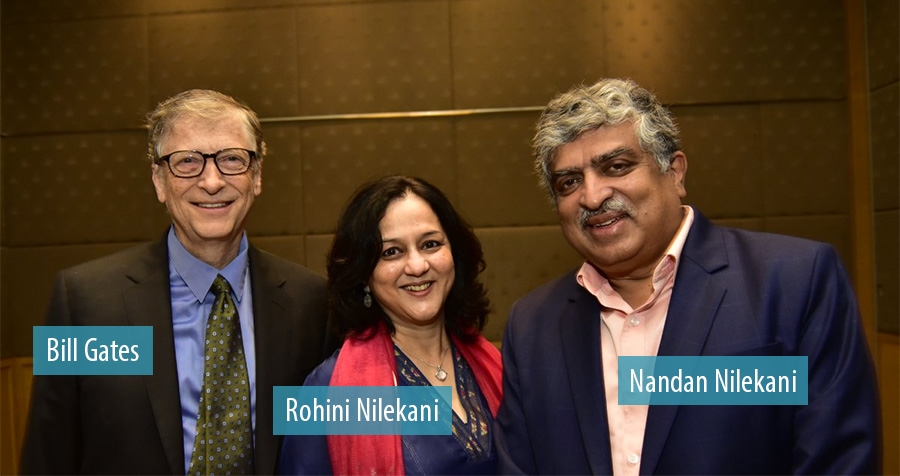
Bill Gates and the Gates Foundation are promoting the adoption of India’s Aadhaar scheme in other countries, citing its potential to improve governance and economic growth, despite concerns over privacy and data misuse.
Perhaps most alarming is Gates’ open declaration of India as an “experimental laboratory” for his initiatives. By treating the country as a testing ground for new technologies and policies, Gates is essentially putting the lives and well-being of millions of Indians at risk. The idea of using a developing nation as a guinea pig for unproven ideas is not only unethical but also dangerous.
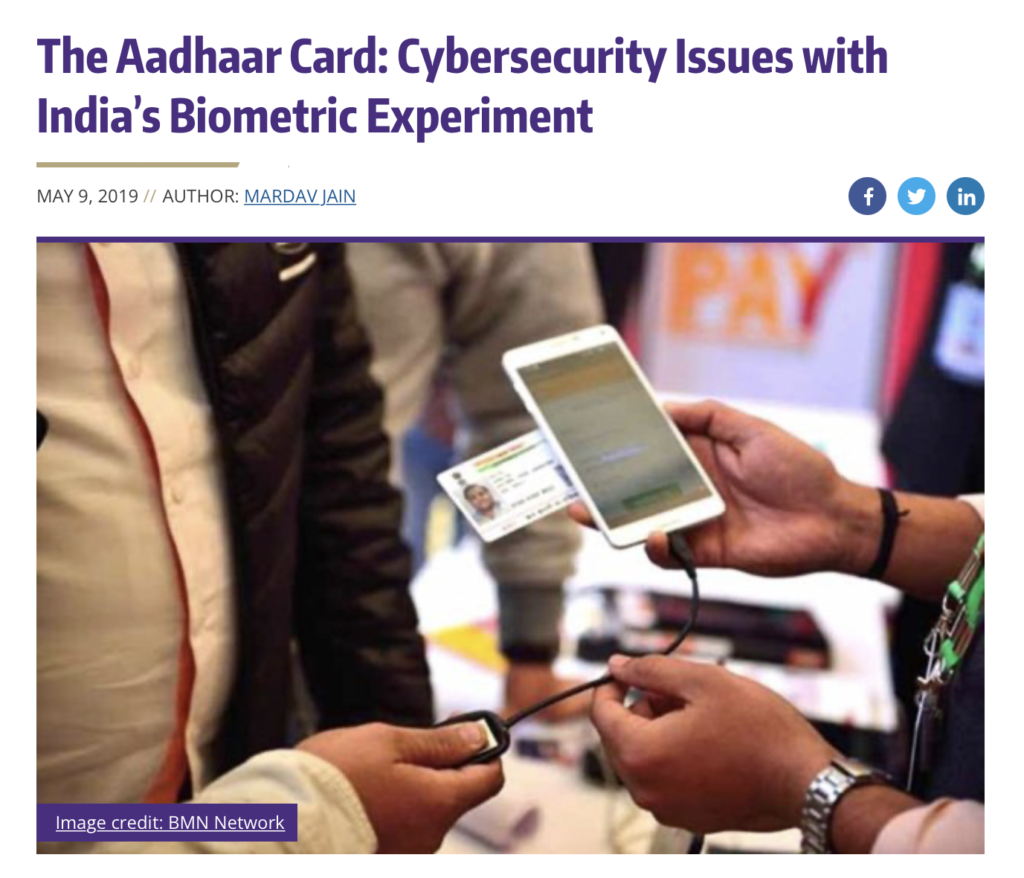
The Aadhaar Card: Cybersecurity Issues with India’s Biometric Experiment
Bill Gates Wants Governments to Drive Digital Transformation in India
India’s economy was one of the fastest-growing in 2018, but a large part of its 1.1 billion people live in poverty and rely on government subsidies for survival.
Despite its potential to modernize India’s bureaucracy, Aadhaar faces serious concerns. These include privacy threats due to data leaks, its use as an identification substitute creating new vulnerabilities, and ethical dilemmas regarding the use of data for artificial intelligence. These issues could turn Aadhaar into a surveillance tool, raising significant worries among citizens. The Unique Identification Authority of India (UIDAI), established as part of India’s Planning Commission, oversees Aadhaar’s implementation. The project, led by Nandan Nilekani from Infosys, was designed to simplify the process of accessing government benefits. Before Aadhaar, the poor faced complex paperwork and long wait times to secure aid. Now, Aadhaar simplifies access by linking to various services such as scholarships, gas subsidies, and bank accounts.
Aadhaar’s significance is immense since it holds personal data for billions. However, since its start, it has encountered numerous security problems, resulting in significant data leaks. The UIDAI has often had to shut down fraudulent websites posing as official sites to collect personal data. In 2018, around 200 government websites inadvertently exposed personal information from Aadhaar, enabling people to access sensitive information easily online. The government even had to block thousands of officials caught accessing Aadhaar data without authorization. Reports also surfaced of individuals selling Aadhaar details on WhatsApp for small amounts, revealing major flaws within the system.
Additionally, various mishaps have led to wide exposure of confidential information. For example, a state website leaked personal data of 1.6 million pension beneficiaries. The Center for Internet and Society reported that 130 million Aadhaar numbers were made public due to government error. Critics argue that these incidents reflect the government’s careless handling of citizen data, showing a lack of accountability for the repercussions faced by the public.
Another issue arises from the push to use Aadhaar as the primary photo ID. Although originally designed for biometric authentication, its widespread adoption as a photo ID increases the chances of duplication or forgery, as it lacks traditional security features. As a result, the vulnerabilities associated with Aadhaar require serious scrutiny to ensure citizens’ privacy and security.
Dr. Usha Ramanathan on “Identity, Privacy, Data, and Our Lives”
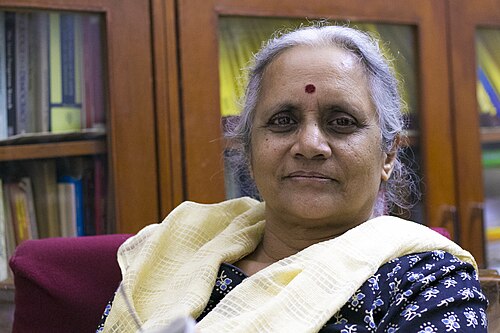
Usha Ramanathan works on the jurisprudence of law, poverty and rights. She writes and speaks on issues that include the nature of law, the Bhopal Gas Disaster, mass displacement, eminent domain, civil liberties including the death penalty, beggary, criminal law, custodial institutions, the environment, and the judicial process. She has been tracking and engaging with the UID project and has written and debated extensively on the subject. In July-September 2013, she wrote a 19-part series on the UID project that was published in The Statesman, a national daily.
Her work draws heavily upon non-governmental experience in its encounters with the state; a 6 year stint with a law journal (Supreme Court Cases) as reporter from the Supreme Court; and engagement with matters of law and public policy.
She was a member of: the Expert Group on Privacy set up by the Planning Commission of India which gave in its report in October 2012; a committee (2013-14) set up in the Department of Biotechnology to review the Draft Human DNA Profiling Bill 2012; and the Committee set up by the Prime Minister’s Office (2013-14) to study the socio-economic status of tribal communities which gave its report to the government in 2014
The Centre for Law & Policy Research hosted Dr. Usha Ramanathan for a talk on “Identity, Privacy, Data and Our Lives,” emphasizing concerns about the Aadhaar scheme. She criticized how Aadhaar was made mandatory without proper legal backing and pointed out ongoing issues related to data security and citizen dignity. Dr. Ramanathan highlighted the hardships faced by individuals who had to authenticate through Aadhaar to access essential services, mentioning that 18 citizens died due to complications with Aadhaar.
She explained that the Aadhaar scheme transitioned from a unique identity project to an identification project, where the government exercises control over citizens using unique identification numbers. Jayna Kothari shared her experience representing transgender activists in Aadhaar-related legal issues, noting that the collection of demographic data could lead to exclusion and surveillance of transgender people. Mr. Kiran from the ‘Save the Internet’ Foundation warned about the security risks of Aadhaar technology being exploited by corporations.
The various identification cards and Aadhaar numbers are in use. The government claims that making Aadhaar mandatory ensures that subsidies reach those in need; however, many people do not apply for any government subsidies. There are both advantages and disadvantages to this mandatory system. The government promises to transfer money to verified accounts, enhancing security.
Initially, Aadhaar was introduced as an 11-digit unique number to easily identify individuals. It is important to differentiate between identity and identification projects; Aadhaar identifies but does not serve as proof of identity. Other IDs [Ration Card, Passport, Voter ID, PAN Card, Driving License, Birth Certificate, etc..] are required to prove one’s identity.
Now, what happens inside the UIDAI is, it sends information to the Central Identities Data Repository (CIDR), which checks whether the UID belongs to us or not. This system is completely independent of our identity.
Therefore, the identification changes, and we get full control over usage. Another thing is that this system is a way to shut down government settings through technology. This is very important. People have noticed that corporate tax and other matters are being handed over to technology companies holding our identities.
This project has been given to biometric companies and other tech companies so they can experiment on all the people in this country, from Shah Rukh Khan to the common man. If you visit, you will see that beneficiaries face difficulties in transferring money through this system because the biometrics are not functioning properly. Even after August 11, 2015, UIDAI itself has stated on its website that it has opened a biometric computer center for research because India’s population diversity makes biometrics a challenge. So, after few years, this is still an ongoing issue.
Usha has a basic question for us: many articles have been written in newspapers about Aadhaar, and viewers should read and research them. The government can reach me through Aadhaar, but it can also access others’ data via police stations, passport details, track phone numbers, or conduct surveillance. They may do these things, but what additional risks does this number pose? I feel it has freed me from the troubles faced by common people. All our identity proofs, such as passports or office numbers, are one thing. The other is, if you carefully read this bill, you will see it states that UID can decide when to suspend or deactivate any number.
Usha has a basic question for us: many articles have been written in newspapers about Aadhaar, and viewers should read and research them. The government can reach me through Aadhaar, but it can also access others’ data via police stations, passport details, track phone numbers, or conduct surveillance. They may do these things, but what additional risks does this number pose? I feel it has freed me from the troubles faced by common people. All our identity proofs, such as passports or office numbers, are one thing. The other is, if you carefully read this bill, you will see it states that UID can decide when to suspend or deactivate any number.
This is important because if someone dies or is no longer using the number, it should not be used by anyone else, so it is deactivated. However, this power is vaguely defined because it only says they can activate or deactivate the number. We consider death as simple enough to remove the number from the database. After that, the number can be deactivated. Such provisions could be misused in political situations and create difficulties for political divisions and, especially, poor people.
Dr. Usha Ramanathan concluded by highlighting the significance of citizen activism against the Aadhaar project and expressed hope that the upcoming Supreme Court decision on Aadhaar could restore democratic principles, urging that the project be viewed as a means to convert citizens into consumers.
Aadhaar Misuse Timeline
2018
- January 2018: Reports emerged of a data breach where access to the Aadhaar database was being sold for a small sum, highlighting security vulnerabilities. This breach allowed access to personal details like names, addresses, photos, phone numbers, and emails. The Unique Identification Authority of India (UIDAI) initiated a police probe in response.
- January 2018: The Tribune newspaper reported on the ease of accessing Aadhaar data, leading to the UIDAI blocking 5,000 officials from accessing the portal.
- January 2018: Three Gujarat government websites were found to have exposed Aadhaar details publicly.
- March 2018: A vulnerability in the Indane Gas website exposed Aadhaar and personal data of enrolled individuals.
- March 2018: An Indian security researcher noted that a vulnerability in the website of Indane Gas, an Indian-government owned corporation supplying gas cylinders for domestic cooking, had resulted in exposing Aadhaar and personal data of every person enrolled with the Aadhaar database, and not just customers of Indane.
- April 2018: A data leak of Andhra Pradesh women’s scheme data, including Aadhaar numbers, was reported.
- May 2018: A government website in Andhra Pradesh leaked Aadhaar data linked to caste, religion, bank accounts, and personal details.
- September 2018: The chairman of the Telecom Regulatory Authority of India (TRAI), R.S. Sharma, shared his Aadhaar number on Twitter, challenging misuse. His personal information was then accessed and disclosed, including his phone number, address, and other details.
- September 2018: The Supreme Court upheld the constitutional validity of Aadhaar but limited its mandatory us
2020
- The First American Financial Corp. data breach, discovered in 2019, exposed an astonishing 885 million records, affecting many individuals and exposing sensitive information.
- The Verifications.io data breach, uncovered in early 2019, emerged as a striking example of the risks associated with data management and verification services. This incident exposed approximately 800 million records, marking it as one of the most significant data leaks from a single source.
- In April 2019, Justdial, one of India’s leading local search engines, experienced a security lapse due to an unprotected API endpoint. This vulnerability resulted in the exposure of sensitive information belonging to nearly 100 million users, including names, mobile numbers, email addresses, physical addresses, and additional user profile details.
- In January 2020, Unacademy, one of India’s largest online learning platforms, experienced a cybersecurity breach affecting over 11 million users. Cyber attackers gained unauthorized access to sensitive user data including email addresses, usernames, hashed passwords, account registration dates, and detailed user activity logs.
2024
- October 2023: The Indian Council of Medical Research (ICMR) data breach exposed the COVID-19 testing data of 815 million individuals.
2023
- February 2024: boAt, a prominent Indian consumer electronics and lifestyle brand, experienced a cybersecurity incident leading to the exposure of sensitive personal data for over 7.5 million customers.
- February 2024: Hathway, a leading Indian Internet Service Provider (ISP) and cable operator, experienced a major security breach that compromised the personal information of over 41.5 million customers.
- July 2024: Bharat Sanchar Nigam Limited (BSNL), one of India’s largest state-owned telecommunications providers, suffered a data breach, compromising the sensitive data of millions of users.
- June 2024: Telangana Police’s Hawk Eye mobile application, designed for citizens to report incidents and crimes, experienced a significant cybersecurity breach, compromising the personal data of approximately 200,000 users.
- May 15, 2025: Alex created and updated the biggest data breaches in India, including the Aadhaar data breach.
Recent Aadhaar Misuse Cases in 2025
Several recent cases of Aadhaar misuse have been reported in 2025, highlighting the ongoing threat of cyber fraud and identity theft. These cases demonstrate various methods employed by scammers and the significant financial and personal consequences for victims.
One prominent case involved an 86-year-old woman in Mumbai who lost over ₹20 crore to fraudsters. The scammers, posing as police officials, convinced her that her Aadhaar card was misused and coerced her into transferring money under the threat of legal action against her and her family. The victim was placed under “digital arrest,” preventing her from discussing the situation with others. The police have since launched an investigation and arrested the individuals involved.
Another case involved a software engineer in Bengaluru who was defrauded of ₹11.83 crore. Cybercriminals impersonated TRAI officers and Mumbai Police officers, falsely claiming his Aadhaar card was misused in a money laundering case. They extracted personal and bank details, ultimately siphoning off a large sum of money.
In Uttar Pradesh, a group of four young men were arrested for tampering with Aadhaar systems. They manipulated the biometric data of over 1,500 Aadhaar cardholders. The group, led by a B.Tech dropout, had a network of “retailers” across multiple states who collected documents from individuals seeking to alter their Aadhaar details illegally. They charged between ₹2,000 and ₹5,000 per alteration.
The cases reveal common tactics employed by scammers to exploit Aadhaar cardholders. These include:
Common Tactics and Methods Used by Scammers
A man in Hyderabad was defrauded of ₹12 lakh in a parcel scam involving the misuse of his Aadhaar number. Fraudsters falsely informed him about the misuse of his Aadhaar for a courier from Mumbai to Saudi Arabia, purportedly containing illegal substances. They then coerced him into transferring funds under the guise of verifying his innocence.
How to Protect Yourself
- Impersonation: Scammers often impersonate officials from government agencies like the police, TRAI, or UIDAI to gain trust and create a sense of urgency.
- Threats and Coercion: Victims are threatened with legal action, arrest, or financial penalties to pressure them into providing personal and financial information or transferring money.
- Digital Arrest: Scammers isolate victims by placing them under “digital arrest,” preventing them from seeking help or discussing the situation with others.
- Social Engineering: Scammers use psychological manipulation, creating a sense of panic and confusion to cloud the victim’s judgment.
- Fake Websites and Documents: Scammers create fake websites that mimic official portals and generate fraudulent documents to alter Aadhaar data.
- Be Vigilant: Remain cautious of unsolicited calls, messages, and emails, especially those requesting personal information or financial details.
- Verify Identities: Independently verify the identity of callers or senders by contacting the relevant organization through official channels.
- Never Share Sensitive Information: Avoid sharing Aadhaar numbers, OTPs, or banking credentials with anyone over the phone or online unless you are certain of their legitimacy.
- Report Suspicious Activity: Immediately report any suspected Aadhaar misuse or fraud to the UIDAI helpline (1947) or the cybercrime portal (cybercrime.gov.in).
- Monitor Aadhaar Usage: Regularly check your Aadhaar authentication history through the myAadhaar portal to identify any unauthorized transactions.
- Lock Biometrics: Consider locking your Aadhaar biometrics to prevent misuse, even if someone has access to your Aadhaar details.
- Attest Photocopies: When providing Aadhaar photocopies, attest them with your signature, the purpose, and the date.
- Use Masked Aadhaar: Utilize masked Aadhaar cards where the first 8 digits are hidden.
Ref:
Cyber fraud, particularly through digital arrests, has become increasingly prevalent, with victims falling prey to these scams every day. [https://www.indiatvnews.com/technology/news/aadhaar-card-misuse-fraud-cost-a-software-engineer-12-crore-2024-12-24-967707]
- Mumbai woman gets a fake call about the misuse of her Aadhaar card, loses over Rs 20 crore in the scam. [https://www.indiatoday.in/technology/news/story/mumbai-woman-gets-fake-call-about-misuse-of-her-aadhaar-card-loses-over-rs-20-crore-in-scam-2694478-2025-03-17]
- The Aadhaar card is one of the most essential documents for an Indian resident. [https://cleartax.in/s/misuse-of-aadhaar-card]
- Scam in Hyderabad: Man loses ₹12 lakh over ‘misuse’ of Aadhaar Card after getting call from fake FedEx official. [https://www.livemint.com/news/india/scam-alert-hyderabad-man-defrauded-of-12-lakh-in-fedex-aadhar-card-cyber-police-cyber-crimes-fedex-official-11720339952091.html]
- Is someone using your Aadhaar without your knowledge? Here is how to check. [https://www.indiatoday.in/technology/tech-tips/story/is-someone-using-your-aadhaar-without-your-knowledge-here-is-how-to-check-2633968-2024-11-15]
- Woman loses ₹20 crores in Aadhaar ‘digital arrest’ scam: Why do people keep falling in traps? [ https://m.economictimes.com/news/new-updates/woman-loses-rs-20-crore-in-aadhaar-digital-arrest-scam-why-do-people-keep-falling-in-traps/articleshow/119105876.cms ]
- In yet another Aadhaar fraud case, four young men in their 20s were arrested in Uttar Pradesh for tampering with Aadhaar’s systems. [ https://www.medianama.com/2025/04/223-aadhaar-fraud-uttar-pradesh-1500-cards-compromised/ ]
- India probes breach of biometric identity database. [https://www.aljazeera.com/news/2018/1/5/india-probes-breach-of-biometric-identity-database]
- India’s Supreme Court upholds the legality of the Aadhaar program. [ https://www.cnn.com/2018/09/26/asia/india-aadhaar-ruling-intl]
- Digital Disasters: The Biggest Data Breaches of All Time. [ https://vipre.com/blog/digital-disasters-the-biggest-data-breaches-of-all-time/?srsltid=AfmBOoorvxSwi0sJXNOc2oRA1avKX6wakMWJIRzriZqNeEvrSwhUHzLv]
- Learn about the biggest data breaches in India, why India is an attractive target for cyber-attacks,, and how these could have been prevented. [ https://www.corbado.com/blog/data-breaches-India]
- Learn about the biggest data breaches in India, why India is an attractive target for cyber-attacks, and how these could have been prevented. [ https://www.corbado.com/blog/data-breaches-India ]
- Wikipedia and Youtube -image
A chronological timeline of events that led to the Supreme Court verdict:
*January 2009: Planning Commission notification on UIDAI.
* 2010-2011: National Identification Authority of India Bill, 2010 introduced.
* November 2012: Retired Justice K.S. Puttaswamy filed a petition in the Supreme Court, challenging the validity of Aadhaar, arguing it violated fundamental rights to equality and privacy
* November 2013: Supreme Court orders all states and Union Territories be impleaded as respondents.
*3 March, 2016: The Aadhaar Bill, 2016 was introduced in Lok Sabha; later passed as a Money Bill.
*May 2017: Former Union minister and Congress leader Jairam Ramesh moves Supreme Court challenging the Centre’s decision to treat Aadhaar as a money bill.
*24 August, 2017: A nine-judge Supreme Court bench rules that the right to privacy is a fundamental right.
*15 December 2017: Supreme Court extends the deadline for mandatory linking of Aadhaar with various services and welfare schemes till 31 March 2018.
*17 January 2018: A five-judge bench of the Supreme Court begins hearing petitions on Aadhaar.
*25 January 2018: Supreme Court asks the Chhattisgarh High Court to modify in 10 days its order directing all trial courts in the state to mandatorily accept copies of the Aadhaar card for releasing an accused on bail.
*19 February 2018: Delhi BJP leader Ashwini Kumar Upadhyay seeks direction from the Election Commission to take appropriate steps to implement an ‘Aadhaar-based election voting system’.
*21 February 2018: Supreme Court says the alleged defect that citizens’ biometric details under the Aadhaar scheme were being collected without any law, could be cured by subsequently bringing a statute
*7 March 2018: Supreme Court says Aadhaar number not mandatory for enrollment of students in all India exams.
*13 March 2018: Supreme Court extends the 31 March deadline for Aadhaar linking till it gives its order.
*22 March 2018: UIDAI CEO says breaking the Aadhaar encryption may take “more than the age of the universe for the fastest computer on earth”.
*28 March 2018: Social activist Reshma Prasad seeks direction from the Centre to create a separate third-gender category option on PAN cards for transgenders.
*3 April 2018: The Centre tells the Supreme Court that the Aadhaar law is just, fair, and reasonable.
*17 April 2018: Supreme Court raises concerns that there is a threat of Aadhaar data misuse.
*25 April 2018: Supreme Court questions Centre on mandatory seeding of Aadhaar with mobile.
*10 May 2018: Supreme Court reserves verdict.
*26 September 2018: Supreme Court upholds constitutional validity of Aadhaar but strikes down certain provisions including its linking with bank accounts, mobile phones, and school admissions.
Should Private Companies Now Use Aadhaar Face Authentication In Apps?
Despite numerous shortcomings in the Aadhaar system, the ministry has introduced the Aadhaar Good Governance portal to enhance the approval process for Aadhaar authentication requests. This follows an amendment that reinstates access to the unique ID verification mechanism for private organizations.
Aadhaar holders in India will soon be able to share their identity electronically through a new mobile app, which will replace the need for photocopies. The Unique Identification Authority of India (UIDAI) is developing this app to allow users to share either a full or masked version of their Aadhaar information via a QR code. This system aims to streamline processes by enabling home updates for personal information like address, phone number, name, and date of birth. The only requirement for users will be to provide their fingerprints and iris scans at enrollment centers.
UIDAI plans to have this home update protocol ready by November. The initiative seeks to reduce paperwork, minimize the risk of document fraud, and expedite the process for citizens. UIDAI will extract data directly from official records such as birth certificates, driving licenses, passports, PAN cards, PDS, and MNREGA. There are also discussions to link electricity bill databases to aid in verifying addresses.
According to UIDAI CEO Bhuvnesh Kumar, around 2,000 of the existing enrollment machines are being transitioned to use the new app. This QR code system will facilitate tasks like hotel check-ins, property transactions, and identity verifications on trains. The QR code is designed to enhance security by allowing users to control their data and share it only with consent. UIDAI is encouraging state governments to adopt this method in property registration offices where document fraud is often an issue.
In addition, UIDAI is focusing on updating biometric records for children, requiring updates at ages five to seven and again at 15 to 17. Officials estimate that there are approximately eight crore pending first-round updates and ten crore pending second-round updates for children’s records. Moreover, security agencies, hotels, and other service providers are in discussions with UIDAI to join the new system.
They claim that UIDAI’s new app and system aim to improve identity verification processes while maintaining privacy and user control over personal data. These changes are intended to make Aadhaar updates more accessible and secure, ultimately benefiting[I should say experimenting] Indian citizens by modernizing their identification methods.
Ref: https://www.ndtvprofit.com/amp/nation/private-companies-can-now-use-aadhaar-face-authentication-in-apps
Online Data Breach: Bill Gates’ Push for Government Mandates
Should Indian Railways require Aadhar authentication for Tatkal ticket bookings?
Indian Railways is making significant changes to the Tatkal ticket booking system to promote transparency and fairness, starting July 1, 2025. All online Tatkal bookings will require mandatory Aadhaar authentication. Passengers will need to link their Aadhaar number with their IRCTC user profile to book tickets. Additionally, OTP (One-Time Password) verification will be necessary at reservation counters and for bookings done through agents starting July 15, 2025.
Other key points include that Aadhaar authentication becomes mandatory for online bookings starting July 1, 2025, and for all bookings from counters and agents starting July 15, 2025. The Ministry of Railways encourages all passengers to update their IRCTC profiles with their Aadhaar details to avoid issues.
Frequently asked questions include inquiries about the recent changes, the requirement for Aadhaar verification, and the booking restrictions for agents. In summary, these new rules are designed to improve the booking experience for genuine passengers while reducing misuse of the Tatkal ticket system.
Overall, the recent changes in online security measures and the push for government mandates on online data security reflect a growing awareness of the importance of protecting personal information in the digital age.
Stay informed about the latest updates to make sure your privacy is a top priority and protect your data right now.
Also Read: