

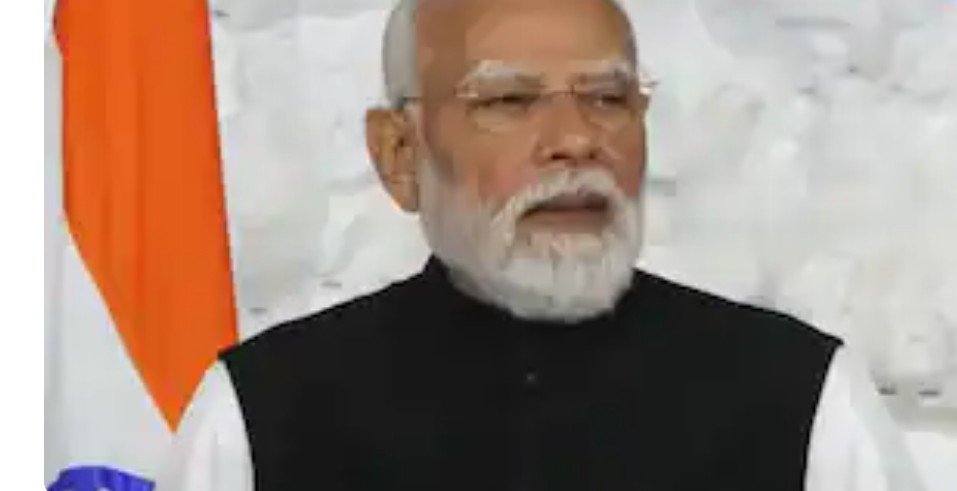
Prime Minister Narendra Modi, after speaking with Nordic leaders on Tuesday, said that a shared commitment to democracy, the rule of law, and multilateralism makes India and the Nordic countries natural partners. He also noted that shared priorities such as technology and sustainability are transforming the relationship between the two sides into new opportunities.
The Prime Minister noted that the Trade and Economic Partnership Agreement with Norway, Iceland, and other EFTA countries, which has been implemented since 2025, has given a new direction to economic cooperation.
Furthermore, he noted that a Free Trade Agreement has recently been signed between India and European countries, in which countries like Denmark, Finland, and Sweden are also partners. This agreement is considered a significant step towards further strengthening trade, investment, and technological cooperation. PM Modi further stated that these ambitious trade agreements will usher in a new “golden era” in relations between India and the Nordic countries.
He stated that in the current era of global tensions and conflict, India and the Nordic countries will continue to strengthen the rules-based global order. The Prime Minister also clarified that whether it is the Ukraine issue or the situation in West Asia, India will continue to support efforts for an early resolution of conflicts through peace, dialogue, and diplomacy.
It is noteworthy that PM Modi held separate meetings with his counterparts from Iceland, Finland, and Denmark on Tuesday to discuss ways to further strengthen bilateral cooperation in areas such as clean energy, trade, sustainable development, and digitalization. These meetings were held ahead of the India-Nordic Summit.
In his talks with Icelandic Prime Minister Kristúr Frósdóttir, Modi emphasized expanding cooperation between the two countries in areas such as clean energy, fisheries, geothermal energy, and carbon capture and storage. He praised Iceland’s capabilities in the “blue economy” and said that the India-EFTA agreement would boost trade and investment.
In his meeting with Finnish Prime Minister Petteri Orpo, discussions focused on expanding cooperation in trade, investment, digitalization, artificial intelligence (AI), 5G-6G, quantum technology, renewable energy, and the circular economy. Emphasis was also placed on strengthening innovation, education, and people-to-people ties. In his talks with Danish Prime Minister Mette Frederiksen, discussions focused on broadly advancing bilateral relations.
Leaders from all Nordic countries, including Norway and Sweden, attended the summit in Oslo. This summit is a continuation of previous summits held in 2018 (Stockholm) and 2022 (Copenhagen) and aims to further strategize partnerships in areas such as technology, green energy, sustainable development, the blue economy, defense, space, and Arctic cooperation.
The Nordic countries are located in Northern Europe and the North Atlantic region and have a combined economy of over $1.9 trillion. These countries are considered leaders in renewable energy and sustainable development.