

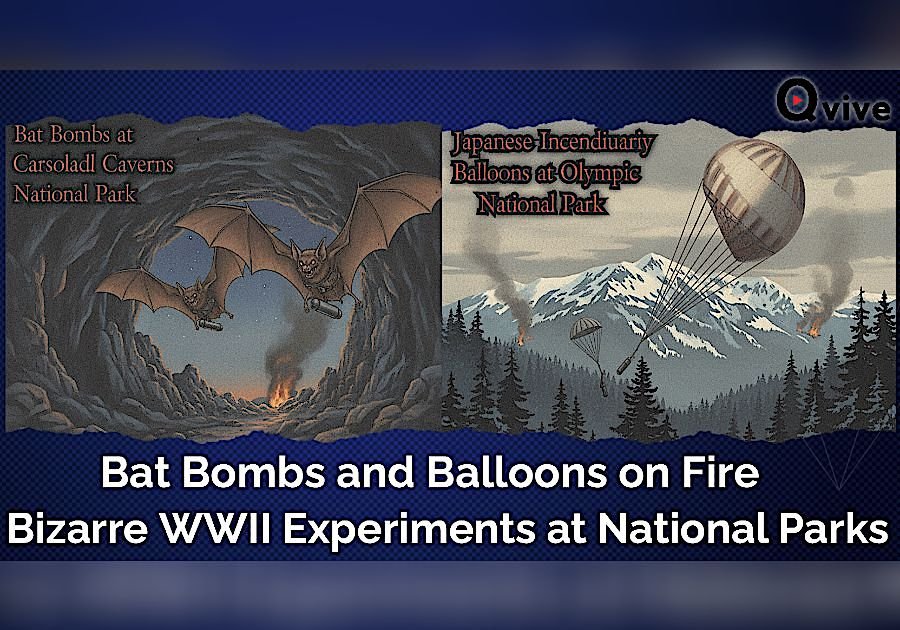
During World War II, some unusual experiments and activities occurred in the United States’ National Parks, particularly at Carlsbad Caverns National Park and Olympic National Park. These actions were part of the war efforts and illustrated the lengths to which the military went to defend the nation.
1942: Bat Bombs at Carlsbad Caverns National Park
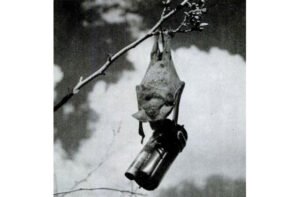
In World War II, the U.S. military developed a secret weapon called the “bat bomb,” a project that utilized the massive populations of Mexican free-tailed bats found in the American Southwest, particularly at Carlsbad Caverns. The concept was championed by Dr. Lytle S. Adams, a dental surgeon who, after visiting the caverns, proposed that these bats could be equipped with tiny, timed incendiary devices and dropped over Japanese cities. The strategic logic relied on the fact that many Japanese urban structures were constructed of wood and paper; the bats, naturally seeking dark, enclosed spaces to roost, would carry the incendiaries into these structures, causing widespread, simultaneous fires.
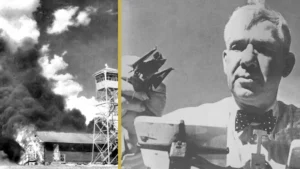
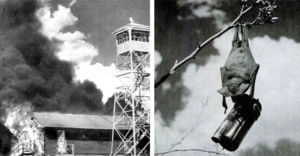
The military took the proposal seriously, with President Franklin D. Roosevelt famously noting that the idea was “worth your time looking into.” The project, eventually designated Project X-Ray, involved cooling the bats to induce a state of hibernation, allowing them to be transported in specialized containers. During testing at an auxiliary airfield near Carlsbad, New Mexico, the project faced significant challenges. In one notable incident, bats that had been “warmed up” for photography escaped and roosted in base facilities, including an aircraft hangar and a general’s car, which were subsequently destroyed by fire when the attached incendiaries detonated prematurely. Despite the potential lethality of the weapon, the project was ultimately canceled in 1944, as the development of the atomic bomb and the logistical difficulties of managing the “bat battalion” made the program impractical for the war effort.
Trying to Make a Bat Idea a Batty Reality
The first decision was the choice of bat. While hundreds of species exist, the most common North American variety is the small brown free-tailed bat, which ranges from 1 ½ to 4 ½ inches in length and weighs from one-third ounce to seven ounces. The creatures feed on insects and live in small groups or in large colonies.
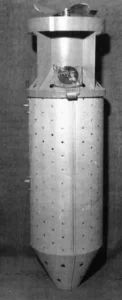
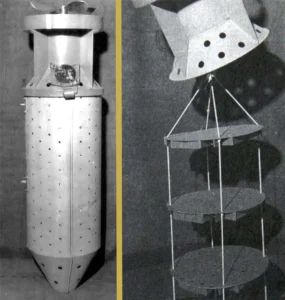
Adams and a team of bat experts from California traveled by car to a variety of locations and ultimately decided that this common free-tailed bat was the best choice. They had two reasons. First, there were millions of them – more than 20 million alone in a cave that Adams and his colleagues found in Texas – and capturing them was relatively easy. Second, the free-tailed bat was strong enough to carry a one-ounce bomb, which the ordnance experts involved in the project thought could be designed and manufactured.
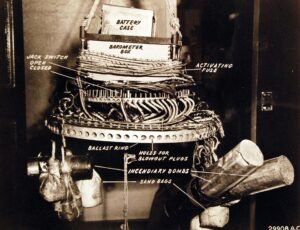
Dr. L. F. Fisser, a member of the National Defense Research Committee, designed two small kerosene incendiary bombs for Adams and his team of bat-bombers. The smaller bomb weighed about two-thirds of an ounce and produced a ten-inch flame that would burn four minutes. Fisser’s larger kerosene incendiary weighed slightly more than an ounce and produced a twelve-inch flame for six minutes. Each of the bomblets had a time-delay fuse, which used a copper chloride solution to corrode a wire holding back a firing pin. When the wire was sufficiently weakened, it broke. This released the firing pin, which ignited the kerosene.
The bombs were attached to the bats with a surgical clip and a piece of string. The idea was that the bats and bombs would be dropped from about 1,000 feet and, after the small furry creatures flew into hiding under the roofs of houses and other buildings, they would bite through the string, dislodge the surgical clip, and fly away – and leave the firebomb behind to work its magic. Of course, if a bat failed to separate itself from the bomb – well, sacrifices were required if the Japanese were to be defeated.
The Army’s Batastrophe
On May 21, 1943, the first major experiment with bombing bats got under way at Muroc Dry Lake, Calif., the site of the future Edwards Air Force Base. Some 3,500 bats had been captured in New Mexico and, to control them, the creatures were put into refrigerators and forced into hibernation. When these bats were released with dummy bombs from a B-25 Mitchell medium bombers flying at 5,000 feet, however, most had not awakened from their refrigerator-induced sleep, did not fly, and crashed into the ground.
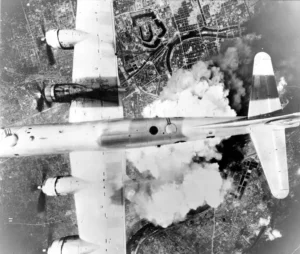
Subsequent bat drops from B-25s did no better. Getting the bats to awake from hibernation remained difficult, with the end result that more than a few failed to fly and died when they hit the ground. Many other bats simply escaped when they were dropped from altitude. The project was subsequently relocated to an Army auxiliary airfield near Carlsbad, possibly to be closer to a supply of bats to replace casualties.
When the Army finally began attaching real incendiaries to the bats, the experiment went awry when some bats escaped and set fire to an aircraft hangar and a car belonging to an Army general. About 6,000 bats were used in the Army experiments, which the Army Chemical Warfare Service ultimately concluded were a failure.
Japanese Incendiary Balloons at Olympic National Park


During World War II, the threat posed by Japanese incendiary balloons, known as Fu-Go, extended to the Pacific Northwest, including the region encompassing Olympic National Park. These balloons, constructed from washi paper and filled with hydrogen, were designed to utilize high-altitude air currents—now identified as the jet stream—to carry incendiary and anti-personnel bombs across the Pacific Ocean to the North American continent.
Between November 1944 and July 1945, approximately 9,300 of these balloons were launched from Japan. While most were ineffective due to damp weather conditions, several reached the United States, including the Olympic Peninsula. Specifically, two balloons were recovered on the peninsula: one at Vaughn (Gig Harbor) on February 28, 1945, and another at Chimacum on March 13, 1945. In response to this threat, the U.S. military initiated the “Sunset Project” in April 1945, which involved establishing radar sites at locations such as Quillayute, Ruby Beach, and Queets to detect incoming balloons. On the boundary of the Park’s Morse Creek addition the Park Service issued the army a special use permit for the designation of an “Impact and Hazard Area” in connection with army tank gun target practice. On the coast the Park granted permission for the removal of 130,000 tons of sand from Rialto Beach for use in completing the Quillayute Air Base.
On many occasions during the war personnel from both the military and the Park Service exchanged services on various missions. Olympic National Park personnel instructed groups of military men in firefighting techniques, assisted in airplane rescue work and organized recreational trips into the Park. While men of the 15th Cavalry were stationed at Port Angeles, the Park opened the swimming pool at Olympic Hot Springs for their use. On several occasions the U.S. Coast Guard took Park personnel on flights over the Park for study purposes. Both the navy and coast guard supplied the Park with men to fight forest fire.
Ref:
- https://en.wikipedia.org/wiki/Bat_bomb
- https://en.wikipedia.org/wiki/Fu-Go_balloon_bomb
- https://www.nps.gov/articles/batbombsandballoons.htm
Also Read:
Due to geoengineering-caused climate change, human life is at risk
Smart Meters: Exploring the Future of Power and the Hurdles Ahead
Will electromagnetic pulses ever be used as weapons of mass destruction?