

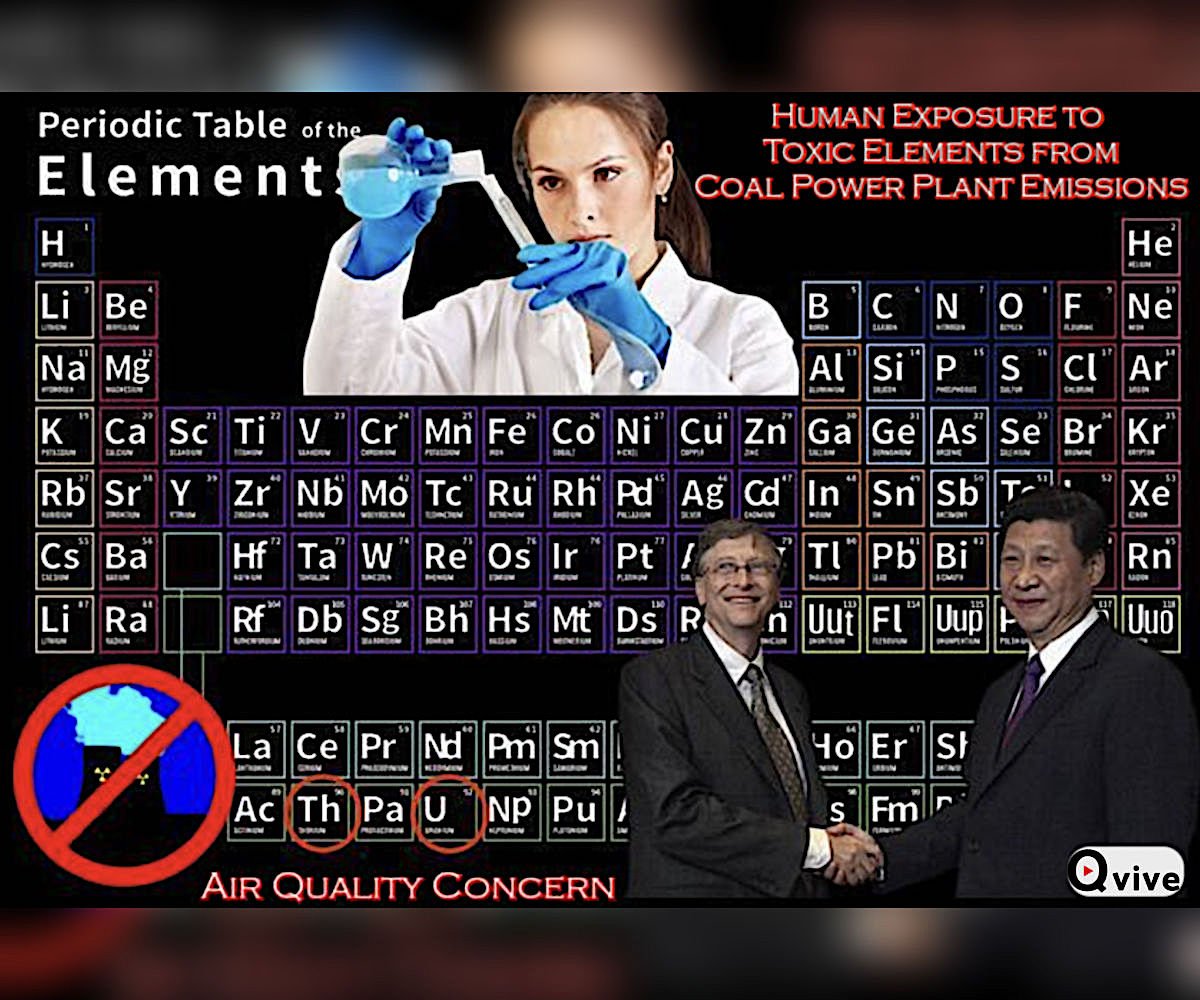
Coal-fired power plants are one of the largest technogenic sources of uranium and thorium released into the environment.
Coal-fired power plants are significant contributors to global energy production. While their primary output is electricity, the combustion process also releases a complex array of byproducts into the atmosphere. Among these are naturally occurring radioactive materials (NORMs), specifically uranium (U) and thorium (Th), and their radioactive decay products. While present in coal, the immense quantities of coal burned annually, coupled with the incomplete combustion and concentration processes, result in their release as technologically occurring radioactive materials (TENORMs). This article focuses on the airborne transport of these radionuclides, the mechanisms of human exposure, and the associated health risks.
How Coal Releases Uranium?
- Coal contains uranium and thorium. Average concentrations:
- Uranium: 1–10 ppm (parts per million) — some lignite/brown coals up to 50–300 ppm
- Thorium: 2–20 ppm
- Burning concentrates them into ash
- 1,000 MW coal plant burns 4 million tonnes of coal per year → Produces 400,000–500,000 tonnes of ash → Uranium concentration in fly ash: 10–100 ppm (10× higher than raw coal)
- Most escapes through the stack
- Modern electrostatic precipitators capture 99–99.9 % of ash
- But that still lets 400–4,000 kg of uranium-rich fly ash escape per plant per year
- Fine particles (<PM2.5) travel hundreds of kilometres
Pathways of Human Exposure and Toxicity
The primary pathway for human exposure to airborne uranium and thorium released from coal power plants is inhalation.
- Inhalation of Radionuclide-Laden Particulates:
- Deposition in the Respiratory Tract: When inhaled, particles containing U and Th are deposited throughout the respiratory tract. Particle size is a critical determinant of deposition site; smaller, respirable particles (PM2.5 and below) can penetrate deep into the lungs, reaching the bronchioles and alveoli, where they can be retained for extended periods.
- Internal Irradiation: Once deposited, these radionuclides, primarily alpha emitters, continuously irradiate the localized lung tissue. Alpha radiation, while having a short range, is highly ionizing and can cause significant cellular damage over time.
- Systemic Translocation: From the lungs, a portion of these radionuclides can be absorbed into the bloodstream and translocated to other organs, including bone, kidneys, and liver, leading to systemic internal exposure.
- Radiological Toxicity:
- Uranium-238 and Thorium-232 are the parent isotopes of long decay chains, producing a series of radioactive daughter products, many of which are also alpha emitters (e.g., Radon-222, Polonium-210 from U-238; Radon-220, Polonium-212 from Th-232).
- Internal exposure to these alpha emitters can cause DNA damage, leading to mutations, chromosomal aberrations, and ultimately increasing the risk of cancer and other adverse health effects.
- Chemical Toxicity (for Uranium):
- Beyond its radioactivity, uranium is also a heavy metal and exhibits chemical toxicity.
- The kidneys are the primary target organ for the chemical toxicity of uranium, potentially leading to renal damage even at concentrations below those causing significant radiological effects.
- The combined effects of radiological and chemical toxicity, particularly with long-term low-level exposure, are a concern.
Health Risks Associated with Airborne Exposure
Long-term, chronic exposure to airborne uranium and thorium from coal power plant emissions is associated with a range of health risks:
- Cancer: Increased risk of various cancers, particularly:
- Lung Cancer: Due to direct irradiation of lung tissue by inhaled alpha emitters.
- Bone Cancer: If radionuclides are translocated and deposited in bone.
- Kidney Cancer: A Potential secondary effect from renal damage.
- Non-Cancerous Effects:
- Kidney Damage: From the chemical toxicity of uranium. This can manifest as impaired renal function.
- Respiratory Issues: Beyond direct radiological damage, the particulate matter itself can exacerbate respiratory conditions like asthma, bronchitis, and chronic obstructive pulmonary disease (COPD).
- Genetic Damage: Ionizing radiation is known to induce genetic mutations.
- Reproductive and Developmental Effects: While less studied in this specific context, internal radionuclide exposure can pose risks to reproductive health and fetal development.
Factors Influencing Risk
The actual health risk to individuals is influenced by several factors:
- Proximity to the Plant: Individuals living closer to coal power plants generally face higher exposure levels.
- Meteorological Conditions: Wind direction, speed, and atmospheric stability affect the dispersion and concentration of airborne contaminants.
- Coal Source: The trace element composition, including U and Th content, varies significantly between different coal deposits.
- Plant Technology and Emission Controls: Modern plants with highly efficient particulate matter control systems release fewer particles, but the challenge remains for ultra-fine particles.
- Exposure Duration: Chronic, long-term exposure significantly increases the cumulative dose and associated risks.
- Individual Susceptibility: Factors like age (children are more vulnerable), pre-existing health conditions, and lifestyle can modify individual risk.
Actual Human Exposure and Health Risks (Documented)
| Exposure Route | Estimated Added Intake Near Coal Plants | Health Effect Evidence |
|---|---|---|
| Inhalation of fly ash | 0.1 – 5 µg uranium/year (within 50 km) | Small but measurable increase in lung dose (0.01–0.1 mSv/year) |
| Ingestion via food/water | Crops, milk, fish near ash ponds: +1–20 µg/day in worst cases | Some Indian and Chinese studies show elevated urine uranium in villages near ash ponds |
| Ash pond leaching | Groundwater near unlined ponds: up to 100–1,000 µg/L uranium | Kidney toxicity reported in Punjab (India) and Inner Mongolia (China) — directly linked to coal ash contamination |
| Children playing in ash | Direct contact + hand-to-mouth: highest risk group | Elevated urinary uranium in studies near U.S. and Indian ash dumps |
| Scenario | Who Was Affected | Outcome |
| Early uranium mining & milling (1940s–1970s) | Miners (not the public) | Lung cancer from radon, kidney damage from the dust |
| Chernobyl graphite fire (1986) | Firefighters & liquidators | Acute radiation syndrome from cesium/iodine. |
India’s Coal Power Plant Owners List
| Owner Type | Major Owners/Companies | % of Capacity | Example Plants |
|---|---|---|---|
| Central Government | NTPC Limited | 29% (62 GW) | Vindhyachal (MP), Mundra (Gujarat, partial), Sipat (Chhattisgarh) |
| State Government | PSPCL (Punjab), MAHAGENCO (Maharashtra), APGENCO (Andhra Pradesh), TSGENCO (Telangana), CSPGCL (Chhattisgarh), UPRVUNL (UP), WBPDCL (West Bengal) | 40% | Lehra Mohabbat (PSPCL), Chandrapur (MAHAGENCO), Rayalaseema (APGENCO) |
| Private | Adani Power, Reliance Power, JSW Energy, Jindal Power, Lanco Infratech | 25% | Mundra (Adani), Sasan (Reliance), Tiroda (Adani) |
| Joint Ventures | NSPCL (NTPC-SAIL), SJVN (NTPC-HP Govt.) | 6% | Bhilai (NSPCL) |
Weaponized Uranium and Adverse Health Outcomes in Iraq

Uranium weapons being employed in Ukraine have significantly increased Uranium levels in the air in the UK
The study, conducted by Christopher Busby, analyzes data from the Atomic Weapons Establishment (AWE) in Aldermaston, UK, to investigate alterations in air Uranium levels corresponding with the commencement of the Ukraine war in February 2022.
A substantial increase in Uranium levels was observed across all nine High Volume Air Samplers (HVAS) from February 2022 onwards.
Uranium levels in air samples rose approximately twofold compared to the pre-war period (November 2017 – January 2022).
Measurements exceeded the Environment Agency’s threshold of 1000 nBq/m³ during the war timeframe.
Uranium Weapons
Since 1991, military forces, particularly in the US and UK, have used uranium-based weapons. They were first deployed during the Gulf War, and more recently in various conflicts, including the war in Ukraine.
When these weapons hit their target, they burn hot and create tiny particles that can remain in the environment for many years. These particles are mainly insoluble, meaning they do not dissolve easily in water or air.
Health Concerns: There is a public and scientific concern because these radioactive uranium particles can linger in the air and may be inhaled by people far from the actual battlefield, potentially leading to serious health problems such as cancer or birth defects.
The Atomic Weapons Establishment (AWE) has been monitoring air quality around their facility since the late 1980s. They used High Volume Air Samplers (HVAS) to collect data from both onsite and offsite locations.
- Significant Increase: Shortly after the Ukraine war started, uranium levels in the air around AWE increased by about two times. This increase was consistent across all nine HVAS samplers used in the study.
- Health Implications: The findings suggest that many people in the UK and Europe may have inhaled large quantities of uranium particles. The study estimates that each individual in the affected areas could have inhaled around 23 million small uranium particles since the war began.
Health and Legal:
- Health Risks: Previous studies in Iraq have shown serious health effects related to exposure to uranium, including complications like birth defects and cancer. There are ongoing debates about how reliable current models are for predicting health risks from such exposure.
- Legal Considerations: The potential for widespread contamination raises legal questions about the use of these weapons, particularly regarding international laws that prohibit indiscriminate damage to civilian populations.
This article sheds light on the environmental and health implications of modern warfare, particularly concerning the use of uranium weapons, making it a critical topic in today’s global discussions about public health and military ethics.
Uranium Toxicity in India: Regions Causing Health Issues
Uranium contamination in India primarily stems from geogenic sources (natural rock dissolution into groundwater) and anthropogenic factors (e.g., mining tailings, coal ash leaching). As of 2025, a Central Ground Water Board (CGWB) report identifies elevated uranium (>30 µg/L, WHO limit) in 6.6% of national samples, affecting 151 districts across 18 states. Health impacts include chemical toxicity (kidney damage, proteinuria, bone fragility) and radiological risks (increased cancer, developmental delays in children). Infants and children are most vulnerable due to higher absorption rates. Below is a summary of key regions with documented health issues, based on recent studies (2024–2025).
Major Affected Regions and Health Effects
| Region/District | State | Primary Source | Key Health Issues | Evidence/Prevalence |
| Malwa Region (Bathinda, Mansa, Sangrur, Barnala, Faridkot, Fatehgarh Sahib) | Punjab | Geogenic (granite aquifers) + coal ash leaching from plants like Lehra Mohabbat and Guru Gobind Singh TPP | Kidney disease, bone deformities, high cancer rates (e.g., “cancer belt”); 76% of groundwater samples exceed 30 µg/L; urinary uranium 15–60 µg/L in children; 26% of hair samples show elevated levels (up to 218 µg/g). | GNDU studies (2021–2025); CGWB 2025; PSHRC hearing (Sep 2025) – affects 1M people. |
| Gangetic Plains (Patna, Bhojpur, Buxar, Saran, Vaishali, Muzaffarpur – 6 districts) | Bihar | Geogenic groundwater (1.7% sources contaminated); possible agricultural runoff | Nephrotoxicity and neurodevelopmental delays in 70% of breastfed infants; elevated uranium in breastmilk (0.1–5 µg/L); chronic kidney/neurological harm. | Scientific Reports (Nov 2025) – first breastmilk study; affects 500K lactating mothers. |
| Jadugoda & Singhbhum Shear Zone (East Singhbhum) | Jharkhand | Uranium mining tailings (UCIL operations since 1967) | Congenital defects, sterility, cancers (e.g., lung, bone), anemia; elevated blood uranium in residents (up to 10x background); affects tribal communities. | Springer study (Aug 2025); EPW reports – impacts 50K locals. |
| Hisar & Semi-Arid Northwest (Fatehabad, Sirsa) | Haryana | Geogenic (semi-arid aquifers) | Chronic kidney disease, fluorosis co-occurrence; 84% of samples >15 µg/L (WHO old limit); bone toxicity and reproductive issues. | PMC (2020–2025 updates); affects 2M in Haryana-Punjab belt. |
| Bharatpur | Rajasthan | Geogenic leaching | Radiation exposure risks; chemical toxicity (kidney/proteinuria); 50%+ samples exceed limits. | Appl Radiat Isot (Aug 2025); 300K exposed. |
| Chakrata & Uttarkashi | Uttarakhand (Garhwal Himalaya) | Tectonic/geogenic (Himalayan rocks) | Lifetime cancer risk (ELCR 10⁻⁴); kidney damage (HQ >1 in 40% samples); elevated in drinking water (up to 100 µg/L). | ScienceDirect (Mar 2025); affects hilly villages (100K). |
| Balod District (Siwani Village) | Chhattisgarh | Geogenic + possible mining influence | kidney/neurological risks; high chemical toxicity. | CWE Journal (2023–2025); 20K villagers. |
| Manchanabele Reservoir Surrounds (Bengaluru rural) | Karnataka | Reservoir/geogenic | Kidney toxicity (LADD up to 21 µg/kg/day); cancer risk (LCR 10⁻³); 34% samples >60 µg/L (AERB limit). | PubMed (Jul 2024–2025); affects peri-urban areas (200K). |
| Thoothukudi | Tamil Nadu | Geogenic + industrial | Health hazards from groundwater (up to 50 µg/L); kidney/bone issues. | Radiat Prot Dosimetry (2024); coastal impacts. |
National Overview
- Most Affected States: Punjab (highest density, 50+ districts), Bihar (recent breastmilk crisis), Haryana, Uttar Pradesh (semi-arid zones), Rajasthan, Jharkhand (mining), Uttarakhand, Chhattisgarh, Karnataka.
- Scale: 60M people at risk (CGWB 2025); Punjab-Haryana belt alone has 10M exposed. Uranium levels often 3–15x WHO limits, leading to 2–5x higher kidney disease rates.
- Vulnerable Groups: Children (neurotoxicity, low IQ), pregnant/lactating women (fetal exposure), farmers (irrigation-linked).
- Mitigation: Reverse osmosis filters reduce 99%.
For region-specific advice, test local water via CGWB labs.
Thorium Toxicity in India: Overview and Health Impacts
Thorium (Th), a naturally occurring radioactive element, is about three times more abundant than uranium and primarily enters the body via inhalation (dust from monazite sands), ingestion (contaminated water/food), or dermal contact. In India, thorium exposure is largely geogenic—leached from granitic rocks and concentrated in monazite-rich beach sands (containing 8–10% ThO₂)—but exacerbated by mining/processing activities. India’s vast reserves (12 million tonnes, mostly in coastal monazite) make it a global leader, but this leads to High Background Radiation Areas (HBRAs) with elevated risks. Toxicity is mainly radiological (alpha/beta/gamma emissions causing DNA damage, cancer) rather than chemical, though oxidative stress and organ damage occur at high doses.
Health Effects of Thorium Exposure
Based on ATSDR/WHO guidelines and Indian studies (e.g., BARC 2024–2025), effects are dose-dependent:
| Exposure Route | Typical Dose in India (mSv/year) | Health Risks | Evidence from Studies |
|---|---|---|---|
| Inhalation (monazite dust, mining aerosols) | 1–6 mSv (HBRAs like Kerala/Odisha) | Lung fibrosis, cancer (1–5% attributable risk); oxidative stress, DNA damage via NF-κB pathway. | BALB/c mouse study (2022): Thorium progeny caused lung/liver/kidney damage; human workers show elevated radon/thoron (thoron inhalation unstudied but linked to lung cancer). |
| Ingestion (groundwater, rice/cereals from contaminated soil) | 0.05–0.2 mSv (Chhatrapur, Odisha) | Kidney/liver toxicity (proteinuria, cirrhosis); bone cancer, leukemia; neurodevelopmental delays in children. | Tamil Nadu HBRA (2024): Indoor doses 1.69–4.43 mSv/year > ICRP limits; lifetime cancer risk 2–10x background; strong U-Th correlation in rice (r=0.88). |
| Dermal/External (beach sands, scales) | 0.5–2 mSv (coastal exposure) | Skin irritation, seminiferous tubule edema; pancreatic/hematopoietic cancers (historical Thorotrast data). | Limited; ATSDR (2025): Edema in rat testes; no widespread dermal cases in India. |
| Chronic Low-Level (HBRAs) | 2–6 mSv (vs. global avg. 2.4 mSv) | Increased all-cause mortality (debated); no clear excess in Kerala cohort but signals in mining areas. | Karanagappally study (2009–2025 update): No elevated cancer vs. low-radiation controls, but Punjab/Odisha show 3–5x kidney issues. |
- Vulnerable Groups: Tribal miners (Jadugoda), coastal fishers/farmers (Kerala/Tamil Nadu), children (higher absorption). No MRLs set, but ICRP recommends <1 mSv/year public limit.
- Mechanisms: Alpha particles from Th-232 decay chain cause double-strand DNA breaks; chemical similarity to calcium leads to bone/lung accumulation.
Regions in India with Thorium Toxicity Concerns
India’s thorium hotspots are coastal HBRAs (monazite beaches) and mining sites. 70% of reserves in Andhra Pradesh (31%), Tamil Nadu (21%), Odisha (20%). Groundwater leaching (up to 2.5 µg/L Th) contaminates 20 coastal districts.
| Region/Area | State | Primary Source | Affected Population & Key Impacts | Thorium Levels |
|---|---|---|---|---|
| Kerala Coast (Chavara, Neendakara, Karunagappally) | Kerala | Monazite beach sands (1% monazite, 9% ThO₂); IREL processing. | 500K; high lung cancer risk from thoron inhalation; no excess overall cancer in cohort but elevated beta doses (0.46–6.12 mSv/year). | Airborne Th: 200–3,000 nGy/h; sands: up to 70 mGy/year. |
| Tamil Nadu Coast (Kanyakumari, Manavalakurichi, Kudiraimozhi) | Tamil Nadu | Monazite placers; HBRA from granite weathering. | 1M; kidney damage, birth defects; rice/soil Th-U correlation (r=0.98); HQ>1 (non-cancer risks). | Sands: 2,990 Bq/kg Th; groundwater: 0.2–2.5 µg/L. |
| Odisha Coast (Chhatrapur-Gopalpur, Bhimilipatnam) | Odisha | Monazite-rich beaches; heavy mineral sands. | 800K; ingestion doses from cereals (50 µSv/year); lifetime cancer risk elevated. | Sands: 375–5,000 nGy/h; water: 0.2 mBq/g in food. |
| Jadugoda & Singhbhum Shear Zone | Jharkhand | Uranium mining tailings (UCIL; Th byproduct in uraninite). | 50K tribals; congenital defects, sterility, anemia, cancers (lung/bone); blood Th 10x background. | Tailings: High Th-232; doses 0.1–2 mSv/year workers. |
| Andhra Pradesh Coast (various beaches) | Andhra Pradesh | Monazite deposits (31% national reserves). | 300K; leaching to water bodies (Th-232 + K-40); weak soil-water correlation. | Sands: Up to 10% ThO₂ in monazite. |
Major Coal Power Plants in India:
India has approximately 180 operational coal-fired thermal power plants (TPPs), contributing over 200 GW to the national grid as of 2025. These are operated by central government entities (e.g., NTPC), state utilities (e.g., APGENCO), and private companies (e.g., Adani Power). Below is a table listing major operational plants (focusing on those with >500 MW capacity for brevity; full lists exceed 150 entries). Data is compiled from official sources like CEA, NTPC, and Wikipedia (updated to 2025). Commissioning years refer to the first unit’s operational start; multi-phase plants have ranges.
| Plant Name | Location (State) | Company/Operator | Owner Type | Installed Capacity (MW) | Commissioning Year(s) |
| Vindhyachal Super TPS | Singrauli, MP | NTPC | Central Govt. | 4,760 | 1982–2012 |
| Mundra TPS | Kutch, Gujarat | Adani Power | Private | 4,620 | 2009–2012 |
| Sasan UMPP | Singrauli, MP | Reliance Power | Private | 3,960 | 2013 |
| Tiroda TPP | Gondia, Maharashtra | Adani Power Maharashtra | Private | 3,300 | 2012–2014 |
| Sipat STPS | Bilaspur, Chhattisgarh | NTPC | Central Govt. | 2,980 | 2008–2014 |
| Chandrapur STPS | Chandrapur, Maharashtra | Maharashtra State Power Generation Co. (MAHAGENCO) | State Govt. | 2,920 | 1985–2016 |
| Korba STPS | Korba, Chhattisgarh | NTPC | Central Govt. | 2,600 | 1983–2014 |
| Kahalgaon STPS | Bhagalpur, Bihar | NTPC | Central Govt. | 2,340 | 1985–2016 |
| NTPC Dadri | Gautam Buddh Nagar, UP | NTPC | Central Govt. | 1,820 | 1991–2002 |
| Rihand STPS | Sonebhadra, UP | NTPC | Central Govt. | 3,000 | 1988–2015 |
| Singrauli STPS | Sonebhadra, UP | NTPC | Central Govt. | 2,000 | 1982–1986 |
| Talcher STPS | Angul, Odisha | NTPC | Central Govt. | 3,000 | 2003–2017 |
| Ramagundam STPS | Peddapalli, Telangana | NTPC | Central Govt. | 2,600 | 1973–2004 |
| Kawai TPP | Baran, Rajasthan | Adani Power Rajasthan | Private | 1,320 | 2013–2015 |
| Mahan Energen TPP | Singrauli, MP | Adani Power (formerly Essar) | Private | 1,200 | 2013 |
| OP Jindal TPP | Raigarh, Chhattisgarh | Jindal Power | Private | 1,000 | 2007–2010 |
| Lanco Amarkantak TPP | Anuppur, MP | Lanco Infratech | Private | 600 | 2011 |
| Hasdeo TPS | Korba, Chhattisgarh | Chhattisgarh State Power Generation Co. (CSPGCL) | State Govt. | 840 | 1983–2014 |
| Bhilai TPS | Durg, Chhattisgarh | NSPCL (NTPC-SAIL JV) | Joint Venture | 500 | 1984–1988 |
| Rayalaseema TPS | Yerraguntla, AP | APGENCO | State Govt. | 1,050 | 1995–2016 |
| Kothagudem TPS | Palvancha, Telangana | TSGENCO (formerly APGENCO) | State Govt. | 1,720 | 1957–2019 |
| Vijayawada TPS | Ibrahimpatnam, AP | APGENCO | State Govt. | 1,760 | 1978–1995 |
| Barh STPS | Patna, Bihar | NTPC | Central Govt. | 660 (Phase I) | 2018 |
| Barauni TPS | Begusarai, Bihar | BSEB (NBPDCL) | State Govt. | 220 | 1963–1979 |
| Badarpur TPS | New Delhi | NTPC | Central Govt. | 705 | 1975–1978 (retired 2018) |
Bottom Line (2025 scientific consensus)
- Coal power plants release 10,000–40,000 times more uranium into the biosphere.
- In several regions (especially India and China), coal ash is now a documented cause of environmental uranium contamination and measurable human exposure — including early kidney damage in children.
So yes — coal plants really do cause uranium toxicity in some communities.
Additional Information:

Helen Huang’s Nuclear Game: A Riveting Political Thriller Exploring the Dark Secrets of Nuclear Power
Helen Huang’s novel, “Nuclear Game,” is a political thriller inspired by her experiences living in China under Communist rule.
The story explores the complex world of nuclear power, combining elements of suspense, intrigue, and high-stakes geopolitics.
As an author, Huang’s work shines a light on the dangers and secrets surrounding nuclear energy, making it a significant contribution in political thriller literature.
Ref:
- https://www.nature.com/articles/s41598-025-25307-7
- https://link.springer.com/article/10.1007/s44282-025-00233-1
- https://www.sciencedirect.com/science/article/abs/pii/S0969804325001496
- https://www.indiatoday.in/india/story/uranium-detected-in-breastmilk-samples-in-bihar-70-of-infants-at-risk-study-2824748-2025-11-23
- https://zeenews.india.com/health/silent-poison-uranium-found-in-breast-milk-across-6-districts-in-bihar-experts-race-to-trace-the-source-2989121
- https://pubs.acs.org/doi/10.1021/acs.estlett.8b00215
- https://www.cwejournal.org/vol19no2/passessment-of-uranium-pollution-in-ground-water-and-human-health-in-balod-district-chhattisgarhp
- https://pubmed.ncbi.nlm.nih.gov/25978299/
- https://india.mongabay.com/2025/01/government-report-highlights-groundwater-contamination-across-india/
- https://acqias.com/daily-news-analysis-current-affairs/Uranium-Contamination-in-India
- https://www.business-standard.com/health/uranium-breast-milk-bihar-study-groundwater-contamination-infant-risk-125112500709_1.html
- https://www.sciencedirect.com/science/article/abs/pii/S2352801X2200008X
- https://pubmed.ncbi.nlm.nih.gov/39016501/
- https://www.outlookindia.com/national/toxic-waters-tainted-childhoods-lead-and-uranium-crisis-unfolds-in-punjab-and-chandigarh
- https://pmc.ncbi.nlm.nih.gov/articles/PMC7767619/
- https://www.lenntech.com/periodic/elements/th.htm
- https://www.ncbi.nlm.nih.gov/books/NBK591332/
- https://www.sciencedirect.com/science/article/abs/pii/S000927972200182X
- https://www.cancer.gov/about-cancer/causes-prevention/risk/substances/thorium
- https://www.researchgate.net/publication/369170067_Uranium_weapons_being_employed_in_Ukraine_have_significantly_increased_Uranium_levels_in_the_air_in_the_UK
Also Read: