

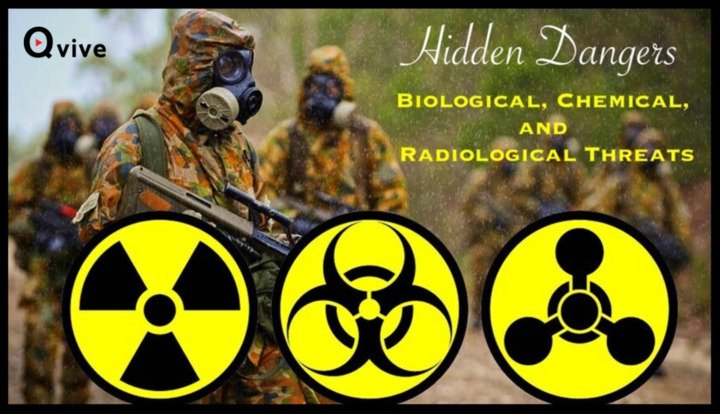
Radiological Attack: Protecting Against the Misuse of Radioactive Materials

A radiological attack is when people intentionally release radioactive materials to create danger and harm. Radioactive materials are used every day in laboratories, medical centers, food irradiation plants, and for industrial uses. While these materials serve important purposes in various industries, they also pose a potential security risk if they were to fall into the wrong hands. If stolen or otherwise acquired, many of these materials could be used in a Radiological Dispersal Device (RDD), commonly known as a “dirty bomb.” In order to prevent the misuse of radioactive materials and stop a radiological attack, it is crucial to implement strict security measures and guidelines.
Radiological agents
A radiation emergency could be a “dirty bomb” or an accident in a nuclear reactor that contaminates a specific area with radioactive materials.
People are exposed to small amounts of radiation every day, both from naturally occurring sources, such as elements in the soil or cosmic rays from the sun, and man-made sources. Man-made sources include some electronic equipment, such as microwave ovens and television sets; medical sources, such as x-rays, certain diagnostic tests, and treatments; and from nuclear weapons testing.
The amount of radiation from natural or man-made sources to which people are exposed is usually small. A radiation emergency, such as a nuclear power plant accident or a terrorist event, could expose people to small or large doses of radiation, depending on the situation.
But what exactly is an RDD, and how can we protect ourselves from this potentially devastating threat?
What is a Radiological Dispersal Device?
An RDD is a type of explosive device that combines conventional explosives with radioactive materials. When the device detonates, it spreads radioactive material over a wide area, causing contamination and potentially exposing people to harmful levels of radiation. While an RDD does not cause a nuclear explosion, the spread of radioactive material can have serious consequences for public health and the environment.
How are Radioactive Materials Used in RDDs?
Radioactive materials such as cesium-137, cobalt-60, and strontium-90 are commonly used in RDDs due to their high radioactivity and widespread availability. These materials can be sourced from medical facilities, research laboratories, or industrial sites, making them a potential target for malicious actors seeking to create an RDD. Once obtained, the radioactive materials can be combined with conventional explosives to create a dirty bomb capable of spreading radiation over a large area.
What are the Risks of a Radiological Attack?
The detonation of an RDD can have serious consequences for public health, the environment, and the economy. Exposure to radiation from an RDD can cause immediate health effects such as radiation burns, radiation sickness, and increased risk of cancer. The contaminated area may also require extensive decontamination efforts, leading to displacement of residents, disruption of businesses, and long-term environmental damage.
High-energy ionizing radiation is harmful. Low-level exposure sources include background, occupational, and medical diagnostics. Radiation disaster incidents include radioactive substance accidents and nuclear power plant accidents. Terrorism and international conflict could trigger intentional radiation disasters that include radiation dispersion devices (RDD) (a radioactive dirty bomb), deliberate exposure to industrial radioactive substances, nuclear power plant sabotage, and nuclear weapon detonation. Nuclear fissioning events such as nuclear power plant incidents and nuclear weapon detonation release radioactive fallout that include radioactive iodine 131, cesium 137, strontium 90, uranium, plutonium, and many other radioactive isotopes. An RDD dirty bomb is likely to spread only one radioactive substance, with the most likely substance being cesium 137. Cobalt 60 and strontium 90 are other RDD dirty bomb possibilities. In a radiation disaster, stable patients should be decontaminated to minimize further radiation exposure. Potassium iodide (KI) is useful for iodine 131 exposure. Prussian blue (ferric hexacyanoferrate) enhances the fecal excretion of cesium via ion exchange. Ca-DTPA (diethylenetriaminepentaacetic acid) and Zn-DTPA form stable ionic complexes with plutonium, americium, and curium, which are excreted in the urine. Amifostine enhances chemical and enzymatic repair of damaged DNA. Acute radiation sickness ranges in severity from mild to lethal, which can be assessed by the nausea/vomiting onset/duration, complete blood cell count findings, and neurologic symptoms.

Radioactive materials are owned by a variety of entities, including research facilities, hospitals, universities, and government agencies. These organizations use radioactive materials for a wide range of applications, such as medical imaging, cancer treatment, and scientific research. While these materials are tightly regulated and controlled, there is always a risk of theft or unauthorized access.
Radiological materials are far from solely a source of concern. They underpin essential technologies across numerous sectors:
- Medicine: Radiation therapy employs focused radiation to destroy cancerous cells. Diagnostic imaging techniques like X-rays, CT scans, and PET scans utilize radioactive materials to visualize internal organs and tissues. Radioactive tracers help diagnose and monitor various illnesses.
- Power Generation: Nuclear power plants leverage the controlled fission (splitting) of radioactive elements like uranium to produce heat, which in turn generates electricity. This is a relatively low-carbon source of power.
- Industry: Radiological materials are used for non-destructive testing of materials, for quality control in manufacturing, and for sterilizing medical equipment and food products.
- Agriculture: Radiation is used to develop new crop varieties, control pests, and enhance food preservation techniques.
- Scientific Research: Radioactive materials play an indispensable role in countless scientific investigations, from dating ancient artifacts to studying the fundamental properties of matter.
- Security: X-ray machines are widely used at airports and other security checkpoints to screen luggage and people.
How Are Radioactive Materials Used?
In Laboratories
Radioactive materials are commonly used in laboratories for research purposes, such as tracing biochemical processes, studying the effects of radiation on biological systems, and conducting experiments in nuclear physics. These materials are handled by trained professionals in controlled environments to minimize the risk of exposure and contamination.
In Medical Centers
In medical centers, radioactive materials are used for diagnostic imaging, cancer treatment, and sterilization of medical equipment. Radioactive isotopes are injected into patients or administered externally to detect and treat various conditions, such as cancer, heart disease, and thyroid disorders. Strict protocols and safety measures are followed to protect patients, healthcare workers, and the environment from potential harm.
In Food Irradiation Plants
Food irradiation plants use radioactive sources, such as gamma rays, electron beams, or x-rays, to kill bacteria, pests, and parasites in food products. This process helps to extend the shelf life of perishable foods, reduce the risk of foodborne illnesses, and ensure food safety. Regulatory agencies closely monitor and regulate the use of radioactive materials in food irradiation to ensure consumer protection and compliance with safety standards.
For Industrial Uses
Radioactive materials are also employed for industrial applications, such as measuring thickness in manufacturing processes, detecting leaks in pipelines, and inspecting welds in construction projects. These materials are utilized for their unique properties, such as their ability to penetrate materials and provide accurate measurements. Industrial facilities must adhere to strict guidelines and regulations to prevent accidents, leaks, or deliberate misuse of radioactive materials.
Radioactive materials such as cesium-137, cobalt-60, and strontium-90 are commonly used in RDDs due to their high radioactivity and widespread availability. These materials can be sourced from medical facilities, research laboratories, or industrial sites, making them a potential target for malicious actors seeking to create an RDD. Once obtained, the radioactive materials can be combined with conventional explosives to create a dirty bomb capable of spreading radiation over a large area.
RADIOLOGICAL ATTACKS DIRTY BOMBS AND OTHER DEVICES
Ref: https://www.dhs.gov/sites/default/files/publications/prep_radiological_fact_sheet.pdf
Bill Gates’ Involvement in Biological, Chemical, and Radiological Agents

Bill Gates is supporting research projects that work on biological, chemical, and radiological agents. This has raised a lot of concerns and fears among the public, leading many to question why he is involved in these types of projects.
Biological agents include pathogens like viruses, bacteria, and toxins that can cause disease and epidemics.
Chemical agents refer to toxic substances that can be weaponized or released accidentally, causing harm through inhalation, ingestion, or skin contact. Geo-Engineering
Radiological agents involve radioactive materials that can be dispersed for malicious purposes or accidentally, causing radiation sickness and long-term health issues.
TerraPower Isotopes, backed by Bill Gates, produces a key radioactive material for cancer medications.

Would you believe that nearly a decade ago, a group of radio chemists at the nuclear power startup TerraPower found a promising opportunity in radioactive waste from Cold War weapons? With the backing of Bill Gates and his vast resources, it is believed TerraPower Isotopes has been able to produce a radioactive ingredient sought for cancer drugs.
The isotope that TerraPower is producing is most easily extracted from uranium-233 found in weapons waste that has been decaying for decades. A fraction of this material naturally converts into thorium-229, which can then be harvested and used to extract the actinium needed for cancer medicine.
Is liquid sodium dangerous?
Yes, liquid sodium is dangerous if not handled property. On the other hand, consider this excerpt from the internet: “The Sodium Reactor Experiment was a pioneering nuclear power plant built by Atomics International at the Santa Susana Field Laboratory near Simi Valley, California. The purpose of the Sodium Reactor Experiment was to demonstrate the feasibility of a liquid sodium-cooled reactor as the heat source for a commercial power reactor to produce electricity. The reactor operated from 1957 to 1964. On July 12, 1957 the Sodium Reactor Experiment became the first nuclear reactor in the United States to produce electrical power for a commercial power grid by powering the nearby city of Moorpark.”
The Danger of Uranium-233 and Thorium-229
While uranium-233 and thorium-229 are essential for the production of actinium for cancer treatment, they also pose a significant danger if not handled properly. Both of these materials are highly radioactive and can cause serious harm if not managed safely. TerraPower should take strict precautions to ensure the safety of its workers and the surrounding environment when handling these radioactive materials.

One company that is at the forefront of using radioactive materials for a positive purpose is TerraPower Isotopes, a nuclear power startup backed by none other than Bill Gates himself. TerraPower Isotopes specializes in producing a key radioactive ingredient sought for cancer medicine, showcasing the potential benefits that radioactive materials can have in the field of healthcare. By harnessing the power of radioactive materials for medical purposes, TerraPower Isotopes is paving the way for advancements in cancer treatment and other critical areas.
Last year showed that radiopharmaceutical companies received billions of dollars in investments and purchases.

In January 2024, TerraPower Isotopes started sending out samples of its product to two different pharmaceutical companies. Now, they are providing services to over 10 customers every week.
In this area, there are less than 20 companies working on drug development. Some of the well-known pharmaceutical companies are Novartis, Janssen, AstraZeneca, and Eli Lilly. There are also newer companies like Alpha-9 Oncology, Aktis Oncology, and Abdera Therapeutics.
While all this is happening, TerraPower, the parent company, is still working on building a small modular nuclear reactor in Wyoming. The company was started in 2006 with support from Gates, who helped create Microsoft, along with some other people. As they were developing their next-generation nuclear power plant, some researchers got interested in actinium-225 and thought their skills could help in making it. This idea resulted in the creation of a subsidiary.
Chris Levesque, the CEO and president of TerraPower, said, “We haven’t yet made our first electron in reactors. That will happen in 2030.”
Are you curious about the companies funded by Bill Gates that are involved in biological, chemical, and radiological research?
Gates has made significant investments is in research and development related to biological, chemical, and radiological agents. By funding companies at the forefront of this research, Gates is helping drive innovation and progress in these critical areas.
List of Companies Funded by Bill Gates
Here is a list of some of the companies funded by Bill Gates that are involved in research related to biological, chemical, and radiological agents:
- Inovio Pharmaceuticals: This biotechnology company focuses on developing DNA-based immunotherapies for infectious diseases and cancer. With funding from the Gates Foundation, Inovio is working on cutting-edge treatments for a range of health challenges.
- EpiVax: Specializing in immunoinformatics, EpiVax uses computational tools to design vaccines and therapeutics. The company’s work in this field has the potential to revolutionize how we address infectious diseases.
- Metabiota: Metabiota is a pioneer in infectious disease modeling and analytics. By tracking and predicting the spread of pathogens, Metabiota helps governments and organizations prepare for and respond to disease outbreaks.
- Eligo Bioscience: Eligo Bioscience is leveraging synthetic biology to develop targeted antimicrobial therapies. Through precision editing of bacterial populations, Eligo is addressing the rising threat of antibiotic resistance.
- Adaptate Biotherapeutics: This company is focused on creating novel cancer immunotherapies. By harnessing the power of the immune system to target tumors, Adaptate is pioneering new ways to treat cancer effectively.
To tackle so-called climate change, Bill Gates is investing in small modular nuclear reactors (SMRs), even though there are worries about the environmental effects of nuclear energy. This has led to concerns from environmentalists and those who question the safety of nuclear power, as they fear it could be harmful to the environment.
People still have valid fears about nuclear energy and its possible effects on the environment:
Radioactive Waste: While some SMRs aim to address the issue, the problem of nuclear waste disposal remains. Spent fuel can remain radioactive for thousands of years, requiring secure long-term storage solutions.
Accident Risk: Although SMRs incorporate safety features, the possibility of accidents, however remote, cannot be entirely eliminated. The consequences of a large-scale release of radiation can be devastating.
Water Usage: Traditional nuclear plants use vast amounts of water for cooling, which can impact local ecosystems and contribute to water scarcity, particularly in arid regions.
Mining and Processing: The extraction and processing of uranium used to fuel nuclear reactors can have environmental consequences, including habitat destruction and water contamination.
Nuclear Proliferation: The technology and materials used in nuclear power plants can potentially be diverted for weapons production, raising concerns about nuclear proliferation.
How Can We Protect Ourselves from a Radiological Attack?
Preventing a radiological attack requires a multi-faceted approach that involves securing radioactive materials, enhancing border security, and increasing public awareness. Steps such as regular inventory checks of radioactive materials, background checks for personnel handling such materials, and security measures at facilities storing radioactive materials can help reduce the risk of theft or unauthorized access. Additionally, training first responders to recognize and respond to a radiological attack can help minimize the impact of such an event.
How to Prevent a Radiological Attack:
- Secure Storage: One of the most important steps in preventing a radiological attack is to ensure that radioactive materials are securely stored at all times. This includes using locked and monitored storage facilities, restricting access to authorized personnel only, and employing surveillance systems to monitor any suspicious activity.
- Strict Regulations: Implementing strict regulations and guidelines for the handling and transportation of radioactive materials is essential in preventing their misuse. This includes conducting thorough background checks on individuals who have access to these materials, as well as training personnel on proper safety protocols.
- Emergency Response Plans: In the event of a security breach or the theft of radioactive materials, it is crucial to have a well-defined emergency response plan in place. This plan should detail the steps to be taken in case of a radiological attack, including notifying the appropriate authorities and implementing containment measures.
- Public Awareness: Increasing public awareness about the risks associated with radiological attacks can also help prevent their occurrence. By educating the public about the potential dangers of dirty bombs and the importance of reporting suspicious activity, we can work together to ensure the safety and security of our communities.
So, what do you think about Bill Gates’ involvement in these companies researching dangerous agents? Is it a threat to humanity?
Source: Geekwire, Facebook-Image, Quora, County Of Santa Clara, Youtube-image, Linkedin-Image, TerraPower
Also Read: