

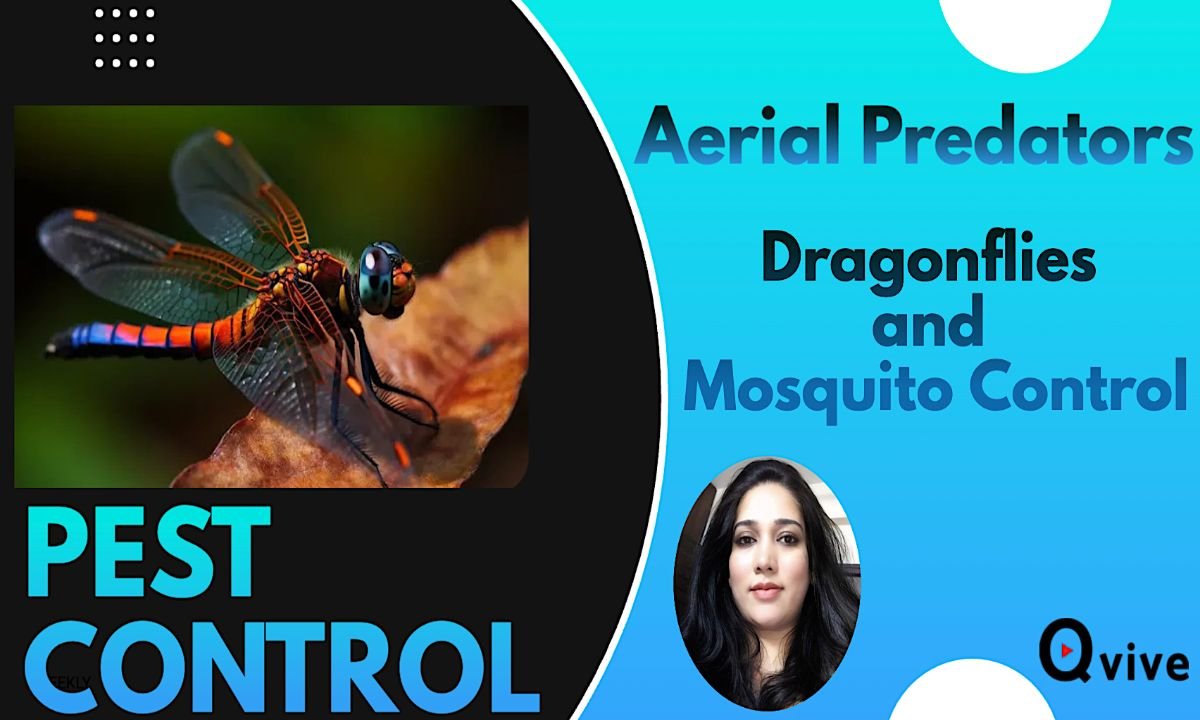
Dragonflies (order Odonata) are among the most efficient aerial predators in the natural world. With a lineage stretching back over 300 million years, these insects have evolved into highly specialized hunters, capable of maneuvering with a precision that few other creatures can match. Their predatory prowess is evident throughout their life cycle: as aquatic nymphs, they consume mosquito larvae in ponds and wetlands, and as adults, they capture flying mosquitoes mid-air.
Both adult dragonflies and their aquatic larvae (nymphs) are strict carnivores. They are highly efficient predators that sustain themselves by hunting other insects, such as mosquitoes, flies, and midges.
What They Eat
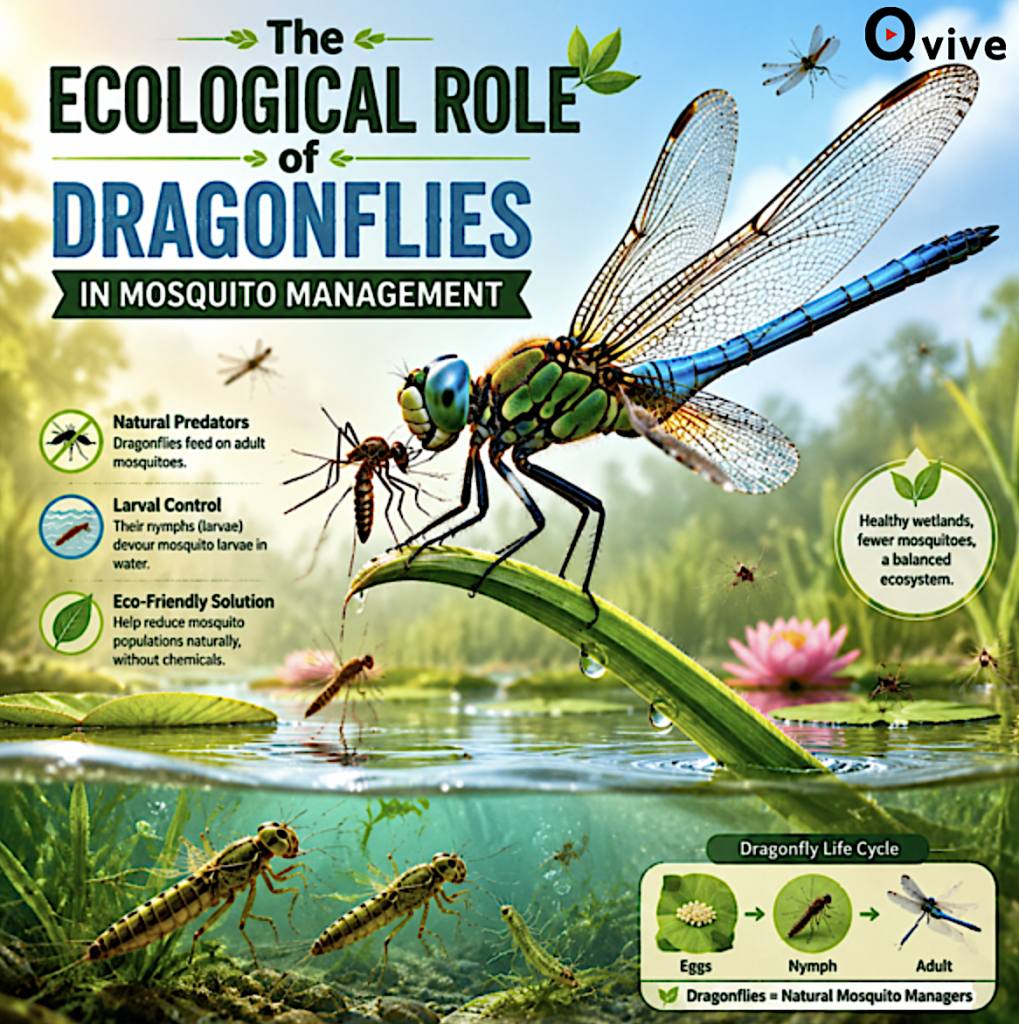
- Adults: Catch and eat flying insects in midair. Their diet includes mosquitoes, flies, gnats, and sometimes even butterflies and smaller dragonflies.
- Nymphs: Aquatic nymphs hunt while submerged, eating small aquatic life such as mosquito larvae, tadpoles, and even small fish.
How They Use Plants
While they do not eat vegetation, plants play a vital role in a dragonfly’s life cycle:
- Perching: Adults use sturdy plants, tall reeds, and branches as resting spots to survey their territory and hunt.
- Egg Laying: Many female dragonflies lay their eggs on or inside aquatic plants.
- Cover: Nymphs use submerged water plants to hide from predators.
The predatory efficiency of the dragonfly is supported by remarkable biological adaptations. Adult dragonflies are capable of flying at speeds significantly higher than their prey, and their hunting success rate in controlled environments has been observed to be as high as 90 to 95 percent. Because they are obligate aerial hunters—meaning they must capture prey while in flight to sustain their high metabolic demands—they have developed exceptional visual acuity and flight control, allowing them to hover, fly backward, and execute rapid turns.
A single dragonfly nymph can consume approximately 40 mosquito larvae per day under laboratory conditions, the sheer scale of mosquito reproduction in natural environments often outpaces the predatory capacity of local dragonfly populations. In regions with high mosquito density, such as the Florida wetlands, the number of larvae can reach into the billions per acre, far exceeding the consumption rates of the resident dragonfly population.
Dragonflies are best viewed as vital components of a healthy, biodiverse ecosystem. Their presence serves as an indicator of aquatic health, and they function as natural partners in integrated pest management strategies rather than a standalone solution for human-scale mosquito control.
The Life Cycle Breakdown
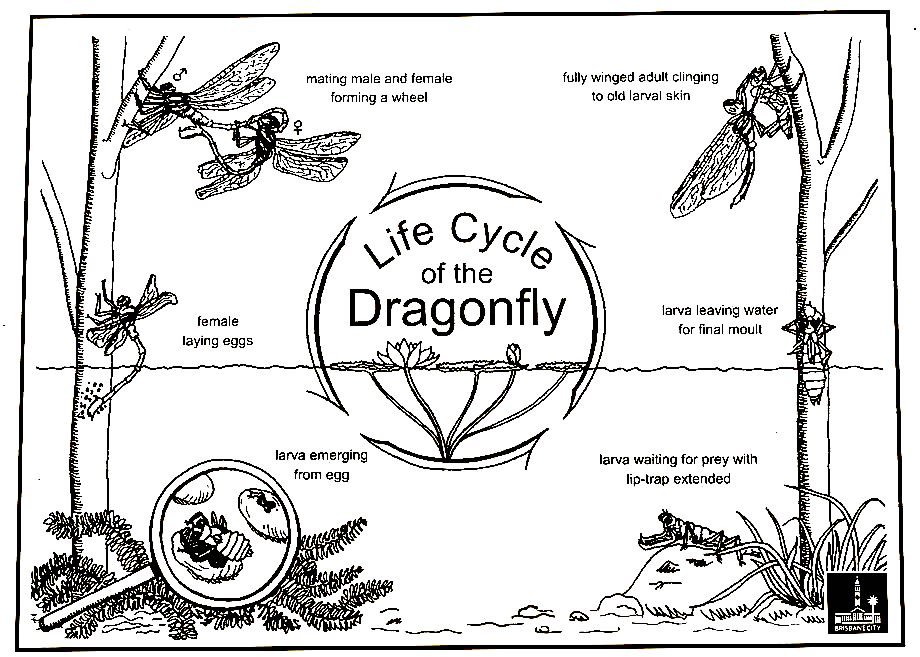
A dragonfly’s life unfolds in three distinct stages:
- Egg Stage (1 to 3 weeks): Adult females lay eggs on or near water sources, such as ponds, streams, or wetlands.
- Nymph Stage (6 months to 5 years): After hatching, the water-bound nymph (or naiad) hunts aquatic insects. The nymph may molt (shed its exoskeleton) up to 15 times as it grows. This stage dictates the vast majority of the dragonfly’s lifespan.
- Adult Stage (1 to 8 weeks): Once fully developed, the nymph crawls out of the water, sheds its shell, and takes flight as an adult. During this final stage, their primary focus is hunting, mating, and laying eggs.
Mosquito-Free Places
- Coorg (Karnataka, India): Located a short drive from Bengaluru (5-6 hours), the lush, green hills of Coorg are famously known for wandering glider dragonflies. Thanks to the clean air, high altitude, and abundant freshwater bodies, this region naturally regulates mosquito populations.
- Iceland: If you are looking for an entire country completely free of mosquitoes, Iceland is the only one in the world. While not heavily populated by dragonflies (due to its cold climate), the lack of mosquitoes makes it the ultimate bite-free destination.
- The Azores (Portugal): These remote Atlantic islands are known for their pristine microclimates and an abundance of dragonflies near their crater lakes, heavily suppressing mosquito populations.
How to Attract Dragonflies to Your Yard
You don’t always have to travel to find these insect hunters. You can organically cultivate a mosquito-free zone in your own local environment by making your yard dragonfly-friendly: ‘
- Build a Water Feature: Add a small garden pond or a deep birdbath. Dragonflies need still or slow-moving water to hunt, breed, and lay eggs.
- Add Perches: Place tall, thin objects like bamboo stakes or decorative rocks around the water so dragonflies can rest and sunbathe while looking for prey.
- Plant Vegetation: Grow water lilies, cattails, or native grasses. This provides necessary shelter for dragonfly nymphs.
- Stop Using Pesticides: Broad-spectrum sprays kill the small insects that dragonflies eat, driving them away from your property.
Plants to Attract Dragonflies and Keeps Mosquitoes Away
- Giant Coneflower:
- Features bright yellow petals and sturdy blooms.
- Thrives in full sun and well-drained soil, perfect for sunny borders or near water.
- Joe-Pye Weed:
- Tall plant (3-7 feet) with light-purple flower clusters that bloom in midsummer.
- Prefers moist, sunny locations and requires minimal care once established.
- Meadow Sage:
- Known for its vertical spikes of purple-blue flowers; contains oils that repel pests.
- Thrives in sunny spots and is low-maintenance.
- Cattail:
- Classic pond plant providing shelter for dragonflies; prefers shallow water.
- Regular trimming helps control its spread.
- Sweet Coneflower:
- Cheerful yellow daisy-like flowers that attract dragonflies while providing habitat.
- Grows well in sunny areas with moderately moist soil.
- Borage:
- Star-shaped blue flowers that can be used in salads.
- Attracts dragonflies and self-seeds for future growth.
- Water Horsetail:
- Miniature bamboo-like plant thriving in wet areas; suitable for pond edges.
- Very low-maintenance and visually appealing.
- Black-Eyed Susan:
- Features golden-yellow petals that serve as resting pads for dragonflies.
- Thrives in sunlight and adapts to various soil types.
- Wild Celery:
- Submerged aquatic plant vital for dragonfly life cycles.
- Helps oxygenate water, supporting pond ecosystems.
- Water Lily:
- Elegant floating plant with colorful blooms ideal for ponds.
- Offers resting pads for dragonflies.
- Arrowhead:
- Arrow-shaped leaves and delicate flowers; provides perches and nesting spots.
- Grows well in ponds and is easy to maintain.
- Yarrow:
- Hardy flower attracting beneficial insects and dragonflies.
- Thrives in poor soil and full sun with minimal care needed.
- Swamp Milkweed:
- Produces pink to purple flowers, attracting both dragonflies and butterflies.
- Grows in moist soil and is beneficial for monarch caterpillars.
- Blue Flag Iris:
- Grows near water edges and offers upright foliage for dragonfly shelter.
- Prefers full sun and consistently moist soil.
- Pickerelweed:
- Aquatic perennial with stunning violet-blue flowers.
- Thrives in shallow water and requires full sun to flourish.
Also Read: