

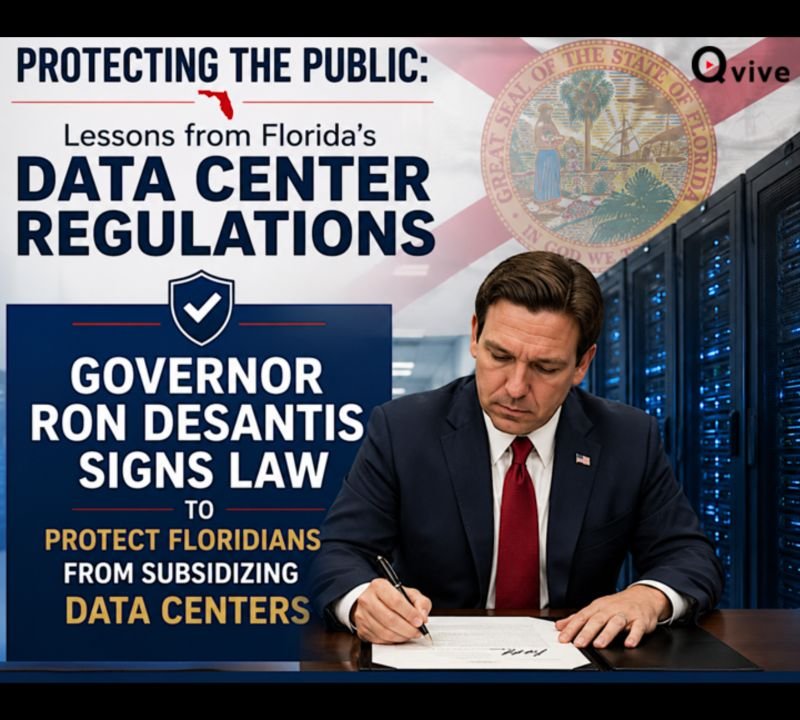
The rapid expansion of artificial intelligence (AI) has necessitated the construction of massive “hyperscale” data centers, facilities that consume staggering amounts of electricity and water. In response to concerns regarding the financial burden placed on residential ratepayers and the strain on natural resources, Florida Governor Ron DeSantis signed Senate Bill 484 (SB 484) into law on May 7, 2026. This legislation establishes a “pay-to-play” model, requiring that large-scale data centers—defined as those consuming at least 50 megawatts of peak demand—bear the full cost of their own infrastructure, including grid upgrades and power generation. By mandating that these costs are not shifted to the general body of ratepayers, the law seeks to prevent individual Floridians from subsidizing the energy-intensive operations of the world’s wealthiest technology companies.
Beyond financial protections, the law addresses the environmental impact of these facilities. Data centers require significant water for cooling, often drawing from groundwater supplies that are already under stress.
B 484 mandates that facilities prioritize the use of reclaimed water and requires rigorous permitting to ensure that water usage does not harm local resources. Furthermore, the law preserves the authority of local governments to regulate land use, ensuring that communities have a voice in whether such massive developments align with their local character.
A Blueprint for Global Governance: Recommendations for India
As India accelerates its digital transformation and AI infrastructure, it faces similar challenges regarding energy grid stability, water scarcity, and the environmental footprint of data centers. To protect citizens, data, and privacy, the Indian government could consider adopting a framework similar to Florida’s SB 484, focusing on the following steps:
- Mandatory Cost-Recovery Tariffs: Implement regulations ensuring that hyperscale data centers pay the full cost of grid expansion and electricity generation, preventing utility companies from passing these capital expenses to residential consumers.
- Water Resource Protection: Establish strict consumptive-use permits that prioritize the use of reclaimed or recycled water for cooling, preventing the depletion of local aquifers and potable water supplies.
- Transparency and Public Oversight: Require that all utility impact studies and water usage plans be subject to public comment periods, ensuring that citizens are informed of the potential impacts on their local environment and utility rates.
- Data Sovereignty and Privacy: Strengthen regulations regarding non-disclosure agreements (NDAs) between local governments and tech companies to ensure that development proposals are transparent and subject to public scrutiny.
- Environmental Impact Audits: Conduct independent, site-specific reviews that account for the “heat island” effect and the carbon footprint of these facilities, ensuring they meet national sustainability standards.
🚨 Data centers are TAKING OVER. 🚨
— Children’s Health Defense (@ChildrensHD) May 21, 2026
Big AI is destroying Georgia communities to power massive data centers that residents never asked for.
“330 property owners are being impacted.”
“21 homes are being completely demolished.”
“The power lines are gonna be like 12 feet from… pic.twitter.com/U1ssPzBFq8
The Environmental and Health Impacts of AI Infrastructure
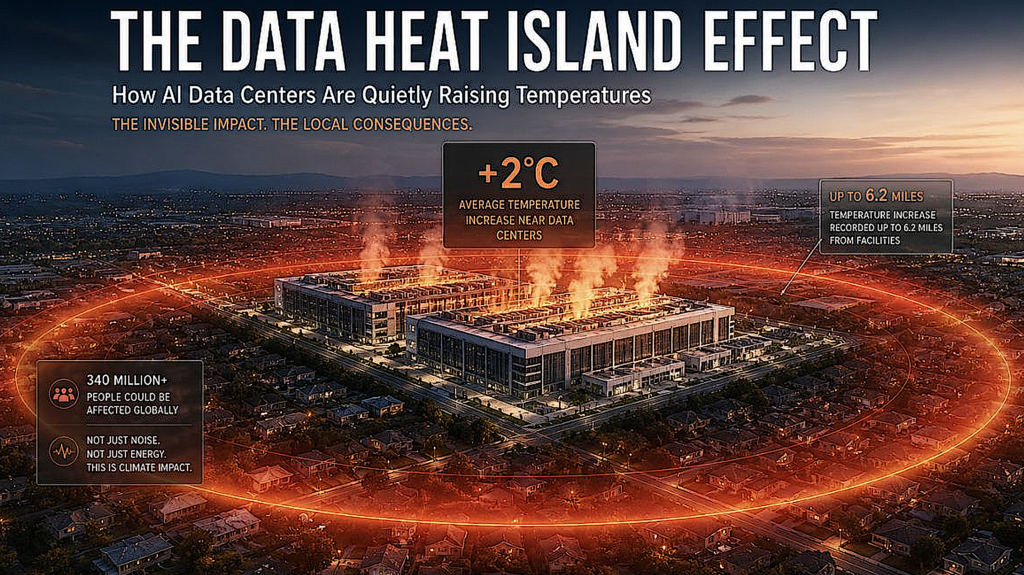
The proliferation of AI data centers is not merely an economic issue; it is a significant environmental and public health concern. The massive heat output from thousands of servers, combined with the energy required for cooling, contributes to localized temperature increases, often referred to as the “urban heat island” effect. This rise in temperature can exacerbate respiratory and cardiovascular health issues among local populations, particularly in densely populated regions. Furthermore, the high energy demand often necessitates the continued reliance on fossil-fuel-based power generation, which accelerates climate change and contributes to extreme weather events.
Governor Ron DeSantis’ Signing of SB 484

GOVERNOR RON DESANTIS SIGNS LAW TO PROTECT FLORIDIANS FROM SUBSIDIZING DATA CENTERS
May 7 2026
LAKELAND, Fla. —Today, Governor Ron DeSantis signed SB 484, which protects ratepayers, the environment, and local communities from harm caused by hyperscale data centers.
“Today in Lakeland, I signed legislation to protect our citizens and communities from hyperscale data centers. These are much-needed protections for taxpayers and our natural resources,” said Governor Ron DeSantis. “SB 484 ensures that local governments maintain the authority to reject data center development in their communities, prevents data center costs from being passed on to consumers, including electricity costs, and protects Florida’s water resources from data center consumption.”
Governor Ron DeSantis signed SB 484. The bill:
- Protects Ratepayers
- Prohibits utilities from passing data center costs, including electricity costs, onto residential and small business customers.
- Requires large-scale users to pay their full cost of service.
- Prevents financial risk from being shifted to the public.
- Empowers Local Communities
- Preserves local authority over zoning, permitting, and land use.
- Allows communities to set stricter standards or deny projects.
- Ensures data centers are properly classified and regulated.
- Increases Transparency and Security
- Requires public disclosure of data center development deals after the exemption period.
- Establishes clear definitions in law to prevent loopholes.
- Prohibits utilities from serving data centers owned or controlled by foreign countries of concern.
- Strengthens Infrastructure and Environmental Standards
- Creates a dedicated permitting process for large-scale data centers.
- Allows use of reclaimed water as part of permitting.
- Requires major modifications to be treated as new applications.
AOC: This is what drinking water in Georgia looks like after Meta began data center construction in the community. pic.twitter.com/oXk11U46ja
— Acyn (@Acyn) May 21, 2026
It's time to realize we are at a major turning point. They are systematically destroying our oil refineries, our food sources, our water, our air, and our communities while building massive digital prisons for us all. If people don't stand up and fight now it will be to late. pic.twitter.com/ZAusvscp9Y
— The Architect. (@TheMarcitect) May 21, 2026
Ref:https://www.flgov.com/eog/news/press/2026/governor-ron-desantis-signs-law-protect-floridians-subsidizing-data-centers
Also Read: