

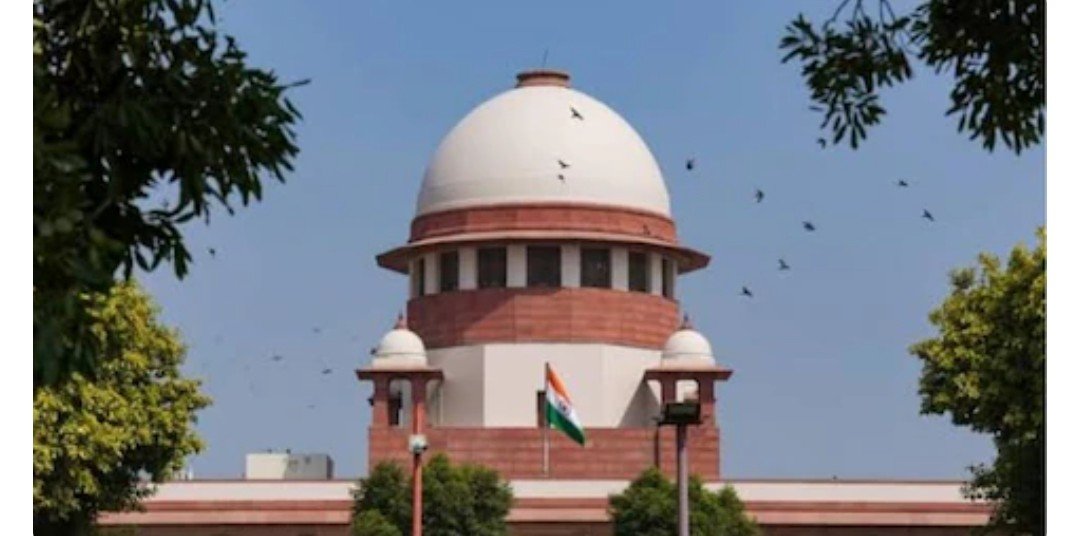
On Thursday (July 30), the Supreme Court made a significant observation regarding the appointment process for the country’s Chief Election Commissioner (CEC) and Election Commissioners (EC). The court stated that it is not enough for a constitutional body like the Election Commission to function independently; the public must also have confidence that it is completely impartial and independent.
During the hearing on this issue, the Supreme Court asked the Central Government why the decision was made to exclude the Chief Justice of India (CJI) from the selection committee when Parliament enacted the new law. A bench of Justices Dipankar Datta and Satish Chandra Sharma stated during the hearing that the Chief Justice plays a role in the selection process for important positions such as the CBI Director and the Lokpal. Therefore, what is the rationale behind excluding the CJI from the selection process for one of the most important institutions of democracy, the Election Commission?
The Supreme Court reserved its decision on the Central Government’s request to refer the matter to a larger Constitutional Bench. The Supreme Court is currently hearing a petition challenging the constitutional validity of the Chief Election Commissioner and Other Election Commissioners (Appointment, Conditions of Service and Tenure) Act, 2023. Under this law, the President appoints Election Commissioners on the recommendation of a selection committee. This committee consists of the Prime Minister, the Leader of the Opposition in the Lok Sabha, and a Union Cabinet Minister nominated by the Prime Minister.
The petitioners argue that this arrangement could compromise the Election Commission’s independence.
Earlier, while hearing this matter in 2023, a five-member Constitutional Bench of the Supreme Court had granted an interim order, stating that until Parliament enacts a new law, the Chief Election Commissioner and Election Commissioners should be appointed by a committee comprising the Prime Minister, the Chief Justice of India, and the Leader of the Opposition in the Lok Sabha.
The Supreme Court’s objective was to make the appointment process more independent and impartial. However, Parliament later passed a new law, replacing the CJI with a Union Cabinet Minister on the selection committee.
Solicitor General Tushar Mehta told the court that it cannot be assumed that the Prime Minister will act against democratic values. He said that the post of Prime Minister has its own dignity and credibility, and the people should have confidence in his decisions. Mehta questioned that if every decision of the Prime Minister is subject to doubt, should there be a provision for consulting a former judge or an outsider in the formation of the Cabinet? He also said that simply because the government has a majority, it cannot be assumed that it will take decisions against the Constitution or with malice.
The bench clarified that it was not expressing distrust in the Prime Minister, but it said that it was equally important for the post of Election Commissioner to appear completely independent. The judge said, “Just as justice should not only be done but should also be seen to be done, the impartiality of the Election Commission should also be visible to the public.” During the hearing, the court also asked how many ministers in the government have pending criminal cases against them. The court reminded the court that it had expressed confidence in the elected government that it would not appoint people with serious criminal cases as ministers.
Attorney General R. Venkataramani and Solicitor General Tushar Mehta told the court that the judiciary does not have jurisdiction to question the wisdom of Parliament’s legislative decisions. They argued that the model chosen by Parliament cannot be declared unconstitutional simply because another model was possible.
The government also argued that the executive, legislature, and judiciary are independent constitutional institutions and that their independence should be equally respected.
The Central Government demanded that the matter be referred to a Constitution Bench, arguing that it involved important constitutional questions. However, senior advocates D. Seshadri Naidu, Gopal Sankaranarayanan, Prashant Bhushan, and Sanjay Parikh opposed this motion. They argued that the government had raised this demand after nearly 20 days of hearings had concluded, and therefore, it should not be accepted now.
In its affidavit, the government stated that simply replacing the CJI with a Cabinet Minister on the selection committee does not impact the Election Commission’s independence. The Central Government stated that for over seven decades, the appointment of Election Commissioners has been primarily through the executive, yet free and fair elections have consistently been held in the country. The government also stated that the fear that vesting the executive with the power to appoint would automatically lead to the Election Commission losing its independence is merely hypothetical.
The decision in this case is considered extremely important for the country’s electoral system and the independence of constitutional institutions. Now it remains to be seen whether the Supreme Court agrees with the Centre’s arguments or feels the need for greater institutional balance in the process of appointment of Election Commissioners.