

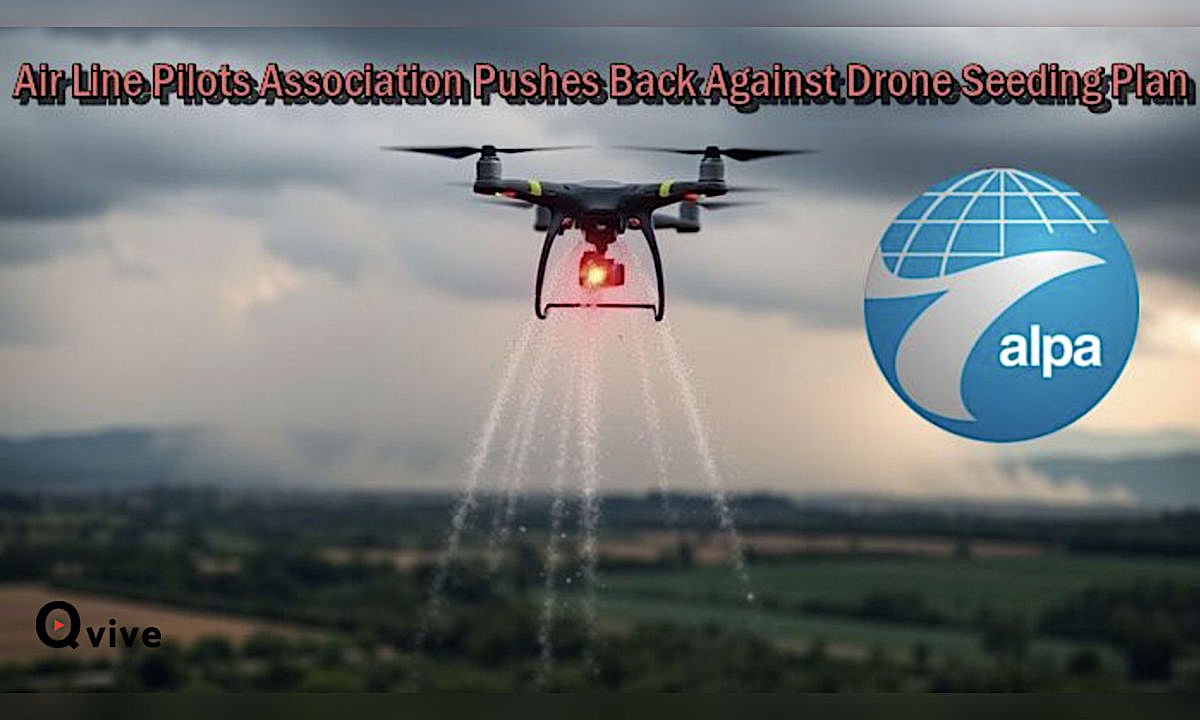
Yes! A new battle is brewing in the skies! The Air Line Pilots Association (ALPA) is urging the FAA to reject a controversial drone cloud-seeding plan by startup Rainmaker. The concern? Aviation safety risks, including potential mid-air collisions with commercial flights at up to 15,000 feet, and the dangers of hazardous precipitation-inducing flares. Get the full story on why pilots are sounding the alarm!
The Air Line Pilots Association (ALPA) has urged the Federal Aviation Administration (FAA) to reject Rainmaker Technology’s proposal to use small drones for cloud seeding due to concerns over “extreme safety risks.” ALPA’s primary concerns revolve around the potential for mid-air collisions between these drones and manned aircraft, particularly in uncontrolled airspace or during critical phases of flight near airports. They argue that the current regulatory framework for drone operations is insufficient to safely integrate a large number of cloud-seeding drones into the national airspace system, especially given the proposed operational altitudes and areas that could overlap with traditional flight paths. ALPA also highlights the lack of robust detect-and-avoid technology on small drones, which could lead to catastrophic consequences if a collision were to occur.
Furthermore, ALPA has expressed apprehension regarding the potential for electromagnetic interference from drone operations affecting aircraft navigation and communication systems. They emphasize the need for comprehensive studies and rigorous testing to ensure that such operations do not compromise the safety and integrity of existing air traffic control and aircraft systems. The union advocates for a more cautious and phased approach to integrating new technologies like drone-based cloud seeding, prioritizing safety above all else, and ensuring that any new operations are thoroughly vetted and regulated before widespread implementation.
Electromagnetic Interference (EMI) from drone operations can significantly affect aircraft navigation and communication systems due to the pervasive nature of electromagnetic fields and the sensitivity of aviation electronics. Drones themselves are susceptible to EMI, which can lead to unpredictable behavior, including compass misalignment, degraded GPS reception, and disrupted communication with controllers. Conversely, the electromagnetic emissions from drones can also pose a risk to other aircraft.
The impact of EMI from drone operations on aircraft navigation and communication systems is a critical concern, particularly with the increasing integration of Unmanned Aerial Vehicles (UAVs) into shared airspace. EMI refers to the disturbance of an electronic system caused by an external electromagnetic field, which can degrade performance, cause malfunctions, data loss, or signal disruption
How EMI from Drones Affects Aircraft Systems
- Disruption of Communication Systems: Drones, like all electronic devices, emit electromagnetic radiation. When these emissions overlap with the frequency bands used by aircraft communication systems, they can cause interference. This can lead to static, dropped signals, or complete loss of communication between pilots and air traffic control, which is critical for safe flight operations. Aircraft communication systems operate on specific radio frequencies, and extraneous signals from drones can introduce noise, making it difficult to discern legitimate transmissions.
- Interference with Navigation Systems (GPS and other GNSS): Aircraft rely heavily on the Global Positioning System (GPS) and other Global Navigation Satellite Systems (GNSS) for accurate navigation and positioning. GPS signals are relatively weak and can be easily disrupted by EMI. If a drone’s electromagnetic emissions interfere with these signals, it can lead to:
- Positional Accuracy Loss: The aircraft’s navigation system might receive corrupted or inaccurate GPS data, causing it to miscalculate its position, speed, or altitude.
- GPS Lock Loss: In severe cases, the EMI can cause the aircraft’s GPS receiver to lose its lock on satellite signals entirely, leading to a complete loss of GPS-based navigation capabilities.
- Compass and IMU Instability: Drones themselves experience compass and Inertial Measurement Unit (IMU) instability due to EMI. Similarly, aircraft compasses and IMUs, which are crucial for orientation and attitude, can be affected by strong external electromagnetic fields, leading to erroneous readings.
- Impact on Avionics and Other Critical Equipment: Modern aircraft are equipped with a vast array of avionics, including flight control systems, radar, and various sensors, all of which are susceptible to EMI. EMI from drones can:
- Degrade Sensor Performance: Sensors used for collision avoidance, weather detection, and other critical functions can provide inaccurate readings or fail altogether if exposed to significant EMI.
- Affect Computer-Controlled Mechanical Systems: The complex computer-controlled mechanical systems within an aircraft, such as those for engine management or flight surface control, could potentially be affected by severe EMI, though aircraft are designed with robust shielding.
Mitigation Strategies and Standards
To address these concerns, the aerospace and aviation industries, along with regulatory bodies, implement stringent standards and mitigation techniques:
- Regulatory Standards: Organizations like the Federal Aviation Administration (FAA) in the U.S. and the European Union Aviation Safety Agency (EASA) establish regulations for drone operations, including restrictions on flight locations and heights, to minimize interference with manned aircraft. Military standards, such as MIL-STD-461, are also in place for defense drones to ensure resistance against EMI.
- Aircraft Shielding and Filtering: Manned aircraft are designed with multiple layers of EMI/EMC protection, from individual Line Replaceable Units (LRUs) to the overall fuselage. This includes:
- EMI Filters: These are crucial components that block interference and protect signal integrity in power systems, avionics, communication systems, and radar equipment. Captor Corporation, for example, provides various EMI filter designs, including DC, single-phase AC, three-phase AC, HEMP/EMP, and TEMPEST EMI filters, which meet commercial aircraft industry and military specifications like RTCA DO-160 and MIL-STD-461.
- Shielding Materials: Aircraft fuselages often incorporate lightweight metals or thin aluminum foil to prevent EMI damage. Conductive elastomers, coatings, and specialized plastics are also used in various components to provide EMI shielding.
- Frequency Management: Careful management of radio frequencies used by drones and aircraft helps prevent overlap and interference. Drone operators can mitigate EMI by choosing to operate in less crowded frequency bands.
- Pre-Flight Assessments and Monitoring: Before flying in potentially EMI-heavy environments, operators can conduct electromagnetic field analysis to identify areas with strong interference. Some advanced drone systems are equipped with real-time interference detection to alert operators.
The continuous growth of the drone market, projected at a compound annual growth rate (CAGR) of 20% from 2020 to 2030, underscores the increasing need for robust EMI shielding and management solutions to ensure the safety and reliability of both drone and manned aircraft operations.
A Closer Look at the Civil Drone (Promotion and Regulation) Bill 2025 Proposed in India
September 16, 2025: The bill was drafted and presented by Manoj Kumar Yadav is an Under Secretary (US(MKY)) at the Ministry of Civil Aviation.
The Civil Drone (Promotion and Regulation) Bill, 2025, is a legislative measure designed to govern the use and management of Unmanned Aircraft Systems (UAS), commonly known as drones, within India.
The bill does not apply to drones utilized by military or armed forces, nor does it cover drones weighing more than 500 kg.
- What is the Bill?
The Bill aims to provide a structured framework for both promoting and regulating drones in India. It applies to all individuals and entities involved in the drone industry, including manufacturers, operators, and users, regardless of their nationality. - Who does it apply to?
- Indian citizens and foreign nationals.
- Anyone operating or owning drones in India or involved in related activities, like manufacturing or importing drones.
- Who is exempt?
The act explicitly does not apply to:
- The unmanned aircraft systems of the naval, military, air force, central armed police forces, or other armed forces of India, unless they are registered as prescribed (Section 2(2)).
- Unmanned aircraft systems with an all-up weight exceeding 500 kilograms. Such heavy drones are governed by separate laws under the Bharatiya Vayuyan Adhiniyam, 2024 (Section 2(3)).
Understanding some key terms is important:
- Drone: An unmanned aircraft that can be operated remotely or autonomously (weighing less than 500 kg).
- Remote Pilot: The individual who controls the drone remotely.
- Airspace Zones:
- Green Zone: Safe airspace for drone operations.
- Red and Yellow Zones: Restricted areas where drone operations require special permissions.
- Regulatory Authority: The Directorate General of Civil Aviation (DGCA) will oversee enforcement and regulatory functions.
- Registration and Compliance: UAS must be registered and possess a Unique Identification Number (UIN); operating without valid insurance is prohibited.
- Liability and Compensation: The Bill stipulates compensation for accidents caused by UAS, with fixed amounts for death or grievous injury.
- Safety Regulations: Mandatory safety and security features must be incorporated in all UAS, with penalties for non-compliance.
- Airspace Management: The Bill delineates airspace zones (red, yellow, green) where varying regulations apply, mandating prior permissions for operations in restricted areas.
- Penalties: Violations of the Bill’s provisions can lead to significant fines and imprisonment, emphasizing the importance of adherence for all stakeholders.
Dr. Narasimha Reddy Donthi, Public Policy Expert and Climate Change Campaigner, Enhancing Safety and Regulation in India’s Drone Bill of 2025
Comments on The Civil Drone (Promotion and Regulation) Bill, 2025 in India
Date: September 28, 2025
From: Dr. Narasimha Reddy Donthi, Public Policy Expert and Climate Change Campaigner
To: Shri Manoj Kumar Yadav, Under Secretary to the Government, Ministry of Civil Aviation

Dr. Narasimha Reddy Donthi addresses the need for extensive discourse and adaptation of the Civil Drone (Promotion and Regulation) Bill, 2025. The focus is on enhancing safety measures, ensuring national security, addressing environmental concerns, and providing social protections regarding drone usage in India.
Regulatory Framework
- Decentralization Needed: The proposed regulatory approach is currently too concentrated in Delhi. A decentralized framework that includes community involvement is crucial for effective implementation. The integration of local and state governments is necessary for oversight, enforcement, and public awareness.
- Enhanced Monitoring: A nationwide drone monitoring system through drone-recognizing radar technology should be established. All drones must ideally transmit location and identification data during flights to enhance security and traceability.
- Visible Grievance Mechanism: A transparent mechanism for citizens to report issues related to drone activities is essential, alongside establishing grievance redressal channels to address violations such as unauthorized drone photography and privacy infringements.
Liability and Accountability
- Strong Penalties: The Bill must enforce strict penalties for drone-related crimes, particularly those involving hazardous drones that could inflict public harm. The suggested penalties for drone misuse should be comparable to those associated with firearm violations.
- Defined Liability Standards: The document emphasizes the need for clear liability frameworks surrounding drone operations, particularly in cases of accidents or breaches of regulations. Responsibility must be outlined for drone pilots, manufacturers, and companies that utilize drones.
Environmental and Social Considerations
- Environmental Protections: The Bill should restrict drone operations in sensitive ecological areas during critical periods, particularly near protected habitats and during the breeding seasons.
- Expansion of Definitions: The definitions within the Bill need to be broadened to encompass various stakeholders and entities impacted by drone operations, including wildlife and biodiversity. A more straightforward definition of “aircraft” is recommended for clarity.
Technological Integration
- Real-time Identification: As part of legislative improvements, a system akin to color-coded registration for drones is proposed to facilitate quick identification and accountability, thereby easing compliance checks.
- Inclusion of Techno-Legal Tribunals: Establishing specialized tribunals for resolving aviation-related disputes would enhance the legal framework and provide expedited remedies for victims of drone-related incidents.
The draft includes insights from drone regulation practices in other nations:
- USA’s Remote ID Proposal: This mandates real-time location broadcasting for drones, enhancing public safety and facilitating regulation.
- China’s Comprehensive Regulatory Approach: China’s regulations require all drones over 250 grams to be registered with real-name verification, ensuring traceability and compliance.
Dr. Narasimha Reddy Donthi’s comments emphasize the necessity for a robust and thorough regulatory framework for drone operations in India, enriched by technological, environmental, and social considerations. The amendments suggested aim to improve safety, operational accountability, and public trust, addressing both immediate and long-term implications of drone usage.
These recommendations call for the integration of robust technical solutions, community involvement, clearer regulatory definitions, and a dual approach to liability and environmental protection, striving for a balanced relationship between technological advancement and societal security.
Ref:
- ALPA Calls for Rejection of Drone Cloud Seeding Proposal. [ https://www.alpa.org/news-events/news-room/2025/alpa-calls-for-rejection-of-drone-cloud-seeding-proposal ]
- Safety Concerns Mount Over Drone Cloud Seeding. [ https://aviation-safety.net/news/2025/safety-concerns-mount-over-drone-cloud-seeding ]
- EMI Shielding for Drones and UAVs. [ https://www.electronicdesign.com/technologies/power/whitepaper/21179428/electronic-design-emi-shielding-for-drones-and-uavs ]
- Utilizing Advanced Materials to Ensure High Performance and High Reliability for UAVs. [ https://incompliancemag.com/emi-shielding-and-thermal-interface-considerations-for-commercial-and-defense-drone-technology/ ]
- What is EMI (Electromagnetic Interference)? [ https://www.flyeye.io/drone-acronym-emi/ ]
- Flying Your Drone in Urban Areas with Heavy Signal Interference. [ https://pilotinstitute.com/heavy-interference-drones/ ]
- EMI Filters for the Aerospace/Aviation Industry. [ https://www.captorcorp.com/emi-filters-aerospace-aviation-industry/ ]
- How Dangerous is EMI for Drones? [https://www.manifoldrobotics.com/post/how-dangerous-is-emi-for-drones]
- https://sarinlaw.com/wp-content/uploads/2025/09/Draft-Civil-Drone-Promotion-and-Regulation-Bill-2025.pdf
- Comments on Draft Civil Drone (Promotion and Regulation) Bill 2025 – Dr. Narasimha Reddy Donthi
- YouTube
Also Read: