


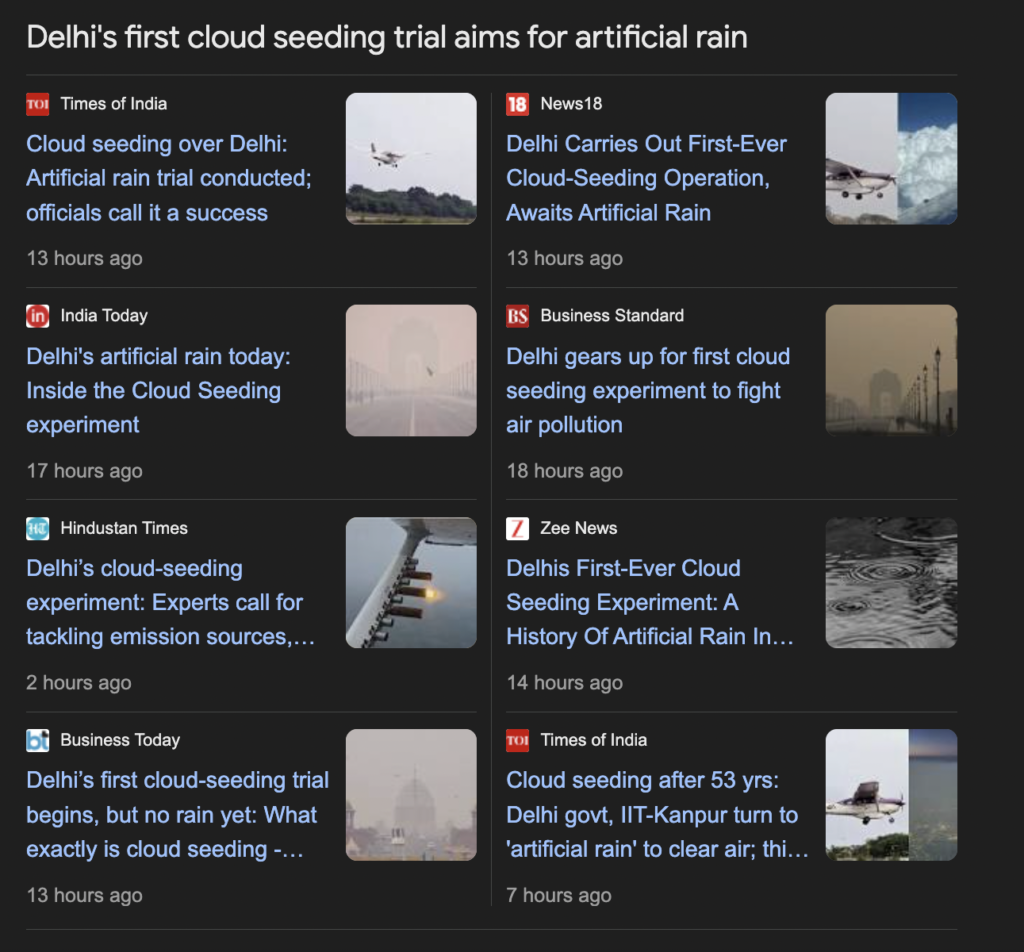
As the Delhi government promotes a seemingly novel cloud seeding initiative to combat air pollution and water scarcity, a collective of concerned scientists, historians, and transparency advocates is calling out what they describe as a deliberate obfuscation of India’s extensive and well-documented history with atmospheric modification experiments. Claims that the current trials are a “first-time” endeavor in Delhi are being strongly refuted, pointing to a significant, decade-long experiment conducted in the very same region from 1957 to 1966.
The Untold Story: Delhi’s First Cloud Seeding Experiment (1957-1966)
Historical records, openly available in scientific literature, confirm that India has been at the forefront of cloud seeding research for over 70 years. The earliest experiments date back to the 1950s, shortly after the technique’s global discovery. S. K. Banerji, the first Director-General of the India Meteorological Department, initiated trials in 1952 using salt and silver iodide. Private entities like the Tata Group also explored cloud seeding in the Western Ghats during this period.
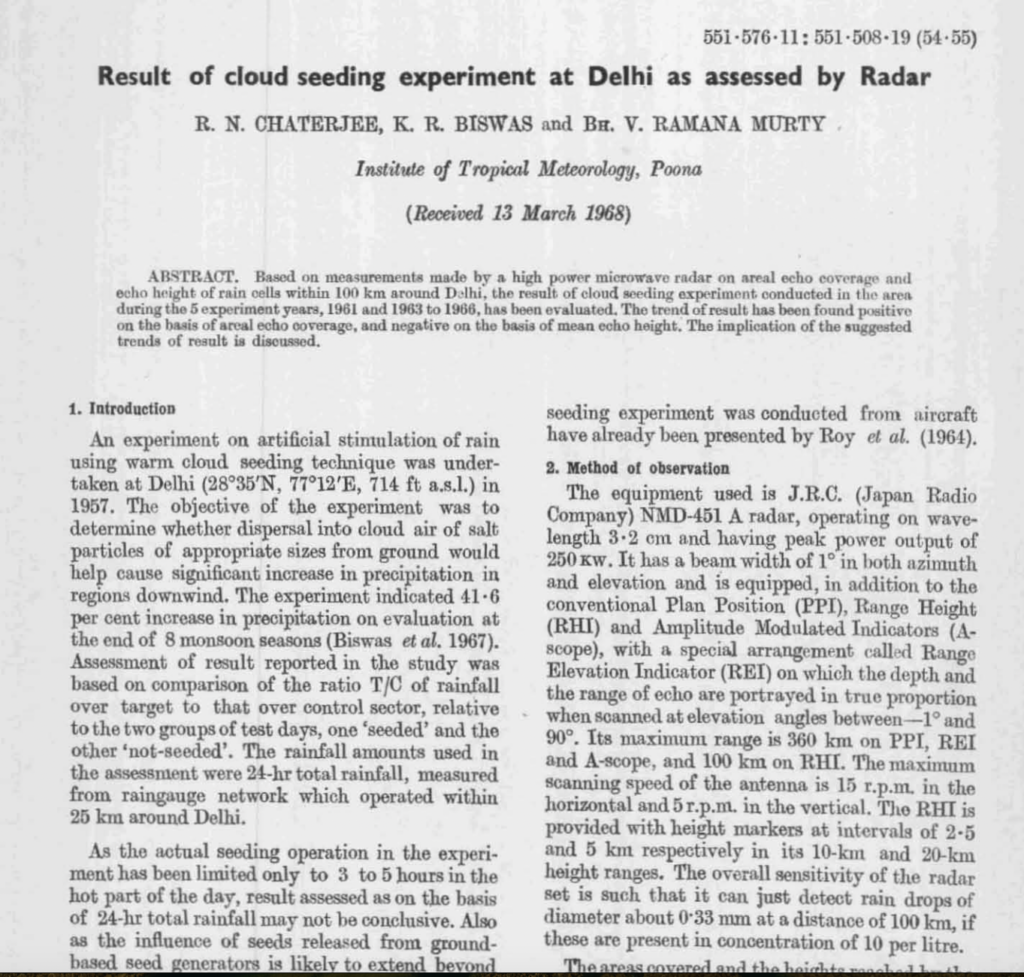
The Delhi Experiment, conducted between 1957 and 1966, represents a significant exploration into the impact of warm cloud seeding on precipitation in the northwest Indian regions of Delhi, Agra, and Jaipur. The research focused on the summer monsoon months (July to September) when the predominant cloud types were cumulus and stratocumulus, characterized by their tops remaining below the freezing level.
How it Was Done: A Glimpse into Early Methodology
- Control-Target Design: A fixed control-target design with day randomization was utilized. This structure allowed for systematic comparisons between seeded (target) and non-seeded (control) conditions.
- Geographic Scope: Target and control areas varied from 450 to 1270 km², with rain gauge densities ranging from 1 per 50 km² to 1 per 300 km².
- Seeding Techniques:
- Seeding was performed by spraying a dilute salt solution using advanced ground-based power sprayers or by dusting a mixture of salt and soapstone (10:1 ratio).
- The radius of the salt particles was approximately 5 µm, with an estimated dispersal rate of about 2 x 10¹⁰ particles per second at the source.
Meteorological Criteria for Seeding
Seeding days were selectively chosen based on specific meteorological conditions, including:
- Low cloud amounts
- Adequate wind shear
- Sufficient humidity in the lower atmosphere.
Rainy days were excluded from consideration, mitigating the likelihood that rainfall in either area stemmed from tall convective clouds influenced by ice-phase processes.
Subsequent analysis of 7287 aircraft reports from 1948-1951 demonstrated that over 90% of low cloud tops were below the freezing level in India, lending further credence to the experiment’s framework and hypothesis.
Key Findings
- Statistical analysis revealed an average increase in rainfall of approximately 20% on seeded days, with significance at a p-value of less than 0.5%.
- Radar observations conducted in the latter stage of the experiment (1961-65) further supported these findings, showing positive changes in precipitation patterns associated with seeding.
Challenges and Critiques
It’s crucial to acknowledge that, like many pioneering scientific endeavors, the Delhi experiment faced its share of limitations and methodological criticisms. Leading atmospheric scientists of the time, such as Mason (1971), Warner (1973), and Cotton (1982), discussed concerns including:
- The use of ground-based generators for seeding.
- A perceived lack of conclusive physical evidence to fully support the hypothesis that precipitation from warm clouds could be increased through salt seeding, despite the strong statistical correlation. Warner, in particular, argued that the results were ambiguous due to this absence of detailed physical corroboration. other
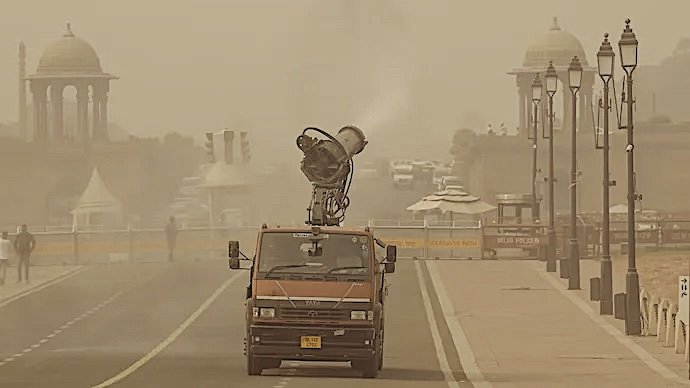
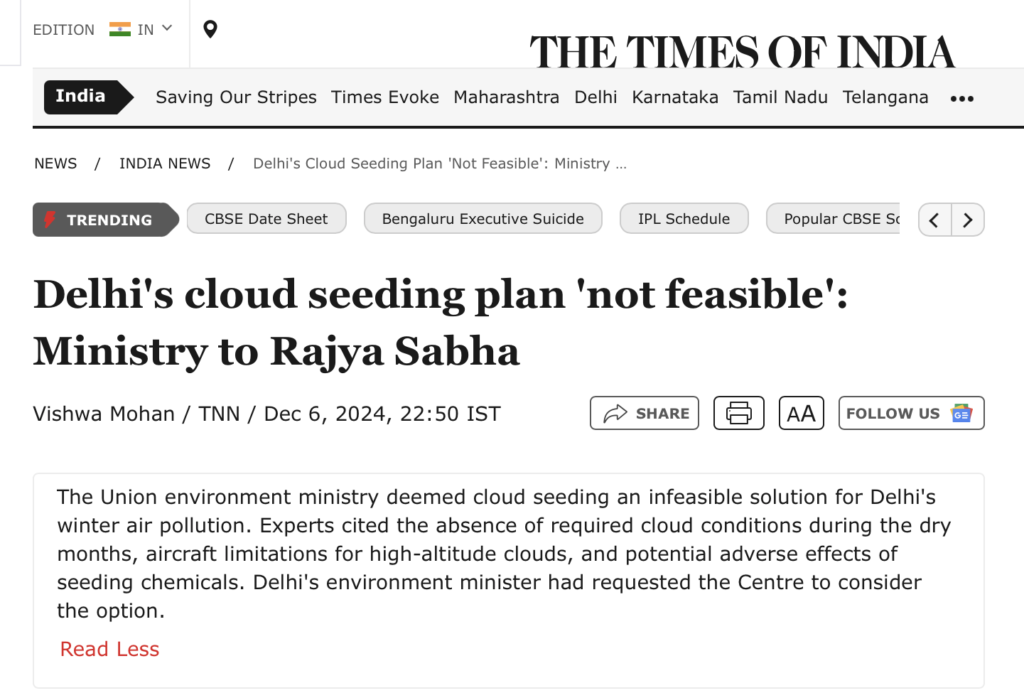
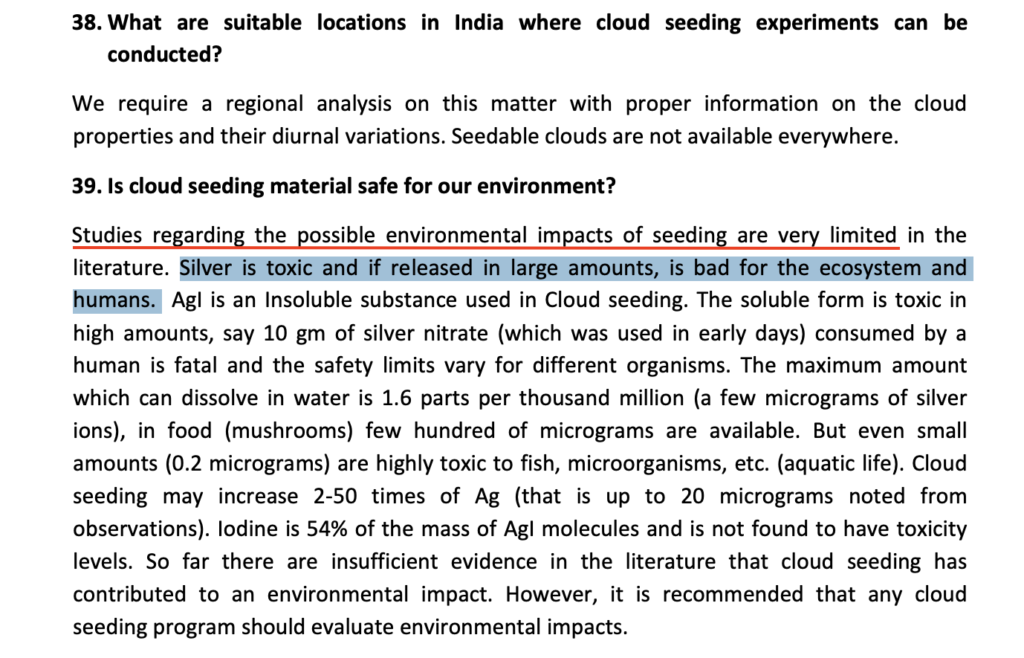
Promoted as a way to ”reduce pollution”, Delhi’s artificial rain-making project is actually attempting to combat pollution by introducing chemical pollutants. Importantly, in December 2024, the cloud seeding initiative was rejected because of concerns about the “uncertainties, efficacy, and potential adverse effects of the chemicals.”
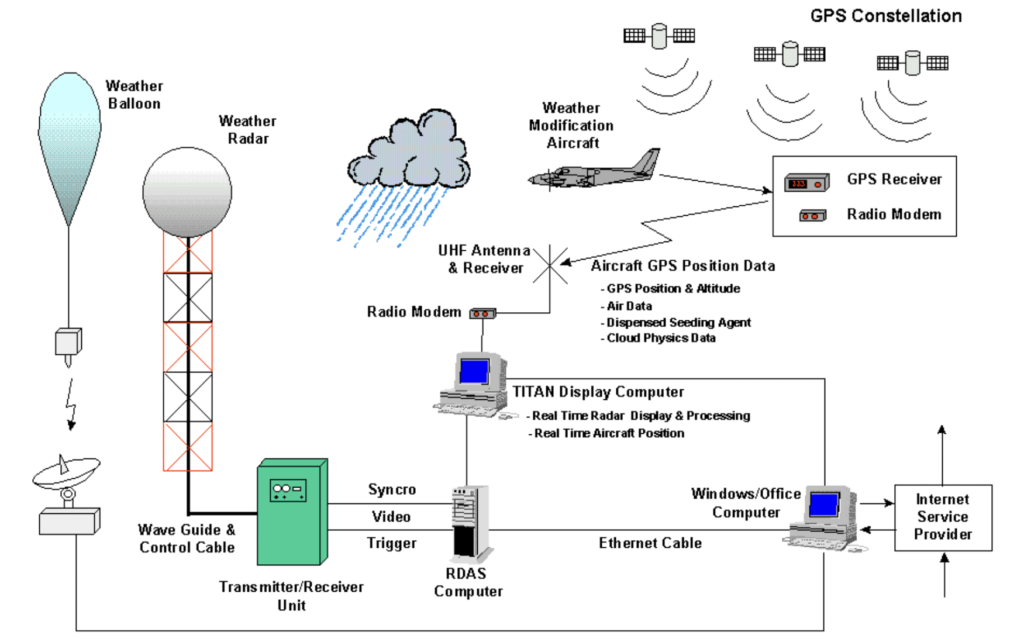
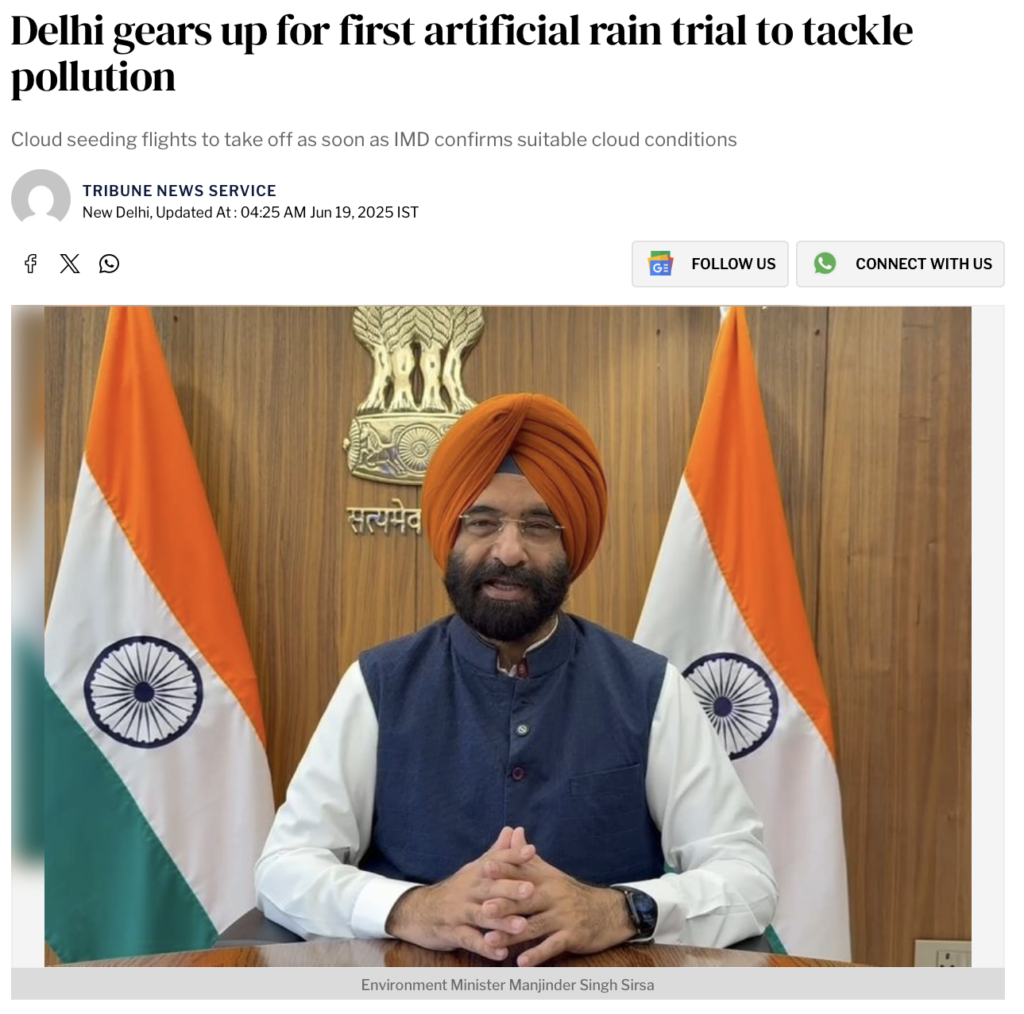
Cloud seeding agents are identified as “a scientifically formulated combination of silver iodide nanoparticles, iodized salt, and rock salt,” deployed using Cessna aircraft. Delhi Environment Minister Manjinder Singh Sirsa is a leading proponent of the plan. He said of the project, “We are not just fighting pollution — we are building a blueprint for the future. This is a national-first experiment rooted in science, executed with military-grade precision and evaluated in real time.” “From anti-smog guns and road sprinkling to now artificial rain — we are literally pushing the skies to deliver clean air for our people,” he added.
Second Major Experiment (Poona Experiment, 1962–1967)
The second major randomized warm cloud seeding experiment in India, often called the Poona Experiment, was conducted concurrently but extended beyond the Delhi trial. Led by IITM, it focused on the Pune (Poona) region in western India, using similar salt-based hygroscopic seeding for warm monsoon clouds. Operations spanned July–October, with evaluations showing potential rainfall boosts of 15–25% in targeted areas.
The Modern Paradox: Why the Silence on Our History?
Given the promising, albeit debated, results of these early experiments, a critical question arises: Why is the government currently presenting cloud seeding as a “new” or “first-time” trial for Delhi? Why is this rich history, with its valuable lessons learned and data points, largely absent from public discourse?
India has, in fact, renewed its focus on cloud seeding since 2018, with the Ministry of Earth Sciences and IITM Pune investing in research and experimental trials. However, the consistent framing of current efforts as unprecedented ignores a significant chapter in our scientific past.
In earlier decades, public education on such scientific endeavors may have been limited, and the public less equipped to question. However, in an age of information, downplaying or omitting historical facts undermines public trust and prevents an informed understanding of current proposals. It raises concerns about transparency and whether past challenges and successes are being truly leveraged for future strategies.
Who is at Risk of Silver Iodide (AgI)Toxicity?
People who are at an increased risk of silver iodide toxicity are listed below:
- People who work with silver iodide in a laboratory or industrial setting.
- People such as miners or smelters are exposed to silver iodide through their occupation.
- People who live in areas where silver iodide is used for cloud seeding.
- Infants and young children.
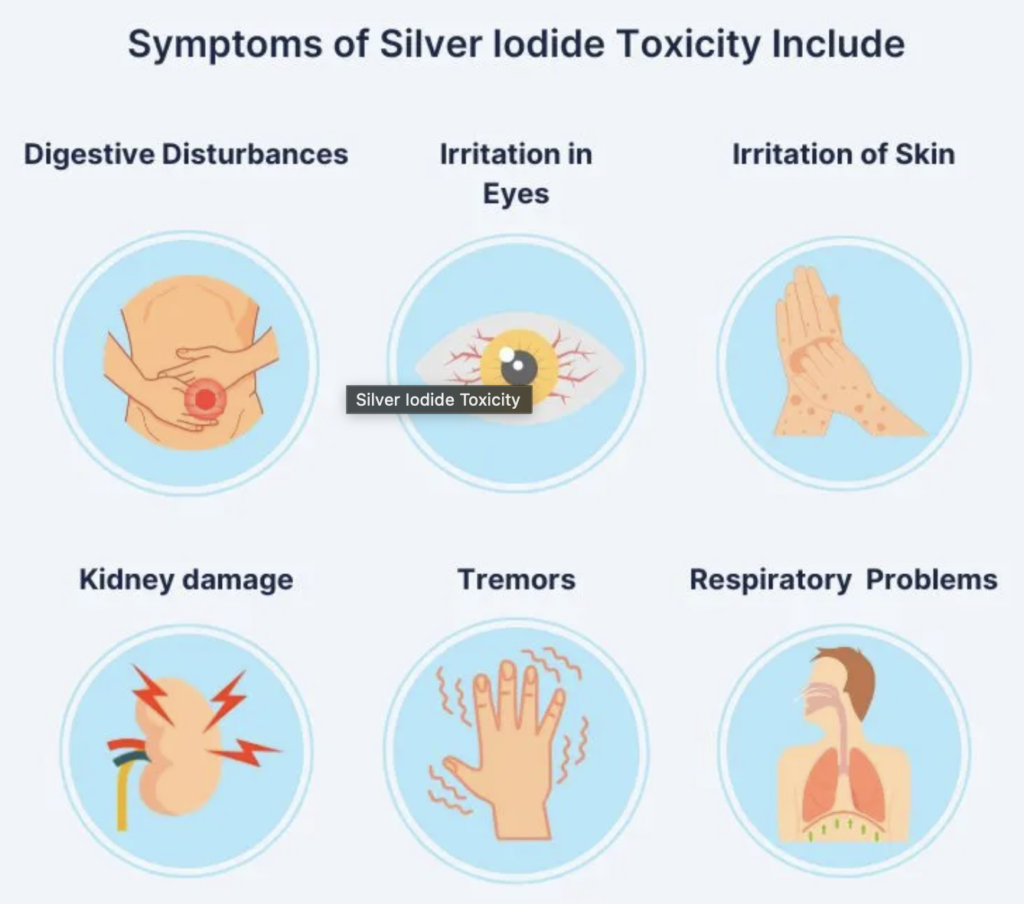
Symptoms of silver iodide toxicity can range from mild to severe, including skin irritation, gastrointestinal upset, and respiratory problems. If a person has been exposed to silver iodide, it is important to seek medical attention immediately.
What Are the Sources of Exposure to Silver Iodide?
Some potential sources of exposure to silver iodide include:
- Occupational Exposure – Workers in industries that use silver iodide, such as the semiconductor or photography industries, may be exposed to the chemical through inhalation, ingestion, or skin contact.
- Environmental Exposure – Silver iodide may be released into the environment due to its use in cloud seeding or through accidental spills or leaks.
- Consumer Products – Silver iodide may be present in some consumer products, such as certain types of jewelry and clothing, or as an ingredient in cosmetics or dietary supplements.
- Medical Treatment – Silver Iodide may be used as a medicinal agent and applied to the skin in creams, ointments, or dressings.
- Food and Water – Silver Iodide may be present in some food or water sources due to environmental contamination.
What Are the Symptoms of Silver Iodide Toxicity?
The symptoms of silver iodide toxicity are listed below:
- Irritation of the eyes, skin, and mucous membranes.
- Gastrointestinal irritation.
- Vomiting.
- Diarrhea.
- Coughing and difficulty breathing.
- Kidney damage.
- Brain damage.
- Death.
- Rash or hives.
- Tremors.
- Abdominal pain.
- Changes in skin color.
Public Demand Transparency: Know Your History
As citizens, it’s vital that we demand transparency and a full historical context from our authorities. When new initiatives are proposed, especially those with significant environmental and financial implications, we deserve to know the complete story – including prior attempts, their successes, their failures, and the invaluable lessons learned.
Understanding Delhi’s long history with cloud seeding allows us to ask better questions and hold decision-makers accountable for genuine scientific progress, not just recycled rhetoric presented as novel. Delhi’s skies have been a laboratory for decades. It’s time our government acknowledges this legacy, presents a comprehensive view of past and present efforts, and engages the public in an honest dialogue about the future of cloud seeding.
Additional Information:
The Cloud Aerosol Interaction and Precipitation Enhancement Experiment (CAIPEEX) is a pioneering national scientific program in India, led by the Indian Institute of Tropical Meteorology (IITM) under the Ministry of Earth Sciences (MoES). Initiated in 2009, it focuses on understanding aerosol-cloud-precipitation interactions in the Indian monsoon environment and evaluating the efficacy of cloud seeding for rainfall enhancement. Unlike earlier operational seeding efforts (e.g., the Delhi Experiment of the 1950s–60s), CAIPEEX emphasizes rigorous, randomized scientific investigations following World Meteorological Organization (WMO) guidelines, combining in-situ observations, numerical modeling, and statistical analysis. The program addresses India’s growing need for precipitation augmentation amid climate change, droughts, and water scarcity, particularly in rain-shadow regions.
CAIPEEX has two primary goals:
- Document aerosol-cloud interactions: Measure in situ properties of aerosols, cloud condensation nuclei (CCN), cloud droplets, and precipitation across diverse Indian regions to elucidate how aerosols influence cloud microphysics and rainfall formation.
- Test cloud seeding efficacy: Conduct randomized experiments using hygroscopic (warm cloud) and glaciogenic (cold cloud) seeding to quantify rainfall increases, develop seeding protocols, and assess environmental impacts.
These objectives aim to provide a scientific basis for operational cloud seeding, moving beyond anecdotal results to evidence-based guidelines.
Phases and Timeline
CAIPEEX has been executed in four phases, spanning 2009–2019, with over 820 hours of airborne observations collected:
| Phase | Years | Key Activities and Locations | Duration/Notes |
|---|---|---|---|
| Phase I | 2009 | Nationwide survey of aerosol, CCN, and cloud microphysical properties; identified suitable seeding sites. Focused on pre-monsoon and monsoon clouds across India. | May–September; ~150 flight hours. |
| Phase II | 2010–2011 | Pilot cloud seeding experiments; studied natural vs. seeded aerosols’ impacts on cloud microstructure and precipitation. Used instrumented aircraft and radars. | Monsoon/post-monsoon; ~200 flight hours. |
| Phase III | 2014–2015 | Expanded observations in rain-shadow regions; refined seeding hypotheses with ground-based networks. | ~200 flight hours; built on prior data for modeling. |
| Phase IV | 2017–2019 | Intensive randomized seeding trials in Maharashtra’s Solapur region (Western Ghats rain-shadow); hygroscopic and glaciogenic seeding with dual aircraft, C-band radar, and rain gauges. 150 seeded vs. 122 unseeded cloud samples analyzed. | July–October 2018–2019; 120 operational days; ~270 flight hours. |
Ref:
- https://www.dws.gov.za/iwqs/reports/tr/TR_100_Kempster_1979_The_toxicology_of_silver_iodide_in_relation_to_its_use_as_a_cloud_seeding_agent.pdf
- https://pubmed.ncbi.nlm.nih.gov/27517140/
- https://climate.sustainability-directory.com/term/silver-iodide-toxicity/
Also Read: