


Bill Gates and Klaus Schwab, a key figure in the World Economic Forum, are looking to collect personal data from Indians, and many are curious about why they are so interested in India. The world is abuzz with discussions about how the WEF seems to want to take on a god-like role. There’s also a lot of buzz about how AI and digital technology will change our lives. So, why is India the first place they are focusing on?

The World Economic Forum has been pushing for India to turn into a surveillance state. This raises some serious questions about privacy and freedom. Also, people in India are worried about the new Income Tax Bill and what it means for their finances.
The Congress party has expressed serious concerns regarding the new income tax bill, claiming it could lead India down the path of becoming a “surveillance state.” They argue that the legislation provides tax officials with excessive powers to access citizens’ digital and financial data.
On Thursday, Congress leaders criticized the BJP-led government for what they see as an infringement on personal privacy, allowing tax authorities to access private emails, social media profiles, and banking information.
Supriya Shrinate, head of the Congress social media department, highlighted the risks to digital privacy, stating, “Your emails, social media, banking, and trading accounts are under siege. This new law gives tax officials the authority to read your private messages, monitor your social media interactions, track your financial activities, and scrutinize your investments.”
⚠️ 𝐖𝐀𝐑𝐍𝐈𝐍𝐆: 𝐘𝐎𝐔𝐑 𝐄𝐌𝐀𝐈𝐋, 𝐒𝐎𝐂𝐈𝐀𝐋 𝐌𝐄𝐃𝐈𝐀, 𝐁𝐀𝐍𝐊 𝐀𝐍𝐃 𝐓𝐑𝐀𝐃𝐈𝐍𝐆 𝐀𝐂𝐂𝐎𝐔𝐍𝐓𝐒 𝐀𝐑𝐄 𝐔𝐍𝐃𝐄𝐑 𝐀𝐓𝐓𝐀𝐂𝐊! ⚠️
— Supriya Shrinate (@SupriyaShrinate) March 6, 2025
The new income tax law allows tax officials unrestricted access to
👉 𝐘𝐨𝐮𝐫 𝐄𝐦𝐚𝐢𝐥𝐬: Read your private conversations
👉… pic.twitter.com/r3kxiSsc7w
The Digital Personal Data Protection Bill could be a serious threat to Indians’ privacy
There are concerns that the Bill, now being tabled in Parliament, gives the government blanket powers to access citizens’ data
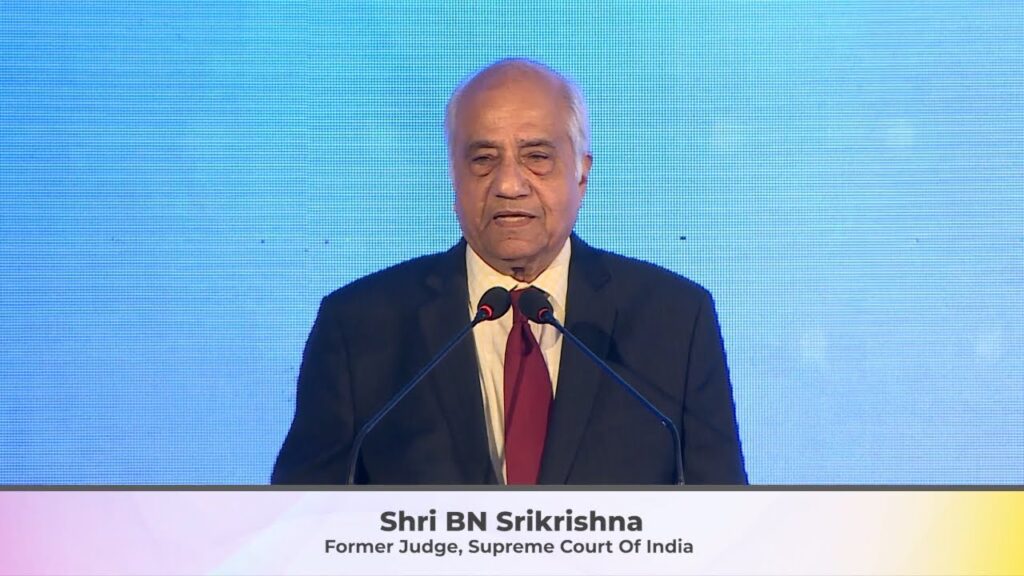
Justice BN Srikrishna, who led the committee that drafted the Personal Data Protection Bill (PDP), said the bill placed in Parliament, which allows the Centre to exempt its agencies from some or all provisions, is “dangerous” and can turn India into an “Orwellian State”.
They have removed the safeguards. That is most dangerous,” Srikrishna told ET.
The Bill would “represent new, significant threats to Indians’ privacy,” Udbhav Tiwari, a public policy advisor at Mozilla, told TechCrunch. “If Indians are to be truly protected, it is urgent that the Parliament reviews and addresses these dangerous provisions before they become law.”
Ref: https://economictimes.indiatimes.com/news/economy/policy/personal-data-protection-bill-can-turn-india-into-orwellian-state-justice-bn-srikrishna/articleshow/72483355.cms
The role of social media intermediaries is being regulated more tightly on several fronts. The Wikimedia Foundation is hoping that the PDP bill will prove the lesser evil compared with the Draft Information Technology [Intermediary Guidelines (Amendment) Rules] 2018.
In the letter, Amanda Keton, General Counsel, Wikimedia Foundation said the new draft rules have not been made public even after a year since official consultations on the draft were completed.
Ref: https://economictimes.indiatimes.com/tech/internet/wikimedia-flags-worries-on-data-law/articleshow/72988168.cms
Forbes India reports that “there are concerns that the Bill gives the government blanket powers to access citizens’ data.”
Ref: http://www.forbesindia.com/article/leaderboard/the-personal-data-protection-bill-could-be-a-serious-threat-to-indians-privacy/56623/1
The bill after being tabled was referred to the JPC which was chaired by Meenakshi Lekhi. After it received criticism from stakeholders, opposition and experts the bill was withdrawn from the Parliament of India on 3 August 2022.
Ref: https://www.lakshmisri.com/insights/articles/data-protection-bill-withdrawn-roadblocks-towards-a-comprehensive-data-protection-framework/
The rules focus on digital personal data processing in India, covering both online and offline data collection, which is digitised. They aim to clarify legal responsibilities, stakeholder registrations, and the framework for establishing a Data Protection Board, along with details on employee roles and service conditions.
Bill Gates is planning to focus on Fintech Companies
The DPDP Act does not mandate data localization in the strictest sense. Data can be stored and processed outside of India, except in countries that are specifically blacklisted by the Indian government.
Fintech companies must prepare for significant changes in their operational practices to comply with the new regulations. A key action will be conducting thorough Data Protection Impact Assessments (DPIAs), as required for significant data fiduciaries.
A key challenge lies in the ambiguity of data localization requirements. While the DPDP Act does not mandate data localization, the Reserve Bank of India (RBI) guidelines require certain data to be stored within India. This creates a complex legal situation for fintech firms that must navigate potential conflicts between the two regulatory frameworks. Moreover, the DPDP Act’s extraterritorial application means data collected within and outside India is subject to the same regulations.
What is the Digital Personal Data Protection (DPDP) Bill?
The DPDP Bill is India’s comprehensive legal framework designed to protect the privacy of individuals and regulate how their personal data is processed by organizations (both government and private). It aims to:
- Give individuals control over their personal data: It grants individuals (referred to as “Data Principals”) rights regarding their data, such as the right to access, correct, and erase their data.
- Impose obligations on organizations (Data Fiduciaries): It establishes responsibilities for organizations that collect, process, and store personal data. These responsibilities include obtaining consent, ensuring data accuracy, implementing security safeguards, and being transparent about data practices.
- Establish a Data Protection Board: It creates an independent regulatory body (the Data Protection Board of India) to oversee compliance with the law, investigate breaches, and impose penalties.
Key Aspects of the Bill:
- Personal Data: The bill defines “personal data” as any data about an individual that can be used to identify them.
- Consent: Data Fiduciaries generally need to obtain consent from individuals before processing their personal data. This consent must be free, informed, specific, and capable of being withdrawn.
- Data Fiduciaries and Data Processors: The bill differentiates between Data Fiduciaries (those who determine the purpose and means of processing data) and Data Processors (those who process data on behalf of the Data Fiduciary). Data Fiduciaries have the primary responsibility for compliance.
- Significant Data Fiduciaries: The government can designate certain Data Fiduciaries as “Significant Data Fiduciaries” based on factors like the volume and sensitivity of the data they process. These organizations may be subject to stricter obligations.
- Cross-Border Data Transfers: The bill allows for cross-border transfers of personal data, except to countries that are specifically restricted by the Indian government.
- Penalties: The bill prescribes significant financial penalties for non-compliance, potentially reaching hundreds of crores of rupees.
- Exemptions: The bill provides some exemptions, such as for processing data for journalistic, research, or legal purposes.
While the DPDP Bill is intended to strengthen data protection, there are several concerns and potential downsides that have been raised, including concerns about infringing upon fundamental rights:
- Dilution of Consent Requirements & Broad Exceptions for ‘Legitimate Use’:
- The Issue: The Bill allows data processing without explicit consent for broadly defined “legitimate uses.” This can be interpreted very widely.
- Fundamental Rights Concerns: This can potentially infringe on the right to privacy (Article 21). If companies can process data without explicit consent for vaguely defined legitimate uses, individuals have less control over their data. The right to informational privacy, recognized as part of Article 21 by the Supreme Court, could be undermined.
- Example: A company could argue that analyzing your browsing history to personalize ads is a “legitimate use” for improving their service, even if you haven’t explicitly consented to that level of tracking.
- Lack of Clarity: The definition of ‘legitimate use’ is ambiguous which can lead to arbitrary interpretation and potential abuse.
- Potential for Increased Surveillance:
- The Issue: The Bill gives the government broad powers to access personal data in the name of national security or law enforcement.
- Fundamental Rights Concerns: This raises concerns about potential government overreach and surveillance. The Supreme Court has emphasized the need for safeguards against excessive surveillance to protect the right to privacy. If the government can easily access personal data without strong oversight, it could chill freedom of speech and expression (Article 19(1)(a)) and potentially lead to discriminatory targeting.
- Reduced Transparency and Accountability
- The Issue: The bill lacks provisions for algorithmic transparency and accountability, which means individuals may not know how their data is being used to make automated decisions that affect them.
- Fundamental Rights Concerns: Lack of transparency violates Article 19(1)(a) (Right to Information) .
- Weakening of the Right to Information (RTI):
- The Issue: The Bill amends the Right to Information Act, potentially restricting access to personal information held by public authorities. Clause 44(3) of the DPDP Bill amends Section 8(1)(j) of the Right to Information (RTI) Act, 2005. This amendment restricts access to personal information held by public authorities, potentially undermining transparency and accountability.
- Fundamental Rights Concerns: This could hinder citizens’ ability to hold the government accountable and access information that is essential for informed decision-making. The RTI Act is crucial for ensuring transparency and combating corruption, and this amendment could weaken its effectiveness.
- Effectiveness of the Data Protection Board:
- The Issue: There are concerns about the independence and effectiveness of the Data Protection Board of India. If the government has too much influence over the Board, it may not be able to effectively protect citizens’ data rights.
- Fundamental Rights Concerns: A weak or biased Data Protection Board could fail to adequately address violations of privacy and other data-related rights, undermining the overall protection of fundamental rights.
- Impact on Innovation and Small Businesses:
- The Issue: The compliance requirements of the Bill could be burdensome for small and medium-sized enterprises (SMEs), potentially hindering innovation.
- Economic Rights Concerns: While not directly a fundamental right, excessive compliance costs could disproportionately affect smaller businesses, potentially creating an uneven playing field and hindering economic opportunities.
- Vagueness and Ambiguity:
- The Issue: Some provisions of the Bill are vaguely worded, which could lead to uncertainty and inconsistent application.
- Legal Certainty Concerns: Vague laws can be challenged in court for violating the principle of legal certainty, which is essential for upholding the rule of law.
The Awaken India Movement is calling on people to join campaign to demand roll back of the amendments made to RTI Act through the Digital Personal Data Protection Act. Section 44(3) of DPDP Act has amended the RTI law, restricting people’s right to access information.
Sign the online petition & organise a signature campaign in your area.
https://docs.google.com/forms/d/e/1FAIpQLSfKiSXF8FiZIUEARspGCYsUUVXp0SNv-K8JRpJUhuq4GT7wnQ/viewform (copy & paste)
https://twitter.com/AnjaliB_/status/1895915117109235738?t=UxbyswzDBed6qqXxP6C2BQ&s=35
Join AIM Groups: https://awakenindiamovement.com/groups/
Even though there has been a lot of criticism, find out how the World Economic Forum (WEF) wants India to promote Digital Personal Data Protection Bill.
World Economic Forum’s Annual Meeting 2025 in Davos:

Bill Gates & Ashwini Vaishnaw attends ‘The Promise of Digital Public Infrastructure’ in New Delhi
Bill Gates met Union Minister Ashwini Vaishnaw in New Delhi and discussed about India’s AI ecosystem and digital public infrastructure. He also stated that the Gates Foundation hopes to support the Indian government’s initiative to build open, secure, and interoperable systems that are inclusive and create strong digital economies.
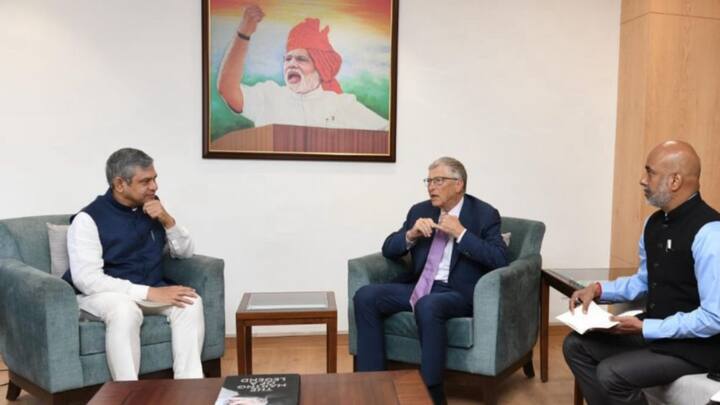
Watch a Video: https://www.facebook.com/cnbctv18india/videos/bill-gates-ashwini-vaishnaw-on-digital-public-infrastructure/224861590014963/
“PM Modi has focused on inclusive development that brings transformative changes in the lives of those at the bottom of the pyramid. From financial inclusion through bank accounts to providing essential services like toilets, gas connections, tap water, and improving infrastructure in both rural and urban areas, this is something which the world wants to understand”, said the Minister before departing to Davos.
The Union Minister mentioned there will be a detailed discussion at the World Economic Forum about inclusive growth, investment in social, physical and digital infrastructure and democratising technology.
“The world is keen to understand India’s economic policies, the digital transformation brought about by the Digital India programme, and the way technology has been democratised to empower citizens across all strata of society,” the minister stated. India’s participation in WEF 2025 aims to strengthen partnerships, attract investment, and position the country as a global leader in sustainable development and technological innovation.
India’s innovative digital architecture, developed as part of the Digital India initiative, has set a global benchmark for leveraging technology to drive inclusive development, a key focus of discussions at the forum, according to the ministry.
Ref: https://www.sarkaritel.com/wef-2025-world-keen-to-understand-indias-economic-policies-says-ashwini-vaishnaw/
The WEF has plans to use DeepSeek in India. However, is it a safe option? Researchers found that DeepSeek has turned into a harmful malware producer. There are also cybersecurity risks associated with DeepSeek R1. Additionally, security problems have been uncovered in China’s AI model, DeepSeek R1.
06 March, 2025 : Ashwini Vaishnaw, Minister for Electronics and Information Technology, on Thursday launched the AI Compute Portal in New Delhi.
The AI Compute Portal is a digital platform through which users such as researchers, startups, and government agencies will be able to access highly valued GPUs and high-powered computing resources specifically designed for artificial intelligence (AI) tasks.
Speaking at the launch, the Union Minister informed that the government is setting up 27 AI data labs.
He further added that the government has received applications for creating the foundational models and now the team is actually have to revaluate all the applications.
India is rapidly building a strong AI computing and semiconductor infrastructure to support its growing digital economy. With the approval of the IndiaAI Mission in 2024, the government allocated Rs 10,300 crore over five years to strengthen AI capabilities.
A key focus of this mission is the development of a high-end common computing facility equipped with 18,693 Graphics Processing Units (GPUs), making it one of the most extensive AI compute infrastructures globally.
This capacity is nearly nine times that of the open-source AI model DeepSeek (China-based) and about two-thirds of what ChatGPT operates on.
According to the Ministry of Electronics & IT, a new common computing facility will soon be launched, allowing researchers and startups to access GPU power at a highly subsidized rate of Rs 100 per hour, compared to the global cost of USD 2.5 to USD 3 per hour.
In parallel, India is advancing semiconductor manufacturing, with five semiconductor plants under construction, as per the IT and Electronics Ministry.
Ref: https://theprint.in/economy/union-minister-ashwini-vaishnaw-launches-ai-compute-portal-govt-setting-up-27-ai-data-labs/2536713/
January 31, 2023 :
Ashwini Vaishnaw on India’s plan for semiconductors at WEF
Pat (Gelsinger, CEO, Intel) who are guiding us in this journey.
We have listened to the industry. When we announced the scheme on Jan 1, 2022, it was with awareness that the demand is for higher nodes. Those that go into electric vehicles and Volvo, in the train sets, in practically all the telecom equipment and in power electronics, all these sectors require higher nodes.
For example, I wouldn’t be surprised if in three years from now, we see a car operating system, an automobile operating system, which basically makes sure that all the chips manufactured by different companies for different functions, are basically able to speak to each other, in a very seamless way.
Ref: https://www.communicationstoday.co.in/ashwini-vaishnaw-minister-for-communications-electronics-information-technology-on-indias-plan-for-semiconductors-at-wef/
6 March 2023: India Acquired 100 Patents for 6G Technology After Fast Rollout of 5G Network: IT Minister Ashwini Vaishnaw
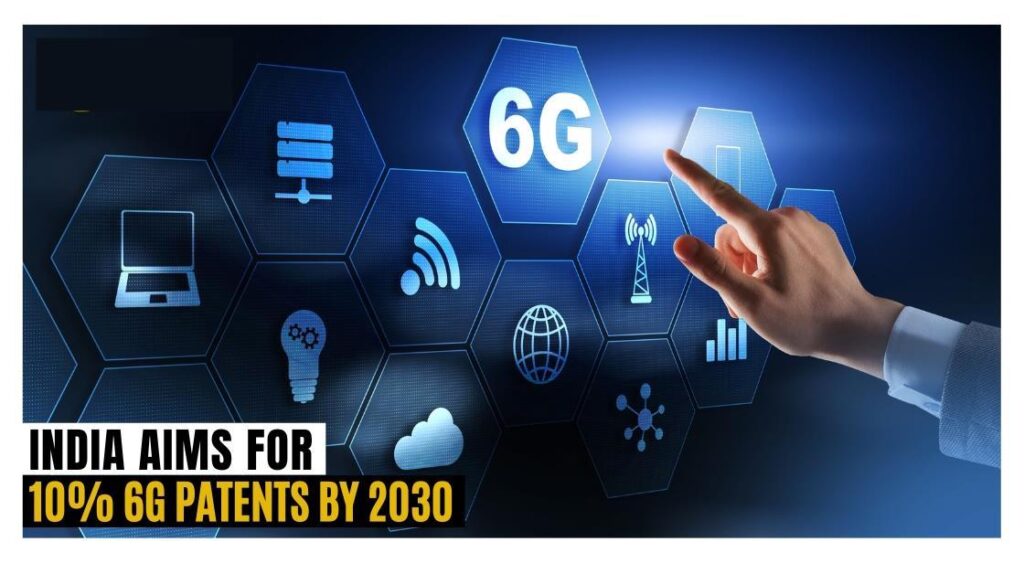
The 6G technology has received 100 patents. So far, no studies have been conducted on 5G data, and we still don’t have enough information about 4G. Last year, India announced that it has made impressive strides in communication technology since 4G. By the time 5G was introduced, India was already a top player globally, and with 6G, it plans to take the lead in the world, as Bill Gates and the World Economic Forum wanted to have control over India.
Ref: https://www.thinkwithniche.com/amp/news/india-aims-for-10-of-6g-patents-by-2030-forms-bharat-6g-alliance
The DPDP Bill is a significant step towards data protection in India, but it’s not without its flaws. The broad exceptions for “legitimate use,” the potential for government surveillance, the weakening of the RTI Act, and concerns about the independence of the Data Protection Board all raise concerns about potential infringements on fundamental rights, particularly the right to privacy, freedom of speech and expression, and the right to information.
Source: Wikipedia, Youtube-Image, twitter, facebook,
Also Read: