

Bill Gates’ Global Mission for Universal Digital Financial Inclusion and 5G Networks
Are you curious about why Bill Gates is so focused on India and the digital financial revolution sweeping the nation? In this article, we will delve into the reasons behind Bill Gates’ interest in India and his push for universal digital financial inclusion. We will also explore how the Fintech Revolution in India is being praised by the world and why 5G networks are becoming increasingly crucial in this digital age.
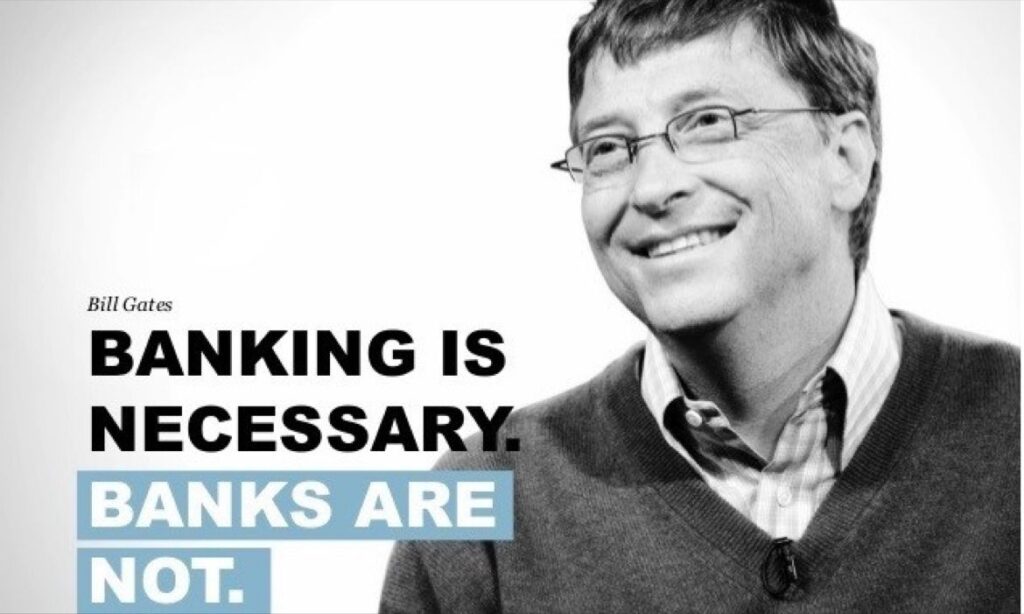
What do you think about this quote from Bill Gates?
“Banking is necessary. Banks are not.”
There is a lot of transformation happening in the banking sector.
The rise of fintech is reshaping how we think about banking services.
New business models like banking-as-a-service are gaining traction.
Traditional banks face challenges from innovative startups.
The convenience and speed of digital solutions attract more customers.
However, community banks are struggling to keep up.
The article explains the reasons for not switching to a cashless system.
Bill Gates on the digital future and financial inclusion
The Fintech Revolution in India is transforming the way people access and manage their finances. With the widespread adoption of mobile banking, digital wallets, and online payment platforms, individuals can now conduct financial transactions with ease and convenience.
The World Bank and other global organizations have recognized India’s work in making digital finance accessible to everyone. The government has been pushing programs like the Pradhan Mantri Jan Dhan Yojana and the Unified Payments Interface (UPI) to make financial services available to a larger population. While it promises a lot, the potential downsides are often overlooked.
The article provides insights into why the World Bank is engaged in this matter.
Bill Gates envisions a future where digital financial inclusion is not limited to a few privileged countries but is accessible to people worldwide. To achieve this goal, he advocates for an open-source model that allows countries to adapt and implement fintech solutions according to their unique needs. By sharing knowledge and resources, Gates believes that innovative solutions can be scaled up and replicated across borders.
As the world gets more connected, having fast and dependable communication networks is super important. 5G networks are the next big thing in wireless technology, providing quicker speeds, less delay, and more capacity for sending data. When it comes to making sure everyone can access digital financial services, 5G networks are allowing transactions between users and banks. However, there are concerns about health issues related to 5G.
“India Is A Great Example”: Bill Gates Praises Platforms Like UPI And Aadhar For Financial Inclusion
Oct 27, 2016: Why Zuckerberg, Gates And Omidyar Are Investing In Fintech For The Poor
The World Bank, along with the IFC (International Finance Corporation), the Bill and Melinda Gates Foundation, and the Omidyar Network, is working hard to share what they’ve learned from their experiences and apply it in other countries, especially in Asia. Countries like India, Indonesia, Vietnam, Myanmar, Cambodia, and Laos are moving straight from using cash to embracing fintech. They’ve already bypassed the traditional banking system, which includes things like bank branches, ATMs, and banking cards.
Bill Gates once said that in the next 15 years, digital banking will allow poor people to have more control over their money and change their lives for the better. By 2030, around 2 billion people who don’t have bank accounts now will be able to save money and make payments using their phones. Mobile money services will provide all kinds of financial help, like savings accounts that earn interest, loans, and insurance. Regular banks can’t help the poor because it’s too expensive for them. That’s why 2.5 billion adults don’t have a bank account right now.
Ref: https://www.forbes.com/sites/vladislavsolodkiy/2016/10/27/why-zuckerberg-gates-and-omidyar-are-investing-in-fintech-for-the-poor/
Loopholes in Aadhaar-based payment systems are putting low-income individuals in danger of being cheated
The Indian government started the Aadhaar-enabled Payment System, which works together with the Business correspondent model. This system was meant to improve financial inclusion in India. Unfortunately, it has run into several problems.
This model is driven by banks and facilitates online interoperable financial inclusion transactions at Points of Sale (Micro ATMs) through Business Correspondents (BCs), who act as informal banking agents for any bank, utilizing Aadhaar authentication.
For example, if an individual wishes to withdraw Rs500 from their bank account via a BC, they must specify the bank name and complete Aadhaar-based biometric authentication (ABBA). The BC will then dispense the requested funds, while simultaneously crediting their own account with the same amount. It is essential for the bank account to be linked to Aadhaar for this process to occur.
How Aadhaar linkage can destroy banks
The Supreme Court of India has a bunch of public interest litigations (PILs) waiting to be decided about Aadhaar linkages. It would be smart to set up a special court to pause all Aadhaar linkages until these cases are looked at. At the same time, the court should quickly hear the PILs because Aadhaar could cause a lot of financial problems for India.
The banking system in India is getting really complicated. When things get more complex, the risks can grow a lot faster than the complexity itself. If looking into just one part of the banking system, like electronic money transfers, doesn’t worry careful bankers, we might end up without any careful bankers at all. It’s clear that our leaders don’t have the time or interest to think about how their decisions affect the country and its resources. Bringing people without bank accounts into this situation isn’t helping them financially; it’s just putting them in debt.
Some important Dates -2014
| Date | Particulars |
| Dec-08 | Incorporation of National Payments Corporation of India (NPCI) |
| 28-Jan-09 | Planning Commission of India Notifies the UIDAI with mandate to create a UID. |
| Apr-09 | Certificate of Commencement of Business issued to National Payments Corporation of India (NPCI) |
| 14-Dec-09 | NPCI takes over ATM switching service to banks in India through National Financial Switch from Institute of Development and Research in Banking Technology (IDRBT) |
| Apr-2010 | UIDAI whitepaper: From Exclusion to Inclusion with Micropayments |
| 13-Dec-11 | The Standing Committee on Finance and urged the government to reconsider and review the UID scheme and also the proposals contained in the Bill in all its ramifications. |
| 27-Jan-11 | RBI Notification RBI/2010-11/389 DBOD.AML.No. 77 /14.01.001/2010-11 making anti-money laundering rules applicable for bank accounts opened with Aadhaar. |
| 28-Sep-11 | RBI Notification 12/207DBOD.AML RBI/2011. BC. No. 36/14.01.001/2011-12 relaxing anti-money laundering rules for bank accounts opened with Aadhaar. |
| Dec-2011 | Dhan Aadhaar Yojana launched |
| 17-May-12 | RBI Notification RBI/2011-12/566 DBOD. No. BL. BC. 105/22.01.009/2011-12 on financial inclusion and banking correspondents. |
| 12-Mar-13 | RBI Circular RBI / 2012-13 / 436 A.P. (DIR Series) Circular No. 89 on revised guidelines for money transfer schemes. |
| 1-Jul-13 | RBI Master Circular RBI/2013-14/1 Master Circular No.1 /2013-14 on money transfer service scheme. |
| 1-Jul-13 | RBI Notification RBI/ 2013-14/31 UBD.BPD. (PCB).MC.No.16 /12.05.001/2013-14 specifying obligations of the banks under the prevention of money laundering act of 2002. |
| 6-Feb-14 | UIDAI Notification 17015/14/2012/FI enabling opening new accounts through micro ATMs |
| 28-Aug-14 | Pradhan Mantri Jan Dhan Yojana launched |
Ref: https://www.moneylife.in/article/how-aadhaar-linkage-can-destroy-banks/38736.html
What problems come with using AePS?
AePS has some big risks that can lead to people getting cheated, especially if they don’t really understand how it works. These risks get worse when banks won’t give out small amounts of money to their customers and send them to Business Correspondents (BCs) instead. Some of these risks include:
Financial fraud can occur with some corrupt BCs who enter a large amount in the PoS but only give the beneficiary a smaller amount. If people ask for a receipt, this can usually be avoided. Unfortunately, many BCs often refuse to give receipts to poor people.
Sometimes, dishonest BCs trick customers by just asking them to place their finger on the scanner. Then, they sneakily take money from the customer’s account without saying anything.
Ref: https://indianexpress.com/article/opinion/columns/aadhaar-enabled-payment-system-7552163/
Bill Gates explains why digital financial inclusion should be ‘universal’
Fintech Startups in India
What is Fintech?
Fintech, short for financial technology, encompasses the intersection of technology and financial services. It refers to the innovative use of technology—software, mobile applications, artificial intelligence (AI), blockchain, cloud computing, and data analytics—to transform traditional financial operations, products, and services.
Fintech companies are disrupting the financial industry by offering more accessible, efficient, and customer-centric solutions. They are revolutionizing how people bank, invest, borrow, lend, and manage their finances. Here’s a deeper look at the key aspects of fintech:
Core Areas of Fintech:
- Digital Banking: Fintech is enabling a shift away from traditional brick-and-mortar banks towards online and mobile banking platforms. Neobanks, digital-only banks with no physical branches, are providing banking services entirely through apps and digital channels.
- Payments: Fintech has revolutionized the way people make payments, from mobile wallets and peer-to-peer (P2P) payment apps to QR code-based payments and contactless technologies.
- Lending: Fintech lenders are leveraging technology to streamline loan applications, assess creditworthiness using alternative data sources, and offer faster loan disbursals. This has made credit more accessible, particularly to individuals and small businesses underserved by traditional banks.
- Investment: Fintech is democratizing investment by offering robo-advisors for automated portfolio management, micro-investing platforms for small investments, and fractional ownership of assets like stocks and real estate.
- Insurance (Insurtech): Technology is making insurance more transparent, personalized, and convenient. Insurtech companies are simplifying policy applications, expediting claims processing, and offering usage-based insurance models.
- Personal Finance: Budgeting apps, expense trackers, and financial planning tools powered by AI are helping individuals manage their finances more effectively.
- Regulatory Technology (Regtech): This branch of fintech focuses on helping financial institutions comply with regulations more efficiently and effectively.
- Blockchain and Cryptocurrency: Blockchain technology, the foundation of cryptocurrencies like Bitcoin, is being explored for potential applications in various financial services, including cross-border payments, supply chain finance, and smart contracts.
The Indian Fintech Boom: A Catalyst for Financial Transformation
The Indian fintech sector is experiencing an unprecedented surge, driven by a confluence of factors that have created a fertile environment for innovation and growth:
- Vast Untapped Market: India possesses a massive unbanked and underbanked population, representing a significant market opportunity for fintech companies. These individuals and small businesses lack access to traditional banking services due to factors like geographic constraints, low income, and documentation challenges. Fintech startups are addressing this gap by offering digital banking solutions, mobile wallets, micro-loans, and other financial products tailored to the needs of this underserved population.
- Exponential Smartphone Growth: The widespread adoption of smartphones has been a game-changer for the fintech industry. With affordable smartphones and mobile data plans readily available, a vast majority of Indians now have access to digital financial services at their fingertips. This has fueled the rapid adoption of mobile banking and payment apps, enabling convenient transactions and financial management.
- Government Initiatives and Digital India: The Indian government has played a pivotal role in fostering the fintech boom through a series of initiatives aimed at promoting digital payments and financial inclusion. Programs like the Jan Dhan Yojana (financial inclusion scheme), Aadhaar (biometric identification system), and UPI (Unified Payments Interface) have created a robust digital infrastructure and a favorable regulatory environment for fintech innovation. The government’s push for a cashless economy has further accelerated the adoption of digital financial services.
- Dynamic Startup Ecosystem: India boasts a thriving startup ecosystem, with fintech companies receiving significant attention and investment from both domestic and international investors. The availability of venture capital funding, along with government support and incubator programs, has created a nurturing environment for fintech startups to flourish. These startups are leveraging cutting-edge technologies like AI, blockchain, and data analytics to develop innovative financial solutions.
- Favorable Demographics: India’s young and tech-savvy population is another crucial factor driving the fintech boom. Millennials and Gen Z consumers are more open to adopting digital financial services and are looking for convenient, personalized, and tech-driven solutions to manage their finances. This demographic trend bodes well for the continued growth of the fintech sector.
- COVID-19 Pandemic as an Accelerator: The COVID-19 pandemic further accelerated the adoption of digital financial services in India. Lockdowns and social distancing measures forced people to embrace online transactions and contactless payments, leading to a surge in the use of mobile wallets, digital banking platforms, and online investment platforms.
Fintech on Various Financial Sectors: A Disruptive Force
Banking:
- Digital Banking Revolution: Fintech companies are leading the charge in digital banking, offering online and mobile banking solutions that are convenient, accessible, and often more user-friendly than traditional banking services. Neobanks, with their branchless model and innovative features like real-time spending insights and personalized financial advice, are attracting a growing number of tech-savvy customers.
- Enhanced Customer Experience: Fintech innovations like chatbots, virtual assistants, and 24/7 customer support have significantly improved customer experience in the banking sector.
- Increased Competition: The emergence of fintech challengers has intensified competition in the banking industry, pushing traditional banks to innovate and improve their digital offerings to stay relevant.
Payments:
- Digital Payments Boom: Fintech companies have played a pivotal role in driving the adoption of digital payments in India. Mobile wallets like Paytm, PhonePe, and Google Pay have become ubiquitous, enabling seamless transactions for everything from buying groceries to paying utility bills.
- QR Code Revolution: Fintech innovations like QR code-based payments have simplified transactions, making it easier for merchants and consumers to adopt digital payments.
- UPI Disruption: The Unified Payments Interface (UPI), a real-time payment system developed by the National Payments Corporation of India (NPCI), has revolutionized peer-to-peer (P2P) transactions and become the backbone of India’s digital payments infrastructure.
Lending:
- Expanding Credit Access: Fintech lenders are leveraging technology and alternative data sources to assess creditworthiness, making loans more accessible to individuals and small businesses who may have been excluded by traditional banks’ stringent criteria.
- Streamlined Processes: Fintech platforms have streamlined the loan application process, enabling faster approvals and disbursals, often within hours or days.
- Innovative Loan Products: Fintech companies are offering innovative loan products like micro-loans, peer-to-peer (P2P) lending, and buy-now-pay-later (BNPL) schemes to cater to diverse financial needs.
Investment:
- Democratization of Investing: Fintech is breaking down barriers to investment by offering robo-advisory services that provide automated portfolio management, micro-investing platforms that allow small investments, and fractional ownership options that enable investors to buy portions of expensive assets like stocks or real estate.
- Enhanced Investor Education: Many fintech platforms offer educational resources and tools to empower investors with knowledge and help them make informed investment decisions.
Insurance (Insurtech):
- Simplified Insurance Products: Insurtech companies are making insurance products more transparent and easy to understand, eliminating complex jargon and hidden fees.
- Customer-Centric Approach: They are prioritizing customer convenience by offering online policy applications, instant quotes, and digital claims processing.
- Usage-Based Insurance: Some insurtech companies are introducing usage-based insurance models that leverage telematics and data analytics to customize premiums based on individual driving behavior or health metrics.
Challenges and Considerations:
While fintech has had a positive impact on financial literacy and consumer behavior, there are still challenges to address:
Digital Divide: A significant portion of the population, particularly in rural areas, still lacks access to the internet and smartphones, limiting their access to fintech services.
Misinformation and Scams: The rise of digital financial services has also led to an increase in online scams and misinformation. Consumer education and awareness programs are crucial to mitigate these risks.
Data Privacy: As fintech companies collect vast amounts of personal and financial data, ensuring data privacy and security is paramount to maintaining consumer trust.
Cybersecurity Concerns:
- Data Breaches: The digital nature of fintech makes it a prime target for cybercriminals. Data breaches can have severe consequences, including financial losses, reputational damage, and legal liabilities.
- Fraud and Scams: Fintech platforms are vulnerable to various types of fraud, such as phishing attacks, identity theft, and transaction fraud. Implementing robust security measures is paramount.
- Consumer Trust: Building and maintaining customer trust is crucial for fintech companies, as any security lapse can erode confidence in the platform.
Case Studies of Successful Indian Fintech Startups: Pioneers of Disruption
The Indian fintech landscape is brimming with inspiring stories of startups that have challenged conventions, revolutionized financial services, and achieved remarkable success. Here are a few shining examples:
1. Paytm (One97 Communications):
- Innovative Solutions: Paytm started as a mobile recharge platform and quickly expanded to offer a comprehensive suite of financial services, including mobile wallets, UPI payments, bill payments, e-commerce, banking, and investments. Paytm revolutionized digital payments in India, making them accessible to the masses and driving the shift towards a cashless economy.
- Target Market: Paytm targets a wide range of consumers, from urban tech-savvy users to those in rural areas seeking access to digital financial services.
- Growth Strategies: Paytm’s success can be attributed to its aggressive marketing campaigns, strategic partnerships with merchants and banks, and its ability to adapt to changing consumer needs. It has also expanded into other sectors like travel, entertainment, and gaming.
- Overall Impact: Paytm has significantly contributed to financial inclusion by bringing millions of unbanked and underbanked individuals into the formal financial system. It has also played a pivotal role in promoting digital payments and reducing the reliance on cash.
2. PhonePe (Flipkart-owned):
- Innovative Solutions: PhonePe is a popular UPI-based payments app known for its user-friendly interface and wide range of services, including bill payments, mobile recharges, money transfers, and investments. PhonePe also offers financial products like insurance and gold purchases.
- Target Market: Similar to Paytm, PhonePe caters to a broad spectrum of users across India.
- Growth Strategies: PhonePe’s growth has been fueled by its association with Flipkart, one of India’s largest e-commerce companies, and its focus on expanding its merchant network for offline payments. It has also leveraged cashback and rewards programs to incentivize users.
- Overall Impact: PhonePe has played a crucial role in popularizing UPI payments and making them a mainstream mode of transaction in India. It has also made it easier for consumers to access financial products like insurance through its platform.
3. Zerodha:
- Innovative Solutions: Zerodha is a discount stock brokerage firm that disrupted the traditional brokerage model by offering zero-brokerage trading for equity investments and low-cost options trading. Zerodha’s technology-driven platform, Kite, is known for its intuitive interface and advanced trading features.
- Target Market: Zerodha primarily targets retail investors and active traders looking for cost-effective brokerage services.
- Growth Strategies: Zerodha’s growth has been driven by its focus on technology, low-cost model, and educational initiatives to empower investors. It has also actively engaged with the trading community through online forums and social media.
- Overall Impact: Zerodha has democratized stock market investing in India by making it more affordable and accessible to the masses. It has also challenged traditional brokers to lower their fees and improve their technology platforms.
4. PolicyBazaar:
- Innovative Solutions: PolicyBazaar is an online insurance aggregator and marketplace that allows consumers to compare and purchase insurance policies from various providers. It simplifies the insurance buying process and offers a wide range of products like health insurance, term insurance, and motor insurance.
- Target Market: PolicyBazaar primarily targets individuals and families looking for insurance coverage.
- Growth Strategies: The company’s growth has been fueled by its strong online presence, extensive marketing campaigns, and focus on customer education. It has also expanded into other financial products like loans and credit cards.
- Overall Impact: PolicyBazaar has increased transparency and competition in the insurance market, making it easier for consumers to choose the right policies and access affordable insurance coverage.
The Future of Fintech in India:
1. Artificial Intelligence (AI) and Machine Learning (ML):
- Hyper-Personalization: AI and ML will enable fintech companies to deliver hyper-personalized financial experiences. This includes tailored product recommendations, investment advice, and financial planning based on individual preferences and risk profiles.
- Advanced Risk Assessment: AI-powered algorithms will analyze vast datasets to assess creditworthiness and fraud risk more accurately and efficiently, leading to faster loan approvals and reduced fraud.
- Chatbots and Virtual Assistants: AI-driven chatbots and virtual assistants will provide instant customer support, answer queries, and guide users through financial transactions.
- Predictive Analytics: Fintech platforms will leverage predictive analytics to anticipate customer needs, identify financial risks, and proactively offer solutions.
2. Blockchain Technology:
- Decentralized Finance (DeFi): DeFi platforms, built on blockchain technology, will enable peer-to-peer lending, borrowing, and trading without intermediaries, potentially disrupting traditional financial institutions.
- Smart Contracts: Blockchain-based smart contracts will automate and streamline various financial processes, such as insurance claims settlements and trade finance, reducing the need for manual intervention and minimizing risk.
- Tokenization of Assets: Real-world assets like real estate, art, and commodities can be tokenized on the blockchain, making them more accessible to a broader range of investors.
- Enhanced Security: Blockchain’s immutable ledger technology will bolster security in financial transactions, making them more transparent and less prone to fraud.
3. Open Banking and API Integration:
- Innovation Hub: Open banking initiatives, driven by regulations like the Account Aggregator framework in India, will create a thriving ecosystem for fintech innovation. Third-party developers will gain access to bank data (with customer consent) to build new financial products and services, fostering competition and customer choice.
- Personalized Financial Management: Open banking will enable individuals to consolidate their financial data from multiple accounts and institutions into a single platform, facilitating better financial management and decision-making.
- Embedded Finance: Financial services will become embedded into non-financial apps and platforms, offering a seamless and convenient experience for users. For instance, you might be able to apply for a loan or make an investment directly from your favorite e-commerce app.
4. Financial Inclusion for All:
- Rural Reach: Fintech startups will continue to prioritize expanding financial inclusion in rural areas, where traditional banking infrastructure is limited. This will involve developing solutions that work on basic mobile phones, leveraging local language interfaces, and addressing the unique needs of rural communities.
- Microfinance and Micro-Insurance: Fintech will play a crucial role in providing affordable micro-loans and micro-insurance products to low-income individuals and small businesses, empowering them economically.
- Financial Literacy Programs: Fintech companies will invest in financial literacy programs to educate underserved populations about financial products, responsible borrowing, and investment options.
Additional Trends to Watch:
- Rise of Neobanks: Digital-only banks will continue to gain traction, offering innovative banking services and challenging traditional banking models.
- Growth of Embedded Finance: Financial services will be increasingly integrated into non-financial platforms, creating a seamless user experience.
- Increased Focus on Cybersecurity: As fintech adoption grows, cybersecurity will become even more critical. Companies will invest heavily in protecting user data and preventing fraud.
- Government Regulations: The government will play a crucial role in shaping the fintech landscape through evolving regulations and policies.
Additional Information:
“Only three jobs will survive AI”: Bill Gates paints a grim picture for the future of work
The key lies in preparation and adaptability
Ref: https://jasondeegan.com/only-three-jobs-will-survive-ai-bill-gates-paints-a-grim-picture-for-the-future-of-work/
Look into the Bill Gates $80 Million Smart City
Source: linkedin, Wikipedia,
Also Read: