

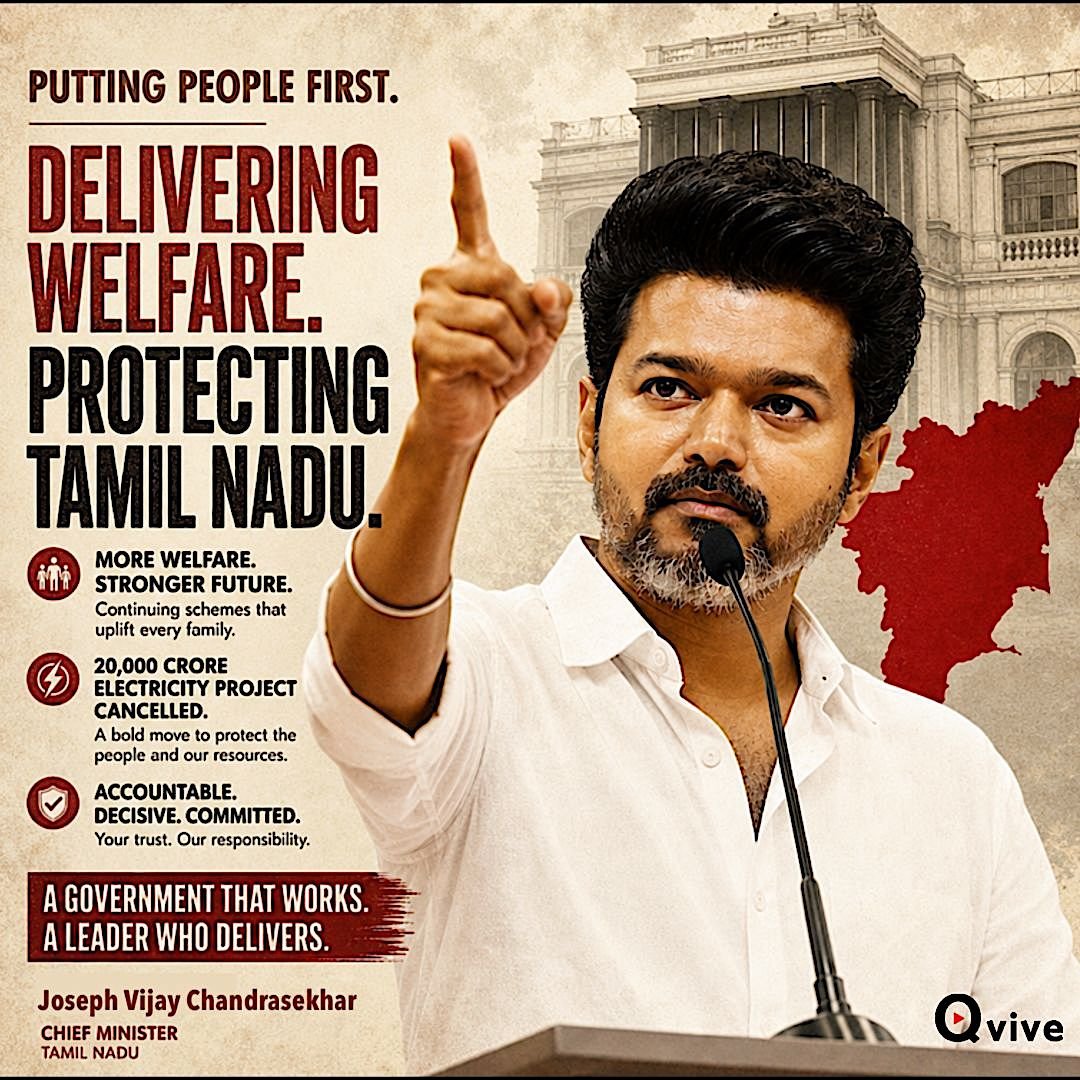
CM Vijay’s Bold Decision on Smart Meters Signals a New Era of People-Centric Governance
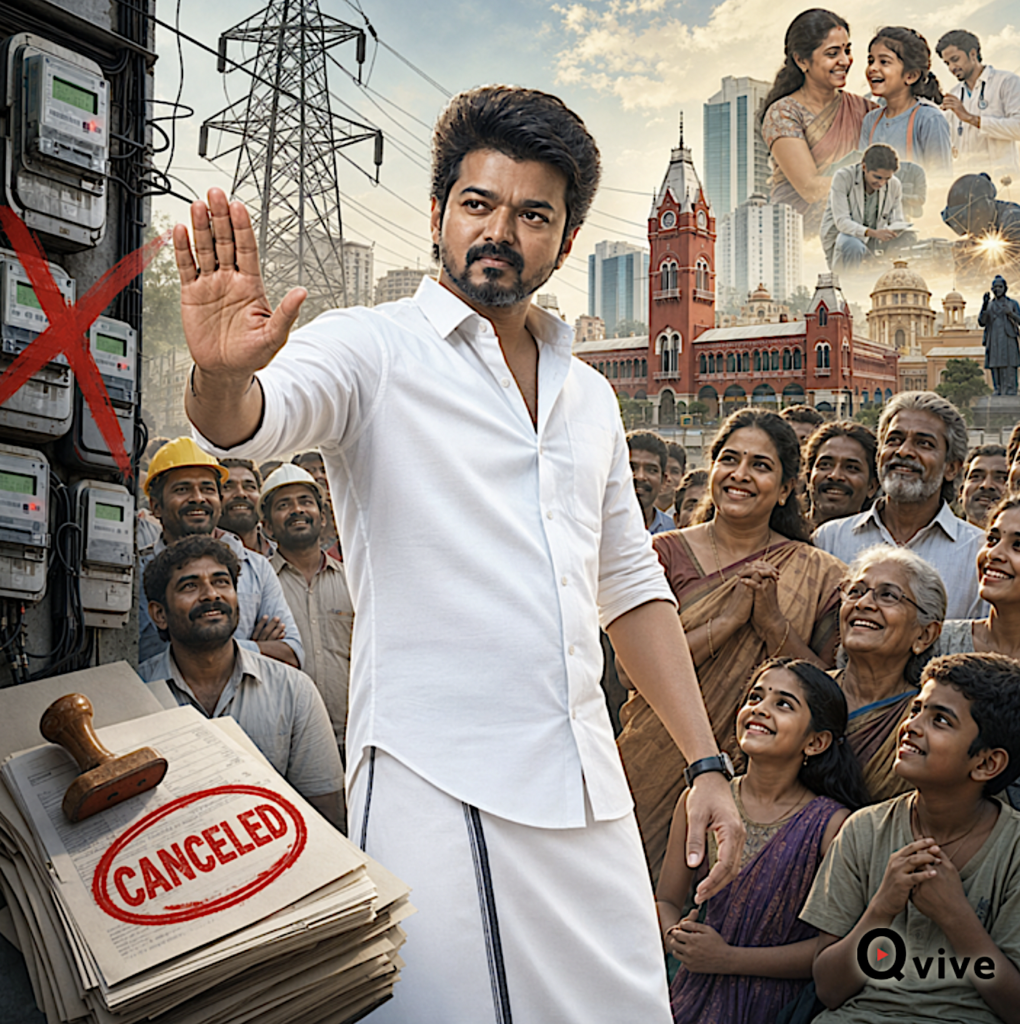
Chennai: In what many observers are calling one of the most significant policy decisions in Tamil Nadu’s recent history, the government led by Chief Minister Vijay has reportedly decided to scrap the proposed ₹20,000-crore smart meter project. The move has generated widespread discussion across political, industrial, and public circles, with many citizens welcoming it as a victory for public welfare and financial responsibility.
The smart meter project, originally planned under the Central Government’s Revamped Distribution Sector Scheme (RDSS), aimed to install advanced electricity meters for more than 3 crore consumers across Tamil Nadu. While supporters of the scheme argued that it would improve billing accuracy and reduce transmission losses, concerns were raised by consumer organizations, trade unions, and electricity board employees regarding its cost and long-term impact.
After assuming office, the new government reportedly undertook a detailed review of the Tamil Nadu Electricity Board’s financial condition. Faced with substantial debt obligations and growing operational challenges, the administration concluded that committing an additional ₹20,000 crore to the project could place further pressure on the state’s power sector finances.
The decision has been welcomed by many Electricity Board employees, who argued that modernization does not necessarily require a complete transition to smart meters. According to employee representatives, power losses can be minimized through technological improvements within the existing billing and distribution framework while preserving public control over essential services.
Many consumer groups also expressed concern that the project could eventually increase costs for ordinary households. They feared that additional financial burdens might ultimately be passed on to consumers and could affect long-standing welfare measures such as free electricity schemes.
Political observers see the government’s reported decision as consistent with its broader emphasis on people-oriented governance. Rather than pursuing a large-scale project with uncertain long-term benefits, the administration appears to have prioritized affordability, financial stability, and public confidence.
The move comes alongside several welfare initiatives announced by Chief Minister Vijay shortly after assuming office. Among the most notable was the approval of 200 units of free electricity for domestic consumers, a measure aimed at easing the financial burden on families amid rising living costs. The government has also announced initiatives focused on public welfare and citizen security, reinforcing its commitment to inclusive governance.
Across social media platforms and public forums, many concerned citizens from different parts of India have praised the reported decision. Supporters argue that protecting public utilities, reducing unnecessary expenditure, and ensuring that welfare benefits continue uninterrupted should remain priorities for any government.
Analysts believe the cancellation of the smart meter project could become a defining moment in the evolution of Tamil Nadu’s electricity sector. By reassessing large-scale expenditures and focusing on the immediate needs of consumers, the government has signaled a governance model centered on accountability and public interest.
While an official announcement from the Electricity Department is awaited, the reported decision has already sparked optimism among consumers and Electricity Board employees. Many hope that the funds saved from the project can be redirected toward strengthening existing infrastructure, improving service reliability, and preserving welfare schemes that benefit millions of households.
If confirmed, the cancellation of the ₹20,000-crore smart meter project will stand as one of the most consequential early decisions of the Vijay administration—one that supporters believe reflects a clear commitment to putting people before projects and public welfare before financial risk.
Also Read: