

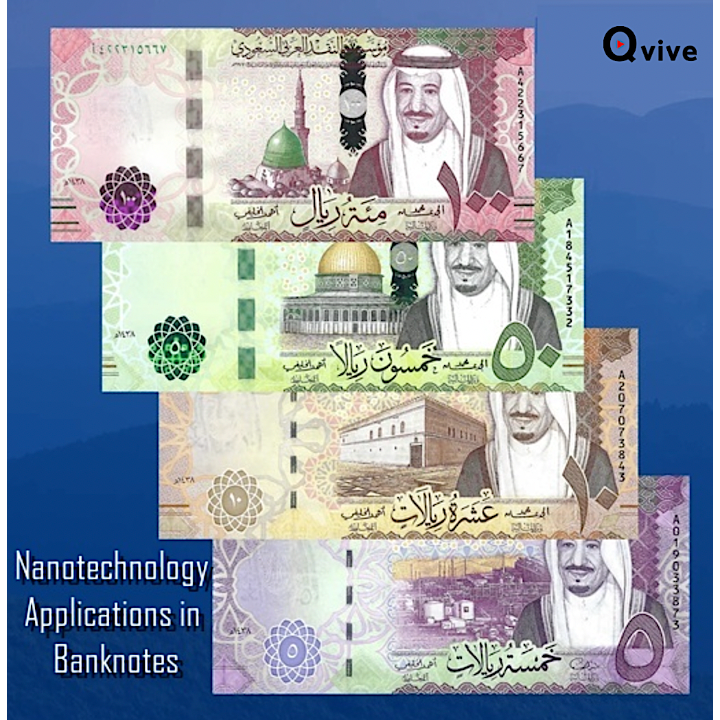
Trackable Banknotes using RFID.
A new RFID chip to be embedded into currency to track bank notes.
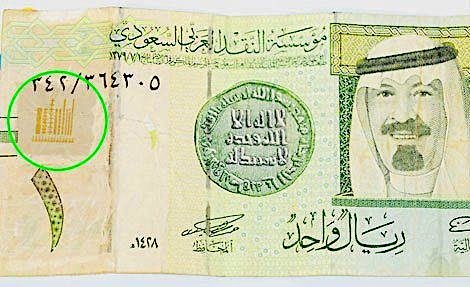
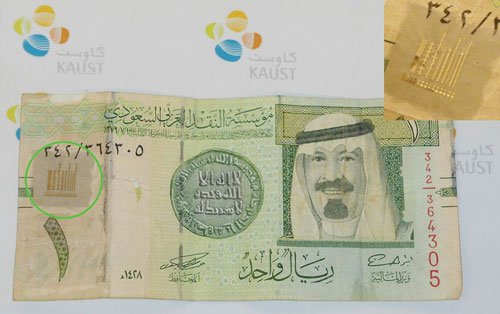
Researchers at the Functional Nanomaterials and Devices Laboratory at King Abdullah University of Science and Technology (KAUST) have pioneered a way to integrate non-volatile, rewritable memory into paper money.
This technology utilizes radio frequency identification (RFID) tags, allowing banknotes to communicate with scanners and store an updated scan log.
KAUST Innovation
Non-Volatile Memory:
Unlike standard passive RFID chips that lose data when powered down, the KAUST design integrates a memory component that retains a record of its scanning history even without continuous power.
RFID Communication:
The chip can actively emit radio signals to a compatible scanner, updating the note’s history each time it changes hands or is checked.
Anti-Counterfeiting:
By logging the exact history of the banknote, authorities and banks can authenticate genuine bills and rapidly trace illicit financial flows or counterfeit currency.
Energy Source:
The integration of cheap power sources or relying on the radio signal itself helps the chip power the read/write logic for the non-volatile memory.
While KAUST researchers developed this experimental nanotechnology, the implementation of smart-tracking and RFID in physical currency faces several hurdles and innovations worldwide:
Smartphone Integration:
Some systems combine traditional security features with NFC-enabled smartphones, allowing users or monetary agencies to challenge and authenticate banknotes easily without expensive proprietary hardware.
Cost and Feasibility:
Historically, widespread implementation of trackable technology has been impeded by the cost of embedding chips in billions of circulating bills.
Understanding RFID:
Passive RFID tags:
These are common RFID tags that do not have a power source of their own. They rely on energy from radio signals to function, which limits their capabilities.
Active RFID:
This type of RFID has its own power source, allowing it to perform tasks like memory refresh, which is crucial for tracking information on banknotes.
The Challenge:
Banknotes are made of fibrous materials that create challenges for applying electronic components.
To make it work, researchers had to solve problems like attaching electronic parts to the rough surfaces of banknotes.
The team, led by Husam Alshareef, has developed a non-volatile, ferroelectric memory made entirely of polymers that can be applied to the unique surface of banknotes.
They used a material called polydimethylsiloxane (PDMS) as a planarizing layer. This means it smooths out the surface, making it easier to apply electronic components.
Not only does PDMS help with surface smoothness, but it also offers better adhesion (stickiness) and protects the electronics from damage.
Performance:
The new banknote tags show performance similar to high-end electronics made from traditional materials like silicon.
This indicates that it is theoretically possible to embed advanced memory chips into banknotes, though it is not yet practical for widespread use.
Future Prospects:
More work is needed to make this technology commercially available. Areas of focus include:Improving printing methods for embedding electronics.
Enhancing the physical durability of the banknotes.
Developing protective layers to cover the electronic components.
Imagine This:
Envision a future where every banknote has a memory. Grading services could track the journey of a dollar bill, telling stories of its past, like which stores it visited or who spent it!
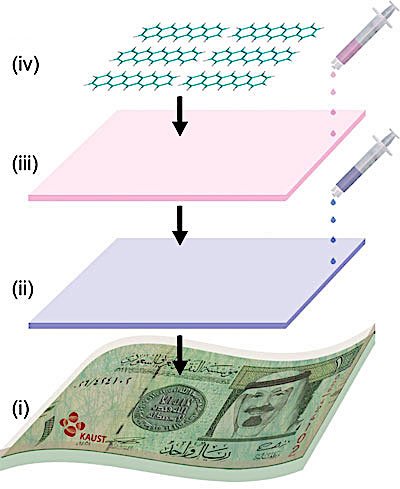
Fabrication of polymer ferroelectric memory devices on banknotes:
(i) PDMS coated banknote
(ii) spin-coating PEDOT:PSS bottom electrodes
(iii) spin-coating P(VDF-TrFE) ferrolectric layer ∼140 nm (iv) thermally evaporated pentacene thin film (∼60 nm).
Ref: https://www.nanowerk.com/spotlight/spotid=24982.php
Also Read: