

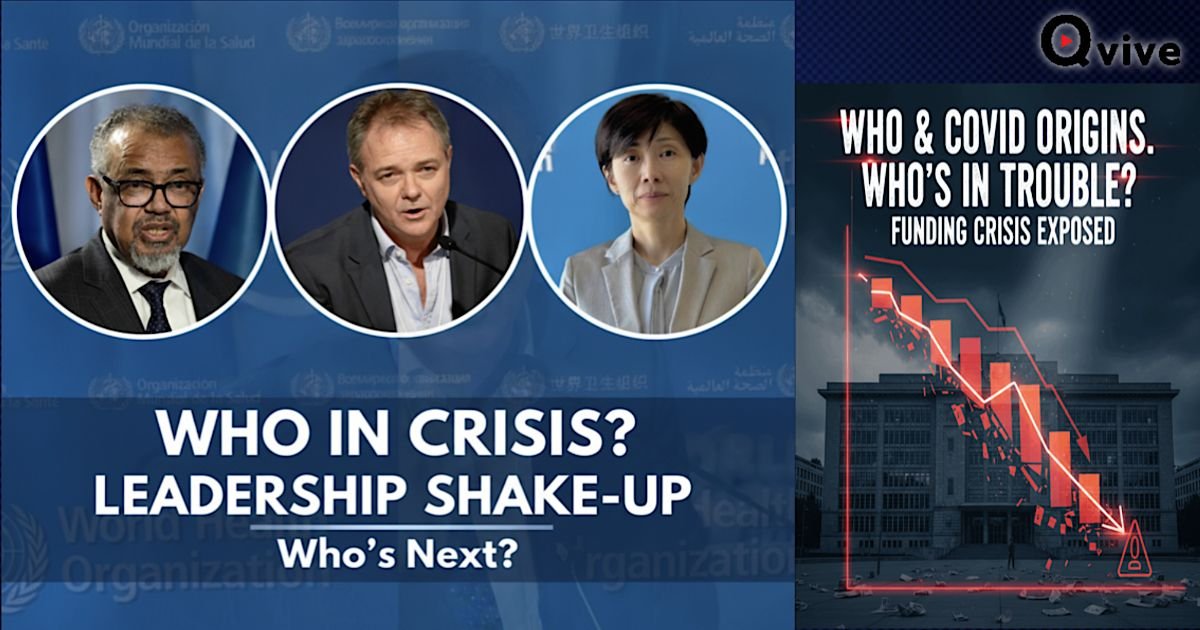
The World Health Organization is undergoing one of the most significant financial and organizational restructurings in its recent history. There are serious claims about the organization being “bankrupt,” as over 2,000 staff laid off and some senior officials resigned due to accusations that WHO concealed the origins of COVID-19.
WHO is facing a severe financial crisis
- WHO has faced major funding pressure following the announced U.S. withdrawal from the organization and reductions in development assistance from other countries.
- In April 2025, WHO said it faced a projected US$560–650 million salary gap for the 2026–27 biennium.
- WHO subsequently reduced its proposed 2026–27 programme budget from US$5.3 billion to US$4.2 billion.
Have over 2,000 positions been lost or are they being removed?
- WHO reported that its workforce was expected to fall by approximately 2,371 people between January 2025 and June 2026.
- The figure consisted of:
- 1,089 departures through retirement, voluntary early retirement and natural attrition.
- 1,282 positions abolished as part of the restructuring.
- By June 2026, WHO’s global workforce was reported at approximately 7,360, compared with 9,401 in January 2025 — roughly a 22% reduction.
Geneva headquarters has been hit particularly hard
- Geneva is WHO’s global headquarters and one of the main centers affected by the restructuring.
- WHO’s former-staff association reported that approximately 600 headquarters positions in Geneva could be affected, from a workforce of roughly 2,371 at the time of that report.
- Other reporting based on WHO restructuring data projected a reduction of about 28% at headquarters, making Geneva one of the areas experiencing the largest proportional reductions.
Have there been high-level resignations amid this crisis?
Yes. Two top-tier officials have recently departed:
- Chief Scientist Jeremy Farrar has resigned.
- Chief Data Officer Yukiko Nakatani, officially left her post on August 13, 2026, to return to Japan.

What impact do these departures have on WHO?
The WHO is currently facing a crisis with significant funding gaps and staffing reductions. Some reports indicate that US withdrawal and cuts to official development assistance have forced the organization to reduce its workforce by about 25% and scale back its budget for 2026-2027 from $5.3 billion to $4.2 billion.
Who is taking over other leadership roles due to these changes?
Dr. Nilesh Buddha has taken over as Officer-in-Charge of the Regional Office for South-East Asia.He steps in after corruption allegations against the former regional director, Saima Wazed, and takes over from Dr. Caterina Boehme, who is leaving to join the UN Population Fund. Dr. Sylvie Briand, an experienced member of WHO since 2001, will act as ADG while a new leader is found.
How does the WHO’s leadership shake-up correlate with future elections?
The changes come as the WHO gears up for the upcoming Director-General election, with Tedros’s term concluding in mid-2027. Further shifts in leadership and strategy may shape the political landscape as candidates prepare for election.
Is this just a facade for the public? Regardless of who changes or leaves, many believe that the WHO is still in line with the WEF Agenda 2030.
The WHO Was Founded by the Cartel as a Criminal Organization
Also Read: