

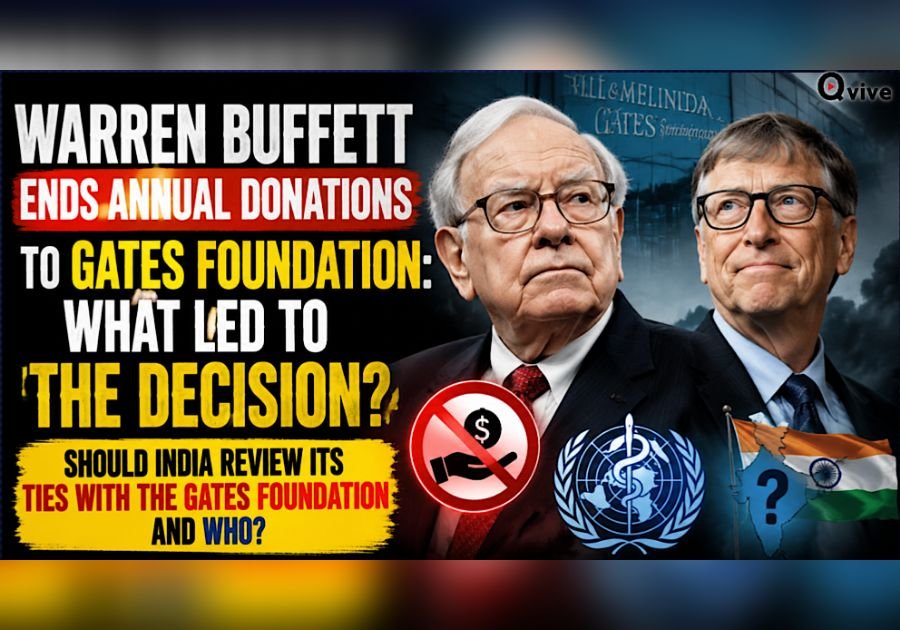
For nearly two decades, Warren Buffett was the single largest external contributor to the Bill & Melinda Gates Foundation. Beginning in 2006, Buffett pledged to systematically distribute the vast majority of his Berkshire Hathaway fortune, with the bulk of the annual disbursements directed to the Gates Foundation. By 2024, his cumulative contributions to the charity exceeded $47 billion.
However, in a major midyear philanthropic realignment, Warren Buffett excluded the Gates Foundation from his annual donations, opting instead to redirect his multi-billion-dollar summer contribution entirely to four foundations run by his children.This decision resulted in a $6 billion distribution divided among:
- The Susan Thompson Buffett Foundation (receiving approximately $4.4 billion to $4.5 billion in Class B Berkshire shares).
- The Sherwood Foundation, run by his daughter Susie Buffett (receiving approximately $500 million).
- The Howard G. Buffett Foundation, run by his son Howard Buffett (receiving approximately $500 million).
- The Novo Foundation, run by his son Peter Buffett and daughter-in-law Jennifer Buffett (receiving approximately $500 million).
The Catalyst: The Jeffrey Epstein Disclosures
The primary catalyst for this abrupt shift was the public disclosure of Microsoft co-founder Bill Gates’s historical ties to the convicted sex offender Jeffrey Epstein. Although Gates has denied any wrongdoing, apologized for the meetings, and asserted they were conducted solely for philanthropic fundraising purposes, the association severely impacted his public standing.
Internal documents released by the U.S. Department of Justice revealed extensive email correspondences, calendar entries, and photographs documenting meetings between Gates and Epstein. This prompted the Gates Foundation to commission an independent external review to assess its historical engagement with Epstein and strengthen its vetting policies.
Buffett, known for his stringent stance on reputational integrity, expressed astonishment at Epstein’s ability to manipulate wealthy and powerful figures. To protect his legacy and ensure absolute oversight, Buffett accelerated his plans to phase out his association with the Gates Foundation. He announced that his remaining fortune—valued at over $140 billion—will be fully liquidated and distributed to his children’s four family foundations by December 31, 2034, completely bypassing the Gates Foundation.
The Indian Government’s Stance on the Gates Foundation
The relationship between the Government of India and the Bill & Melinda Gates Foundation (BMGF) is highly complex, characterized by deep institutional integration alongside periodic, intense regulatory pushback. Over the past two decades, the Gates Foundation has embedded itself within India’s public health, agricultural, and financial inclusion systems. However, the Indian government has not dropped the Gates Foundation; rather, it has systematically restructured its relationship with the organization to assert greater sovereign control and regulatory oversight.
1. The 2017 National Technical Advisory Group on Immunization (NTAGI) Restructuring
The most significant structural pivot occurred in 2017. Historically, the Gates Foundation funded the National Technical Advisory Group on Immunization (NTAGI) Secretariat through the Immunization Technical Support Unit (ITSU), which was managed by the global health organization PATH. Critics and nationalist groups, such as the Awaken India Movement (AIM), Universal Health Organisation (UHO), Swadeshi Jagran Manch (SJM)—an economic affiliate of the Rashtriya Swayamsevak Sangh (RSS)—argued that having a foreign philanthropic entity fund the very body recommending vaccine introductions created severe conflicts of interest.
In response to these domestic pressures, the Ministry of Health and Family Welfare decided to end the Gates Foundation’s direct funding of the NTAGI Secretariat. The government transitioned the funding and administrative management of the ITSU directly to the state-run National Institute of Health and Family Welfare (NIHFW). This move was designed to insulate India’s national immunization policy from external financial influence, though the BMGF continued to collaborate with the government on other technical projects.
2. Tightening of the Foreign Contribution Regulation Act (FCRA)
Under the administration of Prime Minister Narendra Modi, India has aggressively tightened the Foreign Contribution Regulation Act (FCRA) to monitor and restrict foreign funding flowing to domestic NGOs. While the Gates Foundation itself operates under a specific bilateral agreement with the Indian government, many of its local partner organizations and grantees have faced intense scrutiny, license suspensions, or audits. By enforcing strict FCRA compliance, the Indian government has effectively curbed the capacity of foreign donors to independently lobby or shape grassroots policy without direct state approval.
3. Continued Strategic Collaboration
Despite these regulatory corrections, the Indian government continues to partner with the Gates Foundation in critical areas where state capacity requires technical acceleration. The BMGF remains active in supporting:
- The National Health Authority (NHA): Assisting in the digital architecture of the Ayushman Bharat Digital Mission (ABDM).
- Agricultural Development: Collaborating with the Ministry of Agriculture and Farmers Welfare to improve crop yields and digital agricultural infrastructure in states like Bihar and Uttar Pradesh.
- Sanitation and Financial Inclusion: Supporting the Swachh Bharat Mission (Clean India Campaign) and digital payment ecosystems linked to the Jan Dhan-Aadhaar-Mobile (JAM) trinity.
Public Demand and the Debate to “Drop” the Gates Foundation and the WHO
In India, a vocal segment of public intellectuals, nationalist advocacy groups, and public health activists have argued that it is “high time” for the Indian government to sever ties with both the Gates Foundation and the World Health Organization (WHO). This public demand is rooted in anxieties over national sovereignty, bio-colonialism, and the democratic accountability of global health governance.
The Critique of “Philanthrocapitalism”
The core academic critique against the Gates Foundation is rooted in the concept of philanthrocapitalism. Scholars argue that private, unaccountable foundations use their immense wealth to dictate public health priorities for sovereign nations. By prioritizing high-tech, vertical intervention programs—such as targeted vaccination campaigns—critics argue that the BMGF diverts scarce public resources away from horizontal, comprehensive primary healthcare systems.
In India, this manifested in intense debates over the eradication of polio. While the intensive vaccination campaigns successfully eliminated wild poliovirus from India, critics pointed to the high rates of non-polio acute flaccid paralysis (NPAFP) observed during the peak of the oral polio vaccine (OPV) campaigns, arguing that a more holistic approach to sanitation and water quality would have yielded safer, broader health outcomes.
The WHO and Sovereign Policy Alignment
The demand to distance India from the WHO stems from similar concerns regarding institutional independence. Because the WHO relies heavily on specified voluntary contributions—of which the Gates Foundation and Western governments are the largest donors—critics argue that the WHO’s global guidelines are frequently aligned with the interests of multinational pharmaceutical corporations and private donors rather than the grassroots needs of developing nations.
During the COVID-19 PLANdemic, public skepticism intensified regarding vaccine mandates, intellectual property barriers (such as the TRIPS waiver negotiations), and the rapid emergency use authorizations of vaccines. Activists argued that India’s domestic medical research infrastructure, such as the Indian Council of Medical Research (ICMR), should operate entirely independently of WHO guidelines, which they viewed as overly influenced by Western pharmaceutical paradigms.
Also Read:
The Dark Underbelly of AI: Epstein, Eugenics, and the Hidden Agenda Behind Your Digital Life
The Epstein-Gates Pandemic Architecture: Financializing Global Health
Bill Gates, the Big Boss of the World Health Organization: Philanthropist or Misanthropist?