

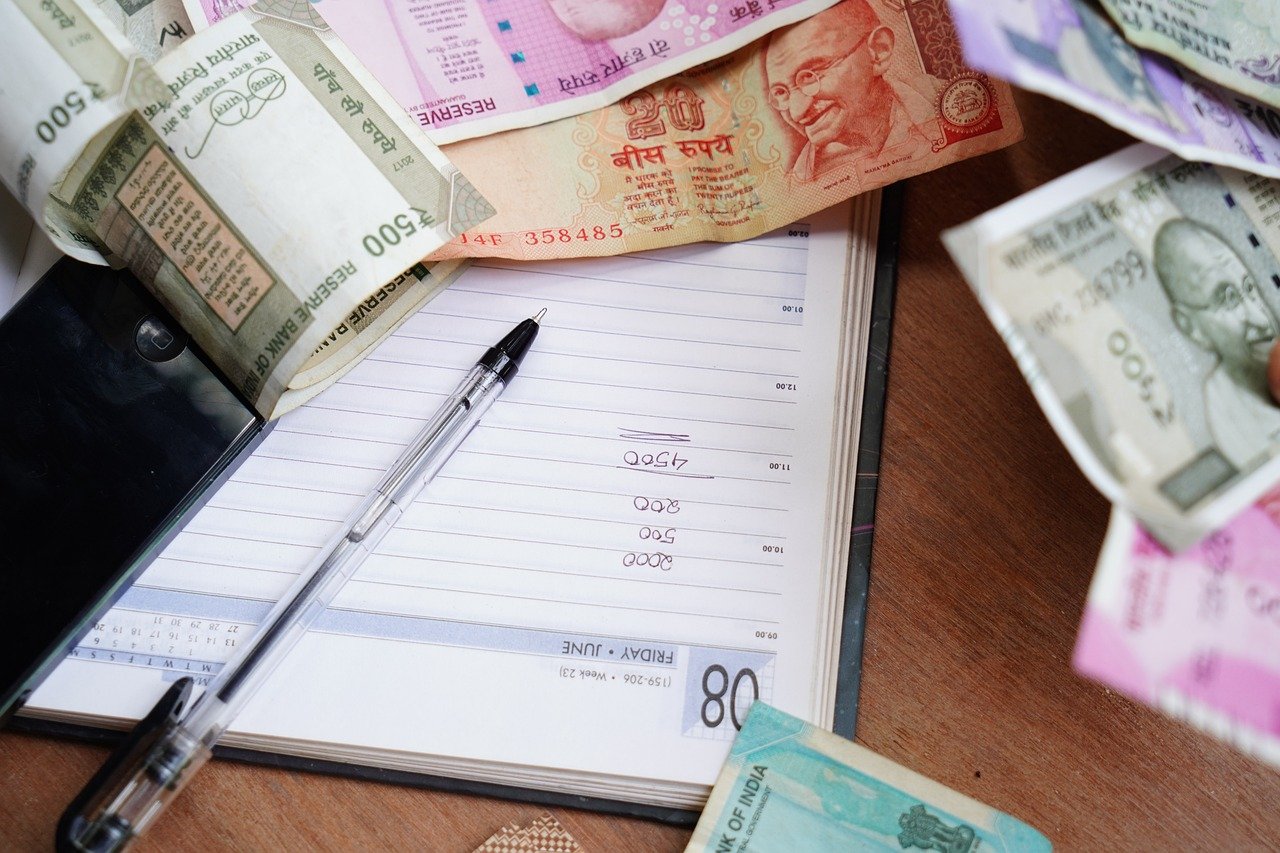
June 26, 2017: India tried [a] to reduce the use of cash in its economy by eliminating, overnight, two of its most widely used bills in what was called demonetization.
[a] http://indianexpress.com/article/india/india-news-india/narendra-modi-prime-minister-address-to-the-nation4364609/While the effort – initially explained as an attempt to curb “black money” – has been a failure in many respects [b], it was part of an ongoing and global push toward cashlessness [c].
[b] https://www.nytimes.com/2017/01/24/world/asia/in-its-third-month-indias-cash-shortage-begins-to-bite.html?_r=0 [c] http://theconversation.com/cash-is-falling-out-of-fashion-will-it-disappear-forever-79316What India and other governments have failed to contend with, however, is the adverse effect such severe policies have on the poor, who seldom use banks.
India’s working poor rely almost exclusively on cash, with about 97 percent of all transactions [d] involving an exchange of rupees. With 93 percent of the country working in informal off-the-books jobs, most transactions entail personalized relationships rather than standardized forms of legal contract or corporate institutions.
[d] http://documents.worldbank.org/curated/en/765851467037506667/pdf/106633-WP-PUBLIC-Innovative-Solutions-Accelerate-Adoption-Electronic-Payments-Merchants-report-2016.pdfMy own research on the persistence of Delhi’s informal recycling economy shows just how important cash is to low-income laborers.

How Delhi’s informal recycling economy works
For the past few years, my work has focused on informal garbage collectors in a northwest Delhi neighborhood who collect garbage for middle-class residents across the city.
Beyond collecting trash, these workers also constitute [e] the city’s only recycling service by separating out and selling plastics, papers, metal and other valuable scrap – including human hair sold for wigs and stale bread used for cow feed. The money they earn from selling these materials is how they support their families.
[e]http://www.worldcat.org/title/of-poverty-and-plastic-scavenging-and-scrap-trading-entrepreneurs-in-indias-urban-informal-economy/oclc/958715213?referer=di&ht=editionWhile my research focus was to understand how an informal economy like this one persists when confronted with formal government-backed services, I also learned how the exchange of cash between buyers and collectors of scrap helped structure community life by creating durable social bonds that functioned like contracts.
Over 20 months from 2013 to 2015, I interviewed more than 100 garbage collectors, scrap buyers and policymakers and worked alongside collectors on their garbage collection routes, at their homes where they sort and sell the scrap, and at recycling factories.
At the site where I did the bulk of my research, around 100 scrap collectors and their families live in homes constructed from bamboo and plastic sheeting on privately owned land. These structures offer not only shelter, but also space for sorting scrap into about 10 different categories, which their families typically assist with until the scrap can be sold.
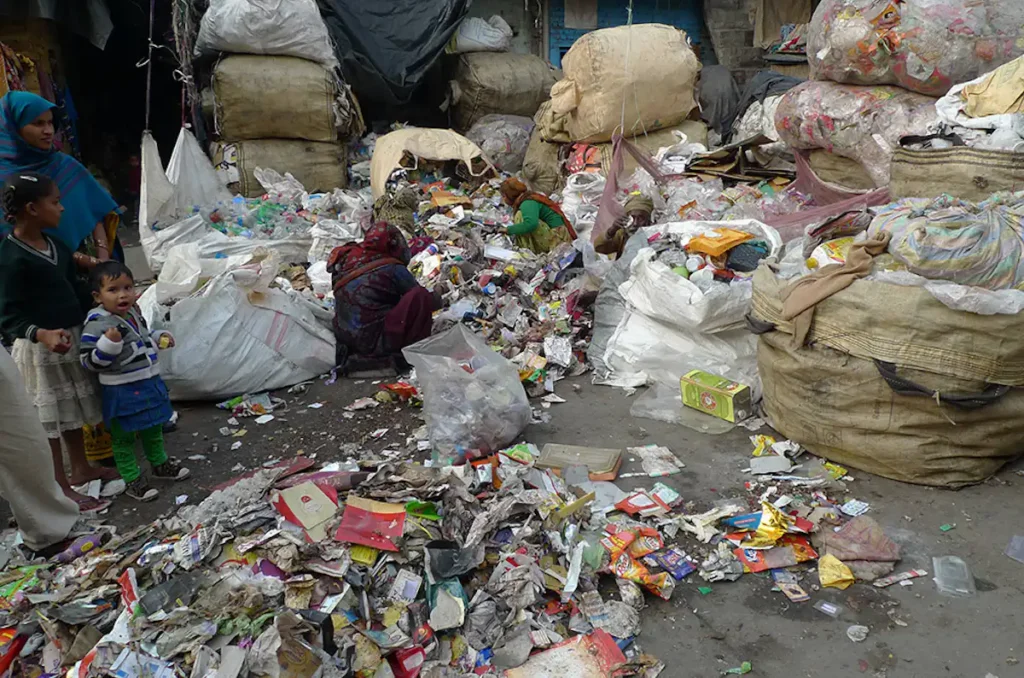
Once it’s sorted into sacks, collectors hoist them onto scales, while buyers jot down the weights and multiply them by the going rate to arrive at the price tag. But, collectors usually aren’t paid the total amounts on the spot. Instead, small payments are made for daily expenses, and the rest is noted down as a deposit against the regular advances given to collectors.
In other words, buyers act almost as patrons who are responsible for the basic needs of their dependent laborers. The collectors, in turn, rely on their buyers for cash to meet their daily needs, as well as for larger sums to pay for weddings, medical expenses and, in some cases, to build better houses and purchase farmland back in the village.
This infuses the cash with extra meaning [f] and also requires durable relationships and negotiations to function. Physical currency’s flexibility makes it amenable to negotiation [g] in both timing and amount – a feature that requires more personalized relationships.
[f] http://www.worldcat.org/title/of-poverty-and-plastic-scavenging-and-scrap-trading-entrepreneurs-in-indias-urban-informal-economy/oclc/958715213?referer=di&ht=edition [g] https://www.jstor.org/stable/2780903Furthermore, scrap buyers themselves get credit to run their businesses in the same way, through informal [h] channels that depend on personal relationships, rather than banks.
[h] http://pages.ucsd.edu/%7Earonatas/conference/Banking_on_each_other.pdfA 2015 report noted that just 15 percent of adults worldwide used a bank account to make or receive payments [i] over a 12-month period.
[i] http://documents.worldbank.org/curated/en/187761468179367706/pdf/WPS7255.pdf
When cash disappears
So what happens when 86 percent of a nation’s currency suddenly disappears?
When I returned in December 2016, a month after Indian Prime Minister Narendra Modi announced [j] that all 500 and 1,000 rupee bills would cease to be legal tender, a scrap collector I knew relayed his experience. Just three hours before Modi’s Nov. 8 announcement, Pintu had boarded a train for a 24-hour journey to his village near Calcutta. With him were 11 1,000 rupee notes that his buyer gave him as an advance just before he left. Just as he got on the train, the notes were declared worthless, and he barely managed to buy a single meal for his family along the way.
[j] https://www.wsj.com/articles/india-to-phase-out-current-500-and-1000-rupee-bank-notes-1478619693More importantly, it was very difficult for people like Pintu and even the scrap buyers to get the new 500 and 2,000 rupee bills issued to replace the eliminated notes. The chain had been damaged: With cash in short supply everywhere, scrap buyers couldn’t pay the collectors, who in turn had more trouble supporting their families. Seeing how people were struggling, a buyer rhetorically asked: “Why didn’t the government do more to make sure that poor people would have money?”
While middle-class Indians were able to exchange their currency in banks, the unbanked poor often had to rely on informal lenders who would only exchange the old bills for new ones at predatory rates. Without savings, and with high rates of illiteracy, these laborers have little chance of joining Modi’s dream of a cashless, digital economy [k].
[k] https://www.bloomberg.com/news/articles/2017-03-09/modi-s-goal-of-a-cashless-india-may-be-thwarted-as-digital-dropsTake it easy
Some have argued [l] that a cashless society would help the poor by, for example, reducing crime and making labor practices more transparent.
[l] http://fortune.com/2017/01/16/cashless-rogoff-india-scandinavia/The United Nations is leading an effort by more than 50 financial companies, foundations, and governments [m], including India, to accelerate the transition from cash to digital payments specifically to “reduce poverty and drive inclusive growth.”
[m] https://www.betterthancash.org/aboutThere’s some truth to this, and while cash exchanges can facilitate mutual care and responsibility, the downside to the patron relationship I described above is that cash can facilitate exploitative or predatory practices because of how much control moneylenders and bosses have over laborers. So it may be wise to gradually move some forms of exchange to digital transactions.
But, if such a future exists, it is still a long way off, at least in India. According to a 2014 study, just 10 percent of Indians over 15 had ever made a digital payment [n]. And in countries where a large share of transactions are already done digitally, there’s evidence that this does not serve the poor well [o].
[n] http://fletcher.tufts.edu/%7E/media/Fletcher/Microsites/Cost%20of%20Cash/COC-India-lowres.pdf [o] http://www.newyorker.com/currency-tag/the-high-cost-for-the-poor-of-using-a-bankWith cashlessness becoming a new economic frontier, the effects of such state-led policies on cash-dependent economies must be considered seriously before they are indiscriminately introduced. My work in India leads me to believe that cash plays an important role in our modern economy, particularly among the poor, and those urging a cashless future should do so with great caution.
Source: Mint-Image, Theconversation – Image,
Also Read: