

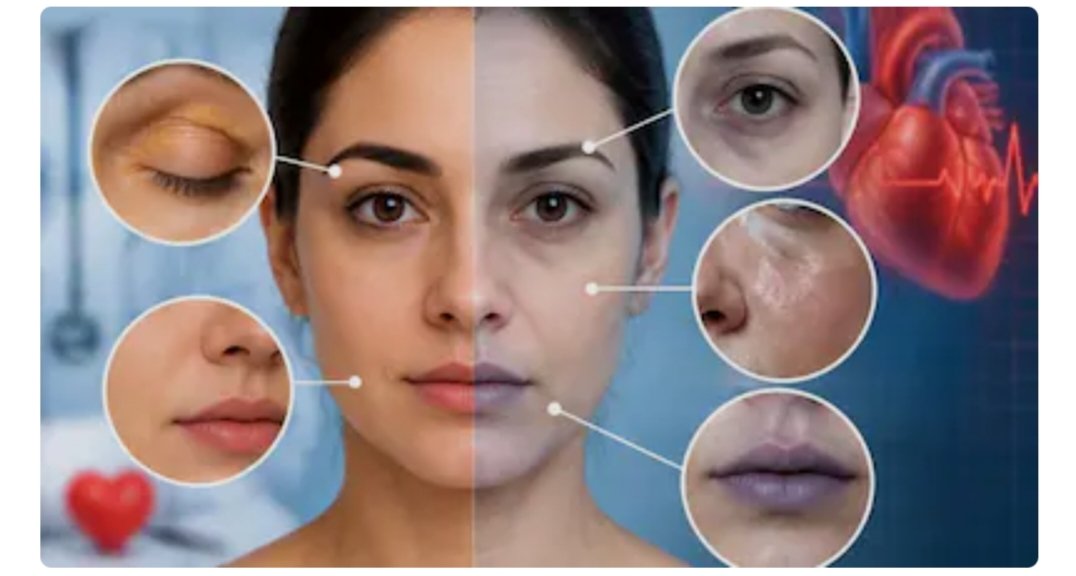
When most people think of a heart attack, symptoms like chest pain, shortness of breath, and excessive sweating come to mind. But have you ever considered that your face and skin can also provide clues about your heart’s health? Experts say that certain changes in the face and skin can sometimes point to underlying health problems. While a heart attack cannot be diagnosed based solely on the face, there are some signs that should not be ignored.
Dr. Anshul Kumar Jain, Director of Cardiology at CK Birla Hospital, Delhi, says that changes in the skin can sometimes be a sign of problems related to blood circulation, oxygen deficiency, or cholesterol. If such symptoms appear, it is important to consult a doctor promptly.
Sudden paleness in the face:Dr. Jain says that if a person’s face suddenly appears very pale, it could be a sign of reduced blood flow. During a heart attack, the body prioritizes blood supply to vital organs, which can reduce blood flow to the skin. However, anemia, low blood pressure, or other causes can also cause paleness in the face.
Sweating accompanied by cold and clammy skin: Doctors say that if you suddenly experience excessive sweating and feel cold or clammy skin, even without physical exertion or hot weather, this could be a sign of a serious heart problem. If these symptoms are accompanied by chest pressure, dizziness, or difficulty breathing, you should immediately consult a doctor.
Bluish discoloration of the lips or face: A bluish or grayish tint around the lips, face, or fingers could indicate that the body is not receiving enough oxygen. This is medically known as cyanosis. This may be associated with a serious heart or lung problem, and immediate treatment is necessary in such a situation.
Yellowing of the skin or eyes:Dr. Anshul says that yellowing of the skin or eyes is not usually considered a direct sign of a heart attack. It can sometimes be a sign of liver or blood-related diseases. However, people who already have risk factors for heart disease should not ignore such changes and should consult a doctor.
Yellow spots around the eyes: Small, raised, yellow spots that appear around the eyelids are called xanthelasma. These are caused by cholesterol and fat deposits. The presence of such spots does not necessarily mean that a person has heart disease, but it may be a sign of high cholesterol, which increases the risk of future heart disease.