

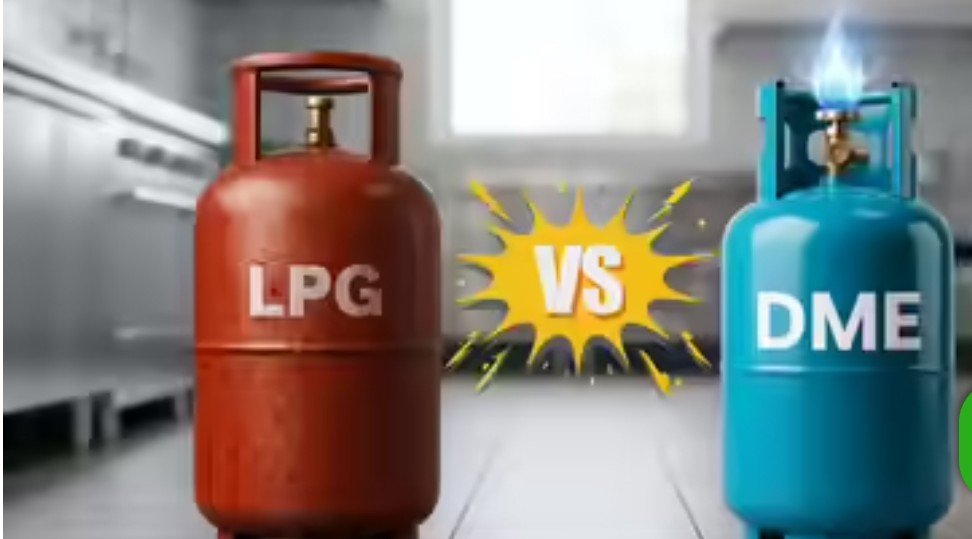
Due to the war between Iran, Israel, and the United States, countries like India experienced LPG shortages. During this time, various LPG alternatives were in the news. Induction and infrared stoves were widely adopted, while technologies like plasma stoves and hydrogen stoves were also discussed. However, plasma and hydrogen stoves were not practical, preventing their widespread adoption. Meanwhile, a new technology-based fuel has emerged as a promising one, one that is not only practical but also fits perfectly into existing gas-cylinder infrastructure.
We are talking about DME, or Dimethyl Ether, which scientists are calling the fuel of the future. According to reports, DME could completely replace the dependence on cooking gas in the future. While plasma and hydrogen technologies appear to be beyond the reach and reach of the average person, DME could prove to be a future technology that can easily fit into a stove-cylinder kitchen setup.
CSIR-National Institute of Science Communication and Policy Research has posted on X about this, stating that the fuel developed by their researchers behaves like LPG and can be produced from polluting smoke and waste, i.e., biomass. This fuel can fit well into Indian kitchens and could also prove to be a major leap towards India’s self-reliance in energy.
DME, or Dimethyl Ether, is a technology that scientists consider the fuel of the future. Simply put, it is a synthetic gas that works much like LPG, although it is much better for the environment than LPG. The most significant feature of DME is its source. We all know that LPG is extracted from underground and is a fossil fuel. DME can be produced in the lab from existing waste, agricultural residues such as stubble, and factory smoke.
DME is being considered an alternative to LPG because it closely resembles LPG in terms of technology and use.
The most significant advantage of DME is that, unlike other stoves, you don’t need to replace your old gas stove, pipes, or cylinders. It easily fits into existing infrastructure.
We depend on foreign sources for LPG, but DME can be produced domestically from coal, waste, and stubble. This significantly reduces costs.
Compared to LPG, DME produces no soot or toxic fumes. It is such a clean fuel that even utensils don’t get blackened.
Another advantage of DME is that it can be filled into cylinders in a liquid state, thus maintaining the current kitchen setup.
DME technology can also make India energy self-sufficient. In times of war or tension, DME technology could become a major tool for eliminating foreign dependence. It could save billions of dollars in foreign exchange.
According to CSIR-NIScPR, this could begin with a blending approach. In fact, up to 20% DME can be added to existing LPG cylinders without any technological changes. This would require neither the stove nor the cylinder, but would immediately reduce the country’s dependence on foreign gas by 20%.
Waste plays a key role in developing DME technology. Urban garbage and rural stubble, which typically cause pollution, can be converted into valuable fuel through this technology. Furthermore, being manufactured domestically also saves logistics and import costs. This could also provide relief to the common man on gas prices.