

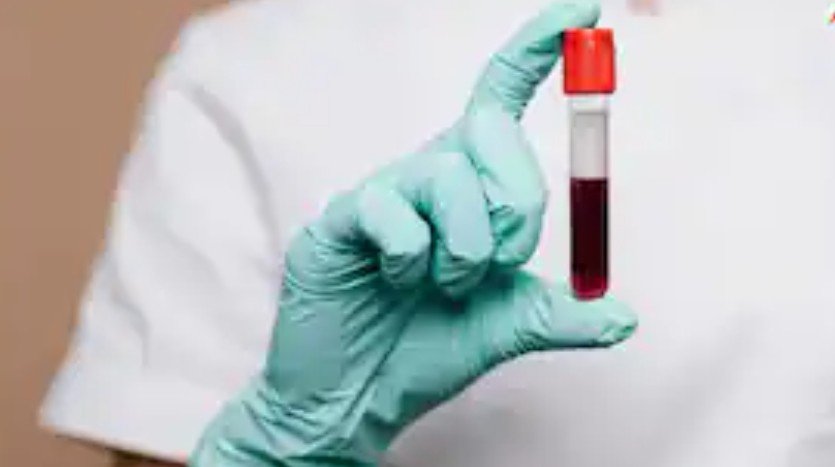
Medical science is rapidly approaching a stage where a simple blood test can provide early indications of many serious diseases. Researchers at the University of California, Los Angeles, have taken a significant step in this direction. They have developed a new test that can help detect many diseases, including cancer, at an early stage. Let us explain what the research revealed.
This research, published in the prestigious journal Proceedings of the National Academy of Sciences, suggests that a single blood sample can assess the body’s overall health. Early detection has been a major challenge in the medical field. If diseases like cancer are detected early, they become much easier to treat. However, existing tests often focus on a single disease and are often expensive or inconvenient.
This new technology is called “MethylScan.” This test analyzes small fragments of DNA present in the blood. This DNA comes from different cells in the body, and when cells die, they release their information into the blood. The unique feature of this test is that it reads methylation patterns in DNA. These are chemical markers that change depending on the condition of the cells. This means that healthy and diseased cells have different methylation patterns, which can be identified to indicate disease.
A major problem with blood-based testing is that most of the DNA in the blood comes from normal cells, making it difficult to detect signs of actual disease. This is called background noise. To overcome this challenge, researchers developed a new technique that removes unnecessary DNA and focuses only on essential and informative DNA. This increased the accuracy of the test and reduced the cost. The study tested over 1,000 people, including cancer patients, those with liver disease, and healthy individuals. The data was interpreted using advanced computer analysis.
The test identified approximately 63 percent of cancer cases overall and more than half of early-stage cases. In liver cancer, in particular, the detection rate in high-risk groups was nearly 80 percent. Another significant advantage is that the test can also identify which organ is affected, helping doctors direct further investigations in the right direction. However, this technology is still in its early stages and requires further large-scale testing before it can be widely used.