

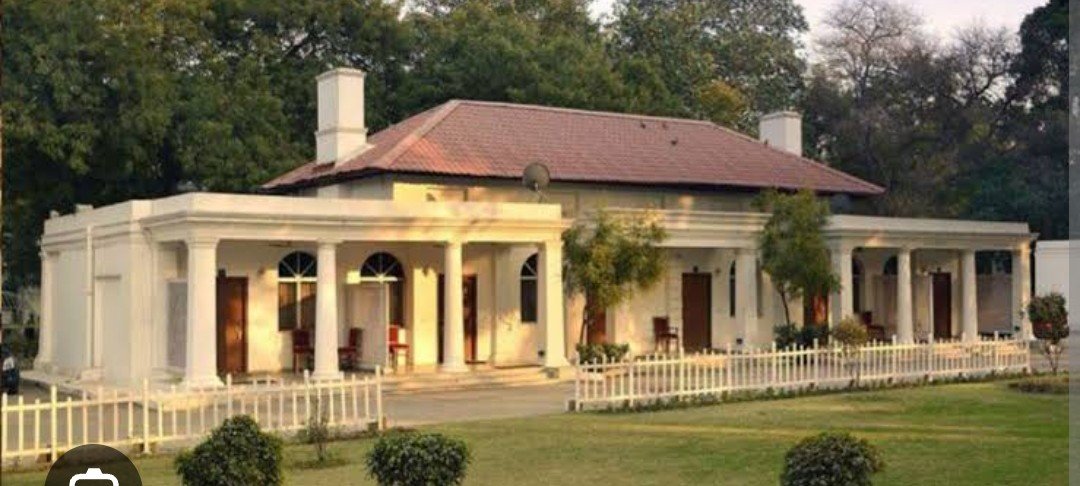
For decades, the Delhi Gymkhana Club, located in the heart of New Delhi, was initially established for sports and those interested in sports… but gradually became a symbol of Delhi’s power, bureaucracy, and high society. It is currently in the news because of reports of financial scams and conspiracies against the country. The central government has ordered the Gymkhana Club to hand over the premises by June 5th. The government has stated that this 27.3-acre plot is necessary to “strengthen and secure defense infrastructure.” The big question is whether the government can order any building or institution to vacate in this manner, and what misdeeds have been committed by the club’s members.
Those who were members of the Delhi Gymkhana Club, which began nearly 113 years ago, would know how significant a privilege it was to be a member of this club. There was a long waiting list of over 30 years to become a member, and among the contenders were prominent politicians, ministers, and thousands of influential people. Yet, only about 100 people were granted membership annually. Now, a fierce controversy has erupted over the central government’s notice to vacate this high-profile club premises. This area is very close to the Prime Minister’s residence and several sensitive government complexes. The central government has issued a notice to the club management, stating that the government land (totaling 27.3 acres) on which the club operates is now needed for national security and defense-related purposes.
The most important aspect of this entire matter is its legal aspect. This is not just a matter of vacating a club, but has become an example of the conflict between government land, public interest, and institutional rights.
The government argues that such a large and prime government land in the heart of the country’s capital, Delhi, cannot be used for a limited and exclusive club, especially when national security and public use are at stake. Even if this matter goes to court, it has often been observed that when public interest and private institutional interests conflict, the courts prioritize public interest.
As reported, the 27-acre land on which the Delhi Gymkhana Club is built is leased from the government. This means that the central government owns the land. If the government proves that the club has violated the terms of the lease, it has the right to terminate the lease. Legally, this matter falls under the scope of “lease termination” and “public property reclamation.”
The Delhi Gymkhana Club is also registered as a company. There have been reports of alleged irregularities in the club’s operations. Therefore, the case is considered to be related to Sections 241 and 242 of the Companies Act, 2013. These grant the government the right to intervene in the operations of an organization if there is a potential for mismanagement or harm to the public interest. In 2021, the National Company Law Appellate Tribunal also made negative comments about the Delhi Gymkhana Club. The NCLT acknowledged that public interest could be affected by the club’s affairs.
The issue of national security was added, citing “defense infrastructure” and public safety. Under Indian law, when issues of national security arise, courts generally grant broad powers to the government. Given these factors, it can be said that the government’s position in this case is legally strong.
The club management still has legal options. If it feels the government is acting arbitrarily, it can approach the court. If the court finds that a fair hearing or due process was not followed, the government’s action may even be stayed.
Some reports (such as media reports citing the autobiography of former CIA agent Robert Baer) claim that during the Cold War, when other locations in Delhi were under tight surveillance, foreign spies used the club to obtain Indian military and defense information by leveraging their influence within the local elite.
An FIR has been filed against the club by the Delhi Police. The case relates to illegal drone flying in the highly sensitive Prime Minister’s Residence area and violations of security regulations.
Financial scams and irregularities: An investigation by the Ministry of Corporate Affairs (MCA) has revealed significant financial irregularities, misappropriation of funds, and violations of regulations. The club faces serious allegations of corruption amounting to approximately ₹50 crore and illegally collecting public funds from individuals.