

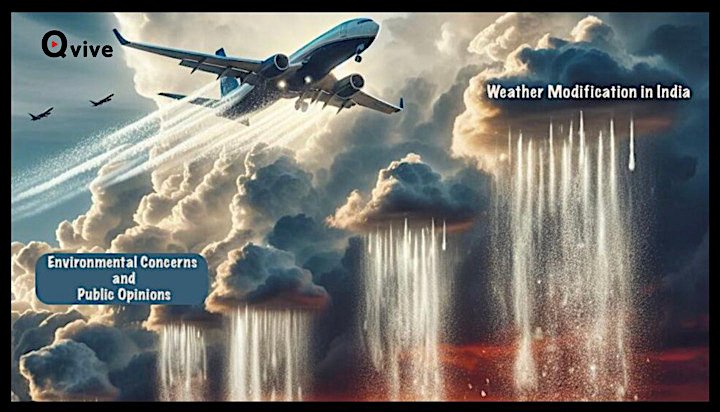
Cloud seeding is a weather modification technique aimed at enhancing precipitation by dispersing substances into the atmosphere that serve as cloud condensation or ice nuclei. In India, this technology has been attempted multiple times since the 1980s, particularly during periods of drought.
There are no documented cases of successful cloud seeding in India that can be compared with failures.
Despite numerous attempts at cloud seeding across various Indian states over several decades, there are no documented cases of successful outcomes that can be reliably compared with failures. The prevailing consensus among scientists and meteorologists is one of caution regarding the efficacy and economic viability of such interventions.
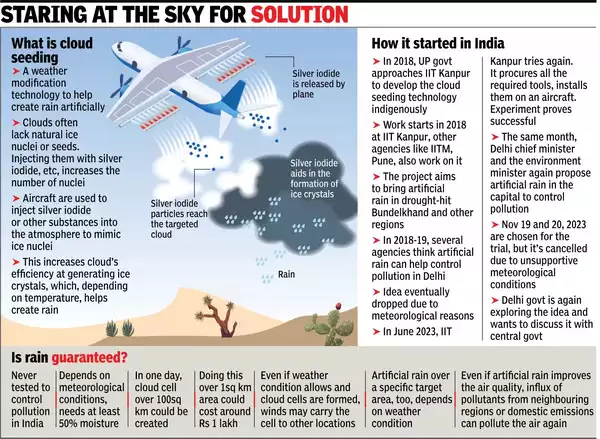
- Initial Attempts: The first significant attempts at cloud seeding in India occurred in Tamil Nadu during the 1983-1984 period. Following this, states like Karnataka and Andhra Pradesh also initiated their own projects to combat drought conditions.
- Subsequent Efforts: Karnataka has made several attempts to implement cloud seeding, notably under “Project Varuna” initiated in 2003 and again in subsequent years (2008, 2012). However, these efforts have often been met with skepticism regarding their effectiveness.
Documented Outcomes
- Lack of Success Evidence: According to various sources, including scientists and meteorological departments, there is no conclusive evidence that cloud seeding has successfully increased rainfall in India. For instance, J Srinivasan from the Divecha Centre for Climate Change stated that experiments conducted have not yielded sufficient data to prove success.
- Mixed Results Internationally: While some international studies suggest potential increases in precipitation due to cloud seeding, these results are often contested and lack consistency. This skepticism extends to Indian experiments where outcomes have been described as ambiguous or inconclusive.
- Failures Documented: Numerous reports highlight failed attempts at cloud seeding across different states:
- The Brihanmumbai Municipal Corporation (BMC) faced failures during its cloud seeding initiatives intended to augment rainfall.
- In Karnataka, previous experiments resulted in minimal or no increase in rainfall despite significant investments.
Ref:
- This is the first footnote. [ https://timesofindia.indiatimes.com/city/bengaluru/rainmaking-a-failed-experiment/articleshow/5039884.cms]
- Here’s another with multiple paragraphs and code. [ https://theconversation.com/cloud-seeding-can-increase-rain-and-snow-and-new-techniques-may-make-it-a-lot-more-effective-podcast-204975]
- Additional context on BMC’s efforts can be found here. [ https://indianexpress.com/article/cities/mumbai/fearing-worst-bmc-to-fall-back-on-failed-cloud-seeding/]
- Further details on Karnataka’s initiatives are available here. [ https://yourstory.com/2017/08/karnataka-cloud-seeding]
Some notable examples of failed cloud seeding operations in India include:
- Karnataka (2003 and 2004): The Karnataka government initiated cloud seeding operations during periods of drought in 2003 and 2004. Despite these efforts, the results were disappointing, with no significant increase in rainfall attributed to the seeding activities. The lack of measurable success led to skepticism about the effectiveness of such interventions.
- Tamil Nadu (1983, 1984-1987, and 1993-1994): Tamil Nadu conducted several cloud seeding operations during severe droughts across multiple years. However, these initiatives did not yield the expected results in terms of increased precipitation, leading to questions about their efficacy.
- Maharashtra (2004): In Maharashtra, cloud seeding was attempted by a US-based company, Weather Modification Inc., but similar to other instances, it did not produce significant rainfall or improve water availability for agricultural needs.
- Beijing Olympics Attempt (2008): While not directly an Indian operation, it is worth noting that cloud seeding was also attempted during the Beijing Olympics to prevent rain during the events. This operation has been cited as an example of how weather modification efforts can be controversial and often yield mixed results.
- General Observations: Across various states in India where cloud seeding has been implemented, including Karnataka and Tamil Nadu, there have been consistent reports from farmers and officials expressing dissatisfaction with the outcomes. Many have pointed out that despite substantial investments in technology and resources for cloud-seeding projects, the anticipated increases in rainfall have often failed to materialize.
These examples illustrate that while cloud seeding is pursued as a potential solution for drought conditions in India, its effectiveness remains highly debated due to numerous unsuccessful attempts over the years.
Ref:
- Source discussing Karnataka’s past experiences with cloud seeding [ https://timesofindia.indiatimes.com/city/bengaluru/cloud-seeding-is-a-failed-mission-in-karnataka/articleshow/14151806.cms ]
- General overview on cloud seeding practices [ https://en.wikipedia.org/wiki/Cloud_seeding ]
Documented Cases of Unsuccessful Cloud Seeding Attempts in India
There have been several documented cases of unsuccessful cloud seeding attempts in India.
The evidence suggests that while cloud seeding is an attractive solution for enhancing rainfall in drought-prone areas of India, many documented cases highlight its limitations and failures under varying meteorological conditions. Experts continue to express skepticism about its effectiveness as a reliable method for inducing rain.
Specific Instances of Failure
- Tansa Experiments: Recently, multiple cloud seeding experiments were conducted over Tansa, Maharashtra. The fourth experiment on a Sunday yielded no significant rainfall despite using 150 grams of silver iodide. The deputy hydraulic engineer, Pramod Guhe, noted that the moisture content in the clouds was very low, which contributed to the failure of these experiments. Previous attempts on Saturday also resulted in minimal rainfall (only 8 mm recorded) due to poor cloud formation.
- Modak Sagar Attempts: On another occasion, two cloud seeding experiments were carried out over Modak Sagar lake but were also unsuccessful. Although there was a slight drizzle after one experiment, it did not lead to substantial rainfall. The same engineer mentioned that the conditions for effective cloud seeding were not met during these attempts.
- Karnataka’s Experience: In Karnataka, historical attempts at cloud seeding have similarly faced challenges. For example, during a deficient monsoon period from 1999 to 2003, initial experiments led to some rain but subsequent efforts did not yield consistent results. Officials indicated that while some precipitation occurred after earlier experiments, it was often far from the targeted areas and could not be reliably attributed to cloud seeding.
- Maharashtra Drought Response: In Maharashtra’s drought-hit areas like Vidarbha and Marathwada, delayed permissions for cloud seeding led to ineffective operations when they finally commenced. Reports indicated that even when rain-bearing clouds were detected and seeding was attempted, the results were suboptimal due to inadequate application levels of chemicals.
Ref:
- Hindustan Times [https://www.hindustantimes.com/india/another-cloud-seeding-experiment-yet-no-rain/story-Al0mjIlKjDRQ37X1b3ccVI.html]
- Times of India [https://timesofindia.indiatimes.com/city/bengaluru/cloud-seeding-is-a-failed-mission-in-karnataka/articleshow/14151806.cms ]
- Tribune India [ https://www.tribuneindia.com/news/archive/nation/cloud-seeding-attempts-fail-in-drought-hit-maha-811590/ ]
The probability that this answer is correct is high based on the provided sources and documented instances of failed cloud seeding attempts in India.
Cloud Seeding Trials for 2025
As of now, the Delhi government has announced plans to conduct cloud seeding trials in Delhi. The trials are scheduled for May 2025, as part of efforts to address the city’s severe air pollution issues. Environment Minister Manjinder Singh Sirsa emphasized that this initiative is part of a broader strategy to explore multiple measures against pollution, indicating that cloud seeding will be tested under suitable atmospheric conditions.
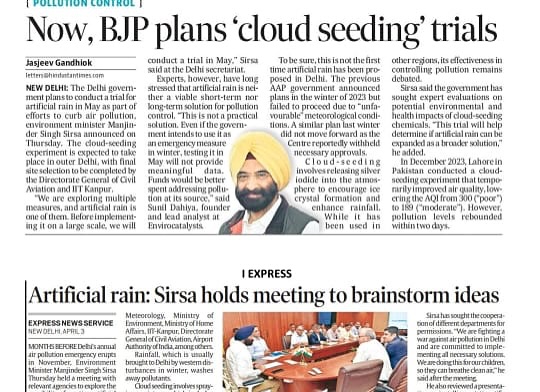
In addition to Delhi, there are ongoing discussions about expanding cloud seeding initiatives under Mission Mausam, which aims to enhance weather forecasting and potentially control rainfall across various regions in India over the next five years. However, specific cities beyond Delhi have not been explicitly mentioned for cloud seeding plans in 2025 within the available sources.
Ref:
- “Pollution control: Now, BJP plans ‘cloud seeding’ trials” [ https://www.hindustantimes.com/cities/delhi-news/pollution-control-now-bjp-plans-cloud-seeding-trials-101743739038271.html ]
- “Planning to conduct cloud seeding trial in May” [ https://www.thehindu.com/news/cities/Delhi/planning-to-conduct-cloud-seeding-trial-in-may-sirsa/article69409260.ece ]
- “India to gain control over weather? ‘Mission Mausam’ aims to artificially enhance or suppress rain” [ https://www.deccanherald.com/india/india-to-gain-control-over-weather-mission-mausam-aims-to-artificially-enhance-or-suppress-rain-and-hail-within-next-5-years-3189450 ]
- “Rain On Demand? How Govt Plans To Control Weather In Next 5 Years” [ https://www.timesnownews.com/india/rain-on-demand-how-govt-plans-to-control-weather-in-next-5-years-article-113317485 ]
Can the Public Object to Weather Modification or Cloud Seeding in India?
Yes, the public can object to weather modification activities such as cloud seeding in India. Objections can be raised under broader environmental protection laws and through engagement with relevant government authorities. Below is a detailed explanation of how you can proceed.
Step 1: Understanding the Legal Framework for Cloud Seeding in India
Cloud seeding is not explicitly regulated under a specific law in India. However, it falls under the purview of environmental and aviation regulations due to its potential impact on ecosystems and airspace. The following legal frameworks may be relevant:
- Environment Protection Act, 1986:
- This act provides a framework for addressing activities that could harm the environment.
- If cloud seeding is perceived as causing harm to ecosystems or human health, objections can be raised under this act.
- Air (Prevention and Control of Pollution) Act, 1981:
- If cloud seeding contributes to air pollution or introduces harmful chemicals into the atmosphere (e.g., silver iodide), concerns can be raised under this act.
- Wildlife Protection Act, 1972:
- If cloud seeding affects wildlife habitats or protected areas, objections can be filed under this act.
- Aviation Regulations:
- Since cloud seeding involves aircraft operations, permissions from the Directorate General of Civil Aviation (DGCA) and other aviation authorities are required.
- Public concerns regarding safety or unauthorized operations can be directed to these authorities.
- Right to Information (RTI) Act, 2005:
- Citizens have the right to request information about ongoing or planned cloud-seeding projects from government agencies.
Step 2: Whom to Contact for Raising Objections
To raise objections against weather modification or cloud-seeding activities in India, you may contact the following authorities:
- Ministry of Environment, Forest and Climate Change (MoEFCC):
- This ministry oversees environmental protection and policies related to ecological balance.
- Website: MoEFCC
- Central Pollution Control Board (CPCB):
- CPCB monitors pollution levels and enforces environmental laws.
- Website: CPCB
- State Pollution Control Boards (SPCBs):
- Each state has its own pollution control board where local concerns can be raised.
- Directorate General of Civil Aviation (DGCA):
- DGCA regulates aviation-related activities, including those involving aircraft used for cloud seeding.
- Website: DGCA
- Local Government Bodies:
- Municipal corporations or district administrations may also play a role if local ecosystems are affected.
- National Green Tribunal (NGT):
- The NGT addresses cases related to environmental protection and conservation.
- Website: NGT
Step 3: How to Write a Letter of Objection
When writing an objection letter regarding weather modification or cloud seeding activities, ensure that your letter is clear and concise while citing relevant facts and laws.
Sample Format for an Objection Letter:
[Your Name] [Your Address] [City], [State], [Pin Code] [Email Address] [Phone Number]Date: [Insert Date]
To
The Secretary
Ministry of Environment, Forest and Climate Change
Indira Paryavaran Bhawan
Jor Bagh Road
New Delhi – 110003
Subject: Objection Against Weather Modification/Cloud Seeding Activities
Dear Sir/Madam,
I am writing this letter as a concerned citizen regarding the proposed/planned weather modification activity involving cloud seeding in [specific location]. I would like to bring attention to the following points:
- Environmental Concerns: Cloud seeding involves dispersing chemical agents such as silver iodide into the atmosphere, which may have adverse effects on ecosystems and water bodies as per studies conducted globally.
- Health Risks: There are potential risks associated with exposure to chemicals used during cloud-seeding operations that could affect public health over time.
- Lack of Transparency: There has been insufficient public consultation regarding this project/activity despite its potential impact on local communities and natural resources.
- Legal Compliance: I urge your office to ensure compliance with existing environmental laws such as the Environment Protection Act, 1986; Air (Prevention & Control of Pollution) Act, 1981; Wildlife Protection Act, 1972; and other applicable regulations before proceeding further with any such activity.
In light of these concerns, I request your esteemed office to halt any ongoing/planned weather modification activities until comprehensive environmental assessments are conducted and shared publicly for review.
I look forward to your prompt response on this matter.
Thank you for your attention.
Yours sincerely,
[Your Full Name]Step 4: Filing Complaints Through Online Platforms
You can also file complaints online through government portals:
- MoEFCC Grievance Portal: PG Portal
- CPCB Complaint System: CPCB Complaints
- NGT Case Filing Portal: NGT e-Filing
Step 5: Using RTI for Information
If you wish to gather more details about ongoing or planned weather modification projects before raising objections:
- File an RTI application with MoEFCC or CPCB requesting information about approvals granted for cloud-seeding projects.
- Use online RTI filing platforms like RTI Online for submitting applications easily.
For further assistance with filing complaints or accessing legal frameworks mentioned above via official websites:
- Ministry of Environment (moef.gov.in)
- Central Pollution Control Board (cpcb.nic.in)
- National Green Tribunal (greentribunal.gov.in)
The main arguments against cloud seeding in India include its ineffectiveness under current meteorological conditions, environmental concerns regarding chemical toxicity, ethical and governance issues related to regulation, high costs associated with implementation, and the potential for maladaptation by diverting focus from more sustainable solutions.
1. Ineffectiveness Under Current Conditions
One of the primary arguments against cloud seeding in India is its limited effectiveness due to specific meteorological conditions. For instance, during winter months, Delhi experiences low moisture levels which are not conducive for cloud seeding operations. The Central Pollution Control Board noted that the project was not pursued further because the necessary pre-existing clouds were often absent during these dry periods. This limitation raises questions about the practicality of cloud seeding as a reliable solution.
2. Environmental Concerns
The chemicals used in cloud seeding, particularly silver iodide, have raised environmental concerns due to their potential toxicity. Studies indicate that while the concentrations used may be low, there is still a risk of bioaccumulation and adverse effects on aquatic life. Additionally, there are worries about unintended consequences such as increased flooding or changes in local weather patterns that could harm ecosystems.
3. Ethical and Governance Issues
There are ethical considerations surrounding the use of cloud seeding technology. The lack of comprehensive governance frameworks means that there are no clear regulations on how and when to conduct cloud seeding operations. This absence can lead to misuse or uncoordinated efforts that may benefit some regions at the expense of others, potentially exacerbating existing inequalities in water distribution.
4. High Costs and Resource Allocation
Implementing cloud seeding projects can be expensive. Estimates suggest costs around ₹1 lakh per square kilometer for such initiatives. Critics argue that these funds could be better allocated towards more sustainable water management practices or infrastructure improvements rather than investing in uncertain technological fixes.
5. Potential for Maladaptation
Cloud seeding might lead to maladaptation by providing a false sense of security regarding water availability. Relying on this technology could divert attention from addressing underlying issues such as unsustainable water use practices and inadequate infrastructure for managing existing water resources. This could ultimately worsen vulnerabilities rather than alleviate them.
Ref:
- “Cloud Seeding: Why It’s No Longer Being Seen as an Option to Clear Delhi’s Air.” [ https://timesofindia.indiatimes.com/city/delhi/why-cloud-seeding-is-no-longer-being-seen-as-an-option-to-clear-delhis-air/articleshow/88530860.cms ]
- “Artificial Rain: Benefits and Risks.” [ https://www.livemint.com/news/india/delhi-air-pollution-benefits-disadvantages-cost-of-artificial-rains-all-you-need-to-know-11699886905784.html ]
- “How Cloud Seeding Boosts Rainfall and Why That’s Controversial.” [ https://timesofindia.indiatimes.com/world/middle-east/how-cloud-seeding-boosts-rainfall-and-why-thats-controversial/articleshow/109377959.cms ]
- “Dodging Silver Bullets: How Cloud Seeding Could Go Wrong.” [ https://thebulletin.org/2022/08/dodging-silver-bullets-how-cloud-seeding-could-go-wrong/ ]
- “Delhi Government Mulls Use of Artificial Rain Through Cloud Seeding.” [ https://www.livemint.com/news/india/delhi-air-pollution-benefits-disadvantages-cost-of-artificial-rains-all-you-need-to-know-11699886905784.html ]
- “Cloud Seeding: A Complex Solution to Water Shortages.” [ https://earth.org/unleashing-the-power-of-cloud-seeding-navigating-potential-and-pitfalls/ ]

Srishti Aviation is an aviation management and consulting firm that operates in various sectors including aircraft charter, helicopter charter, and cloud seeding. The firm is led by Mr. Shwetang Shah, who serves as the Managing Partner. Under his leadership, Srishti Aviation collaborates with partners such as Aeroknights Aviation and Helicop Aviation to provide a range of services aimed at supporting corporate houses and high-net-worth individuals (HNIs) in starting, developing, and operating their aviation businesses

Srishti Aviation is owned by a consortium that includes Aeroknights Aviation and Helicop Aviation. The specific individuals or entities behind the ownership structure have not been publicly detailed in available sources. However, it is known that these partnerships leverage the expertise and resources of each firm to enhance their service offerings in aviation management and consulting.
Srishti Aviation was established in 2020. This date marks the beginning of its operations as a collaborative effort between the three firms, aiming to provide comprehensive solutions in aviation management, including consulting services for various stakeholders in the aviation industry.
The funding for Srishti Aviation comes from a combination of private investments from its partner firms, Aeroknights Aviation and Helicop Aviation. These companies have invested capital to support the operational costs and growth initiatives of Srishti Aviation. Additionally, they may seek external funding through venture capital or partnerships with other investors interested in the aviation sector, although specific details about such arrangements have not been disclosed publicly.
Chemicals Commonly Used in Cloud Seeding
The chemicals used in cloud seeding include silver iodide, potassium iodide, dry ice, liquid propane, hygroscopic salts like sodium chloride and calcium chloride, among others. While their immediate environmental impacts are generally considered minimal due to low concentrations used during operations, concerns persist regarding bioaccumulation (especially for silver iodide), soil salinization from salts, potential aquatic toxicity, and broader ecological disruptions caused by altering precipitation patterns.
The chemicals used vary based on the type of cloud seeding (e.g., static or dynamic) and the specific environmental conditions. Below are the most commonly used chemicals:
- Silver Iodide (AgI):
Silver iodide is one of the most widely used substances in cloud seeding due to its crystalline structure, which closely resembles that of ice. This similarity makes it effective at inducing freezing nucleation in supercooled clouds, leading to precipitation formation. - Potassium Iodide (KI):
Potassium iodide is another chemical with properties similar to silver iodide and is sometimes used as an alternative for inducing ice nucleation. - Dry Ice (Solid Carbon Dioxide, CO₂):
Dry ice is often used because it rapidly cools the surrounding air, causing water vapor to condense and form ice crystals. - Liquid Propane (C₃H₈):
Liquid propane expands into a gas when released and can produce ice crystals at higher temperatures than silver iodide, making it suitable for certain atmospheric conditions. - Hygroscopic Materials:
Hygroscopic materials like sodium chloride (NaCl) and calcium chloride (CaCl₂) are increasingly popular for warm-cloud seeding because they attract moisture, encouraging droplet formation. - Other Chemicals:
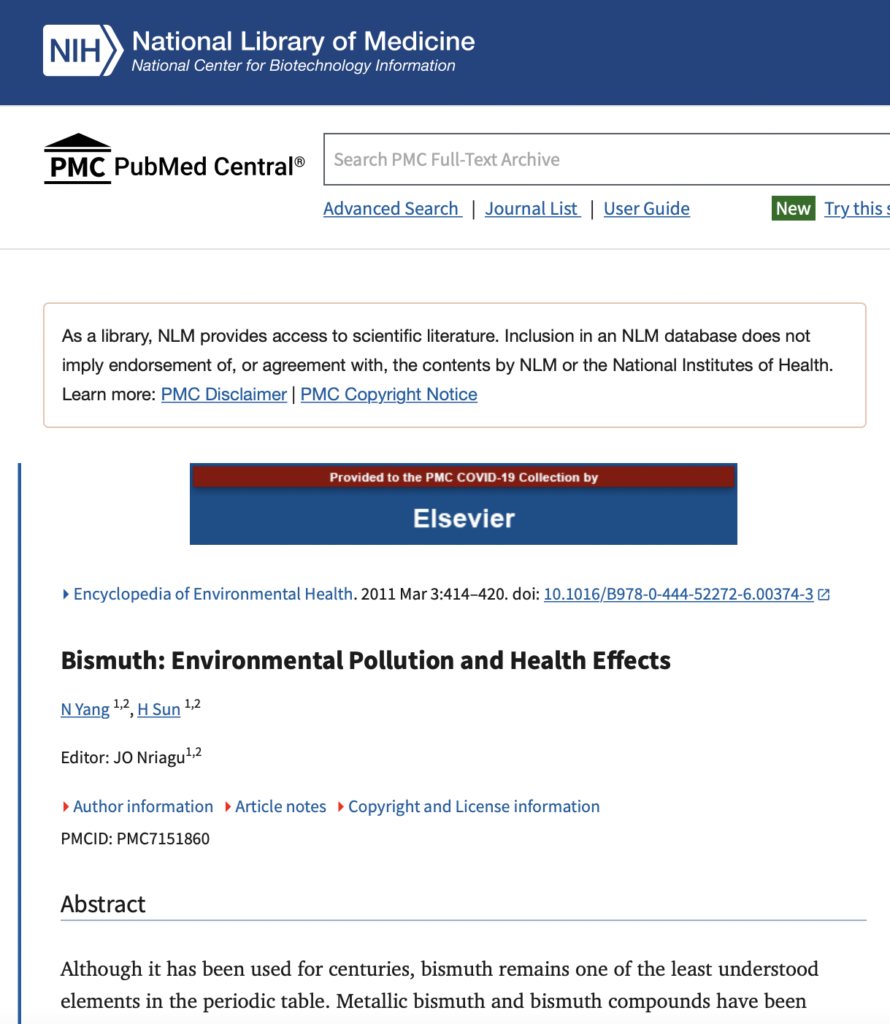
Other less commonly used substances include bismuth tri-iodide (BiI₃), sulfur dioxide (SO₂), and frozen carbon dioxide pellets.
Environmental Impacts of Cloud Seeding Chemicals
The environmental impacts of these chemicals depend on their concentration, frequency of use, and how they interact with ecosystems over time. Below is a detailed analysis of their potential effects:
1. Silver Iodide
- Toxicity Concerns: Silver iodide is classified as a hazardous substance under the Clean Water Act due to its toxicity. While studies suggest that the concentrations typically used in cloud seeding are low enough to be ecologically harmless, concerns remain about bioaccumulation in sensitive ecosystems.
- Aquatic Impact: Prolonged exposure in areas with repeated cloud seeding operations has led to elevated levels of silver compounds in water bodies, potentially harming aquatic life.
- Human Health Risks: Excessive exposure could lead to health issues such as skin irritation or respiratory problems if improperly handled.
2. Potassium Iodide
- Potassium iodide shares similar risks with silver iodide but is generally considered as toxic.
- Its environmental impact has not been studied as extensively as silver iodide’s, leaving some uncertainties about long-term effects.
3. Dry Ice
- Dry ice sublimates directly into carbon dioxide gas upon release, contributing minimally to greenhouse gas emissions compared to other sources.
- It does leave harmful residues in the environment but may have localized cooling effects that could disrupt small-scale ecosystems temporarily.
4. Liquid Propane
- Liquid propane poses direct environmental risks since it dissipates quickly after release.
- However, improper handling or accidental leaks during storage or transport could pose fire hazards or contribute to localized air pollution.
5. Hygroscopic Materials
- Sodium chloride and calcium chloride are salts that can accumulate in soils and water bodies if overused.
- Excessive salt deposition may lead to soil salinization, negatively affecting plant growth and agricultural productivity.
- In aquatic environments, increased salinity can harm freshwater species adapted to low-salt conditions.
6. Other Chemicals
- Substances like sulfur dioxide or bismuth tri-iodide have limited usage due to their higher toxicity levels and potential for adverse environmental impacts.
- Sulfur dioxide can contribute to acid rain formation if released in significant quantities.
Broader Environmental Considerations
While proponents argue that cloud seeding chemicals are used in relatively small amounts that minimize ecological harm:
- There remains uncertainty about the cumulative effects of repeated operations over time.
- Potential contamination risks exist if chemicals leach into groundwater or accumulate in ecosystems.
- Some studies link cloud seeding activities with unintended consequences such as urban flooding or changes in local weather patterns that might disrupt natural hydrological cycles.
Ref:
- Laura Kuhl | Dodging Silver Bullets: How Cloud Seeding Could Go Wrong [ https://thebulletin.org/2022/08/dodging-silver-bullets-how-cloud-seeding-could-go-wrong/ ]
- Earth.org | Unleashing the Power of Cloud Seeding [ https://earth.org/unleashing-the-power-of-cloud-seeding-navigating-potential-and-pitfalls/ ]
Source: Qvive, Youtube, Facebook – image – Technology2030,
Also Read: