

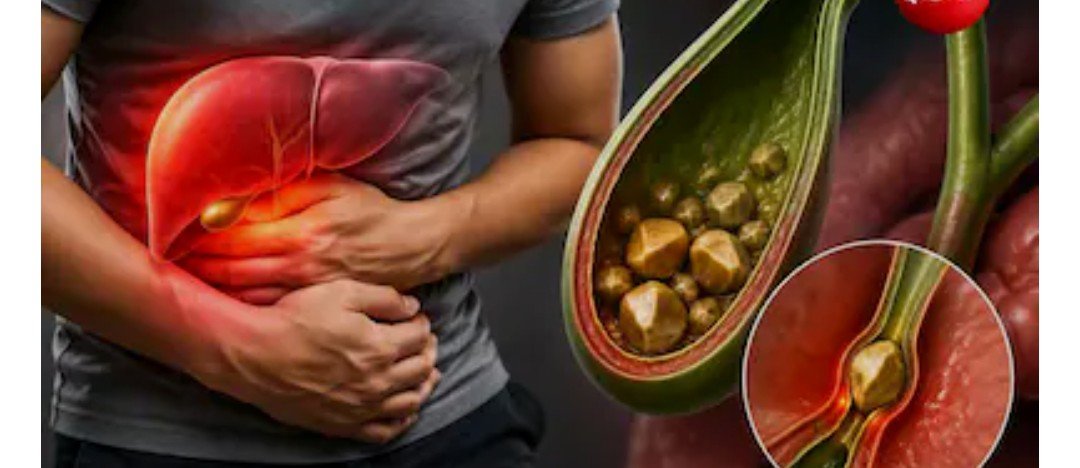
Dr. Amit Kumar Sanghi, Senior Consultant-Gynecologist at Narayana Hospital, says that many people with gallstones don’t experience any symptoms. These are often called silent gallstones and don’t always require treatment. Problems can arise when the stones block the flow of bile. Therefore, if you have gallstones, don’t ignore the following symptoms:
Pain in the upper right abdomen: The most common symptom of gallstones is pain in the upper right abdomen. This pain can start suddenly and can sometimes be severe or persistent.
Pain in the upper middle abdomen: In some people, this pain can also be felt in the upper middle abdomen. The pain often appears after eating heavy or fried foods and may radiate to the back or right shoulder.
Feelings of pain and nausea: Gallstones in the gallbladder can cause pain, nausea, or vomiting. However, keep in mind that simply experiencing gas, indigestion, or abdominal pain doesn’t necessarily mean gallstones, as these symptoms can have many other causes.
If the stone blocks the bile duct, it can lead to jaundice. This can cause yellowing of the skin or whites of the eyes, and darkening of the urine. In some cases, stool may also become lighter than normal.
If the following symptoms persist along with the pain, immediate medical attention is needed:
If the abdominal pain persists for several hours and recurs.
Fever and chills.
Persistent vomiting.
Jaundice or severe pain.