

In light of this article, do you still believe the Indian government should be involved in the development and production of vaccines?
Why was this incident not covered by mainstream media? Why were they silent? Having this information available to the public was important.
Related article:
Tribal girls in Khammam killed by drug trial.
When Khammam district was formed in 2009, it was a part of Andhra Pradesh (the border changed in 2014, making it a part of Telangana). It is considered one of India’s poorest and least developed regions due to its largely rural population.
SEVENTY-SECOND REPORT
On
ALLEGED IRREGULARITIES IN THE CONDUCT OF STUDIES USING HUMAN PAPILLOMA VIRUS (HPV) VACCINE BY PATH IN INDIA
Download: https://hsrii.org/wp-content/uploads/2014/07/72.pdf
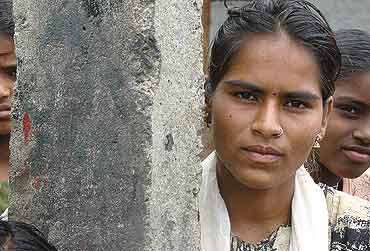
It was PATH’s project in Khammam district in 2009 that infected 14,000 girls with Gardasil. The girls recruited for PATH’s project were all between 10 and 14 years old from low-income, predominantly tribal backgrounds. There were many girls living in ashram pathshalas (government-run hostels) near the schools where they attended, instead of living with their families.

PATH conducted a project in 2009 to administer the Human Papillomavirus (HPV) vaccine. This project aimed to generate and disseminate evidence to inform the public sector about HPV vaccines.
This project was conducted in four countries: India, Uganda, Peru and Vietnam. Gavi, another Gates-funded organization, had been considered to oversee the project, but ultimately it was assigned to PATH.
The University of Essex’s Linsey McGoey later stated that she believed girls in ashram pathshalas had been targeted for the project as a means of avoiding parental consent.
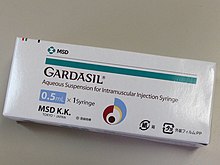
The death of three Tribal girls living in a common hostel who were administered the cervical cancer vaccine in Khammam district has shaken the Tribal community in Khammam region. The girls, 13-year old Sarita, 13-year old Sodi Sayamma and a third girl with no history of medical illness, were administered the vaccine against the HPV virus called Gardasil few months ago.
On January 23, 30,000 Tribal girls between the ages of 10 and 14 years in Khammam district and Gujarat’s Vadodara district were being administered a cervical cancer vaccine in a ‘demonstration project’.
District immunity officer, Khammam, confronted with Tribal communities calling the deaths as suicides. ‘Post-mortems show that these are suicide deaths. Fifteen thousand Tribal girls between the ages of 10-14 have been administered three doses of cervical cancer vaccine at Rs 9,000 each. Then why only three dead,’ questioned the officer.
But activists interfacing with these girls pointed out that girls were developed side effects like diarrhoea, nausea, allergies and epileptic attacks before death.
Silly comment by this officer is that, they took the written consent of the girls’ parents before administering this vaccine. What could Tribal communities know about written consent? An Activist Kalpana who has been tracking this case for the last eight months pointed out that the written consent signed by the parents remains completely one-sided. It states that the vaccine has no side effects, creates life long immunity and will not create any health problems for their child.
On July 9, 2009, the Andhra Pradesh Minister for Health and Family Welfare in association with the Indian Council of Medical Research (ICMR) and PATH (Programme for Appropriate Technology in Health) International a non-profit organization based in USA launched what it described as a ‘demonstration project’ for vaccination against cervical cancer. The vaccine, against the Human Papillomavirus (HPV), which is one of the most common families of viruses and the source of a common sexually transmitted infection, was administered to 14,000 girls between the ages of 10 and 14 in three mandals – Bhadrachalam, Kothagudem and Thirumalayapalem – of Khammam district in Andhra Pradesh. In Andhra Pradesh, the vaccine used was Gardasil, manufactured by Merck Sharpe and Dohme, the Indian subsidiary of Merck and Co. Inc., a US-based pharmaceutical company.
In a similar project, on August 13, 2009, the Gujarat government launched a two-year ‘Demonstration Project for Cancer of the Cervix Vaccine’ in three blocks of Vadodara District – Dabhoi, Kawant and Shinor – to administer three doses of the HPV vaccine to 16,000 girls between 10 and 14 years. There were reports of deaths of four girls from Andhra Pradesh and two girls from Gujarat following the administration of the vaccine.
During March 27-30, 2010, a team of women’s and health activists visited Bhadrachalam mandal, one of the three mandals of Khammam district where the ‘demonstration project’ was undertaken to understand the ground reality; in particular, to look at the nature and procedures of taking consent and providing information to the girls and their parents, and the availability of the health infrastructure required to support cancer screening and prevention.
The children selected to participate in this project were from four social groups with poor economic background – scheduled tribes, scheduled castes, Muslims and other backward communities. Majority were tribal children, whose parents were agricultural labourers. Some girls were from families that have been displaced by the ongoing conflict in the neighbouring state of Chhattisgarh; circumstances that serve only to compound their vulnerability.
Majority of the vaccinated girls in Bhadrachalam were residents of ashram paathshalas (boarding schools). The selection of these girls for the project is striking, given that their parents, living separately, cannot monitor and respond to any adverse developments in their children’s health. Moreover, this has allowed providers to conveniently side-step the provision of parental consent.
The vaccine was administered through a camp approach in the hostels and school campuses. In many instances, the wardens of the residential schools and hostels were asked to provide consent or permission for vaccination, while parents were not informed. The very nature of this project appears to be in violation of all ethical norms as a warden, whether a legal guardian or not, be allowed to provide consent for hundreds of children without consulting their parents, who are their natural guardians;
The ‘consent form’ was used primarily in the case of non-residential schools, and children were asked to get signatures from their parents. This violates the designated protocol for obtaining informed consent, whereby the ‘researcher’ is required to directly provide information mandatory for consent to the person(s), in this case the parents.
Selected girls were given HPV Immunization Cards, which were in English – a language that neither the girls, nor their parents, were familiar with. Further, all involved (the wardens, teachers and students) believed the project to be part of the public immunization program, and had no idea that they were in fact, part of a research study. They were not even aware that they had a choice regarding participation in the study.
Many stated that they were given to understand that the government was providing free of cost an expensive vaccine that would prevent ‘uterine’ or ‘cervical cancer’. This would otherwise be unaffordable for them. Several parents brought their daughters to the vaccination camps themselves when they heard about the project. One mother said, “Since it was a vaccine being given by the government, we all trusted it blindly and considered it reliable, like any other vaccine that is given in the immunization programme”. Participants were verbally informed that the vaccine would provide life-long protection, with no side-effects or impact on fertility. The fact that the vaccine protects against only two types of the HPV virus and that regular pap screening is required even after vaccination was mentioned at all- neither verbally, nor in the written material given to some girls. Since the long term efficacy and protection by the vaccine is unknown, it cannot be claimed that even 60-70% protection will be achieved. Currently is also unclear if, when and how booster shots will be required.
Many of the vaccinated girls continue to suffer from stomachaches, headaches, giddiness and exhaustion. There have been reports of early onset of menstruation, heavy bleeding and severe menstrual cramps, extreme mood swings, irritability, and uneasiness following the vaccination. No systematic follow up or monitoring has been carried out by the vaccine providers.
While the project was being carried out under the banner of the National Rural Health Mission (NRHM) shockingly enough the Mission’s mandate does not extend to or mention any such research project. Further, the existing health infrastructure in the region is woefully inadequate. Pap smear facilities are conspicuous by their absence in all government facilities in the area. The entire tribal mandal of Bhadrachalam does not have a single gynaecologist.
The vulnerability of this these communities are thus further compounded by of the lack of access to health care, lack of access to information and absence of mechanisms for reporting adverse effects.
The state government has claimed that the deaths of the four girls post-vaccination were unrelated to the ‘project’. However, parents of Kudumula Sarita, who died in January 2010, believe that their daughter died due to the vaccination, and not by consuming pesticide, as has been officially declared by the authorities.
The trial has been suspended temporarily by the government after a strong campaign by health networks, women’s groups and by parliamentarians. A committee has been set up by the government to conduct an inquiry, the composition of the committee leaves much to be desired and is far from representative.
The Ministry of Health and Family Welfare, on 22nd April 2010, finally conceded that the HPV vaccination project was in fact, a “post-licensure operational research study”, which on further clarification, was confirmed to be a Phase IV, post marketing, clinical trial.
On 29th April, the ICMR admitted that their ethical guidelines had been flouted in the course of this trial.
Alleged Irregularities in the Conduct of Studies using Human Papilloma Virus (HPV) Vaccine by Path in India (Department of Health Research, Ministry of Health and Family Welfare)
Parliament of India (Rajya Sabha) report into the 2010 deaths of seven adolescent girls involved in an Human Papilloma Virus (HPV) vaccine trial organised by the Programme for Appropriate Technology in Health (PATH), a global health non-profit.
Retrieved from ( https://archive.org/details/indian-parliament-report-on-hpv-trial-studies-conduct/page/6/mode/1up )
Bill & Melinda Gates Foundation has funded two entities that have played a key role in the immunization programme and are both under fire for conflict of interest.
In 2009, several schools for tribal children in Khammam district in Telangana — then a part of undivided Andhra Pradesh — became sites for observation studies for a cervical cancer vaccine that was administered to thousands of girls aged between nine and 15. The girls were administered the Human Papilloma Virus (HPV) vaccine in three rounds that year under the supervision of state health department officials. The vaccine used was Gardasil, manufactured by Merck. It was administered to around 16,000 girls in the district, many of whom stayed in state government-run hostels meant for tribal students.
Months later, many girls started falling ill and by 2010 five of them died. Two more deaths were reported from Vadodara, Gujarat, where an estimated 14,000 children studying in schools meant for tribal children were also vaccinated with another brand of HPV vaccine, Cervarix, manufactured by GSK. Earlier in the week, the Associated Press reported that scores of teenaged girls were hospitalised in a small town in northern Colombia with symptoms that parents suspect could be an adverse reaction to Gardasil.
A standing committee on health and family welfare that investigated the irregularities pertaining to the observation studies in India tabled its report a year ago, on August 30.
The committee found that consent for conducting these studies, in many cases, was taken from the hostel wardens, which was a ]agrant violation of norms. In many other cases, thumbprint impressions of their poor and illiterate parents were duly aTixed onto the consent form. The children also had no idea about the nature of the disease or the vaccine. The authorities concerned could not furnish requisite consent forms for the vaccinated children in a huge number of cases.
The committee said it was “deeply shocked to 9nd that in Andhra Pradesh out of the 9,543 [consent] forms, 1,948 forms have thumb impressions while hostel wardens have signed 2,763 forms. In Gujarat, out of the 6,217 forms 3,944 have thumb impressions and 5,454 either signed or carried thumb impressions of guardians. The data revealed that a very large number of parents or guardians are illiterate and could not even write in their local languages, Telugu or Gujarati.”
Earlier this month, taking a serious view of the death of seven tribal girls in the context of the observation studies, the Supreme Court asked the Drug Controller General of India (DCGI) and the Indian Council of Medical Research (ICMR) to explain how permissions were given.
The SC bench of justices Dipak Misra and V Gopala Gowda asked the Centre to produce relevant 9les that pertained to the grant of licence for trial of the HPV vaccine in India. The court also asked the Centre to appraise it of steps taken
Wrong Dose
In recent years, the deaths of many infants allegedly soon after they were immunized with the Pentavalent vaccine, a 9ve-in-one shot, has contributed towards anxiety around vaccines. The vaccine has been controversial in Sri Lanka, Bhutan and Vietnam, too, where it was temporarily suspended on account of some reported post-vaccination deaths of infants.
Launched in 2011 in India, Pentavalent is a combination of 9ve vaccines in one: diphtheria, tetanus, whooping cough, hepatitis B and haemophilus in]uenza type b (the bacteria that causes meningitis and pneumonia). The vaccine created a furore after many infants from across the country were reported to have died after the vaccination. A reply by the health ministry to an RTI application shows that the deaths of three infants in Tamil Nadu have “a consistent causal association to immunization”, which means the ministry con9rms that there is a connection between the vaccination and the deaths. In all, 54 cases of deaths of infants who were vaccinated with Pentavalent have been classi9ed as ‘adverse events following immunization’(AEFI), nomenclature that con9rms the deaths have occurred soon after vaccination.

“PHFI is a private society cleverly disguised as a public-private partnership since some of the people in the governing body are or have been senior civil servants or public servants,” adds Supreme Court lawyer and activist Prashant Bhushan. Bhushan points out that PHFI appears to have several connections with the big pharma companies and their consultants. “The PHFI appears to have a con]ict of interest in advising the government of India and directing the immunization programme.”
PHFI’s Srinath Reddy stresses that they had received unrestricted educational grants from pharma companies towards building the capacity of health professionals for providing appropriate health care of adequate quality in primary health care settings. However, these were not connected with the PHFI’s work on the immunization front, he added. “As a not-for-pro9t organization, PHFI receives grants from different stakeholders for funding capacity building programmes which address broader public health and health system needs, including quality of healthcare. These grants are in no way tied to any pharmaceutical product and are meant solely for educational activities.” But then again the line between transferring medical knowledge and deriving commercial interests is a thin one.
Source: ET, Cinejosh,