

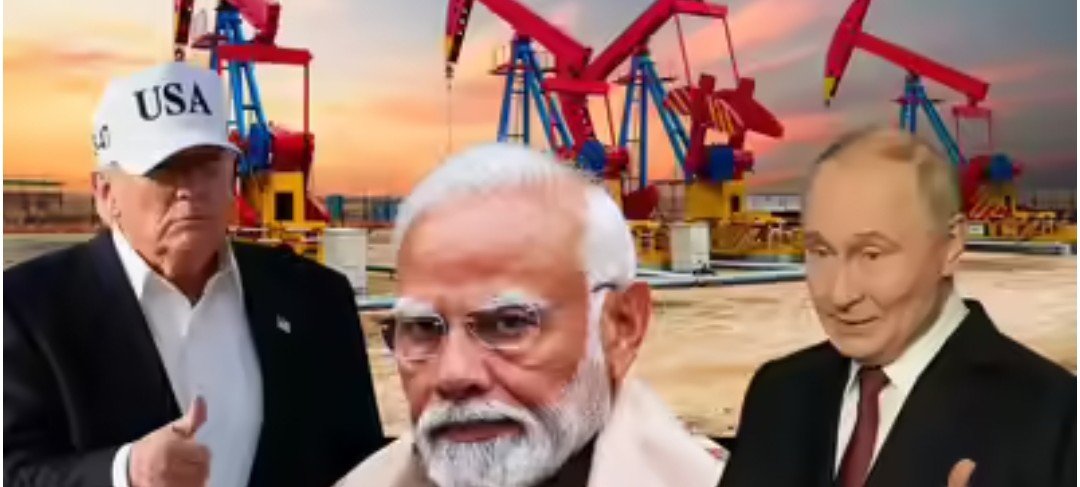
Uncertainty is looming over India’s Russian oil imports due to the US. The Donald Trump administration in the US has stated that it wants to end the sanctions waivers granted to countries like India to purchase Russian oil “as soon as possible.” Testifying before the Senate Foreign Policy Committee, US Secretary of State Marco Rubio argued that these measures were implemented for a limited period to ease global supply following the Iran war.
Rubio told the committee, “We would like to end this as quickly as possible because this country’s fundamental policy has been to impose sanctions on their oil. These waivers are for a limited period, aimed at further opening up global supply.” The US Secretary of State stated that this waiver was an effort to mitigate the global impact of rising oil prices.
The US had waived the sanctions on the purchase of Russian oil in March and extended it twice. The last such exemption was granted on May 17th for a month. India is among the countries that benefited from this exemption from US sanctions on the purchase of Russian oil.
The end of the US exemption on Russian oil could have a negative impact on India.
India relies on foreign countries to purchase approximately nine-tenths of its oil consumption. Following the conflict in Ukraine, New Delhi found a cost-effective partner in Moscow when Russia offered steep discounts on crude oil following Western sanctions. Data from energy intelligence firm Kpler shows that last month, India imported a record 2.3 million barrels per day of crude oil from Russia. This import was made possible by the continued import of cargoes under the sanctions exemption.
India imports approximately 90% of its oil consumption. During the Russia-Ukraine crisis and the subsequent Iran war, India purchased a record 2.3 million barrels per day (bpd) of discounted oil from Russia.
With the end of the exemption, Indian refineries will be forced to purchase oil at higher prices from the international spot market, significantly increasing India’s crude oil import bill.
The increased cost of crude oil procurement will increase the burden on Indian oil marketing companies (OMCs), which could ultimately lead to higher prices for petrol, diesel, and cooking gas (LPG) in the domestic market.
If India reduces oil imports from Russia due to fear of US sanctions, it will have to turn back to new sources like the Middle East or Brazil and the US.
Experts have stated that India’s continued import of oil from Russia has helped avert a major energy crisis that could have arisen during the war in Iran and the closure of the Strait of Hormuz. If this exemption ends, the country’s oil refineries may be forced to purchase more expensive crude oil from elsewhere on the spot market.
However, New Delhi has consistently maintained that energy purchases are based solely on national interest, affordability, and energy security. The government has repeatedly defended its right to purchase oil from any supplier that best meets the country’s needs.