

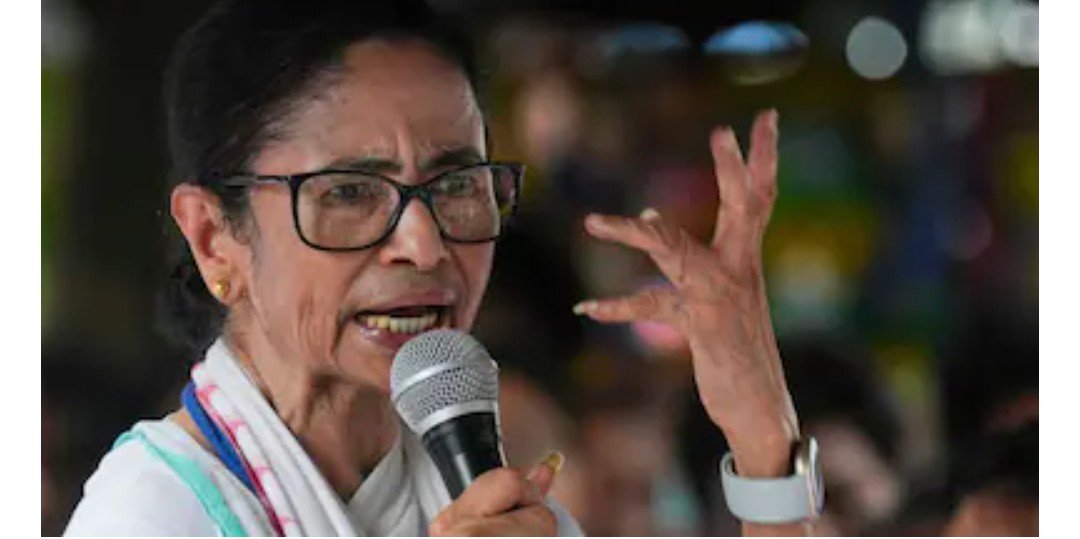
Mamata Banerjee’s 15-year rule in West Bengal has ended, and the BJP has taken over. Since the government’s ouster, Mamata Banerjee’s troubles have been mounting, with several MLAs from her party, the Trinamool Congress (TMC), potentially rebelling. Expelled MLA Ritabrata Banerjee has claimed that 59 MLAs are with him. The Speaker of the West Bengal Assembly has created a stir in West Bengal politics and Mamata’s camp by appointing the leader of these rebel MLAs, Ritabrata Banerjee, as the Leader of the Opposition in the West Bengal Assembly. This entire development is reminding people of the Maharashtra incident, when Eknath Shinde split Uddhav Thackeray’s party. Furthermore, he also took away the party’s symbol and name. In such a situation, the question arises: how many MLAs can rebel to break a party, and what factors does the Election Commission consider before making a decision?
Whenever MLAs rebel within a party, the first issue that comes to mind is the Anti-Defection Law. This law was enacted in 1985 to prevent horse-trading. It provides for the cancellation of membership of MLAs who leave the party. This law applies to all elected MLAs or MPs who act against the party. This includes matters ranging from voting on issues to making statements against the party and disobeying the whip. However, there are ways to circumvent this.
When two-thirds or more of the members of a party defect, the Anti-Defection Law does not apply.
All these MLAs can join another party or form their own.
If the number falls below two-thirds, their membership can be revoked.
The members who leave the party must join another party or form a new party to retain their membership.
Considering what could happen to the TMC in this situation, according to Election Commission data, the BJP won 207 seats in West Bengal in this year’s assembly elections, while Mamata Banerjee’s TMC was reduced to just 80. If MLA Ritabrata Banerjee’s claim proves true and 59 of the 80 MLAs leave the party, the threat will not be to those MLAs, but to Mamata Banerjee. Two-thirds of 80 seats is approximately 53. If more MLAs rebel, they could easily form a new party or join another party. Furthermore, this group of MLAs could also stake a claim to Mamata’s TMC and its election symbol.
Considering the loss of a party’s name and symbol, the two-thirds rule applies to a safe exit from any party, but it is not sufficient to claim the party’s name and election symbol. The Election Commission has specific rules for this, and a decision is made only after evaluating several factors. Such decisions are made under the Election Symbol (Reservation and Allotment) Order, 1968.
In this matter, the Election Commission considers the following:
After a split in a party, if an application for a symbol and name is submitted to the Election Commission, several layers of scrutiny begin. These factors were taken into account when Eknath Shinde was given the reins of the Shiv Sena in Maharashtra.
The party’s core principles and goals are taken into account. If the rebel faction is successful in proving that the party has deviated from its core principles, this could be a major factor.
The Election Commission also examines the party’s constitution. If the party’s constitution does not meet the conditions provided to the Election Commission at the time of the party’s registration, the party may be handed over to another faction.
The Election Commission also looks at which faction of the party has what majority in the Assembly and the Lok Sabha. The votes received by the MLAs of the faction which is claiming the name and symbol of the party are added to the total votes of the party. After this, the percentage is calculated and the faction which has a higher percentage of votes gets an edge.