

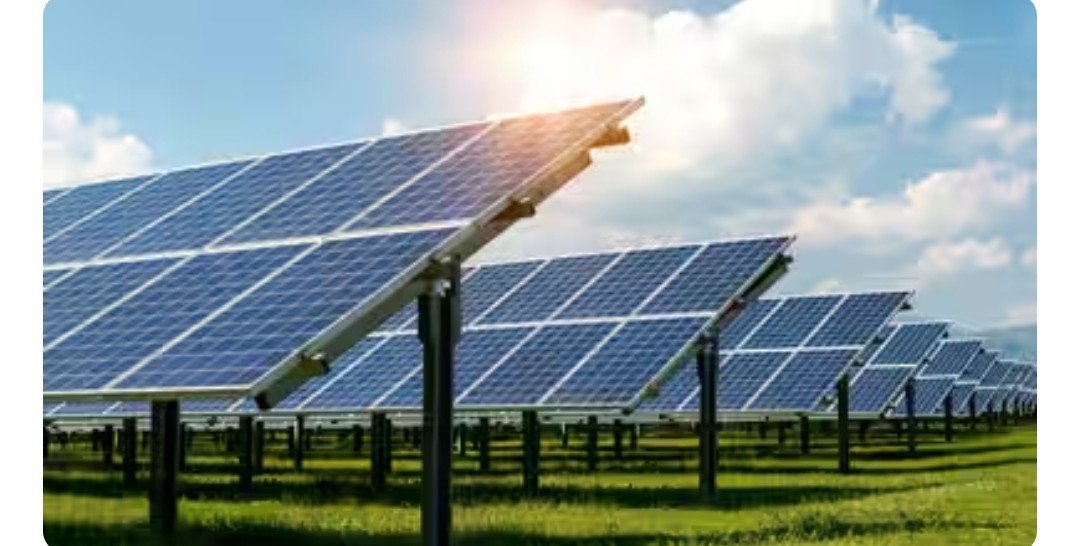
An experiment at Oregon State University found that raising lambs in a shaded field, or solar farm, under solar panels is just as beneficial and easy as grazing them in open fields. Many people still believe that installing solar panels takes up a significant portion of their land, rendering them useless. But this isn’t true. Previous experiments have shown that good crops can be grown even on open fields under solar panels. Now, a new experiment has revealed that raising lambs in an area under solar panels is also easier.
Researchers at the university’s research farm in Corvallis compared two groups of Polypay breed lambs over two years. One group grazed on traditional open fields, while the other grazed under a working solar array. These results have changed the old thinking about installing solar panels on agricultural land. The experiment proved that less grass growth does not necessarily mean lower animal production.
The experiment was designed to ensure as accurate a comparison as possible. Researchers placed lambs of the same weight and age in two adjacent fields. One pasture was completely under the open sky in Oregon, while the other was under solar panels. Over the two-year study, the pasture under the solar panels produced 38% less forage than the open pasture. The areas directly under the panels were in complete shade, with the least amount of grass growing. This might seem counterintuitive, but the reduced forage did not affect their weight.
Lambs grazing under the solar panels gained an average of 120 grams per day, while lambs grazing in the open field gained 119 grams per day.
Meanwhile, in the second year, lambs living under solar panels gained 89 grams of weight per day, while those in the open field group gained 92 grams.
These differences were so small that researchers concluded that growth rates were similar. This meant that lambs living under panels grew about the same, even though they received significantly less forage.
This clearly shows that it’s not the amount of grass consumed that makes the difference in weight, but rather its nutritional value. Plants grown in shade can develop differently from those grown in full sunlight.
According to the study, the fodder grown under solar panels had better nutritional quality, with more protein and digestibility. Simply put, grass was less, but better. The grass the lambs received was more nutritious.