

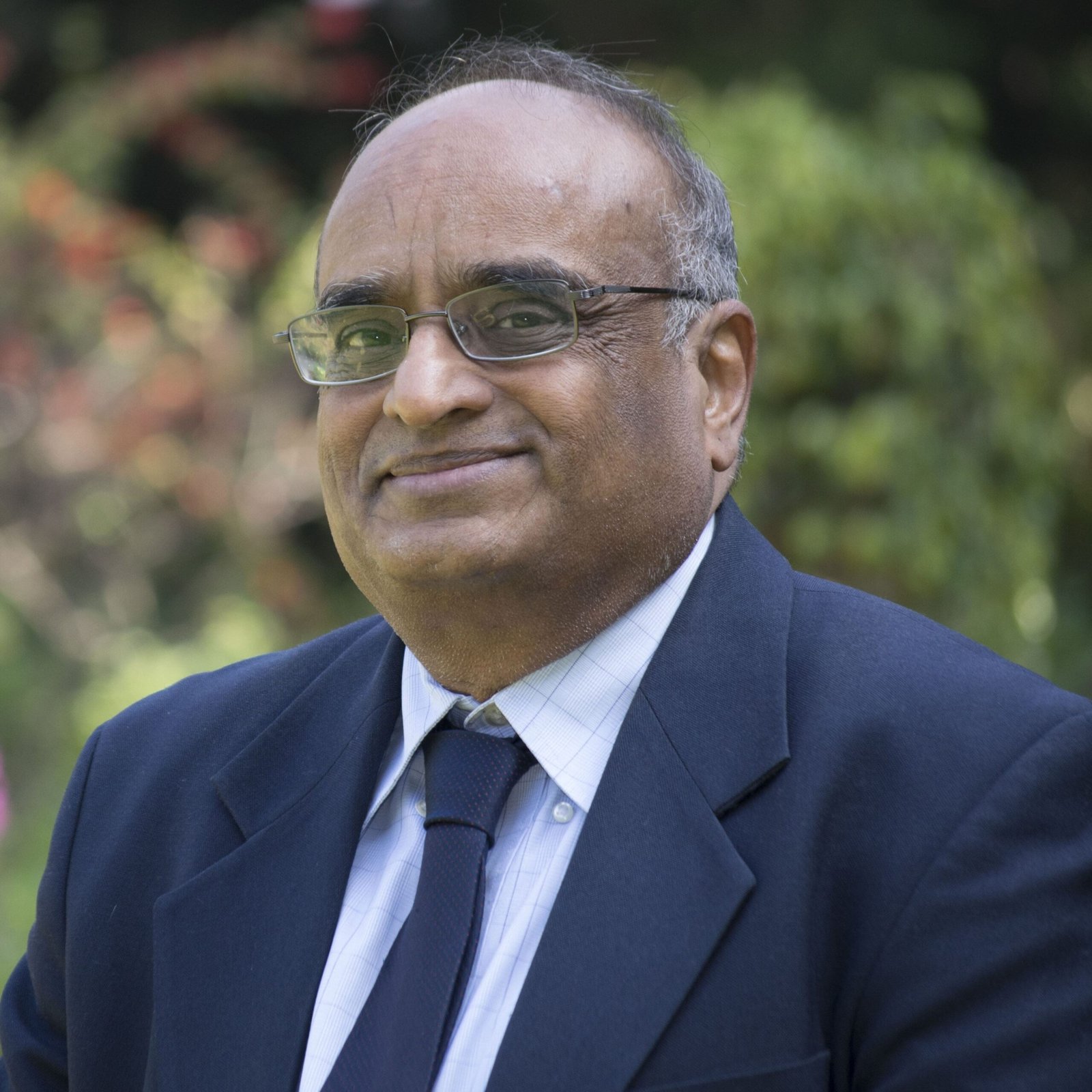
While Reserve Bank of India (RBI) has denied as rumours that every Rs 2000 note has a GPS-chip in it, which would be able to tap its movement from a satellite, a top Indian Institute of Management-Bangalore professor, R Vaidyanathan, who was the main brain behind the demonetization move, has said that the new notes do have radio frequency identification (RFID) tags in them.
Related Article:
( http://www.thenewsminute.com/article/if-black-money-was-aim-demonetisation-does-rs-2000-note-defeat-purpose-52698 )
Vaidyanathan, who was in constant touch with Prime Minister Narendra Modi’s national security adviser Ajit Doval ahead of the surprise Modi announcement to demonetize Rs 500 and 1000 notes, has said, the “new notes cannot be easily faked” as the new “Rs 2000 note has RFID tags”, though adding, “The government is not coming forward to announce it.”
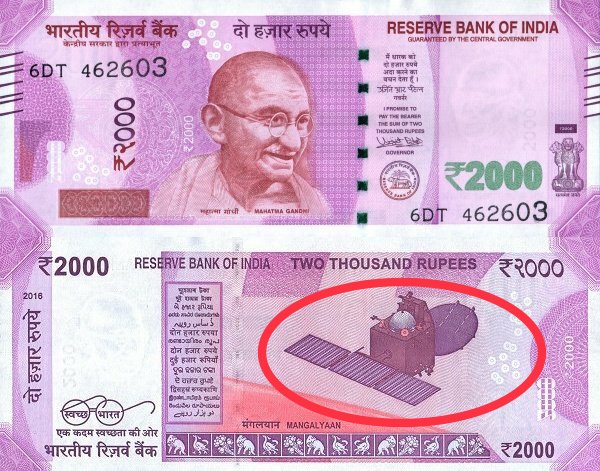
Suggesting that this is what he has gathered, Vaidyanathan seems sure, “The new notes have some tracking mechanism in them. ” Vaidyanathan first openly declared the need to demonetize Rs 500 and Rs 1000 notes way back in 2012, which is reportedly the basis of the Modi idea to go for it.
Vaidyanathan, significantly, was part of the task force which the BJP set up on January 31, 2011, to suggest measures to tackle black money. While the task force did submit a slew of recommendations on how to combat the menace, the party in its 23 recommendations furnished in a 95-page report did not refer to the need to demonetize Rs 500 and Rs 1,000 denomination notes.
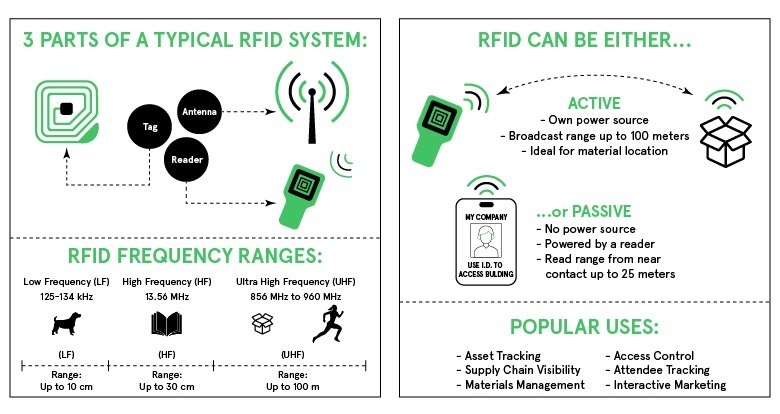
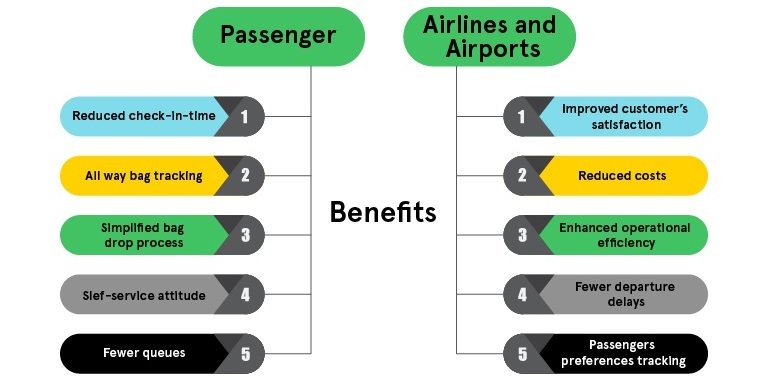
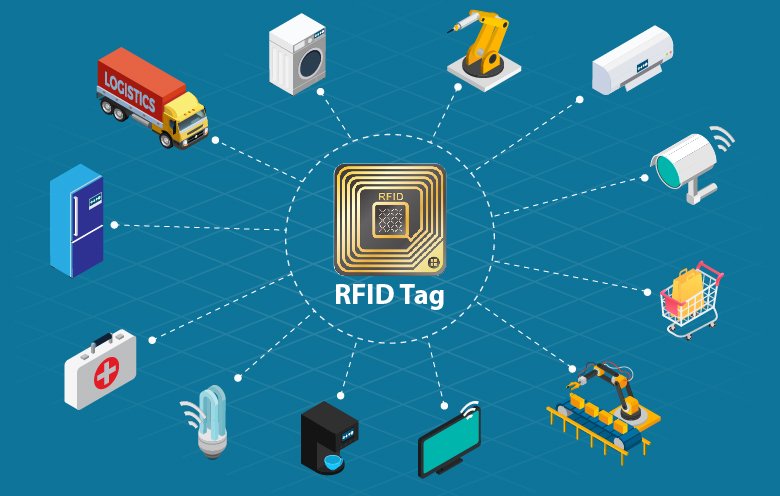
CLICK HERE However, even then, Vaidyanathan had been of the view that there is a need to scrap “high-value notes” as a measure to counter the hoarding of black money, something that he continued to doggedly insist on ever since. ( http://scroll.in/article/821170/behind-the-scenes-how-the-modi-government-came-to-its-decision-to-scrap-high-value-currency-notes ) ( http://www.firstpost.com/business/economy/we-should-abolish-rs-500-and-rs-1000-notes-completely-354908.html ) He insisted, “This can be undertaken in an orderly fashion over a period of say three to four months and all those who possess the higher denominations can exchange it with banking channels for lower denominations. It will automatically bring a huge amount of the funds kept in these denominations into the banking channels.” Emeritus Resource Faculty, School of International Cooperation, Security and Strategic Languages (SICSSL). Dr. R. Vaidyanathan is retired Professor of Finance at IIM- Bangalore. A graduate of the Loyola College, Madras and a Masters from the Indian Statistical Institute, Calcutta he obtained his Doctorate from the Indian Institute of Management Calcutta where he also taught for four years. He is two times Fulbright scholar and a Fellow of ICSSR-Visiting Faculty at various universities in USA/UK. He has been selected by Business today as one of the ten best professors at all IIMS. He has the rare privilege of being in various committees of regulators like SEBI/RBI/IRDA/PFRDA. He is consultant to many organizations and is on the board of many corporates. The IIMB expert on Finance & Control and author of several fascinating books on the Indian economy features in Thinkers50 India list JANUARY 7, 2016: Dr R Vaidyanathan, Professor in the Finance & Control area at IIM Bangalore, has been named in the recently released definitive list of 50 of the most influential management thinkers from India for 2015, as per the Thinkers50 India list. The list described these individuals as “people who generated, built upon and enriched thought leadership in the country”. Some of the other names featuring in the list include Ravi Venkatesan (Social Venture Partners), Nirmalya Kumar (Tata Sons), Tarun Khanna (Harvard University), etc. Prof. Vaidyanathan is known for his work in finance, especially in banking, insurance and capital markets. He was named one of the 10 best professors at all IIMs by Business Today magazine in 2006-2007. He is also a National Fellow of ICSSR – in recognition of his contribution to Social Management, Insurance/Pensions, Security Analysis and Portfolio Management, and Financial Markets. He is on the editorial board of many reputed academic journals. His research work covers Corporate Finance, Investments, Portfolio Management, Risk Management and Pensions. He has published a number of articles in India and abroad on Corporate Finance and Capital Markets. His recent book, titled ‘India Uninc’, about the unincorporated sector in the Indian Economy, and published by Tata Westland in 2014, was well received by policy planners and the market. He has been conferred Life Contribution award by Asia Pacific Risk and Insurance Association [APRIA] and KYBO LIFE in 2019. His book “India Uninc- Role of Non-corporate sectors in India” which focus on Indian/Asian value systems has been well received by planners and policy makers. His other book on Black money and Tax Havens has been acclaimed by experts. His recent book “Caste as social Capital” has been well received by the market. He is on the Advisory council of Vivekananda International Foundation [VA]. He is a member of “National Security Advisory Board” under National Security Council. He is an Adjunct Professor of AURO University at Surat and Cho. S. Ramaswamy Chair Professor in Public policy at Sastra University. Additional Information: Do you know that one of the oldest wireless technologies is Radio Frequency Identification (RFID)? Patented by the late British inventor Charles Walton in 1983, RFID made it possible for new, state-of-the-art technology, near-field communication (NFC), to exist. Think of an Internet-free IoT existence. For the most part, we can’t, right? NFC makes it possible. Not only does NFC allow connecting the unconnected, but it also permits bidirectional communication, consumes less power compared to Bluetooth, connects electronic devices with a single tap and provides multi-level data security. Like NFC, RFID takes an IoT setup to wide-ranging adoption. Let’s dissect IoT a little to understand that. IoT requires a few components to enable devices and objects to communicate. First, it is necessary to identify objects uniquely. Second, the object should be able to transmit data wirelessly. Here comes an RFID tag’s role. Smart objects will be embedded with both a sensor and an RFID tag. Depending on the type of sensor, it can capture surrounding temperature fluctuations, quantity changes, or other information types. And an RFID tag uniquely identifies the object. The information from the smart object travels to a central database via IP networks that stores and sorts the data into a human-readable format. In addition, sensors, RFID tags and IP networks are common in households, offices, warehouses, parks and many other places today. Thus, the combination of RFID and IoT is slowly establishing its solid presence in a variety of industries, ranging from manufacturing to logistics to healthcare and retail. For decades, RFID technology has been in use. It offers clear advantages over printed bar codes. While bar codes generally identify an object, RFID can locate a particular individual object. Through links to a cloud-based reference database, RFID offers the ability to fully trace an item – including learning about its size, serial number, color, batch, when and where it was made, by whom, under what conditions, etc. Furthermore, unlike bar codes, for reading, RFID labels do not need to be visible. That’s why amongst all Automatic Identification and Data Capture (AIDC) technologies – a barcode, a data matrix and a QR code – RFID is leading the cadre. The image below will help you understand the basics of RFID: Let’s now dive into some of the real-world examples that show how RFID and IoT are flying together to reach new heights. At some point or another, nearly every air traveler faces issues with their baggage while at the airport. These can be bag misplacement, lost items, excessive waiting time, etc. RFID baggage tracking technology can be used to get rid of such problems and make your airport experience smooth. Delta is the first US carrier to use RFID technology to track baggage. ( https://news.delta.com/delta-introduces-innovative-baggage-tracking-process-0 ) For Delta, the traveler must have the airline’s mobile app, where push notifications help travelers know their baggage location while on their way to the aircraft, on the plane, and when the baggage is on the way to the baggage claim counter. Delta has achieved an eye-popping 99.9% tracking success rate by embedding RFID chips in each luggage, making it one of the best among US global airlines. Airlines and airports not only benefit from taking care of customer headaches and increasing their satisfaction rate, but the technology also brings benefits to them as mentioned below. Read More: https://www.softwebsolutions.com/resources/IoT-adoption-with-RFID-technology.html ( https://www.forbes.com/sites/mattperez/2020/03/18/bill-gates-calls-for-national-tracking-system-for-coronavirus-during-reddit-ama/?sh=2622ad4b6a72 ) Source: Slideshare, Banknoteworld-image, Endeavour Africa group, softwebsolutions, slideshare, Rashtriya Raksha University, Aim4truth, Forbes, rumble,
After Modi came to power, he began being consulted more often than other experts on issues of black money. In fact, it is Vaidyanathan’s proposal which found “wide acceptance among the key people involved”, says a report.
He reportedly held discussions with Doval, in which a few senior officials from the RBI too were roped in, and informal discussions began with key bank officials from the public and private sector on how to demonetize Rs 500 and 1000 notes.
In 2012, Vaidyanathan wrote, “If the government wants to reduce domestic black money, it should withdraw Rs 500 and Rs 1,000 notes from circulation”, though adding, it should “replace them with lower denominations such as Rs 100 and Rs 50.”
Vaidyanathan was of the view, “In our country, cash transactions are more to avoid taxes and generate black money. The higher the denomination, the easier it is to transact and transport. Taking into account our situation, we should evolve laws to prohibit the holding of cash beyond a threshold level and this will go a long way in preventing disbursals for black transactions.”
Hence, he said, “Two steps – demonetising Rs 500 and Rs 1,000 currency notes and creating a threshold limit for cash holdings – will facilitate a reduction in domestic black money transactions. These decisions will not eliminate domestic black money, but will help reduce it to some extent.”
However, Modi did not pay heed to this view, but announced introduction newly designed notes of Rs 500 and 2000, with possibilities of introduction of Rs new 1000 notes, too. It is not known whether Vaidyanathan thinks Modi has done the right thing.
Dr. R. Vaidyanathan
Professor of Finance & Control[Retd], Indian Institute of Management, Bannerghatta Road, Bangalore – 560076About Dr. R. Vaidyanathan
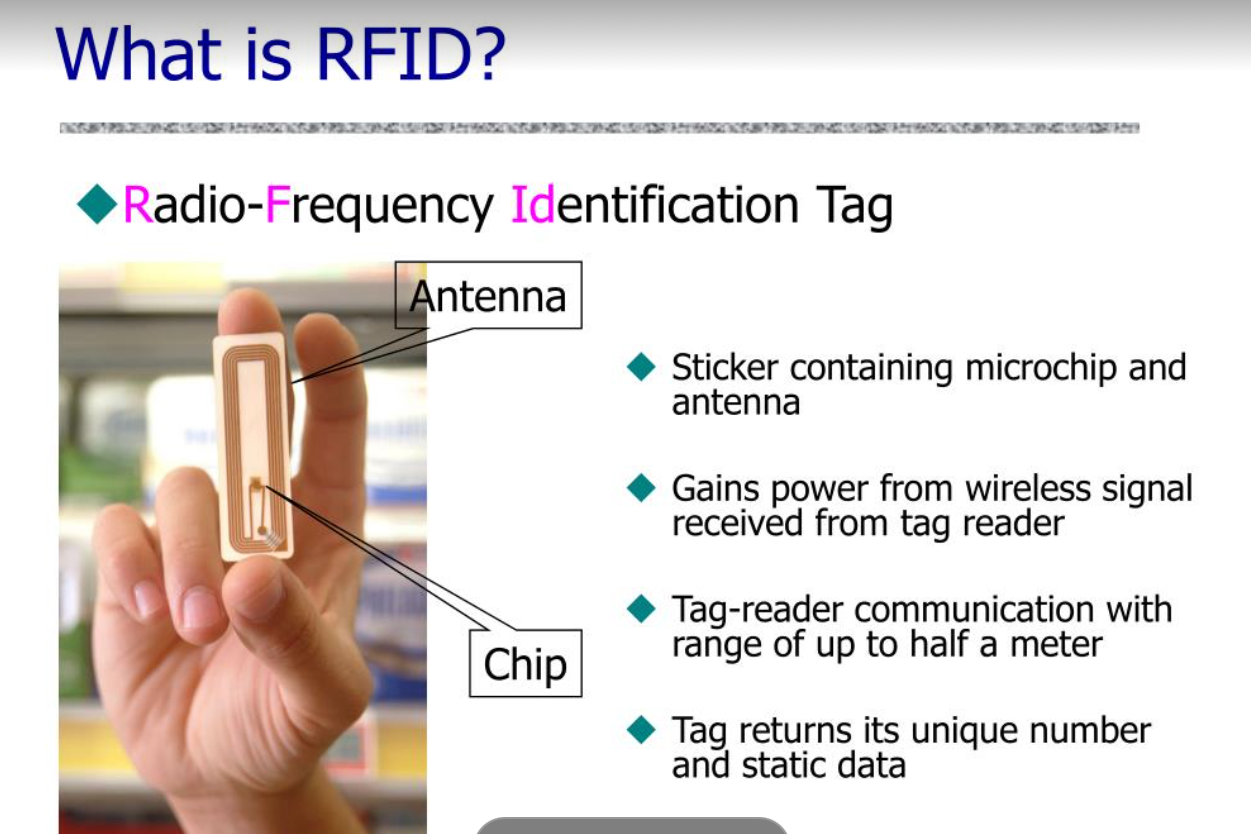
WHAT IS RFID ( Radio Frequency Identification Tag )?



RFID and IoT for baggage tracing and handling
Bill Gates Calls For National Tracking System For Coronavirus During Reddit AMA
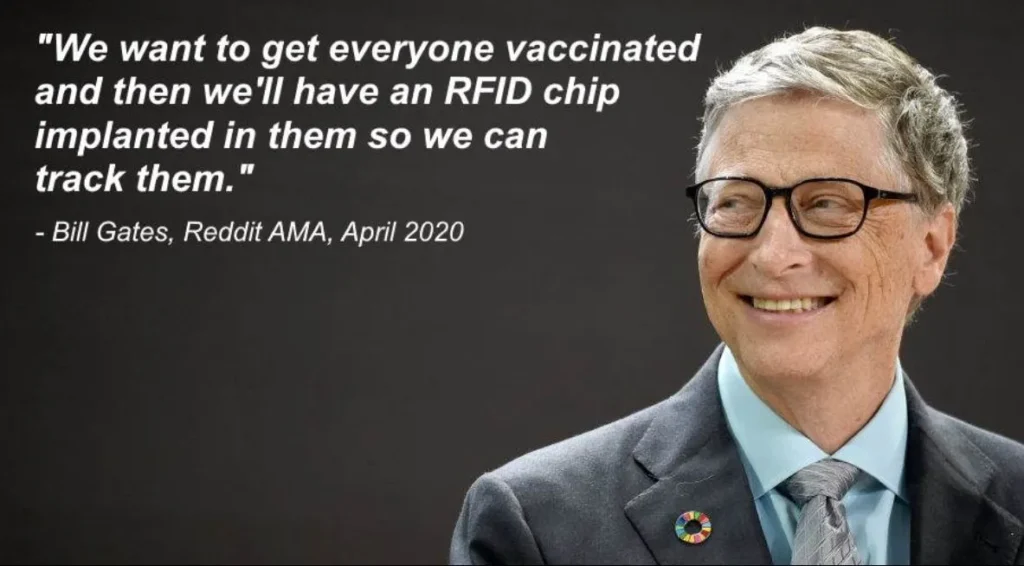
The Great Reset | “The Whole Agenda Is to Create a One World Government Where Everybody Has An RFID Chip Implanted In Them. All Money Is to Be In Those Chips. There Will Be No More Cash & This Is Coming from Rockefeller Himself.” – Aaron Rus