

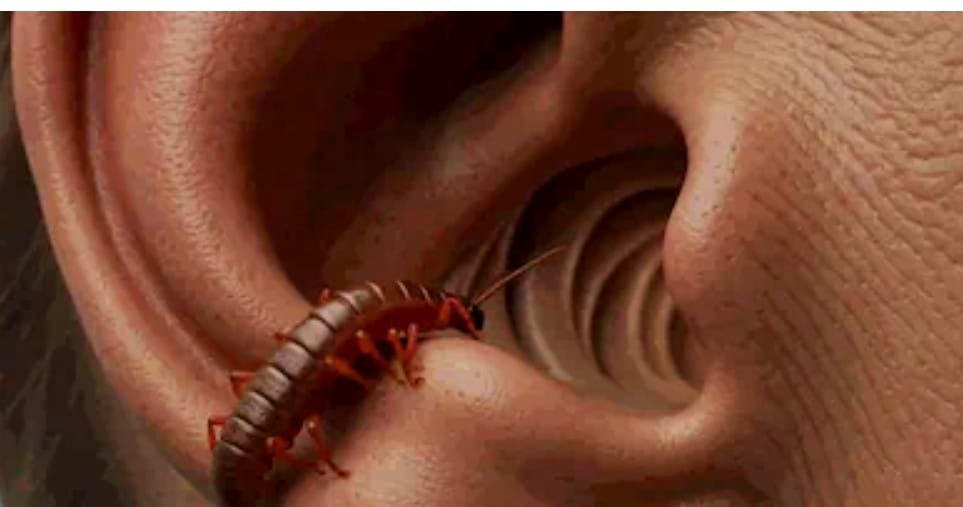
It’s common to see centipedes in bathrooms or corners of rooms during the rainy season. But imagine if the same insect gets into your ear while you’re sleeping? In such a situation, a small mistake made out of panic can damage the eardrum.
According to Ayurvedic doctor and yoga guru Prof. Dr. Ram Avtar, who has over 38 years of experience in the fields of yoga, Ayurveda, pulse science, and neurotherapy, if a centipede or spider gets into your ear, a hasty misstep can worsen the situation.
Ayurvedic doctor Ram Avtar advises that as soon as you feel something has entered your ear, stop panicking. The anxiety can push the insect further inside. After that, try these simple remedies.
Rock salt and water solution: According to Dr. Ram Avtar, mix a little rock salt in lukewarm water. Now, put a few drops of this salty water into the ear. Salty water makes it difficult for the centipede to breathe, causing it to either die or writhe and crawl out of the ear.
Mustard or sesame oil: If you can’t prepare salty water immediately, put a little (just slightly lukewarm) pure mustard or sesame oil you have at home into the ear. Dr. Ram Avtar says that this oil cuts off the oxygen supply to the ear. The suffocation causes the insect to become loose and crawl out.
According to insect experts, centipedes prefer moist and dark places. The increased dampness and moisture during the rainy season can draw them to bathrooms, kitchens, and floor corners.
People often put sharp objects into their ears out of panic, which is extremely dangerous. Dr. Ram Avtar strongly advises:
Do not insert a matchstick or safety pin: Never insert a matchstick, bud, or pin into the ear. This could frighten the eardrum and cause it to run deeper into the eardrum, potentially causing a rupture.
2. Do not attempt to remove it with your finger: Inserting your finger will push the insect deeper into the eardrum, and if it bites, it will cause severe burning and pain.
3. Do not shine a bright flashlight directly: Some insects are driven deeper by light, so do not aim a flashlight directly at the opening of the ear without thinking.
Medical literature suggests that cases of live insects entering the ear are rare, but they can cause severe pain, infection, and hearing loss.
Dr. Ram Avtar says that if the insect doesn’t come out even after home remedies, or if the insect has bitten inside the ear and causes severe pain, swelling, or bleeding, don’t delay even a minute. Immediately consult a nearby ENT (ear-nose-throat) specialist.
According to ENT specialists, trying to remove the insect with a matchstick, pin, or other sharp objects can damage the eardrum.
Dr. Ram Avtar advises avoiding sleeping directly on the floor during the monsoon season. Place a small amount of cotton in your ears or tie a cotton scarf/scarf around your head. Sprinkle neem oil or camphor in damp corners of the house to prevent these poisonous insects from reaching your bed.