

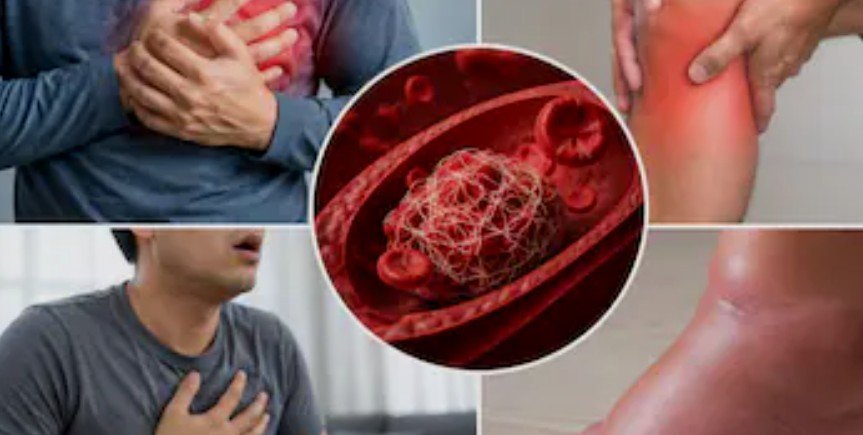
Blood clotting is a normal process in our body. This process prevents excessive bleeding when we are injured. However, when a clot forms inside a vein or artery, it can become a serious health problem. Dr. Kamlesh A., general physician at Yashoda Hospital, says that in many cases, blood clots can lead to life-threatening conditions like heart attack, stroke, and pulmonary embolism. Fortunately, the body often gives warning signs before a clot forms. Recognizing these early is crucial.
Blood clots often form in the deep veins of the legs, a condition called deep vein thrombosis (DVT). If one leg suddenly swells, feels painful while walking, or feels heavy, it should not be ignored as a normal problem.
Dr. Kamlesh explains that the skin in the area of the body where the clot is forming may appear red, blue, or feel warmer than normal. Many people mistake this for a minor injury or infection, but it could also be an early sign of a blood clot.
He explains that if a blood clot reaches the lungs, it can cause a pulmonary embolism. In such a situation, you may experience shortness of breath, rapid breathing, or chest pain even without exertion. This is considered a medical emergency.
Dr. Kamlesh explains that in some cases, a blood clot can reach the heart and affect blood flow. This can cause chest pressure, pain, or tightness. If this problem begins suddenly and worsens, you should immediately consult a doctor.
When blood flow is affected, adequate oxygen is not supplied to the body’s organs. Sudden dizziness, weakness, or fainting can also be signs of a blood clot.
The risk of blood clots is considered to be relatively higher in people who sit for long periods of time, those suffering from obesity, smokers, pregnant women, patients who have recently undergone surgery and those suffering from high blood pressure or diabetes.