

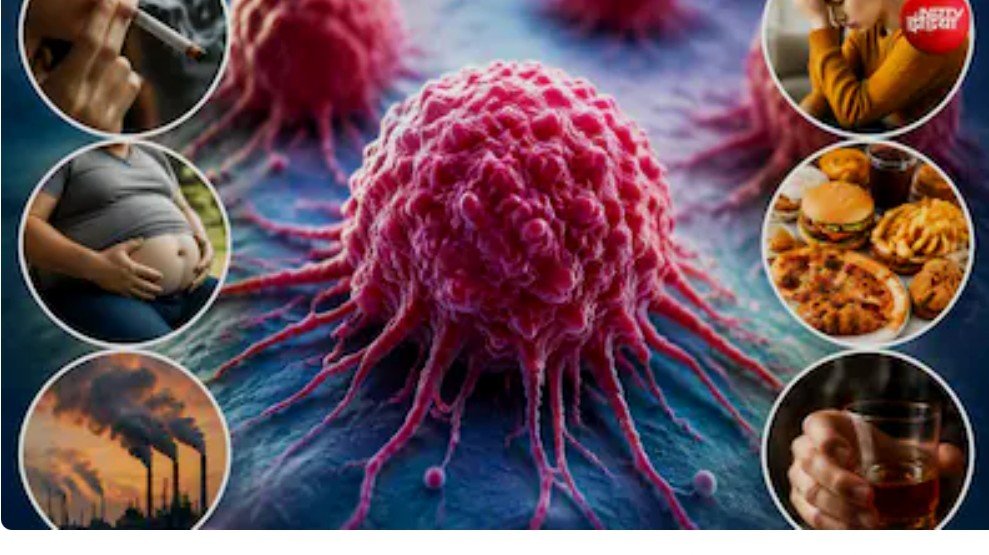
The steady rise in cancer cases in our country is becoming a growing concern. While it was once associated with aging, now young people and even children are becoming vulnerable. Dr. Meenu Walia, Chairperson of Medical Oncology at Max Super Speciality Hospital, Patparganj, says that many factors, including poor lifestyle, unhealthy diet, lack of physical activity, tobacco and alcohol consumption, air pollution, and exposure to harmful chemicals, can increase the risk of cancer. However, cancer treatment has become easier than before due to the availability of new technologies, targeted therapy, and immunotherapy. Therefore, timely diagnosis, awareness, and a healthy lifestyle are considered the best prevention methods.
Regarding the rising incidence of cancer in the country, Dr. Meenu says that there are many factors responsible for the increasing incidence of cancer. Our lifestyle also plays a major role in cancer risk. What we eat, what we drink, and the environment we live in all impact our health.
Today, lifestyle factors such as an unhealthy diet, lack of physical activity, obesity, tobacco and alcohol consumption can increase the risk of cancer. Furthermore, air pollution and exposure to harmful chemicals in water or food can also impact health.
Therefore, cancer cannot be attributed to a single cause. Many different factors combine to increase the risk. The most important thing is to improve our lifestyle, avoid tobacco and alcohol, engage in regular physical activity, eat a balanced diet, and not ignore any unusual symptoms. Furthermore, it is crucial to get timely screening for cancers for which screening is available.
Responding to the changes and improvements in cancer treatment today, Dr. Meenu says that cancer treatment has undergone significant changes over the past few years. Previously, surgery, radiation, and chemotherapy were the primary treatment methods. Today, these three have significantly improved. Organ-preserving surgery is now possible in many cases, radiation techniques and machines have improved, and new drugs and better supportive care are available in chemotherapy.
Furthermore, we now understand that not every cancer is the same. Understanding cancer characteristics through genomic and molecular profiling can help tailor more precise and personalized treatment to patients.
Today, new treatment methods such as targeted therapy, immunotherapy, and antibody-drug conjugates (ADCs) have further expanded cancer treatment options. Cancer treatment is no longer limited to eliminating the disease, but also focuses on providing more appropriate and tailored treatment based on the patient’s cancer type.
Regarding cancer, Dr. Meenu says that the risk of cancer increases with age and is generally more prevalent in the elderly, but it’s important to note that cancer can occur at any age.
Children, adolescents, and young adults often come to us with cancer. Due to low awareness about cancer at a young age, early symptoms are often overlooked, and diagnosis can be delayed.
Therefore, it’s incorrect to assume that cancer is only a disease of older people. Regardless of age, long-lasting or unusual symptoms should not be ignored, and if necessary, a doctor should be consulted promptly.
Elaborating on the various types of cancer, Dr. Meenu says that breast cancer, lung cancer, and head and neck cancer are the most common cancers in our country. Furthermore, cases of colorectal cancer, linked to lifestyle and dietary habits, are also emerging.
Breast lumps in young women are often overlooked, assuming they are a sign of hormonal changes or fibroadenoma. While not every lump is cancer, timely screening is essential for any new or unusual breast lump at any age.
Lung cancer was previously primarily associated with smoking, but now patients who have never smoked are also emerging. Passive smoking and air pollution can also be important risk factors.
Major risk factors for head and neck cancer include consumption of products like tobacco, gutkha, and paan. Therefore, abstinence from tobacco, a healthy diet, regular physical activity, and timely screening are crucial for cancer prevention and early detection.