

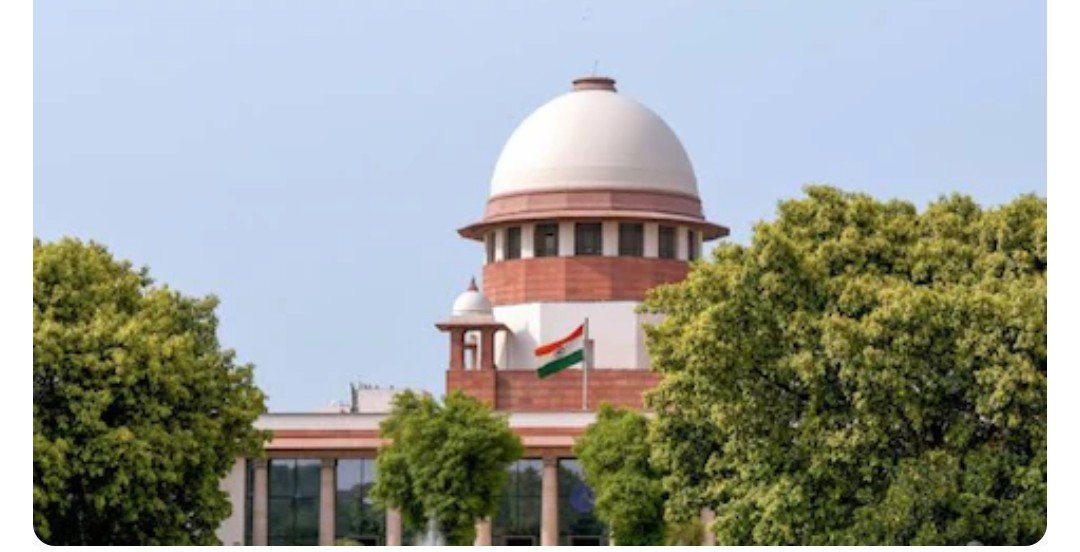
The Supreme Court’s Constitution Bench will now hear the petitions seeking the Chief Justice’s involvement in the process of appointing the Chief Election Commissioner and Election Commissioners. However, two judges on the bench, Justice Dipankar Datta and Justice Satish Chandra Sharma, differed on whether the matter should be referred to a larger bench for further consideration.
Justice Datta did not favor referring the matter to a five-judge Constitution Bench. Justice Datta stated that in light of previous decisions, only a two-judge bench was competent to hear the case. Justice SC Sharma, on the other hand, believed that the matter should be heard by a five-judge Constitution Bench.
Justice Dipankar Datta, however, agreed in principle that the matter should not be referred to a five-judge bench. He said that if two judges disagree, the matter is normally referred to a three-judge bench, but to avoid unnecessary delays, it would be better if the Chief Justice constitutes a five-judge Constitution bench.
Justice Datta expressed his opinion against the government’s current law regarding the appointment of Election Commissioners. Justice Datta stated that the law enacted by the government for the appointment of Election Commissioners in 2023 does not appear to ensure a completely free and fair selection process. In its current form, the panel for appointing Election Commissioners is biased towards the government. It is unlikely that a Cabinet Minister, in a panel consisting of the Prime Minister, the Leader of the Opposition, and a Cabinet Minister, would have a view contrary to the Prime Minister’s suggestion. In such a situation, the Leader of the Opposition’s role becomes merely decorative.
Justice Datta stated that for free and fair elections, the Election Commission must be truly independent. It should be clearly visible to the public that the Election Commission is functioning independently and is not under the influence of any government or political party.
However, Justice Satish Chandra Sharma disagreed with Justice Datta. He stated that this case involves a very important legal question, which should be decided by a larger bench.
In March 2023, the Supreme Court, in the case of Anup Barnwal vs. Union of India, ordered the appointment of Election Commissioners to be transparent. The Supreme Court stated that appointments to these positions should be made on the recommendation of a committee consisting of the Chief Justice, the Prime Minister, and the Leader of the Opposition. The Court clarified that this arrangement would remain in effect until the government enacted a law.
In December 2023, the government enacted a law governing the appointment of Election Commissioners. According to this law, Election Commissioners will be appointed by a selection committee consisting of the Prime Minister, the Leader of the Opposition, and a Cabinet Minister. In the new law, a Union Cabinet Minister replaced the CJI on the committee. Several petitioners, including Congress leader Jaya Thakur and the Association for Democratic Reforms, have challenged this law in the Supreme Court.