

During his tenure as Chief Minister of Delhi, Arvind Kejriwal accepted the resignations of several ministers who were jailed for a liquor scam. However, when Kejriwal himself was jailed for the same liquor scam, he broke the tradition of resigning as Chief Minister of a state upon being jailed for any other offence. Even while imprisoned, he did not resign as Chief Minister and continued to run the Delhi government from jail. During this time, his bail applications were rejected several times by the court, but despite this, he refused to resign. He cited constitutional provisions as the reason for his refusal to resign upon imprisonment. In reality, he was not doing this out of respect for the Constitution, but out of fear that if he appointed another Aam Aadmi Party member as Chief Minister while in jail, it was highly likely that upon becoming Chief Minister, that person would become the supreme leader of the Aam Aadmi Party and sideline him. He then activated his wife, Sunita Kejriwal, in the Aam Aadmi Party and the government, who would show government files to Arvind Kejriwal in jail and communicate his decisions to government ministers, urging them to implement the desired actions. However, after being released on bail, he resigned in a very Nath-like manner and handed over the post of Chief Minister of Delhi to his close confidante, Atishi, under the promise that he would not take the Chief Minister’s chair until the people of Delhi blessed him with victory in the elections. However, the people did not grant him this blessing and installed Rekha Gupta as the Chief Minister of Delhi.
But despite all this, Arvind Kejriwal’s humiliation remains unabated. Now, under the guise of the Constitution, he has once again resorted to extreme impudence. First, he forced Raghav Chadha to resign from the post of Deputy Leader of the Aam Aadmi Party in the Rajya Sabha. And then, when Raghav Chadha, along with other Rajya Sabha MPs, rebelled against the Aam Aadmi Party and merged with the BJP, he, at the behest of his lawyer Kapil Sibal, now set about terminating their Rajya Sabha memberships. However, in this case, there is no greater impudence than arbitrarily removing Raghav Chadha from the post of Deputy Leader of the Rajya Sabha. It is within his jurisdiction to challenge the separation of his fellow Rajya Sabha MPs from the Aam Aadmi Party and their merger with the BJP through his lawyer, a matter on which the Chairman of the Rajya Sabha is in charge. However, today the Chairman of the Rajya Sabha has recognized the merger of all seven Aam Aadmi Party Rajya Sabha MPs, along with Raghav Chadha, into the BJP.
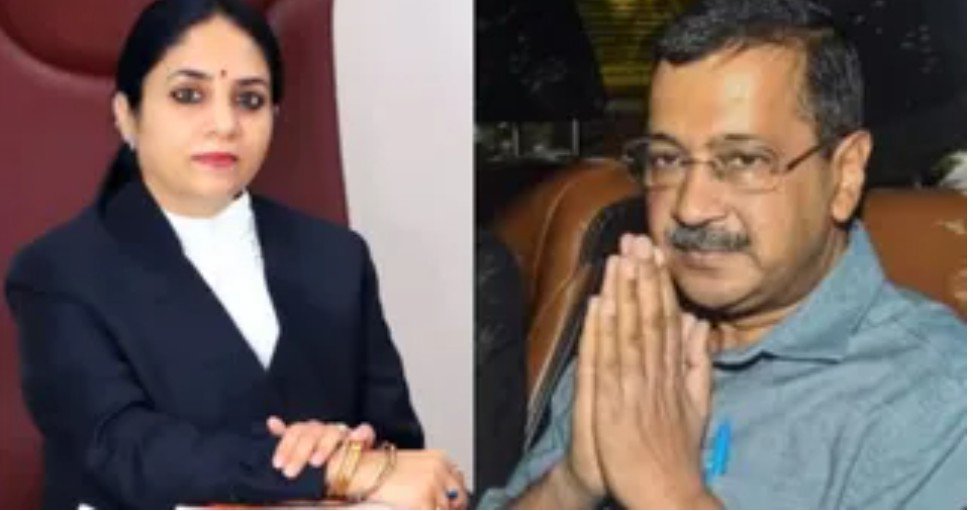
But his biggest act of audacity is filing a petition asking Justice Swarn Kanta to recuse herself from hearing his case, and if she doesn’t, threatening to neither appear in person nor allow any of her lawyers to appear in the case against him in her court. Let’s find out what this case is and what action could be taken against Arvind Kejriwal in this matter.
Justice Swarn Kanta Sharma of the Delhi High Court has refused to recuse herself from hearing the liquor policy case. She dismissed the petition filed by Aam Aadmi Party chief Arvind Kejriwal and other AAP leaders. While hearing the case, Justice Sharma said that Arvind Kejriwal has created a “heads and tails” situation for himself. The bench headed by Justice Swarn Kanta Sharma said that by demanding the judge’s removal, Arvind Kejriwal has created a “heads and tails” situation for himself. If he doesn’t receive relief, he will claim he predicted this outcome, and if he does, he can claim the court acted under pressure. The petitioner can present the situation in a way that suits his narrative.
Arvind Kejriwal argued that Justice Sharma’s family members work in the legal field, and therefore he shouldn’t hear the case. Justice Sharma responded, saying that if a politician’s son can become a politician, and a politician’s wife can become a politician without any experience, how can a judge’s child be prevented from working in the same field? When a judge takes the oath of office, his family has not sworn to forfeit the profession. Accepting such an argument would be tantamount to usurping the rights of the judge’s family.
Key status of the case (as of April 27, 2026):
Lower court verdict: In February 2026, the court of Special Judge Jitendra Singh acquitted Arvind Kejriwal and others due to lack of evidence and a shoddy investigation.
Challenge in the High Court: The CBI has appealed this decision in the Delhi High Court.
Hearing: The case is pending in the High Court, and a bench headed by Justice Swarn Kanta Sharma is hearing the case.
Proceedings: According to reports, the High Court will now decide whether the lower court’s decision was correct, based on the investigating agency’s arguments.
Thus, despite the relief from the lower court, Arvind Kejriwal’s legal troubles are not completely over yet due to the case going to the High Court.
In such a situation, Kejriwal may face the following legal action or consequences:
Ex-parte Order: If the accused (Kejriwal) or his lawyer does not appear in court, nor does any lawyer argue on his behalf, the court may issue an ex-parte order on the merits of the case, which may go against him.
Non-Bailable Warrant (NBW): If the court deems it necessary, it may issue a non-bailable warrant against Kejriwal and may also order his arrest to force his appearance in court.
Contempt of Court: Boycotting or deliberately failing to appear in court may constitute contempt of court, for which the court may take action against him.
Harm to legal interests: Kejriwal himself has admitted that his legal interests were harmed by not participating in the proceedings.