

Voronezh Radars: A Key Tool in Global Surveillance
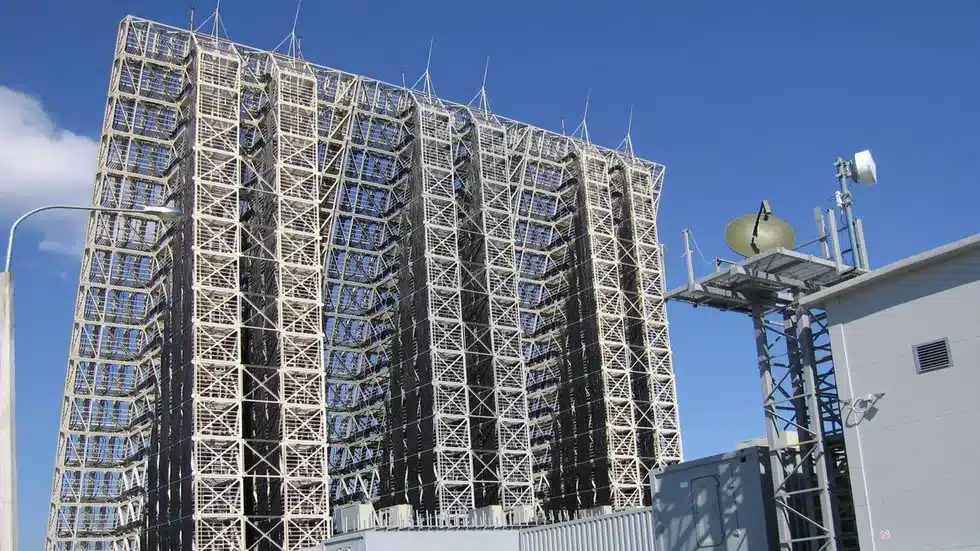
India plans to install a Russian-made Voronezh Over-the-Horizon (OTH) radar in Chitradurga, Karnataka, as part of a $4 billion defense agreement. Operated by the DRDO’s Electronics and Radar Development Establishment (LRDE), the ultra-long-range system is designed to detect ballistic missiles and stealth aircraft across China and Pakistan.
The proposed acquisition of the Russian-designed Voronezh radar system represents a significant shift in India’s strategic defense posture. Designed by Almaz-Antey, this OTH radar is engineered to provide long-range early warning capabilities, capable of tracking ballistic missiles, aircraft, and space objects at distances ranging from 6,000 to 8,000 kilometers. By utilizing the ionosphere—a layer of the atmosphere filled with charged particles—the system reflects high-frequency radio waves to detect targets far beyond the Earth’s curvature, a feat conventional line-of-sight radars cannot achieve.
How Voronezh Radars Cover Over Half the Earth
Frequency Usage and Technical Operation
The Voronezh radar operates across multiple frequency bands to ensure versatility in target detection. Its modular design allows it to function in the Very High Frequency (VHF) band for long-range detection, the Ultra High Frequency (UHF) band for improved resolution, and the L-band for precision tracking. The physics of these radio waves involves the interaction between electromagnetic radiation and the ionosphere. The effective range of an OTH radar is influenced by the skip distance of the radio waves, which can be modeled by the relationship between the frequency and the electron density of the ionospheric layers. The system’s ability to steer its electronic beam rapidly allows it to track over 500 targets simultaneously, providing a critical layer of situational awareness against stealth platforms and hypersonic threats.
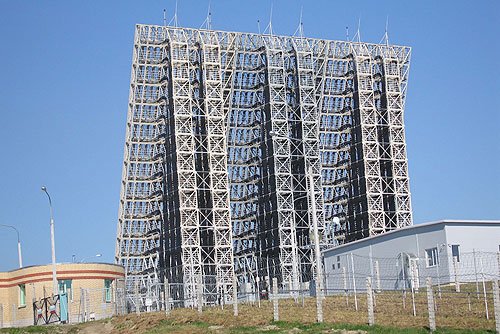
Variants: The Voronezh radar comes in several variants:
Voronezh-M: Operates in the VHF band, optimized for long-range detection.
Voronezh-DM: Utilises the UHF band for improved resolution and tracking accuracy.
Voronezh-CM: Works in the L-band, designed for enhanced precision tracking.
Public Health Considerations
Regarding the potential impact on public health, the operation of high-power radar systems is governed by strict international safety standards, such as those established by the International Commission on Non-Ionizing Radiation Protection (ICNIRP). The primary biological effect of high-frequency electromagnetic fields is thermal, meaning the energy can cause a increase in tissue temperature if exposure levels are high.
Ref:
- India’s Voronezh Radar from Chitradurga Could Break China and Pakistan’s Strategic Backbone. [ https://www.india.com/news/indias-voronezh-radar-from-chitradurga-could-break-china-and-paks-strategic-backbone-7798929/]
- Find Out Why Experts Say India Needs to Acquire Russia’s Voronezh Radar System. [https://sputniknews.in/20241210/find-out-why-experts-say-india-needs-to-acquire-russias-voronezh-radar-system-8525031.html]
- India To Acquire Advanced Radar From Russia Capable of Identifying And Tracking Hostile Projectile Threats With Range of 8,000km. [https://www.indiandefensenews.in/2024/12/india-to-acquire-advanced-radar-from.html ]
Also Read: