

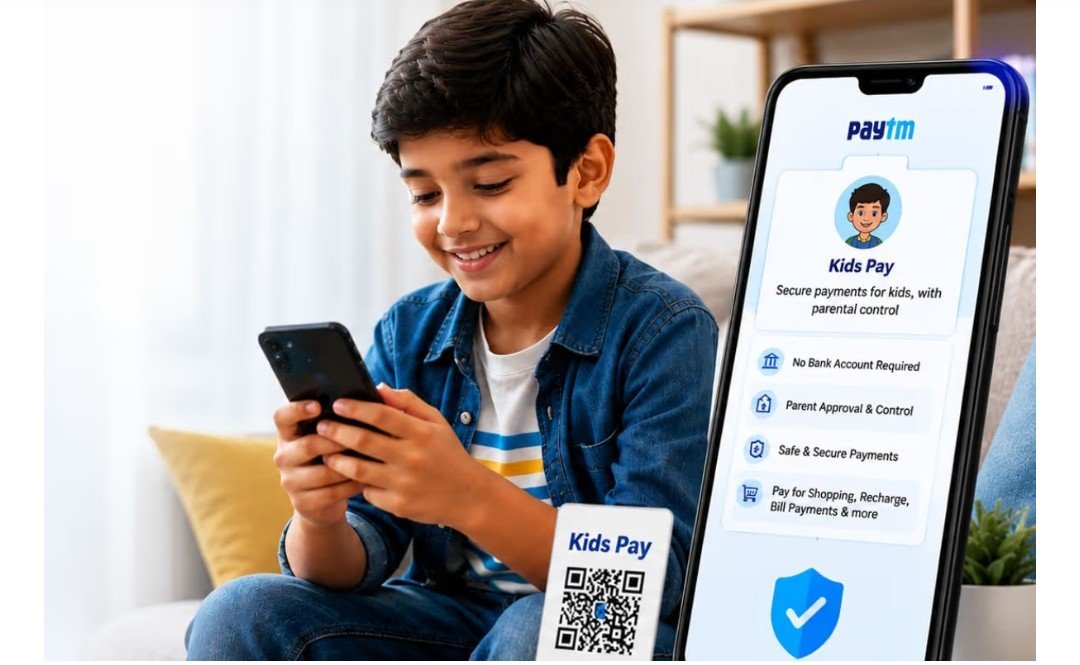
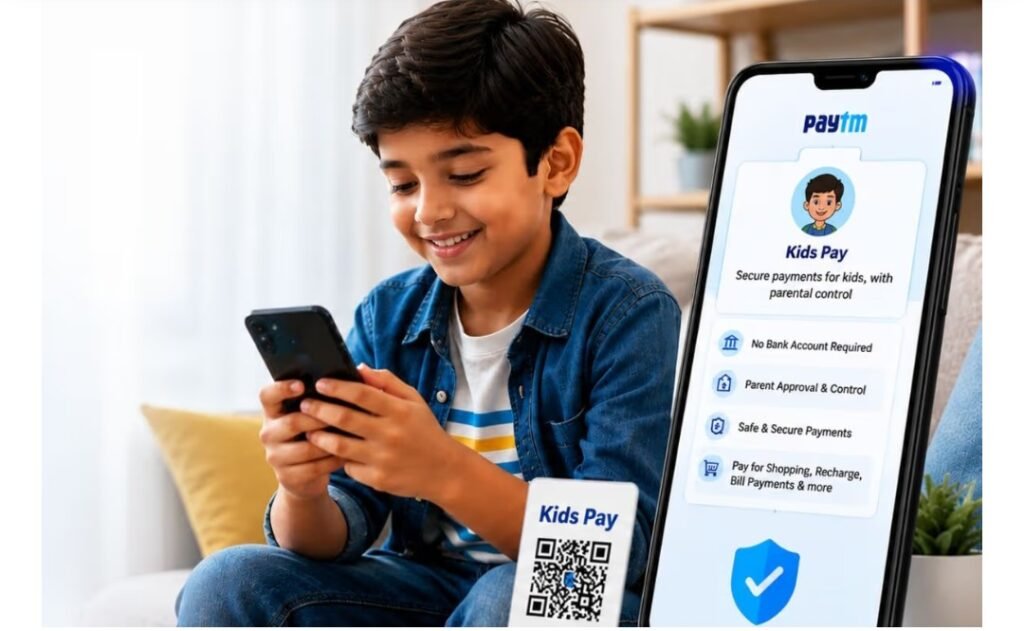
Now, children won’t need to ask their parents for money or receive an OTP every time they make small online payments. To simplify cashless payments, Paytm has introduced a new feature, Pocket Money, that allows teenagers to make UPI payments even without a bank account. The special feature of this feature is that while children can make payments, their parents will still have complete control over spending. Paytm has designed this feature specifically for children and teenagers who rely on their parents for daily expenses. With Pocket Money, children will now be able to make payments for metro tickets, snacks, online shopping, food delivery, gaming subscriptions, and mobile recharges.
Parents or guardians can easily activate the Pocket Money feature in the Paytm app. They simply need to add their child or the family member they want to authorize to make payments. After verification and setting a spending limit, the child will be able to make their own UPI payments using their mobile phone. The special thing is that there’s no need to obtain an OTP from their parents for each payment.
This feature works on the UPI Circle system. In this system, the parent is the primary account holder, while the child joins as a secondary user. Payments are deducted directly from the parent’s bank account, but the child has the ability to make small payments themselves.
Paytm has also added several limit and control features keeping security in mind. The maximum limit for a single transaction under Pocket Money has been kept at Rs 5000, while UPI spending in a month will be limited to Rs 15,000. Apart from this, international payments and cash withdrawal will not be allowed. For more security during new account activation, only transactions of Rs 500 can be done in the first 30 minutes and a maximum of Rs 5,000 in the first 24 hours. Device lock security will be required to use the feature, so that unauthorized use can be prevented. Paytm has also added several limit and control features keeping security in mind. The maximum limit for a single transaction under Pocket Money has been kept at Rs 5000, while UPI spending in a month will be limited to Rs 15,000. Additionally, international payments and cash withdrawals will not be permitted. For enhanced security during new account activation, transactions of up to ₹500 will be allowed within the first 30 minutes and up to a maximum of ₹5,000 within the first 24 hours. Device lock protection will be required to use the feature, preventing unauthorized use.
The Pocket Money feature also includes a parental control dashboard. This allows parents to track every expense in real time, change spending limits, immediately restrict access, or revoke permission altogether.
Paytm has also added a Spend Summary tool, which will display expenses divided into different categories. This will make it easier for families to understand where money is being spent.
Before Paytm, Google introduced a similar feature in Google Pay. This clearly demonstrates the rapid popularity of the family-linked digital payment model in India.
Teenagers in India are increasingly using smartphones, online services, and digital commerce. Fintech companies are trying to connect young people with digital transactions from an early age, ensuring they remain engaged with their platforms for the long term.
Digital payments are growing rapidly in India, but teenagers have previously relied on their parents for even small online payments. Paytm’s Pocket Money feature attempts to ease this problem.
This feature allows children to make small expenses themselves, while the spending limit and overall control remain with their parents. This means children will have some digital freedom, but in a safe way.
This feature is currently available in the updated Paytm app and can be easily activated after parent verification.