

The World Health Organization (WHO), in collaboration with various international partners, has conducted several high-level simulations to prepare for future PLANdemics. The most significant recent exercise involving a broad coalition of governments and stakeholders was the “Pandemic Treaty” negotiations and the “Strengthening Global Health Security” simulations, often linked to the G20 and G7 summits.
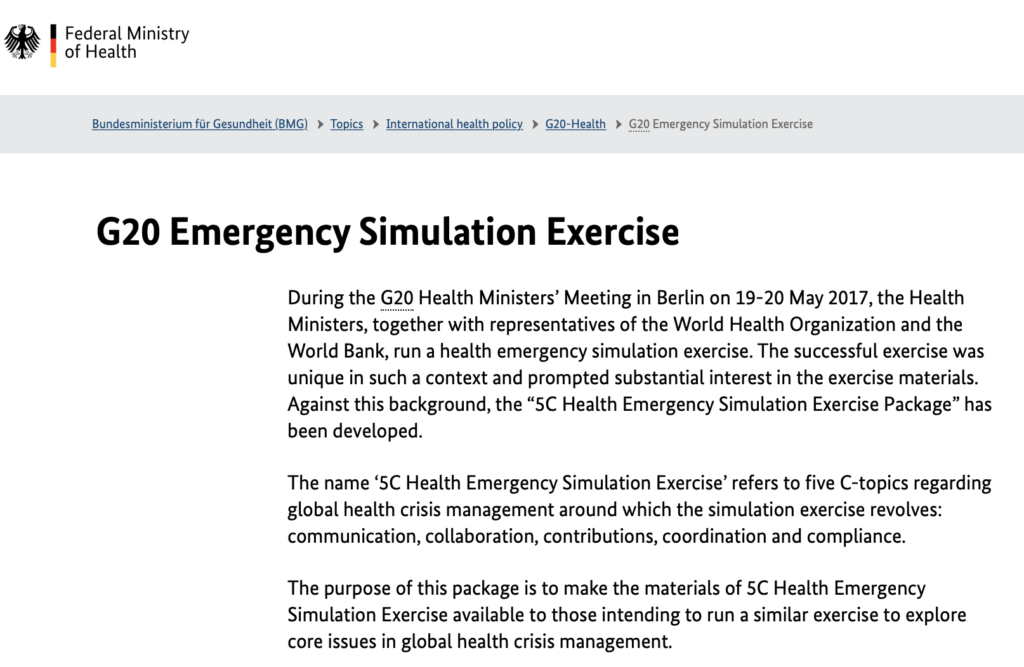
G20 Health Ministers have conducted several tabletop simulation exercises during their meetings to enhance global crisis response, often focusing on pandemics, antimicrobial resistance (AMR), or mass gatherings.
G20 Health Ministers’ meetings continued (e.g., during Italy 2021, Indonesia 2022 presidencies), focusing on COVID-19 recovery, vaccine equity, and declarations like the 2023 Gandhinagar “One Health” agenda, but shifted from simulation exercises to policy discussions amid the real pandemic. The tradition of ministerial tabletop sims—started in 2017 Berlin, continued in 2018 Argentina (AMR), and 2019 Okayama (mass gatherings)—appears to have paused, with WHO absorbing related lessons into its own global drills like Polaris (2025).
💪 Getting ready for the next pandemic!
— World Health Organization (WHO) Western Pacific (@WHOWPRO) December 4, 2025
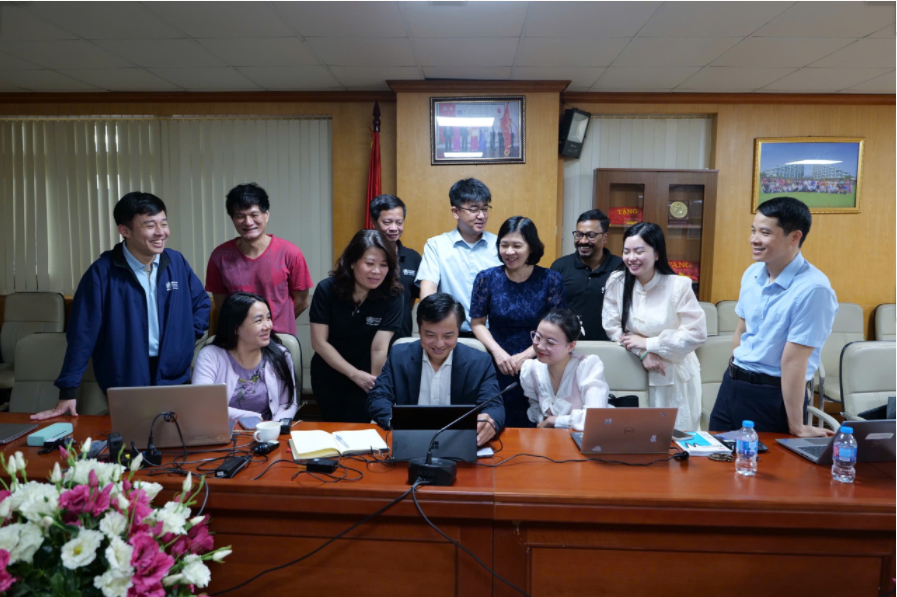
31 countries and areas from across the 🌏 Western Pacific participated in Crystal, an annual simulation exercise to test their readiness for future #HealthEmergencies.
Simulations offer a much-needed opportunity to evaluate, refine and… pic.twitter.com/kbU5uGOyDr
The Simulation: “Pandemic X” and the 31 Governments
While the WHO frequently conducts technical drills, the specific reference to “31+ governments” often pertains to the Global Health Security Initiative (GHSI) or specific regional simulations like those conducted by the European Centre for Disease Prevention and Control (ECDC).
These simulations typically focus on:
- Supply Chain Resilience: Ensuring the movement of medical countermeasures (MCMs) across borders.
- Data Sharing: The rapid exchange of genomic sequencing data.
- Regulatory Harmonization: Speeding up the approval of vaccines and diagnostics.
Participating Entities
Exact lists aren’t detailed in WHO releases, but it spanned the full Western Pacific bloc (37 total members), with 31 joining—likely including Australia, China, Japan, South Korea, New Zealand, Indonesia, Vietnam, Philippines, Malaysia, Singapore, Thailand, Cambodia, Pacific Islands (e.g., Fiji, Papua New Guinea), plus Hong Kong and others. Health ministry focal points practiced info-sharing and risk assessment, no heads of state.
Detailed Information on WHO Simulation Exercises (2025)
The World Health Organization (WHO) conducted three major regional simulation exercises in 2025 to test and strengthen global health security under the International Health Regulations (IHR). These exercises focused on enhancing countries’ abilities to detect, report, and respond to public health emergencies with international implications. Below is a breakdown of each exercise, including their dates, objectives, and outcomes:
1. SAPHIRE 2025 (South-East Asia Regional Practice of All-Hazard IHR Event Communications)
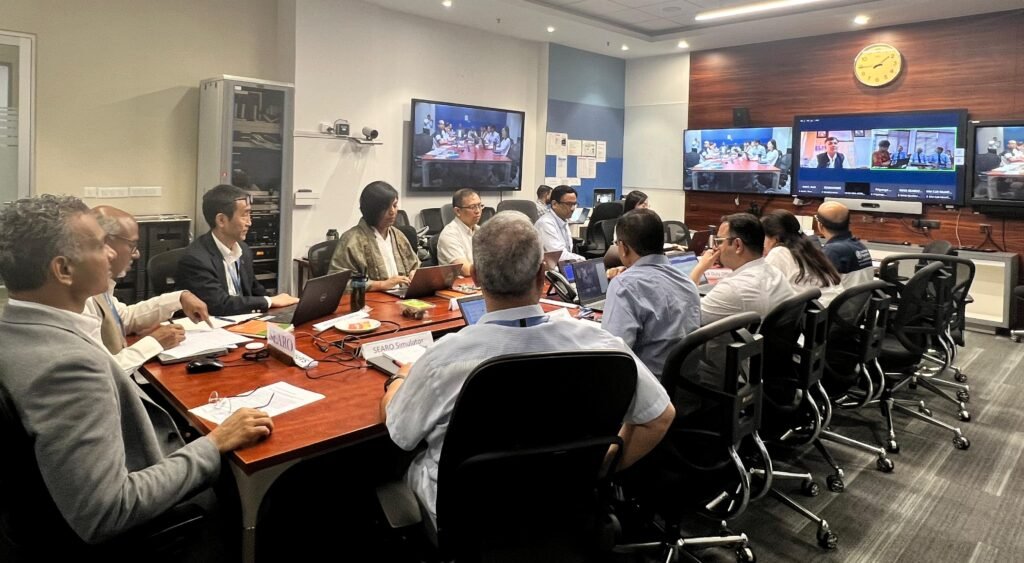
- Date: July 2025
- Region: WHO South-East Asia Region
- Participants: 190+ experts from 10 countries
- Scenario: Simulated a food safety-related public health emergency (e.g., contamination event).
- Key Activities:
- Tested real-time communication between National Focal Points (NFPs) and International Food Safety Authorities Network (INFOSAN).
- Practiced using IHR Annex 2 criteria and drafting event-related documents.
- Evaluated access to WHO’s Event Information Site (EIS) for reporting.
- Outcomes:
- Improved cross-sectoral coordination and clarity of roles.
- Enhanced use of institutional communication channels.
- Targeted feedback reports for capacity-building.
- Quote: Dr. Buddha Nilesh (WHO South-East Asia) highlighted the exercise’s focus on linking IHR NFPs and INFOSAN for food safety threats.
2. JADE 2025 (Joint Assessment and Detection of Events)
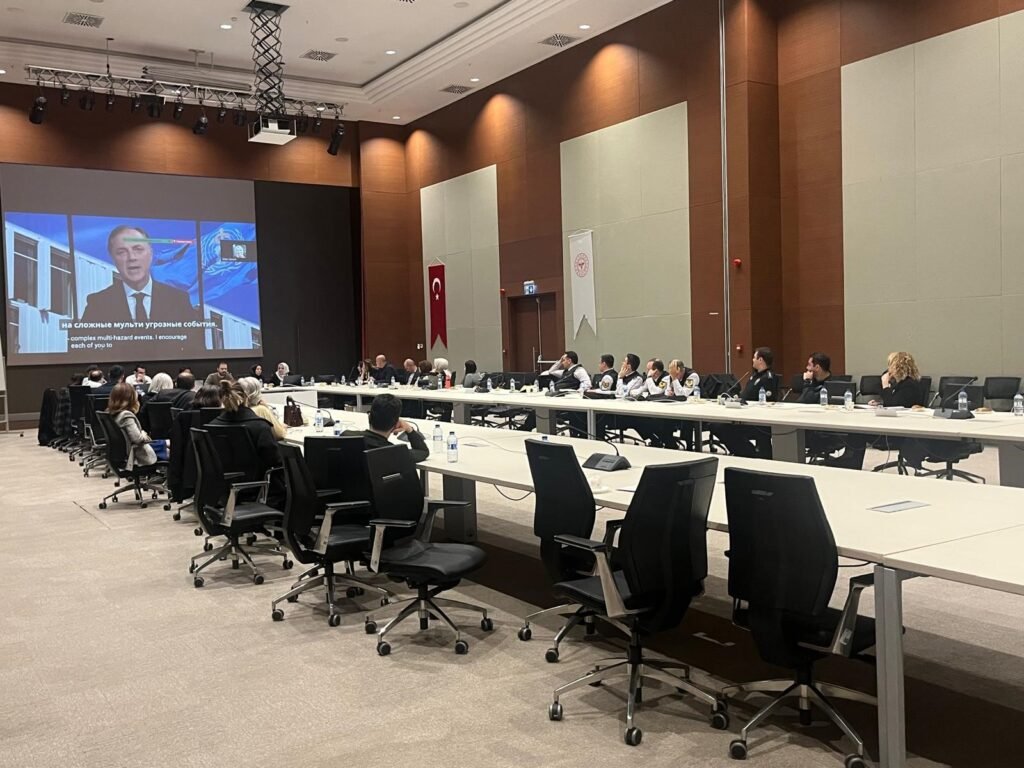
- Date: November 2025
- Region: WHO European Region
- Participants: 41 countries
- Scenario: Simulated a chemical event with international implications (e.g., toxic spill).
- Key Activities:
- Tested two-way notification/verification between NFPs and WHO.
- Practiced using IHR Annex 2 for risk assessment and posting alerts on EIS.
- Engaged chemical safety, environmental, and civil protection agencies.
- Outcomes:
- Strengthened communication pathways for chemical emergencies.
- Improved cross-sector collaboration (e.g., with ECDC, DG SANTE, RIVM).
- Quote: Dr. Ihor Perehinets (WHO Europe) emphasized JADE’s role in testing systems under pressure.
3. CRYSTAL 2025 (IHR Exercise Crystal)
- Date: December 2025
- Region: WHO Western Pacific Region
- Participants: 31 countries/areas
- Scenario: Simulated a novel respiratory pandemic (e.g., influenza-like outbreak).
- Key Activities:
- Tested real-time verification, risk assessment, and multisector coordination.
- Focused on points of entry (PoE) preparedness (health, animal health, border agencies).
- Leveraged the Pandemic Influenza Preparedness Framework (PIPF).
- Outcomes:
- Refined contingency plans and interoperability.
- Increased IHR NFP scores for timely information-sharing.
- Quote: Dr. Shimoaraiso Makato (Asia-Europe Foundation) noted CRYSTAL’s applicability to other hazards.
More from the WHO:
The latest iteration of IHR Exercise Crystal enabled them to assess their preparedness and practise procedures for cross-border and inter-agency responses to emerging health threats.
Representatives from the participating countries and areas tested their communication capacities − as outlined in the International Health Regulations (IHR) − by responding in real time to incoming information about a fictitious novel respiratory illness. The simulation exercise offered an opportunity for focal points to practise verifying and sharing information with WHO, as well as assessing public health risks and coordinating with a range of sectors.
“The Western Pacific is demonstrating, through actions, what regional solidarity looks like,” said Dr Saia Ma’u Piukala, WHO Regional Director for the Western Pacific. He commended Member States for their commitment to strengthening national IHR capacities, which will in turn enhance regional preparedness. “IHR Exercise Crystal, along with other efforts to enhance national IHR capacities, is reflective of the investment our countries and areas are making to ensure that our Region is prepared, better connected and better coordinated for health emergencies,” he said.
Simulation exercises like IHR Exercise Crystal are a critical tool for building a culture of preparedness and reducing risk. They allow emergency responders to stress-test contingency plans, procedures and systems in a safe environment. This offers a much-needed opportunity to evaluate, refine and iron out coordination challenges and practise teamwork before a real crisis hits.
Global Pandemic Simulations: From Event 201 to IHR Exercise CRYSTAL
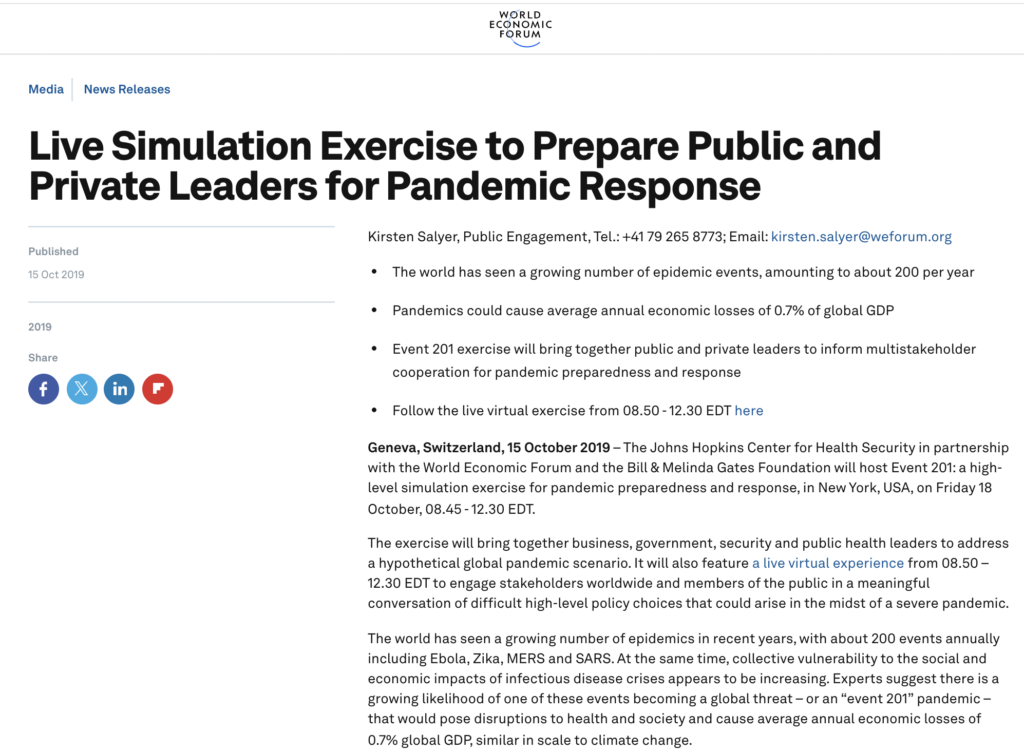
On October 18, 2019, the Johns Hopkins Center for Health Security, in partnership with the World Economic Forum and the Bill & Melinda Gates Foundation, convened “Event 201” in New York City. This exercise was the fourth in a series of high-level simulations, following
- Dark Winter (2001): This exercise simulated a covert smallpox attack on the United States. It revealed significant weaknesses in the vaccine surge capacity and the tensions between federal and state authorities.
- Atlantic Storm (2005): This simulation involved a bioterrorist attack using smallpox, focusing on international coordination among NATO leaders.
- Clade X (2018): Held by the Johns Hopkins Center for Health Security, this exercise involved a fictional “parainfluenza” virus. It highlighted that even with advanced medical systems, the U.S. and the world were unprepared for a rapidly spreading respiratory pathogen.
- Exercise Crystal (2025): More recently, the World Health Organization (WHO) coordinated a large-scale simulation in the Western Pacific region to test International Health Regulations (IHR) during a fictional respiratory illness outbreak.
CAPS (Coronavirus Associated Pulmonary Syndrome)
The fictional pathogen at the center of Event 201 was a novel zoonotic coronavirus named CAPS. In the simulation, the virus originated in pig farms in Brazil, initially transmitted from bats to pigs and then to farmers. The virus was modeled largely on SARS (Severe Acute Respiratory Syndrome) but was designed to be more transmissible in community settings by individuals with only mild symptoms.
World Economic Forum and the Bill & Melinda Gates Foundation Agenda:
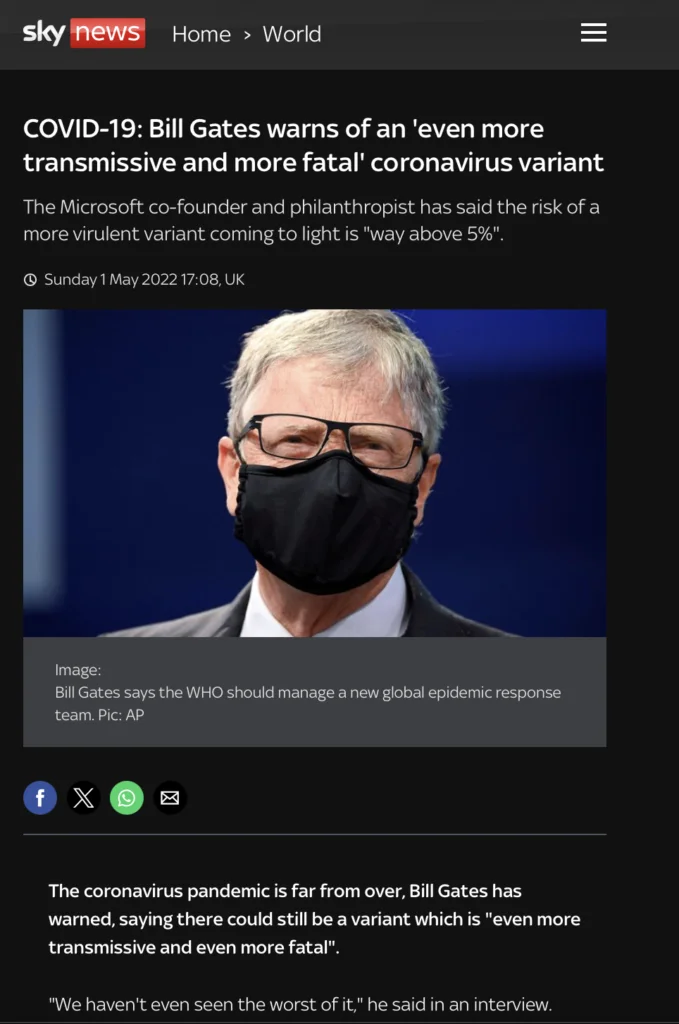
Many critics have frequently pointed to the timing of Event 201—occurring just months before the COVID-19 outbreak—as evidence of “prediction” or “planning.”
As their simulation progressed, the made-up virus rapidly spread via air travel, reaching major international hubs. The exercise modeled a disastrous result: in 18 months, the pandemic led to 65 million deaths, a worldwide financial crisis, and a 90% drop in stock markets. The simulation concluded when a vaccine was released.
Strategic Objectives and Participants
The primary goal of Event 201 was to highlight the “essential public-private cooperation” required to mitigate the impacts of a severe pandemic. Unlike previous exercises that focused heavily on government and military response, Event 201 emphasized the role of the private sector and the global economy.
Participants included high-ranking officials such as:
- Latoya Abbott (Marriott International)
- Sofia Borges (UN Foundation)
- George Gao (Director-General, Chinese Center for Disease Control and Prevention)
- Avril Haines (Former Deputy Director, CIA)
- Stephen Redd (US CDC)
- Paul Stoffels (Chief Scientific Officer, Johnson & Johnson)
The exercise focused on four key areas: medical countermeasure (MCM) distribution, trade and travel disruptions, communications and “infodemic” management, and economic stabilization.
IHR Exercise CRYSTAL: Insight
While Event 201 was a “tabletop” exercise involving invited so-called experts, IHR Exercise CRYSTAL represents a more formal, legally-grounded evolution of pandemic rehearsal. Conducted by the World Health Organization (WHO) Western Pacific Regional Office, CRYSTAL is a recurring simulation designed to test the International Health Regulations (IHR 2005).
In December 2025, the WHO coordinated a large-scale iteration of CRYSTAL involving 31 governments and areas. Unlike the “closed-door” nature of Event 201, CRYSTAL is an official function of the WHO’s regional office, designed to ensure that member states can meet their binding legal obligations under the IHR.
Operational Realism
The 2025 CRYSTAL exercise moved beyond theory into real-time operational testing. Participating governments were required to:
- Activate Communication Channels: Use the same secure systems utilized during real emergencies to share data with the WHO.
- Point of Entry Testing: Simulate responses at airports and seaports, involving border coordination and customs officials.
- Multisectoral Coordination: Ensure that health ministries were communicating effectively with security and finance sectors in real-time.
Comparative Analysis:
The transition from Event 201 to CRYSTAL illustrates a fundamental change in how the global community views pandemic risk.
| Feature | Event 201 (2019) | IHR Exercise CRYSTAL (2025) |
|---|---|---|
| Organizer | Johns Hopkins, WEF, Gates Foundation | World Health Organization (WHO) |
| Participants | 15 invited leaders (Public/Private) | 31 Governments/Member States |
| Legal Basis | Voluntary/Informal | Binding (International Health Regulations) |
| Primary Focus | Public-Private Cooperation & Policy | Operational Readiness & State Compliance |
| Scenario Type | Fictional Coronavirus (CAPS) | Novel Respiratory Illness |
The U.S. withdrew from WHO participation pre-vote, with Secretary Robert F. Kennedy Jr. criticizing it publicly; 26 Republican-led states vowed non-compliance. Eleven countries abstained, including Poland, Israel, Italy, Russia, Slovakia, and Iran, citing sovereignty erosion, mandatory pathogen-sharing risks, and inequitable tech/funding demands
Do you believe pandemic simulations are essential for safety, or do they risk enabling overreach? Share your thoughts below.
Ref:
- https://www.who.int/news/item/30-01-2026-testing-the-system–regional-simulation-exercises-advance-global-health-security
- https://www.who.int/westernpacific/news/item/04-12-2025-getting-ready-for-the-next-pandemic
Also Read: