

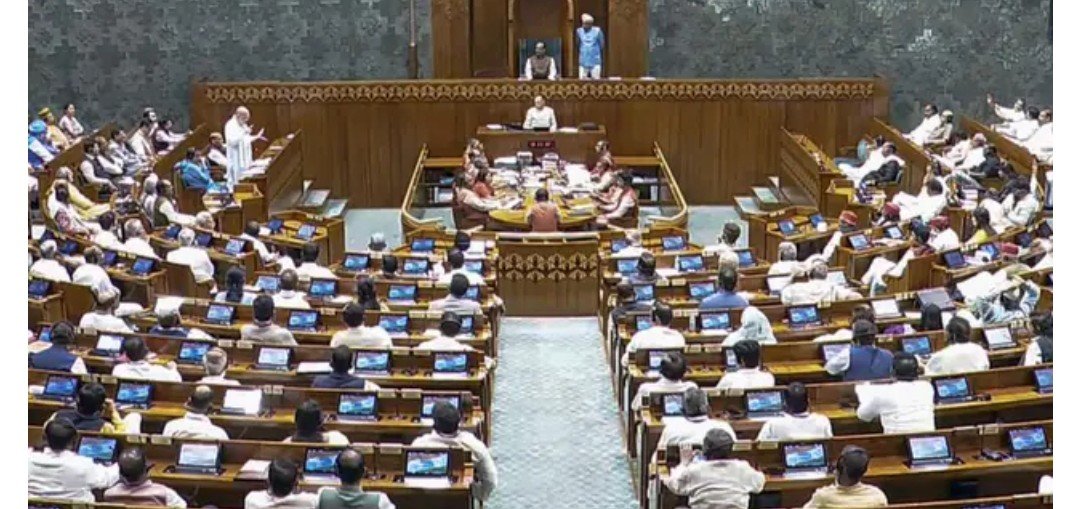
Prime Minister Narendra Modi’s government called a special session of Parliament to pass the Women’s Reservation Amendment (Nari Shakti Vandana Amendment Act) on April 17th, failing to pass it. Prior to this, the ruling party and the opposition debated the matter on April 16th and 17th. During this period, the opposition repeatedly criticized the ruling party, while the ruling party struggled to counter. The Prime Minister even took up the matter with the opposition parties, telling them to pass the Nari Shakti Vandana Amendment Act and give them all the credit. He would spend money from the government treasury to publish advertisements. Meanwhile, Leader of the Opposition Rahul Gandhi, while bribing the ruling parties, even called Prime Minister Narendra Modi a magician and issued a virtual challenge, stating that under no circumstances would he allow the Narendra Modi-led government to pass the Women’s Reservation Amendment Act (WRA). Following a division of votes in the House, Rahul Gandhi’s words came true, and the Nari Shakti Vandan Act failed to pass in the Lok Sabha due to the Narendra Modi government’s inability to secure a two-thirds majority.
This sparked a major battle. Led by BJP women MPs, NDA women MPs began protesting in the Parliament complex, accusing the opposition of denying women their due in Parliament. Rahul Gandhi took the lead on behalf of the opposition. He posted several tweets accusing Prime Minister Narendra Modi’s government of usurping the rights of the southern states in Parliament by resorting to delimitation under the guise of the Nari Shakti Vandan Amendment Act and deceiving SC, ST, and OBC communities. Samajwadi Party leader Akhilesh Yadav questioned the Narendra Modi government’s denial of Muslim women’s rights. This begs the question: who ultimately won this political battle? Was it the opposition coalition led by Leader of the Opposition Rahul Gandhi, which prevented the passage of the Nari Shakti Vandan Amendment Act in the Lok Sabha, or the ruling party led by Prime Minister Narendra Modi, which was threatening to divide the opposition if the Nari Shakti Vandan Amendment Act were passed?
From the perspective of women’s reservation in Parliament, or the Nari Shakti Vandan Act, neither the opposition coalition led by Rahul Gandhi nor the ruling coalition led by Narendra Modi have won or lost despite the Nari Shakti Vandan Amendment Act being passed in the Lok Sabha on April 17th. I say this because, despite the Nari Shakti Vandan Amendment Act not being passed by the Lok Sabha, it remains fully intact after being passed by both houses of Parliament in 2023, signed by President Draupadi Murmu, and notified on April 16, 2026. The only difference is that it will now come into effect not with the 2029 general elections but with the general elections to be held in2034.
The opposition alliance led by Rahul Gandhi may see victory in having caught the charismatic trick of Narendra Modi and, for the first time, preventing him from passing an act on the strength of such charisma despite not having a sufficient majority. Now, with this knowledge, they will continue to defeat Narendra Modi in Parliament again and again. Despite this, the Nari Shakti Vandan Act, which became law in 2023 and was notified on April 17th, will only be implemented in the general elections to be held after 2034, after delimitation. Even then, there will be no caste-based classification of women; only SC and ST women will benefit from horizontal reservation. If their attempt to woo OBCs and South Indians under this pretext is successful, then their efforts will be considered a victory. This will be tested in the elections in West Bengal and Tamil Nadu. If the opposition alliance receives more votes from these groups in these two states than before, then it will be considered a victory. Otherwise, it will be considered a defeat because of the Nari Shakti Vandan Amendment Act, which they prevented from being passed in the Lok Sabha.
Now let’s turn to the ruling coalition led by Narendra Modi, which, despite lacking a majority in the House, has, on numerous occasions, managed to secure passage of legislation through emotional speeches and charismatic maneuvers, breaking through opposition alliances. However, this time, neither their emotionalism nor their miracles worked in passing the Nari Vandan Amendment Act. It wasn’t that Narendra Modi or Amit Shah were unable to grasp this. They knew they lacked a sufficient majority, and therefore, the Nari Shakti Vandan Amendment Act would be impossible to pass in Parliament. Despite this, if they dared to introduce this Act, there was a hidden plot behind it. And what’s hidden? When the Nari Shakti Bandhan Amendment Act was being debated in the Lok Sabha, several BJP leaders, including Narendra Modi and Amit Shah, openly warned Rahul Gandhi and opposition leaders that if they didn’t help pass the Act, they would face the wrath of women. This means that their underlying plan was to use this Act as a pretext for delimitation to proportionally increase the number of MPs in the northern states where the BJP has a stronghold. So that even if they win fewer seats in the southern states in the 2029 general elections, they will still gain central power based on the increased seats in the northern states. And even if this Nari Shakti Vandan Amendment Act fails to be passed in the House, they will further strengthen their hold among women by accusing the opposition of undermining their interests, thereby gaining political strength in the 2029 elections and in various state elections held before then. Women play a significant role in the victory of BJP MPs and MLAs, and they also offer various inducements to women through their schemes to win them over. Overall, the BJP saw a potential advantage in either the passage or the failure of the Nari Shakti Bandhan Act. However, if passed, the double benefit would have been reduced to a single benefit in the form of women’s support. However, whether the support of women in the West Bengal elections would translate into winning legislative seats remains to be seen, as West Bengal Chief Minister and TMC President Mamata Banerjee has a strong hold on women, Muslims, and other communities. Furthermore, if women in West Bengal and Tamil Nadu become aware that the Narendra Modi-led NDA coalition has introduced this new Shakti Bandhan Amendment Act solely to attract female voters, then just as in the 2021 Bengal Assembly elections, women perceived it as an insult due to Narendra Modi’s repeated use of phrases like “Didi” (didi) and distanced themselves from the BJP, a similar scenario could occur this time around.