

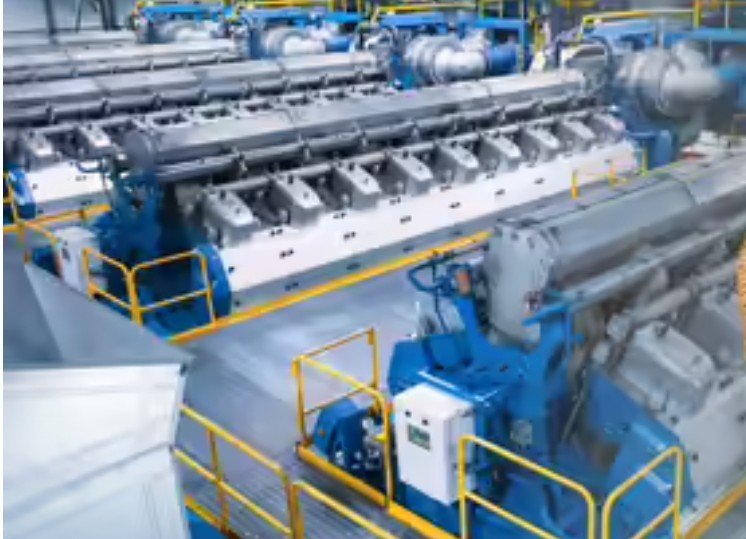
You may have heard about blending ethanol with petrol. Now, electricity will be generated from that same ethanol. In fact, Brazil has developed the world’s first ethanol engine, which will run entirely on ethanol and generate electricity on a large scale. Until now, ethanol was used only as an alternative to petrol and diesel in vehicles like cars and trucks, or through blending. Now, the giant engine developed by scientists will be able to generate electricity for the power grid. If reports are to be believed, this innovative technology could revolutionize the power grid.
This project has been set up at the Suape II Power Plant in Pernambuco, Brazil. The companies involved in its development include Suape Energia, an energy company, and Wärtsilä, a renowned Finnish technology firm.
To achieve this, Wärtsilä modified a special engine, the 32M, which runs exclusively on ethanol derived from Brazilian sugarcane. Scientists will now test it under real-world conditions. Over the next few years, this engine will be run to test its performance, durability, and pollution levels.
It’s worth noting that Brazil is the world’s largest ethanol producer and consumer. Brazil has spent years building a robust infrastructure for ethanol production, storage, and transportation. Although Brazil is the world’s largest ethanol producer, the idea of generating electricity from it has been largely ignored. With the new engine, the path to generating electricity from ethanol has also been cleared.
Solar panels and wind turbines have limitations in generating electricity. If the sun doesn’t shine or the wind doesn’t blow, they are useless. This makes battery-based storage systems very expensive for keeping the grid running.
Another advantage of this is that it is a low-carbon energy source that can be stored and transported.
This ethanol engine will be able to power the grid without interruption even when solar or wind energy is not available.
According to the International Energy Agency (IEA), global bioenergy production will grow rapidly by 2030. Consequently, the future of this technology appears bright.