

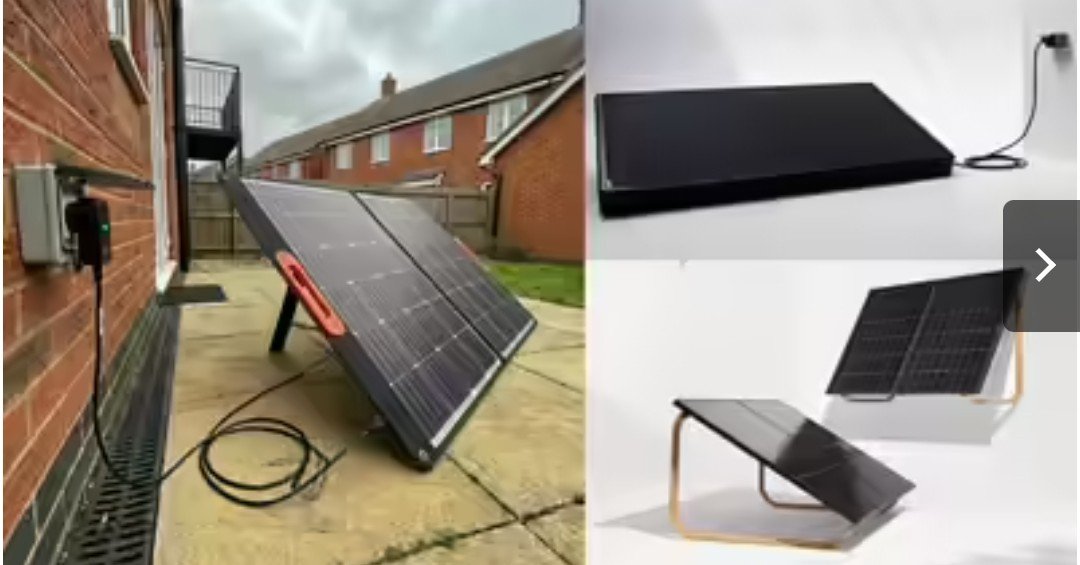
What if you could plug a device into a socket, like your mobile charger, and it would start generating electricity for you? Many people are unable to install solar panels at home because they are expensive and require a significant amount of space.
A new technology effectively solves all these problems, called plug-in solar panel technology. It’s also commonly known as plug-and-play solar.
The uniqueness of this technology is that it doesn’t require any rooftop installation, nor does it require heavy wiring, structures, or lakhs of rupees. Using a plug-in solar panel is as easy as charging your phone. You can install it yourself on your balcony, wall, or any small, sunny spot. Let’s understand it in detail.
A new technology effectively solves all these problems: plug-in solar panel technology. It’s also commonly known as plug-and-play solar.
The uniqueness of this technology is that it doesn’t require any rooftop installation, nor does it require heavy wiring, structures, or millions of dollars. Using a plug-in solar panel is as easy as charging your phone. You can install it yourself on your balcony, wall, or any small, sunny spot. Let’s understand its details.
In simple terms, this plug-in solar technology is a ready-to-use version of a solar panel. Unlike traditional solar panels, using it is as easy as using a phone charger.
However, the difference between plug-in solar panels and phone chargers is that phone chargers use electricity, while plug-in solar panels generate electricity.
It primarily involves two things: the solar panel, which generates direct current from sunlight. The second is a micro-inverter that converts DC electricity into AC current for use in homes.
Plug-in solar panels are very easy to use. First, place the panel in a location with good sunlight. They can be used anywhere, like a balcony, wall, or roof.
Next, plug the micro-inverter’s 3-pin plug on the back of the panel into any power socket.
Then, turn on the socket. The power will then be supplied to your home’s wiring in the opposite direction.
This will cause your home appliances, such as your refrigerator, fan, or TV, to draw solar power first, which will slow down your home’s electricity meter, resulting in a noticeable difference in your bill.
It’s worth noting that using them requires no changes to your home’s existing wiring or meter, and they can be used in India as well.
Plug-and-play solar panels, due to their portable nature, generate less power than traditional solar panel connections.
If you purchase an 800-watt plug-in solar system, it generates 2-3 units of electricity per day.
On average, an 800-watt plug-in solar system can generate 600 to 800 units of electricity annually.
If you are a renter and cannot afford a fixed rooftop solar system, you can take advantage of plug-and-play solar technology.
Even those who currently lack the investment can use plug-and-play solar panels at a low cost.
Even if you don’t want to run heavy equipment on solar, you can still use it. It’s generally best for garden sheds, motorhomes, or select devices like computers and internet routers.
If you don’t have the space to install a large solar system at home, this portable system can still be considered.
The cost of plug-in solar technology depends on the quality of the system and its capacity. A small setup of a 300W to 400W system typically costs around ₹25,000 to ₹35,000.
A standard 800W system can cost around ₹50,000 to ₹75,000. This typically includes two panels and an advanced micro-inverter.