

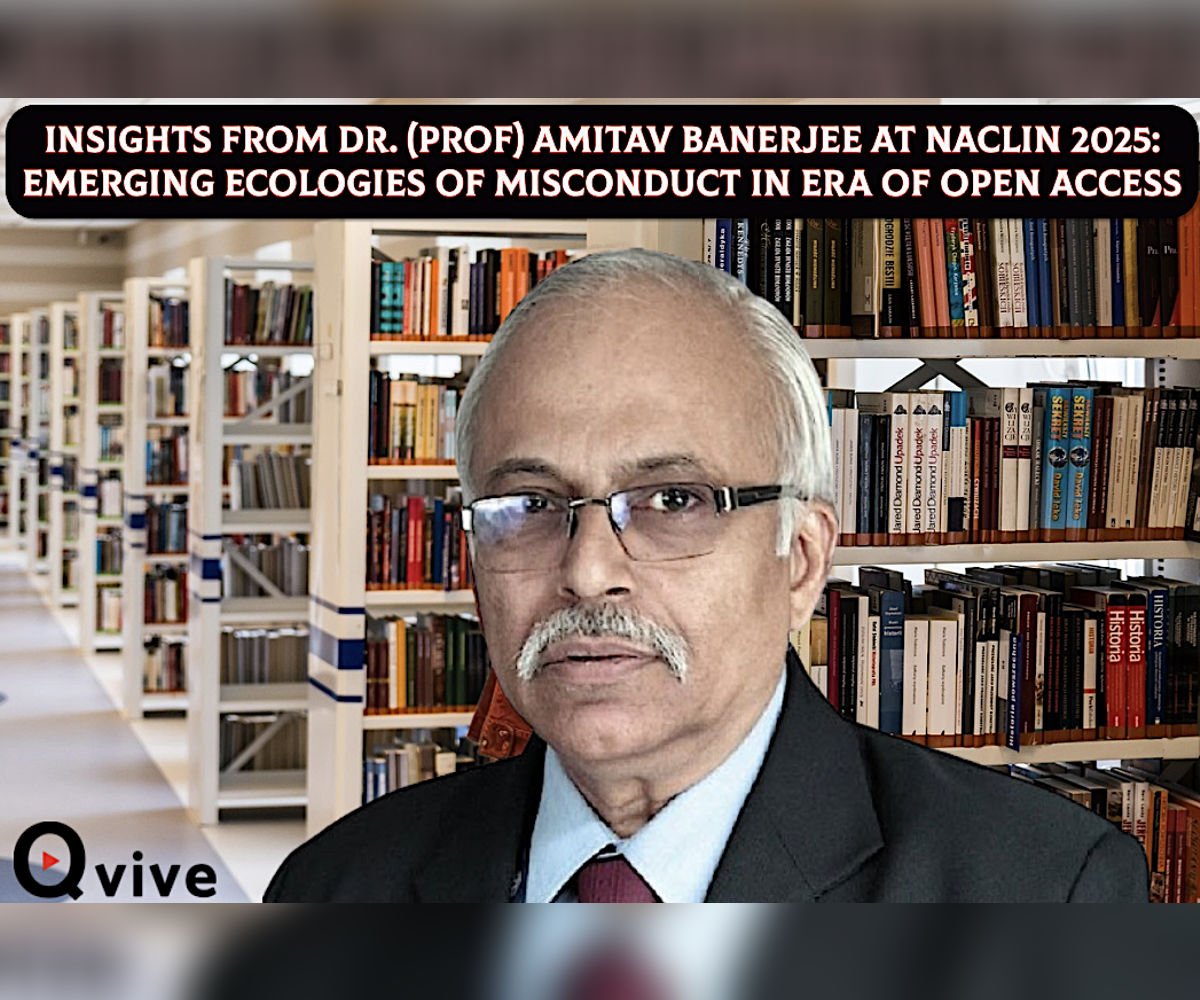
Dr. (Prof) Amitav Banerjee presented an insightful speech at the 28th National Knowledge Library and Information Network Conference (NACLIN 2025), addressing the challenges of misconduct and open access. His presentation highlighted on how misconduct and the decline in the quality of literature are impacting both institutional and individual levels.
Forms of Misconduct
- Various Forms of Misconduct: Nowadays, advocates and students engage in various types of misconduct. This includes plagiarism, publishing in fake journals, and employing unethical methods to enhance ratings.
- Example: For instance, some students include the names of their advisors in their papers, even if they did not contribute to that paper. This is referred to as “gift authorship.”
Impact of Open Access
- Open Access: It can be seen as a platform that makes access to research works and other articles easier. However, there are different perspectives and controversies regarding open access.
- The Problem of Misconduct and Quality: With open access, questions arise about the quality and reliability of research papers. Due to publishing in fake journals and misconduct, original knowledge is lost.
The Role of Librarians
- Librarian’s Task: Dr. Amitav emphasized that librarians should play an active role in understanding this issue. They can help in providing accurate information and preventing misconduct.
- Example: Librarians can identify articles that have been published in fake journals and understand their impacts.
Crisis of the Peer Review System
- Challenges of Peer Review:Dr. Amitav noted that merely adding citations leads authors to attempt publication in journals with high impact factors, while the actual quality continues to decline.
- Example: Many authors referencing and repeating their old work has become a common practice.
The Challenge of AI
- The Rise of AI: Today, the use of AI software is on the rise, assisting in writing and data analysis tasks. However, human judgment will always be necessary.
- Validation of Data: AI can only compile data; identifying the right studies or new knowledge requires human revision.
Dr. Amitav Banerjee’s presentation focused on how the advent of open access has increased the level of misconduct. To bring about improvements in this area, it is essential for researchers, librarians, and academic institutions to work together. By addressing this issue, we can move towards fresh and high-quality knowledge.
Also Read: