

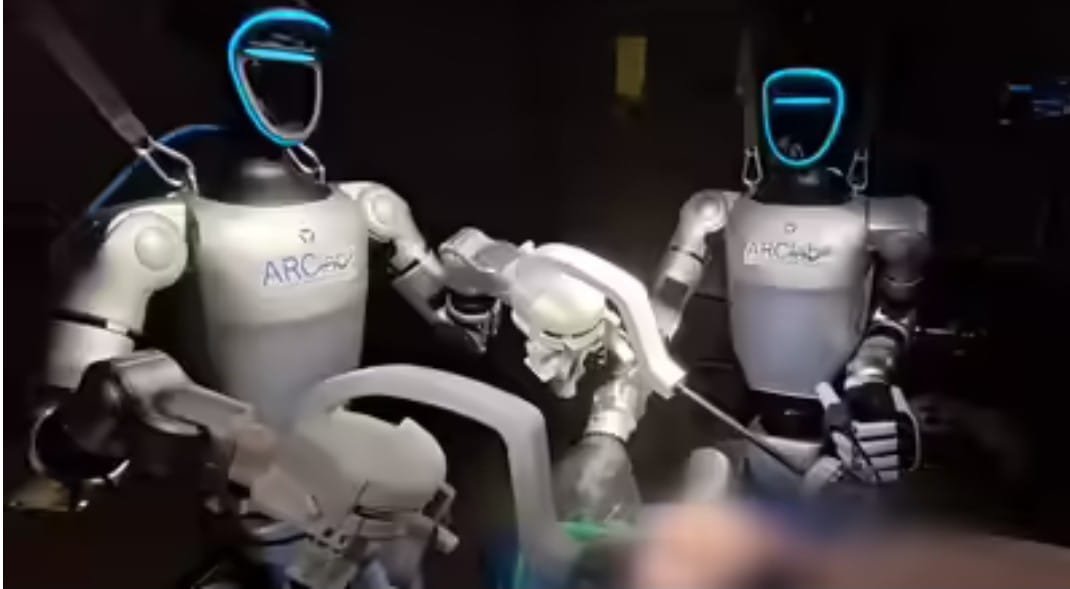
A major breakthrough has been achieved in the robotics sector. Until now, humanoid robots have been seen working in factories or homes, but this is the first time a humanoid robot has performed surgery. A humanoid robot, working with surgeons at the University of California, San Diego, successfully performed a gallbladder removal surgery. Subsequently, in a second operation, two humanoids performed a laparoscopic gallbladder removal together. Both initial tests were conducted on animals that were not monkeys or humans.
In one surgery, a humanoid robot and a surgeon worked together to remove the gallbladder. A human doctor acted as an assistant during the procedure. However, the second laparoscopic gallbladder removal surgery was performed entirely by a team of two humanoid robot surgeons.
Michael Yip of the Department of Electrical and Computer Engineering at UC San Diego says this study shows that humanoid robots have a bright future in the field of surgery. Yip is one of the senior authors of this research paper. Robot surgeons are not just a spectacular achievement. The team detailed the essential and practical uses of humanoid robots like “Surgie” on the operating table.
According to a report in UC San Diego Today, Yip explained that remotely controlled and autonomous humanoid robots have real potential and capability to increase access to essential surgeries that patients typically don’t have access to.
This could help address healthcare crises not only in the United States but around the world.
The team explained that these robots could be deployed in remote areas where staff shortages are a challenge.
Surgie, the surgical robot, is only five feet tall and weighs 60 pounds, making it easily portable.
The team that created “Surgie” believes this humanoid robot could play a vital role in this field.
As a humanoid robot, Sergi can move and perform tasks like humans. The researchers envision situations where Sergi could act as an assistant in the operating room, such as bringing instruments to human surgeons and cleaning up after procedures.
However, many improvements are still needed. The team says that the humanoid robot had to recalibrate several times during surgery, which added to the overall process. In addition, work is underway to address latency issues. Latency, the time between a human controlling the robot and the robot responding, is crucial for deploying these robots in remote areas.