


A shocking revelation by Dr. (Prof) Amitav Banerjee has brought to light that an inadequately equipped laboratory in India was being funded by the US Centers for Disease Control and Prevention (CDC) for research on the Nipah virus. This virus is considered a potential biological weapon. This case not only exposes scientific unethical practices but also raises serious questions related to national security.
Nipah Virus:
Origin: The Nipah virus was first identified in Malaysia in 1998, where it spread from pigs to humans.
Natural Host: Fruit bats are the natural carriers of this virus.
Mode of Transmission: Primarily spreads through the consumption of fruits or date palm sap contaminated with bat saliva or urine.
Mortality Rate: Ranges from 40% to 70%, but it does not easily become a pandemic because it spreads only through close contact.
According to Dr.Amitav, fewer than 500 deaths have occurred worldwide due to Nipah in the last 27 years, indicating that the virus is naturally less contagious.
US CDC Funding to an Indian Laboratory:
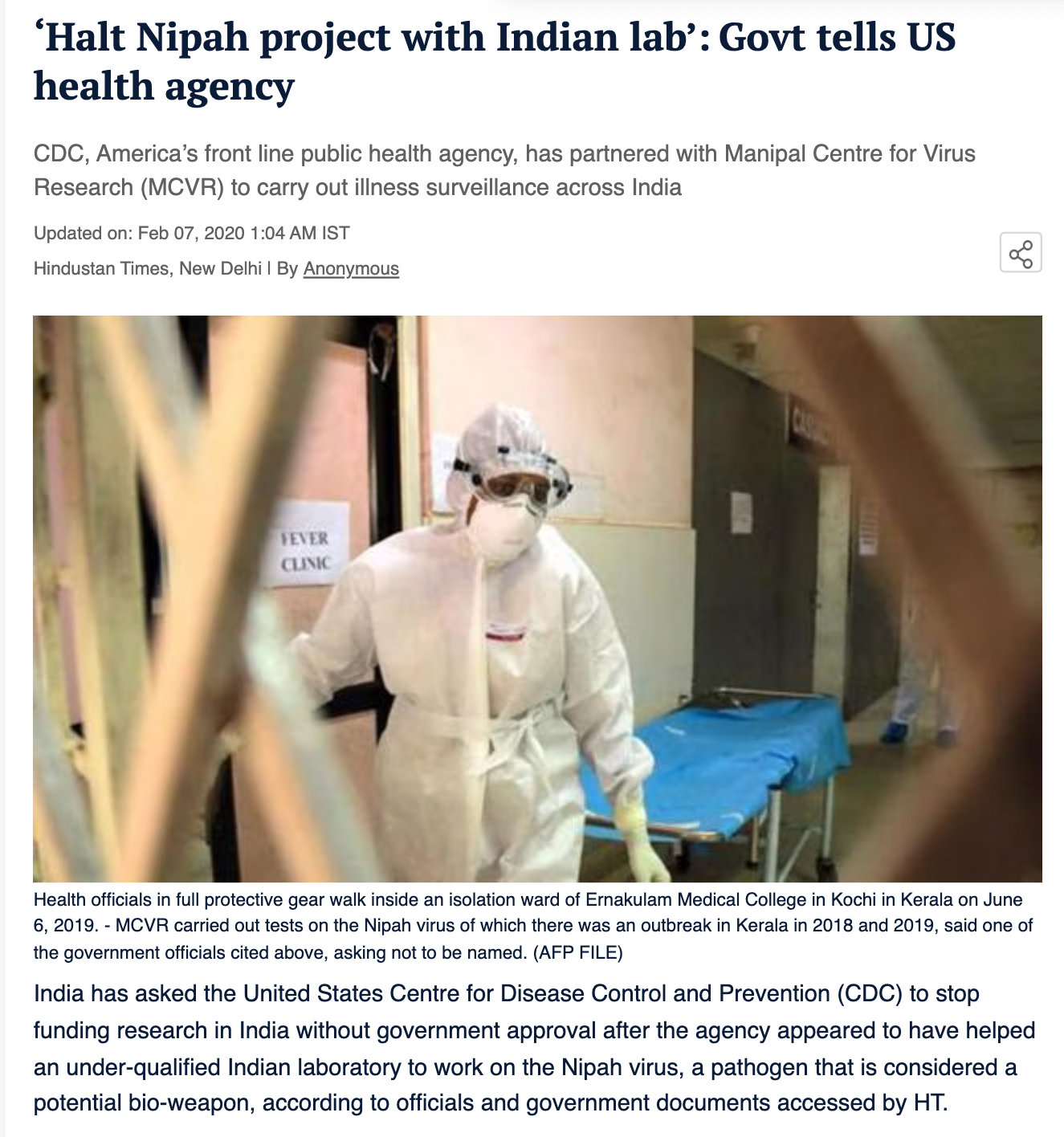
In 2018-19, the Manipal Centre for Virus Research (MCVR) began research on the Nipah virus in partnership with the US CDC. However, this research was conducted without the permission of the Indian government, raising several serious questions:
1. Disregard for Safety Standards
Nipah virus research should only be conducted in a BSL-4 (Biosafety Level 4) laboratory, which is required for highly dangerous pathogens.
The Manipal lab had BSL-2 or BSL-3 facilities, which are inadequate for this virus.
This increased the risk of the virus leaking and accidentally spreading.
2. Suspicion of Biological Weapons Development
The Nipah virus is considered a “potential bioweapon” that could be deliberately mutated to make it more deadly.
Through gain-of-function research (research that makes a virus more infectious/deadly), it could be used as a pandemic weapon, as was alleged in the case of COVID-19.
3. Indian Government Unaware
This research was not approved under the Foreign Contribution Regulation Act (FCRA).
According to a 2020 report by the Hindustan Times, the Ministry of Home Affairs and the Ministry of Health were unaware of it.
The American funding for the research violated Indian regulations.
Similarities and Concerns with the Coronavirus
Dr.Amitav drew parallels with the COVID-19 pandemic, stating that:
There is evidence that the coronavirus leaked from the Wuhan lab.
The US Department of Defense (DARPA) and the CDC funded the Wuhan Institute of Virology, where gain-of-function research was being conducted.
Similarly, unauthorized research was also being conducted on the Nipah virus, raising concerns about the potential for future man-made pandemics.
Vaccine Industry and Financial Gains
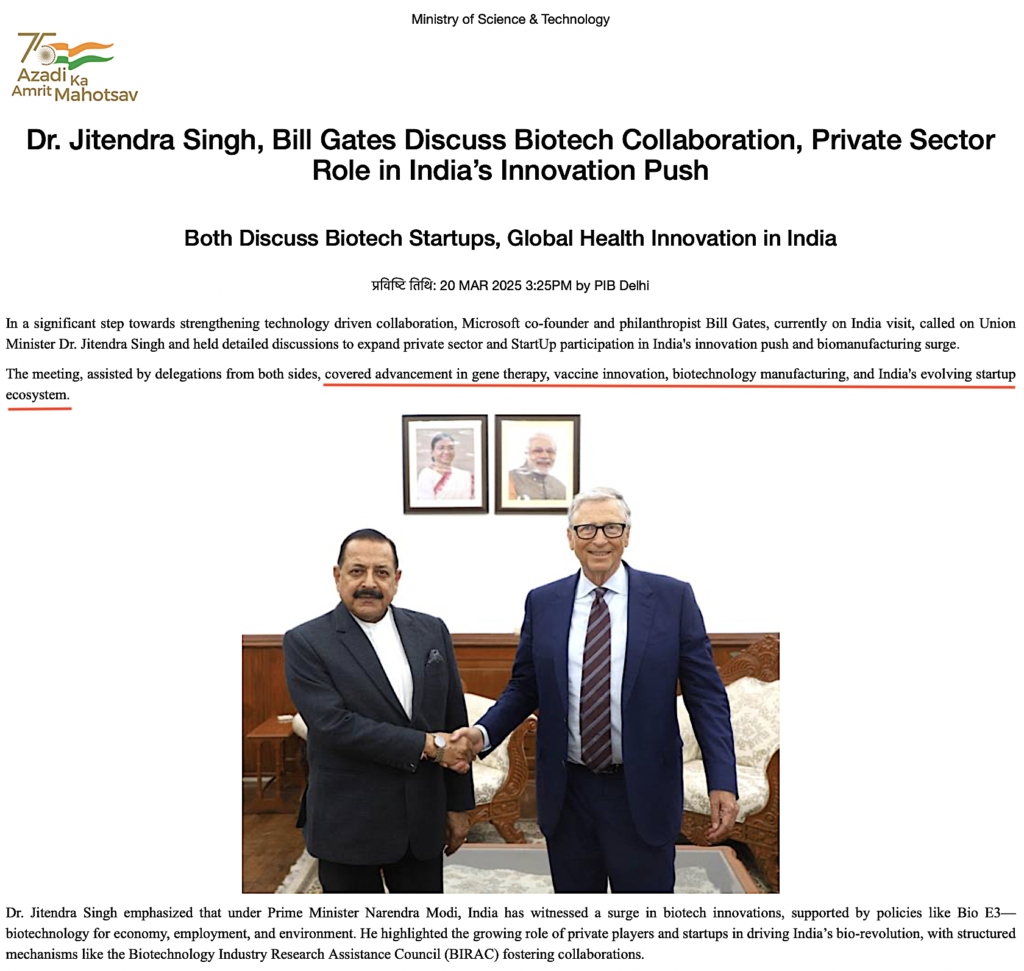
For pharmaceutical companies, creating panic by researching deadly viruses and then quickly selling vaccines has become a profitable business model.
Trials for an mRNA vaccine against the Nipah virus have already begun, and the patent will be held by the US.
The WHO is also declaring Nipah a “potential pandemic,” which could pave the way for the Pandemic Treaty (global health agreement).
Threat to India and Necessary Actions
The government should investigate how many other laboratories are conducting research on dangerous viruses with foreign funding.
The mandatory implementation of BSL-4 labs should be enforced to prevent accidental virus leaks.
Strict controls should be placed on foreign funding, especially for research related to biosecurity.
Do not mislead the public: Nipah Virus
Additional information:
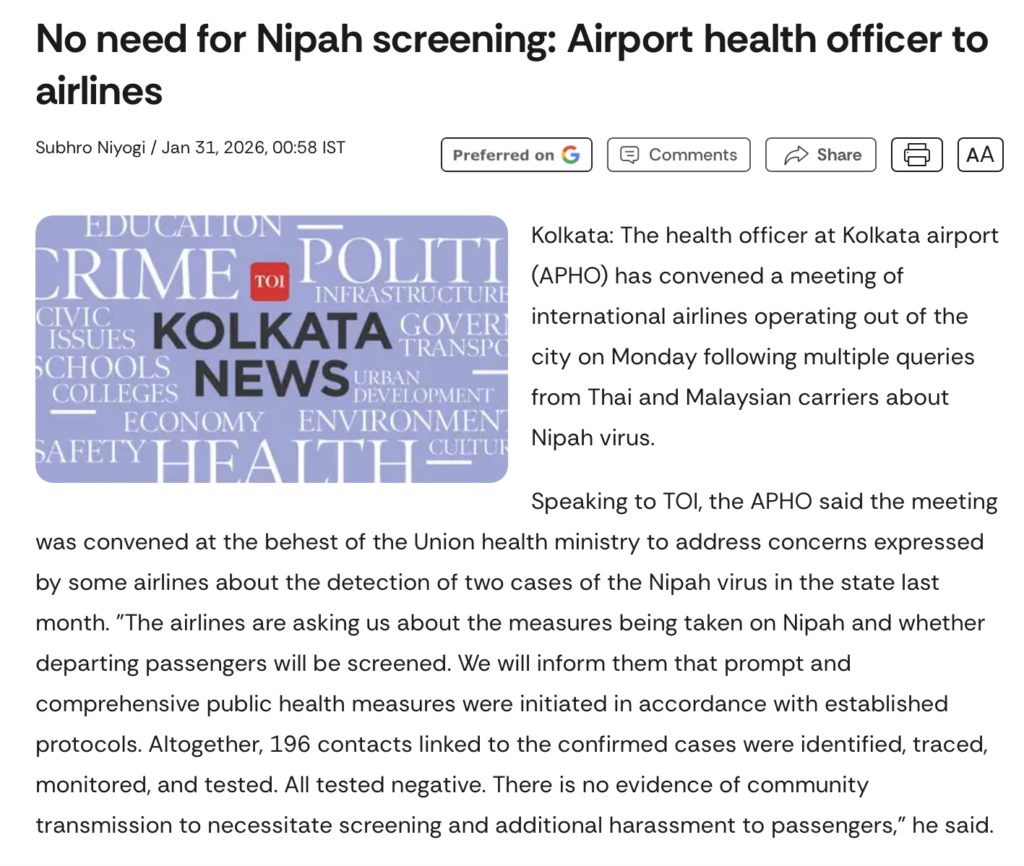
The Indian Ministry of Health and Family Welfare has asserted that the situation is under control and that there is no indication of community transmission. The Airport Health Officer (APHO) in Kolkata has notified international airlines that screening departing passengers is not required, as all 196 identified contacts of the two confirmed cases have tested negative.
Indian officials highlighted that swift public health actions, such as contact tracing and isolation, were implemented following established protocols, making further passenger “harassment” through screening unnecessary.
Also Read: