


India’s reliance on technology from other countries is multifaceted, driven by its rapid economic growth, ambitious technological development goals, and strategic partnerships. While India is actively working towards self-sufficiency (aatmanirbharta) in technology, it continues to depend on various nations for critical and emerging technologies, research and development, and supply chain resilience.
India primarily depends on technology from the United States, China, and the European Union, with significant collaborations also existing with countries like Japan, South Korea, and Russia. This dependence is observed across various sectors, including semiconductors, artificial intelligence (AI), quantum technology, biotechnology, advanced telecommunications, and defense.
United States
The United States is a crucial partner for India in technology, particularly in critical and emerging areas. This partnership has been significantly strengthened through initiatives like the U.S.-India Initiative on Critical and Emerging Technology (iCET) and the Transforming the Relationship Utilizing Strategic Technology (TRUST) initiative.

- Semiconductors: India relies on the U.S. for expertise, investment, and supply chain diversification in semiconductor manufacturing and packaging. The March 2023 Memorandum of Understanding on Semiconductor Supply Chain and Innovation Partnership aligns the U.S. CHIPS and Science Act with India’s Semiconductor Mission. U.S. companies like Micron, Applied Materials, and Lam Research are investing in India, contributing to the development of fabrication plants and workforce training. The U.S. Space Force is also collaborating with 3rdiTech on a compound semiconductor fabrication plant in India for national security applications.
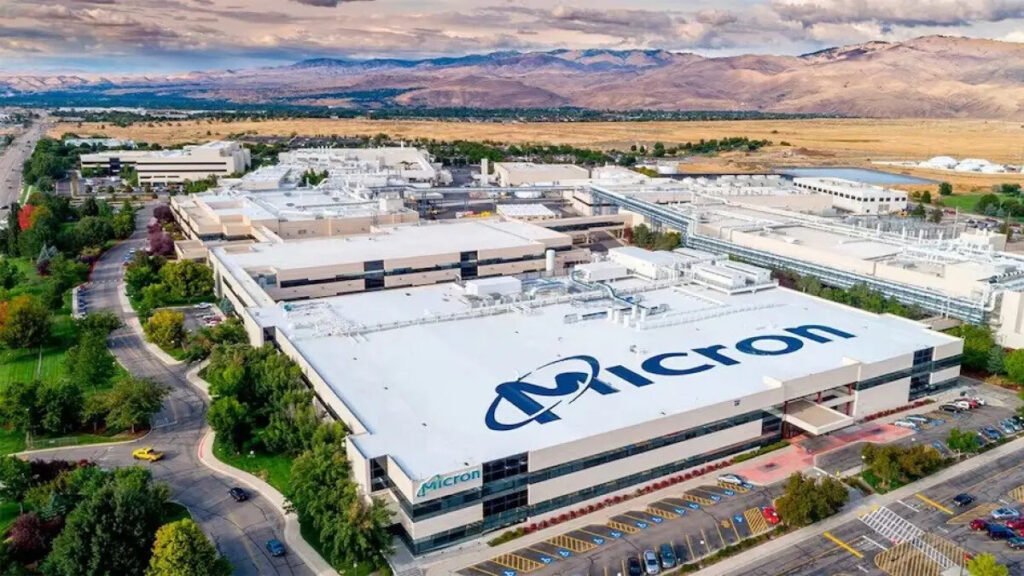
Micron Technology‘s semiconductor assembly and test plant in Sanand, Gujarat, is expected to see its Phase 1 construction completed by December 2025, with Tata Projects handling the civil and engineering works, though some reports suggest potential delays pushing initial production targets past late 2025 for full rollout, with earlier projections aiming for late 2024 or early 2025
Here are visuals of Micron’s ongoing semiconductor plant construction in India:

- Artificial Intelligence (AI): The U.S. is a leader in advanced compute, foundational models, and frontier AI research, which India seeks to leverage. U.S. tech giants like Microsoft, Amazon, and Google are making substantial investments in hyperscale data centers and cloud infrastructure in India, expanding its AI capabilities. Collaborations also extend to AI safety benchmarks, reciprocal compute access, and trusted data-sharing frameworks.
- Quantum Technology: India engages with the U.S. for quantum communication, post-quantum cryptography, and secure migration strategies, aligning with India’s National Quantum Mission. Institutional ties are deepening through partnerships like India’s Centre for Development of Advanced Computing joining the U.S. Accelerated Data Analytics and Computing Institute.
- Biotechnology and Biopharma: The U.S. and India are cooperating to secure life sciences supply chains, particularly in active pharmaceutical ingredients (APIs) and key starting materials, through initiatives like the Bio-5 Consortium and joint funding calls for R&D
- Advanced Telecommunications (5G/6G): The Bharat 6G Alliance and the U.S. Next G Alliance are coordinating R&D, field trials, and standards-setting to ensure interoperability and supply chain trust in emerging 5G and 6G systems. Qualcomm’s investments in India for Open RAN deployments further illustrate this collaboration.
- Defense Technology: The U.S. and India are working on co-production and co-development of defense technologies, including jet engines, artillery systems, and undersea domain awareness systems. The INDUS-X platform fosters innovation and investment in defense and emerging technologies.
- Space Technology: Collaboration includes joint efforts on human spaceflight, commercial space technology, and satellite development like the NASA-ISRO Synthetic Aperture Radar (NISAR) for climate change monitoring.
China
Historically, India has had significant technology linkages with China, particularly in areas like semiconductors and investments in its startup ecosystem. However, due to geopolitical tensions and concerns about supply chain security, India has been actively working to reduce its dependence on China.
- Semiconductors: In 2021, India imported a substantial amount of semiconductors from China, particularly digital integrated circuits (ICs) and memory. While efforts are underway to diversify, this historical reliance indicates a past dependence.
- Investments: Chinese tech giants like Alibaba, Tencent, and Didi Chuxing have invested in Indian unicorns and startups.
- 5G Technology: India has excluded Chinese 5G companies from its 5G trials and has not invited them to briefings on new business requirements, indicating a move away from Chinese telecommunications technology.
European Union
The European Union is increasingly viewed as an important and reliable partner for India in technology, especially as India seeks to diversify its partnerships beyond the U.S. and mitigate risks associated with China.
- Semiconductors: The EU’s vision of “open strategic autonomy” and its need to de-risk industrial supply chains align with India’s goals to boost local production and create high-tech jobs. There is a focus on joint investment in semiconductor manufacturing, particularly for lower-end silicon used in various industries.
- Artificial Intelligence (AI): Cooperation is expanding across the AI stack, from indigenous foundation models to talent sharing and research collaboration. India aims to play a leading role in global AI governance, aligning with EU efforts.
- Advanced Telecommunications (6G): The EU and India are collaborating on 6G research and telecom standards development.
- Supply Chain Resilience: Both the EU and India are keen to deepen technology cooperation through a “full-stack” approach to de-risk supply chains and foster joint innovation in areas like semiconductors, AI, and 6G.
Other Countries
India also collaborates with other countries to strengthen its technological capabilities and diversify its partnerships.
- Japan and South Korea: These countries are part of multilateral initiatives like the Quad, which includes technology working groups focused on critical and emerging technologies, supply chains, and standards. The Bio-5 Biopharmaceutical Supply Chain Consortium also includes South Korea and Japan.
- Russia: Despite efforts to strengthen ties with Western nations, India has historically maintained close ties with Russia, particularly in military equipment. However, the U.S. aims for its cooperation with India to accelerate India’s move away from Russian military equipment.
While India is striving for technological self-reliance, its current technological landscape involves significant dependence and collaboration with a range of international partners. The U.S. remains a primary partner for cutting-edge technologies and strategic alignment, while the EU is emerging as a crucial partner for supply chain resilience and innovation. India’s strategy involves leveraging these partnerships to accelerate its climb up the technology value chain, access frontier R&D, and embed its emerging industries in global supply chains.
Additional Information:
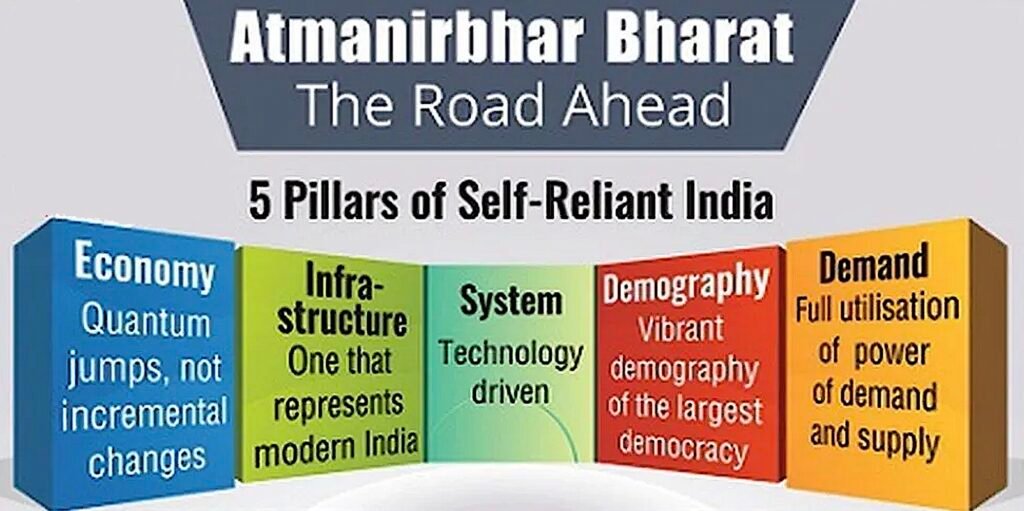
The Atmanirbhar Bharat Abhiyan, or “Self-Reliant India Mission,” is a policy framework launched by the Indian government in response to the economic challenges posed by the COVID-19 pandemic in 2020. While the term “self-reliance” was used by Prime Minister Narendra Modi as early as 2014 in discussions about national security and the Digital India initiative, the Hindi phrase “Atmanirbhar Bharat” gained prominence with the announcement of India’s economic stimulus package during the pandemic. The initiative aims to make India a larger and more important part of the world economy by fostering domestic production, reducing import dependence, and promoting technological self-reliance.
The core tenets of Atmanirbhar Bharat are built upon five pillars: economy, infrastructure, technology-driven systems, vibrant demography, and demand. It is seen as an adaptation of Mahatma Gandhi’s Swadeshi movement, with slogans like “Vocal for Local” and “Make in India” being integral to its promotion. The policy emphasizes being self-sustaining and self-generating, creating “wealth and values not only for ourselves but for the larger humanity”.
The Atmanirbhar Bharat initiative, while aiming for economic independence and resilience, faces criticism regarding potential drawbacks such as protectionism, inefficiency, and disruptions to global supply chains. Opposition stems from concerns that it could hinder international trade, lead to higher consumer prices, and create an environment susceptible to crony capitalism.
Despite its stated goals of boosting domestic industries and enhancing India’s global standing, Atmanirbhar Bharat has encountered various criticisms and concerns from economists, political commentators, and international bodies.
One of the primary concerns revolves around the potential for protectionism and isolationism. Critics, such as Swaminathan Aiyar and Arvind Panagariya, argue that a drive for self-sufficiency, if interpreted as self-sufficiency rather than self-reliance, could lead to a revival of pre-liberalization era policies that proved unsuccessful in the past. The United States Trade Representative, in an April 2022 report, noted that programs like “Make in India” and “Self-Reliant India” aim to increase India’s self-sufficiency by promoting domestic industry and reducing reliance on foreign suppliers and imported goods, which can lead to significant tariff and non-tariff barriers for U.S. exporters. This protectionist tendency, including tariff increases, has been observed during this phase.
Another significant drawback highlighted is the risk of inefficiency and reduced competitiveness. If domestic industries struggle to match the quality, efficiency, or cost-effectiveness of imported goods, it could result in higher prices for consumers and a lack of innovation due to reduced competition. Sadanand Dhume expressed skepticism about the terminology, fearing it might lead to closed-mindedness, cronyism, and mediocrity.
The initiative also raises concerns about disruptions to global supply chains. Reducing dependence on imports could lead to shortages and increased costs for industries that rely heavily on imported raw materials or components, potentially undermining the very objectives of economic self-reliance and resilience. India’s substantial annual imports from China (₹6.4 trillion or $75 billion USD) highlight the practical challenges in immediately reducing dependence in certain sectors.
Furthermore, there are accusations of crony capitalism and the potential for government interventions, such as subsidies or preferential treatment, to lead to favoritism and corruption. Some critics have rephrased the initiative as a “Fend For Yourself” campaign, suggesting a lack of genuine economic impact beyond political messaging. Opposition members have pointed out that India has a long history of establishing public sector undertakings and institutions for self-reliance (e.g., SAIL, IIT, AIIMS, DRDO, ISRO), questioning whether Atmanirbhar Bharat is merely a “re-packaged version” of previous initiatives like “Make in India” with new slogans.
International reactions have also reflected these concerns. Kenneth Juster, former U.S. ambassador to India, stated in January 2021 that Atmanirbhar Bharat and the desire to play a larger economic role in the world might not be compatible. Nisha Desai Biswal, an American businesswoman, noted a “pause” due to a lack of clarity on the initiative’s definition, suggesting it could be counterproductive.
The defense sector, a key area for self-reliance, also faces challenges. While India has made strides in domestic production and aims to reduce imports, it remains the world’s largest arms importer, with a significant portion of its equipment still originating from Soviet/Russian sources. This dependence makes India susceptible to geopolitical tensions and highlights the ongoing struggle to achieve true self-sufficiency in critical military hardware. The slow pace of defense procurement and the need for substantial investment in research and development are also persistent issues.
The Atmanirbhar Bharat initiative is lauded by its proponents as a path to economic strength and strategic autonomy, it faces significant opposition and criticism due to concerns about protectionism, potential inefficiencies, disruptions to global trade, and the risk of cronyism. Navigating these trade-offs and ensuring transparent, competitive, and globally integrated growth remains a critical challenge for India.
Ref:
- Sustaining Momentum in U.S.-India Technology Ties. [ https://www.csis.org/analysis/sustaining-momentum-us-india-technology-ties ]
- Reducing Trade Friction Can Strengthen the U.S.–India Technology Partnership. [ https://itif.org/publications/2025/12/03/reducing-trade-friction-can-strengthen-the-us-india-technology-partnership/ ]
- The U.S.–India AI Moment: A Partnership Ready to Deliver. [ https://scsp222.substack.com/p/the-usindia-ai-moment-a-partnership ]
- What is the India-United States TRUST Initiative? [ https://carnegieendowment.org/posts/2025/04/what-is-the-india-united-states-trust-initiative?lang=en ]
- FACT SHEET: The United States and India Committed to Strengthening Strategic Technology Partnership. [ https://www.presidency.ucsb.edu/node/375725 ]
- Full-stack ahead: A bright future for the EU-India technology partnership. [ https://ecdpm.org/work/full-stack-ahead-bright-future-eu-india-technology-partnership ]
- U.S. Courts India as Technology Partner to Counter China. [ https://www.nytimes.com/2023/01/31/business/economy/us-india-technology-partnership.html ]
- Atmanirbhar Bharat. [ https://en.wikipedia.org/wiki/Atmanirbhar_Bharat ]
- Image-https://www.techpowerup.com/331898/tata-to-complete-microns-india-chip-facility-by-end-of-2025
- Image-https://www.mobileworldlive.com/asia-pacific/us-india-plot-joint-chip-factory/
- Image-https://www.business-standard.com/companies/news/micron-set-to-break-ground-for-sanand-semiconductor-plant-on-saturday-123092000213_1.html
- Aatmanirbharta in Defence: Paving the Path for Bharat to Global Defence Leadership. [ https://swadeshishodh.org/atmanirbharta-in-defence-paving-the-path-for-bharat-to-global-defence-leadership/ ]
- AATMANIRBHAR BHARAT PROS AND CONS. [ https://www.scribd.com/document/726514068/AATMANIRBHAR-BHARAT-PROS-AND-CONS-1 ]
- Joshi et al. 2021, p. 1. [ https://en.wikipedia.org/wiki/Atmanirbhar_Bharat ]
- “Govt needs to understand the difference between self-sufficiency and self-reliance: Swaminathan Aiyar”. The Economic Times. 30 June 2020. [ https://en.wikipedia.org/wiki/Atmanirbhar_Bharat ]
Also Read: