

The Spanish Influenza Epidemic of 1918: Was It Caused by Vaccinations?
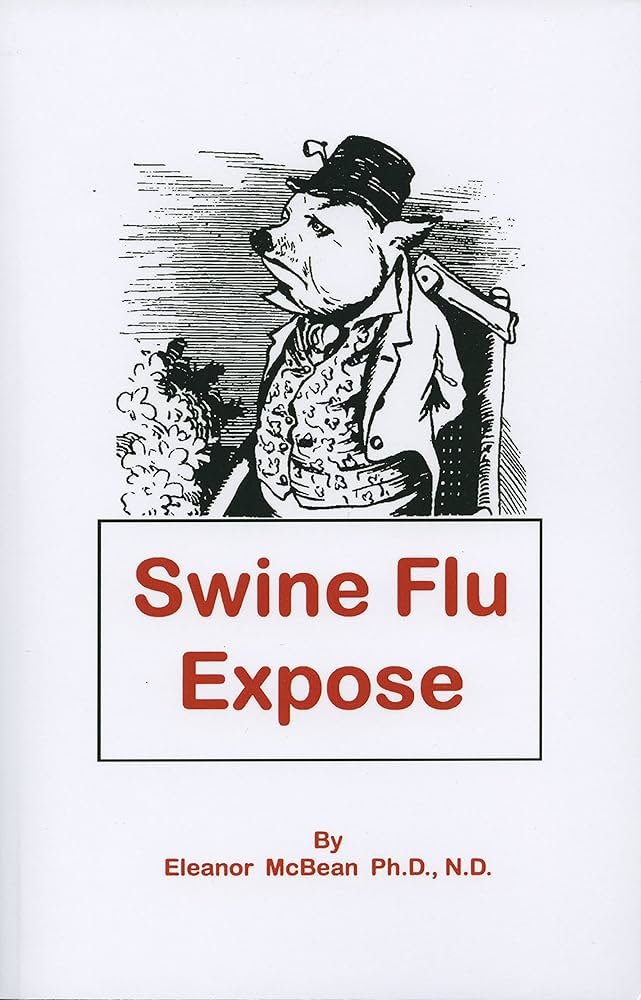
The chapter from Eleanora I. McBean’s book, Swine Flu Expose, presents a provocative perspective on the origins of the 1918 Spanish Influenza pandemic, positing that the widespread vaccinations given to military personnel during and after World War I were the primary catalyst for the outbreak, rather than a viral agent.
The Spanish Influenza pandemic, which resulted in an estimated 20 million fatalities globally, is typically attributed to a viral infection, yet McBean’s analysis challenges this conventional narrative by suggesting that the immunizations intended to protect soldiers may have inadvertently contributed to the epidemic’s severity and rapid transmission.
McBean’s argument highlights the potential adverse effects of the vaccines administered during this tumultuous period, asserting that the immune responses triggered by these vaccinations could have compromised the health of individuals, making them more susceptible to the influenza virus.
The chapter delves into the historical context of the vaccination campaigns, examining how the urgency of World War I led to the rapid development and deployment of vaccines, which may not have undergone thorough testing, thereby raising questions about their safety and efficacy.
By exploring this alternative viewpoint, McBean invites readers to reconsider the established understanding of the 1918 pandemic, encouraging a critical examination of the role that medical interventions, such as vaccinations, may have played in shaping the course of one of history’s most devastating health crises.
The Role of Vaccinations in Disease Outbreaks
According to Eleanora I. McBean, Ph.D., N.D. (author of Swine Flu Exposé, 1977), vaccines are designed to induce a mild form of the disease they aim to prevent. However, she argues that their unpredictable nature makes them dangerous, as they can sometimes cause severe or fatal reactions.
When multiple vaccines were administered in quick succession (as was common in military camps), the body’s immune system became overwhelmed, leading to a “conglomerate disease”—a mix of symptoms from multiple vaccines.
Evidence from Military Vaccination Programs
McBean cites U.S. Secretary of War Henry L. Stimson’s report, which documented:
- 63 deaths directly attributed to the yellow fever vaccine
- 28,585 cases of hepatitis from vaccinations within six months of WWI
Soldiers returning from war were riddled with illnesses—not from combat but from vaccine-induced diseases. Many suffered from post-vaccinal encephalitis (misdiagnosed as “shell shock”), paralysis, and organ failure.
The 1918 “Spanish Flu” – A Medically Manufactured Epidemic?
After WWI, vaccine manufacturers had surplus stock and launched a mass vaccination campaign in the U.S., claiming soldiers brought foreign diseases. McBean argues:
- The “Spanish Flu” was not Spanish in origin—it was caused by the toxic buildup of multiple vaccines.
- Symptoms matched typhoid, diphtheria, pneumonia, and polio—all diseases for which soldiers had been vaccinated.
- Smallpox vaccines → Syphilis, paralysis, leprosy, cancer
- Polio vaccines → Encephalitis (brain inflammation), paralysis
- Typhoid vaccines → Severe typhoid-like symptoms
- Diphtheria vaccines → Suffocation, “Black Death” symptoms
- Doctors, unable to identify the new disease, blamed Spain to divert attention from vaccine injuries.
McBean, who lived through the pandemic, reported:
- Only vaccinated individuals fell ill.
- Her unvaccinated family remained healthy despite exposure.
- Hospitals were overwhelmed because doctors and nurses, also vaccinated, succumbed to the flu.
Alternative Healing vs. Medical Failures
While conventional medicine failed (with a 33% death rate), holistic treatments like water therapy, fasting, and natural diets (used in clinics like Battle Creek Sanitarium) had near-100% recovery rates. This stark contrast suggests that medical interventions worsened the crisis.
Modern Parallels: Vaccine-Driven Pandemics?
McBean draws parallels to later “scares” like the Hong Kong Flu (1968) and Swine Flu (1976), which she argues were manufactured to sell vaccines. In 1976, the U.S. government allocated $135 million for a swine flu vaccine, leading to 56 deaths shortly after administration.
A Warning for Today
The 1918 pandemic raises critical questions about vaccine safety, corporate profit motives, and government complicity. If McBean’s claims hold merit, then future “pandemics” could be similarly manipulated.
What is the latest agenda regarding vaccines in the market?
The Bill & Melinda Gates Foundation (BMGF) has funded clinical trials for Bharat Biotech’s Typbar TCV®
Now their plan is to make you think that Antibiotic Resistance is real, so the increase in drug-resistant typhoid strains makes vaccines very important.
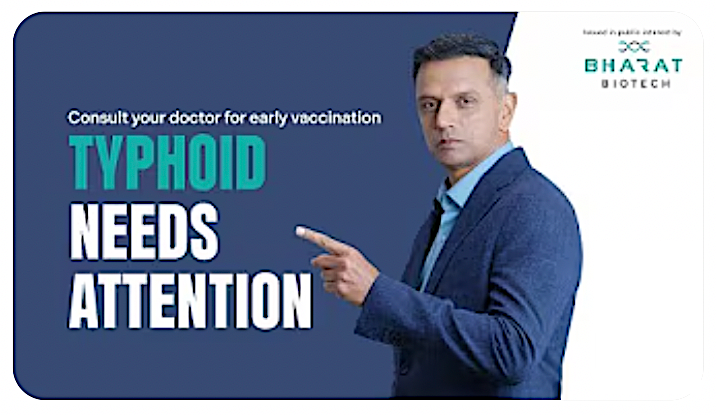
Bill Gates and the Bill & Melinda Gates Foundation (BMGF) have played a significant role in funding and promoting typhoid conjugate vaccines (TCVs)—particularly Typbar-TCV (Bharat Biotech)—in low-income countries, including India.
Gates Foundation’s Role in Typhoid Vaccination
- Funding & Research: The Gates Foundation has invested in typhoid vaccine development, especially in making them affordable for developing nations.
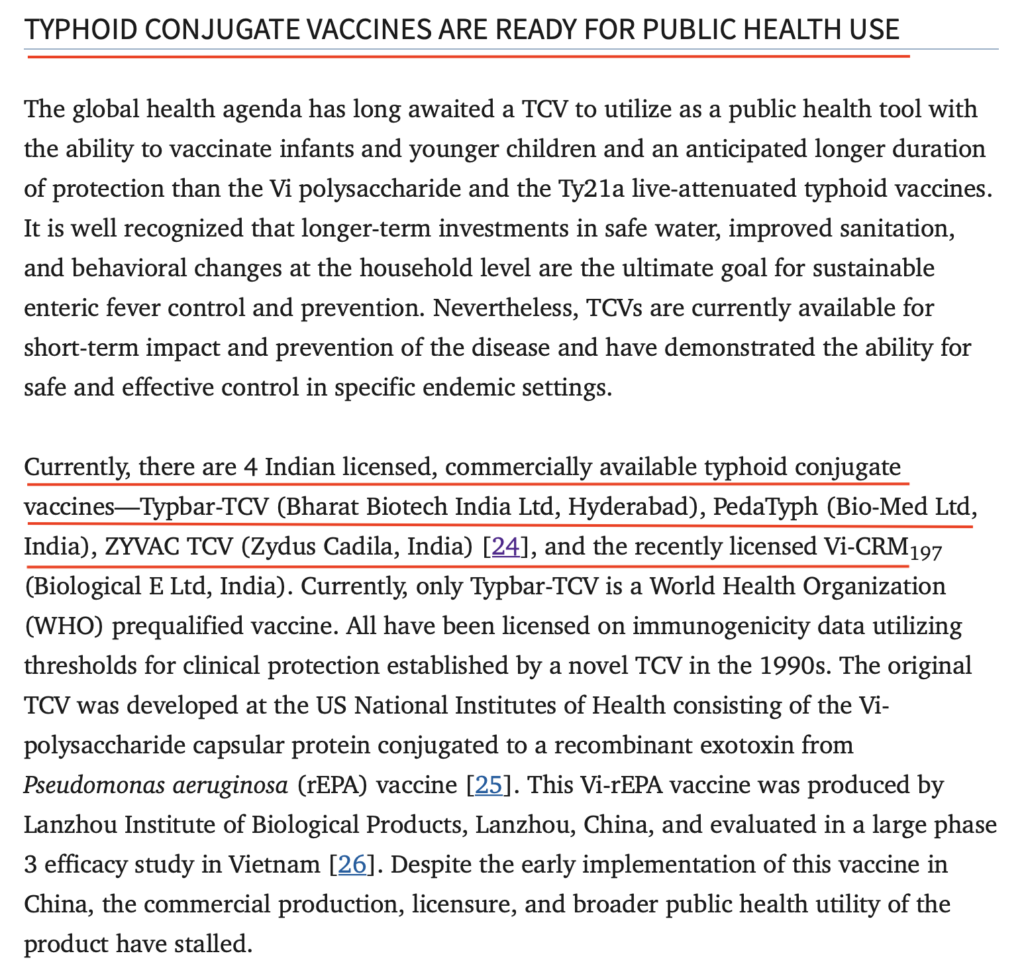
- Support for Typbar-TCV: BMGF funded clinical trials for Bharat Biotech’s Typbar-TCV, which was later prequalified by WHO (2018).
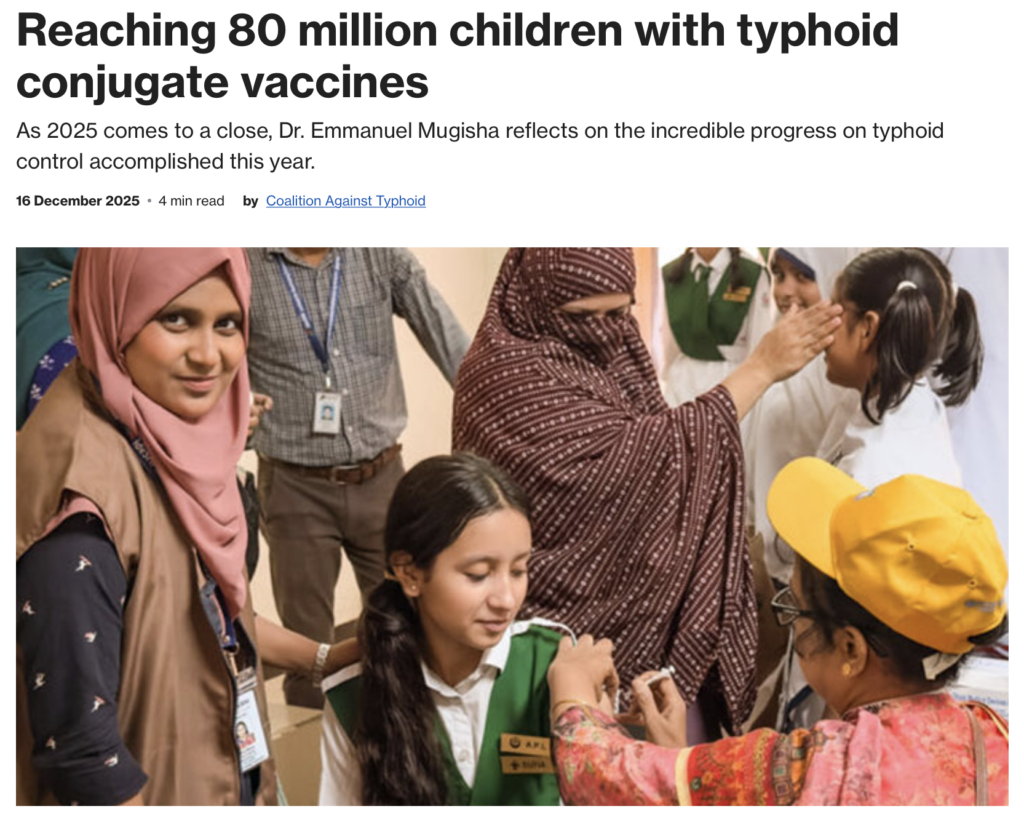
- Gavi Alliance Partnership: BMGF works with Gavi, the Vaccine Alliance, to support typhoid vaccination programs in countries like India, Pakistan, and Africa.

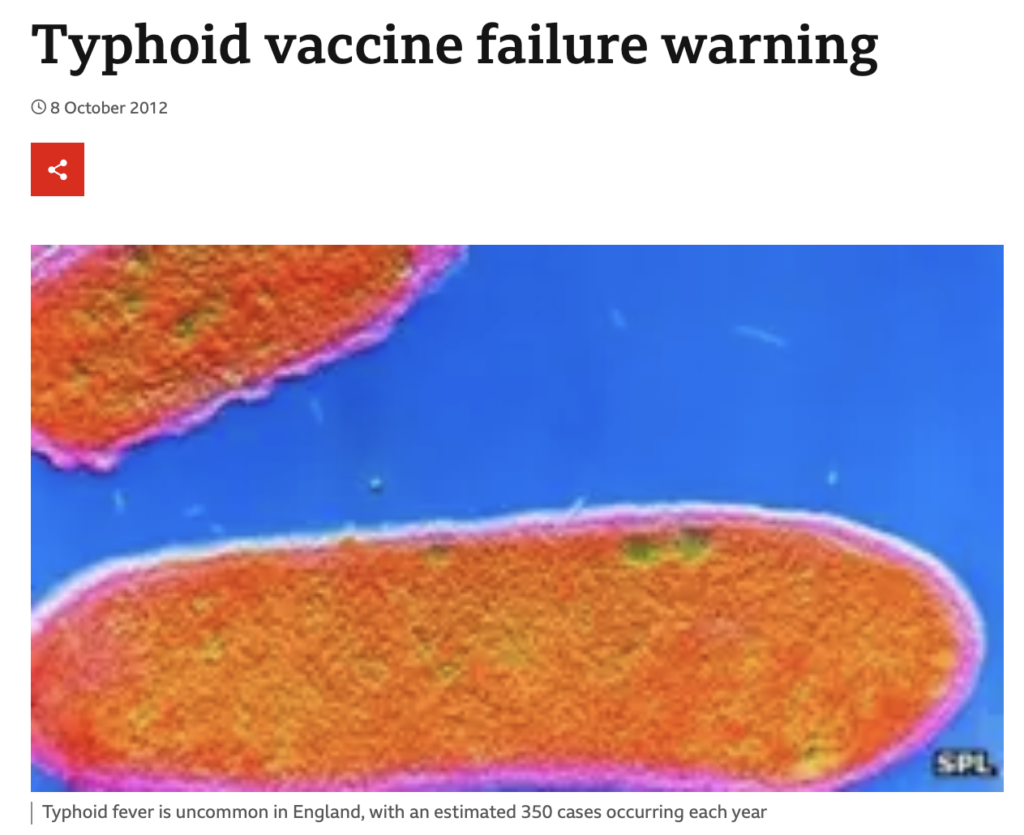
Warning Over Potential Typhoid Vaccine Failure Affects Over 700,000 People in the UK: BBC News Online – 8 October 2012
Sanofi Recalls 88% of Typhim Vi Vaccine Stock Over Efficacy Concerns
CDC Report:
Risks of a vaccine reaction
- Pain from the shot, redness, or swelling at the site of the injection, fever, and headache, and general discomfort can happen after inactivated typhoid vaccine.
- Fever, headache, abdominal pain, diarrhea, nausea, and vomiting can happen after live typhoid vaccine.
People sometimes faint after medical procedures, including vaccination. Tell your provider if you feel dizzy or have vision changes or ringing in the ears.
As with any medicine, there is a very remote chance of a vaccine causing a severe allergic reaction, other serious injury, or death.
FDA Report:
Data From Worldwide Post-marketing Experience
In addition to reports in clinical trials, worldwide voluntary adverse events reports received since market introduction of Typhim Vi vaccine are listed below. This list includes serious events and/or events which were included based on severity, frequency of reporting or a plausible causal connection to Typhim Vi vaccine. Because these events were reported voluntarily from a population of uncertain size, it is not possible to reliably estimate their frequency or establish a causalrelationship tovaccination.
- Gastrointestinal disorders
Nausea, vomiting, diarrhea, abdominal pain - General disorders and administration site condition
Injection site pain, inflammation, induration, and erythema; lymphadenopathy, fever, asthenia, malaise, flu-like episode - Immune system disorders Anaphylaxis, allergic-type reactions such as pruritus, rash, urticaria, angioedema, difficulty breathing, hypotension; serum sickness
- Musculoskeletal and connective tissue disorders Myalgia, arthralgia, cervical pain
- Nervous system disorders Syncope with and without convulsions, headache, loss of consciousness, tremor
- Respiratory system disorders
- Asthma Additional Adverse Events: Post-marketing reports of glomerulonephritis, neutropenia, bilateral retinitis, and polyarthritis have been reported in patients who had also received other vaccines.
31-year-old soldier dead after the typhoid vaccine.
— They Keep Saying Its Rare (@mRNAdeaths) December 13, 2025
"Fatal ascending paralysis after typhoid vaccine" pic.twitter.com/8buymwm8ha
Quotes from Medical Doctors on vaccinations:
“There is a great deal of evidence to prove that immunization of children does more harm than good.” Dr. J. Anthony Morris, former Chief Vaccine Control Officer, U.S. Food and Drug Administration
“The greatest threat of childhood disease lies in the dangerous and ineffectual efforts made to prevent them through mass immunization.” Dr. R. Mendelsohn, Author and Professor of Pediatrics (How To Raise A Healthy Child In Spite Of Your Doctor)
“In our opinion, there is now sufficient evidence of immune malfunction following current vaccination programs to anticipate growing public demands for research investigation into alternative methods of prevention of infectious disease.” Dr.’s H. Buttram and J. Hoffman (Vaccinations and Immune Malfunctions)
“All vaccination has the effect of directing the three values of the blood into or toward the zone characteristics of cancer and leukemia …Vaccines do predispose to cancer and leukemia.” Professor L.C. Vincent, Founder of Bioelectronics
“Every vaccine carries certain hazards and can produce inward reactions in some people…in general; there are more vaccine complications than is generally appreciated.” Professor George Dick, London University
“Official data have shown that the large-scale vaccinations undertaken in the U.S. have failed to obtain any significant improvement of the diseases against which they were supposed to provide protection.” Dr A. Sabin, developer of the Oral Polio vaccine (lecture to Italian doctors in Piacenza, Italy, December 7, 1985)
“In addition to the many obvious cases of mortality from these practices, there are also long-term hazards which are almost impossible to estimate accurately…the inherent danger of all vaccine procedures should be a deterrent to their unnecessary or unjustifiable use.” Sir Graham Wilson (The Hazards of Immunization)
“Laying aside the very real possibility that the various vaccines are contaminated with animal viruses and may cause serious illness later in life (multiple sclerosis, cancer, leukemia, etc) we must consider whether the vaccines really work for their intended purpose.” Dr. W.C. Douglas (Cutting Edge, May 1990)
“The only wholly safe vaccine is a vaccine that is never used” Dr. James A. Shannon, National Institute of Health, USA
With reference to Smallpox; “Vaccination is a monstrosity, a misbegotten offspring of error and ignorance; it should have no place in either hygiene or medicine… Believe not in vaccination, it is a world-wide delusion, an unscientific practice, a fatal superstition with consequences measured today by tears and sorrow without end.”Professor Chas Rauta, University of Perguia, Italy (New York Medical Journal July 1899)
“Vaccination does not protect, it actually renders its subjects more susceptible by depressing vital power and diminishing natural resistance, and millions of people have died of smallpox which they contracted after being vaccinated.” Dr J.W. Hodge (The Vaccination Superstition)
“It is nonsense to think that you can inject pus – and it is usually from the pustule end of the dead smallpox victim … it is unthinkable that you can inject that into a little child and in any way improve its health. What is true of vaccination is exactly as true of all forms of serum immunization, if we could by any means build up a natural resistance to disease through these artificial means, I would applaud it to the echo, but we can’t do it.” Dr. William Howard Hay (lecture to Medical Freedom Society, June 25th 1937)
“Immunization against smallpox is more hazardous than the disease itself.” Professor Ari Zuckerman, World Health Organization
With reference to Whooping Cough; “There is no doubt in my mind that in the United Kingdom alone some hundreds, if not thousands of well infants have suffered irreparable brain damage needlessly and that their lives and those of their parents have been wrecked in consequence.” Professor Gordon Stewart, University of Glasgow (Here’s Health, March 1980)
“My suspicion, which is shared by others in my profession, is that the nearly 10,000 SIDS deaths that occur in the U.S. each year are related to one or more of the vaccines that are routinely given to children. The pertussis (whooping cough) vaccine is the most likely villain, but it could also be one or more of the others.” Dr. R. Mendelsohn, Author and Professor of Pediatrics (How To Raise A Healthy Child In Spite Of Your Doctor)
“The worst vaccine of all is the whooping cough vaccine…it is responsible for a lot of deaths and for a lot of infants suffering irreversible brain damage…” Dr. Archie Kalokerinos, Author and Vaccine Researcher (Natural Health Convention, Stanwell Tops, NSW, Australia 1987)
Ayurveda, an ancient Indian system of medicine, offers a holistic approach to managing typhoid fever by focusing on strengthening the immune system, improving digestion, and supporting the body’s natural healing processes.
Ayurvedic Understanding of Typhoid
Understanding Typhoid Fever
Typhoid fever, also known as enteric fever, is characterized by a range of symptoms including high fever (often reaching 103°F or higher), headache, fatigue, abdominal pain, and either diarrhea or constipation.
In Ayurveda, typhoid is broadly classified under ‘jwara,’ a term encompassing various types of fevers. While no single Ayurvedic condition perfectly matches modern typhoid, several are considered close correlations:
- Pittolbana Vishama Sannipata / Ashukari Sannipata: This type of fever is caused by the aggravation of all three doshas (Vata, Pitta, Kapha), with Pitta being predominant and the doshas being vitiated in unequal proportions. It is considered life-threatening due to its potential for rapid complications, similar to severe typhoid. Symptoms can include hiccoughs, breathlessness, excessive sleepiness, diarrhea, joint pain, delirium, heaviness, fatigue, abdominal pain, excessive sweating, bleeding, colic, and intense burning sensation.
- Antrika Jwara: This term literally means “intestinal fever,” directly correlating with typhoid’s impact on the intestines. Symptoms like intestinal bleeding and perforation, which are life-threatening complications of typhoid, are also described in this context.
- Santata (Vishama) Jwara: This refers to continuous fever, a characteristic often seen in typhoid where the fever persists for many days without reduction and with consistently high temperatures.
- Jwaratisara: This condition combines “jwara” (fever) and “atisara” (diarrhea), reflecting the common co-occurrence of fever and intestinal symptoms, particularly diarrhea, in typhoid.
Ayurveda attributes the causes of these conditions to the consumption of incompatible and unwholesome foods, leading to the vitiation of doshas that then lodge in the stomach, dislodge the digestive fire (Agni), and cause fever. In typhoid, a predominance of Pitta is often observed.
Ayurvedic Management and Remedies for Typhoid
Ayurvedic management of typhoid focuses on a multi-faceted approach:
- Dietary Guidelines:
- Consume easily digestible foods: Light, warm, and well-cooked meals such as khichdi (rice and lentils), clear vegetable soups, and rice porridge are recommended.
- Avoid certain foods: Spicy, oily, fried, heavy, and processed foods should be avoided as they can worsen symptoms and overburden the digestive system. Raw salads, unpeeled fruits, dry fruits, nuts, and certain raw vegetables like broccoli and cabbage are also discouraged.
- Small, frequent meals: Eating small amounts of food at frequent intervals is beneficial.
- Hydration:
- Drink plenty of fluids: Staying well-hydrated is crucial to combat dehydration caused by fever, vomiting, and diarrhea.
- Recommended fluids: Boiled and cooled water, fruit juices, coconut water, soups, and herbal infusions like coriander or cumin water are beneficial.
- Oral Rehydration Solution (ORS): WHO-recommended ORS is an effective solution for dehydration.
- Herbal Remedies: Several herbs are traditionally used for their immune-boosting, antimicrobial, and anti-inflammatory properties:
- Tulsi (Holy Basil): Known for its antimicrobial properties, it helps fight bacterial infections and reduces fever. It can be consumed as fresh leaves, decoction, or tea.
- Giloy (Tinospora cordifolia): Referred to as the “elixir of life,” it strengthens the immune system and helps combat fever, fatigue, and weakness. A decoction made from its stems is commonly used.
- Turmeric (Haldi): A staple herb with strong anti-inflammatory and antimicrobial properties, it helps reduce fever and infection. It can be added to warm milk or water.
- Pomegranate (Daanimma): Valued for its detoxifying and antibacterial effects, it helps reduce inflammation, strengthens the gut lining, and aids in healing. Pomegranate juice is also good for preventing dehydration.
- Ajwain (Carom Seeds): Used for its carminative and digestive properties, it helps alleviate stomach discomfort.
- Ashwagandha (Withania somnifera): An adaptogen that reduces stress and enhances immunity, it helps reduce fatigue and improves energy levels.
- Black Pepper (Kali Mirch): Stimulates digestion and improves nutrient absorption.
- Triphala: A blend of three fruits, it detoxifies the digestive tract, improves gut health, and supports immunity.
- Garlic: Its antimicrobial and antioxidative properties may aid recovery.
- Bananas: Contain pectin, a soluble fiber beneficial for diarrhea, and potassium to replace lost electrolytes.
- Cloves: Possess antibacterial properties and can reduce nausea and vomiting.
- Ayurvedic Formulations: Specific formulations are used to treat various types of fever, including those correlated with typhoid:
- Sudarshana Churna, Sudarshana Ghana Vati, Avipatti Churna, Amritottaram Kashayam, Sudarshanarishtam, Vettumaran Gulika, Sarva Jwarahara Lauha, Vishama Jwarantaka Vati.
- Formulations for Sannipata Jwara: Sannipata Jwarahara Kashaya, Sannipata Jwaradihara Kashaya, Kacchuradi Choorna (Laghu), Chukkum Tippalyadi Gutika, Ramachandiswara Rasa, Anandabhairava Gutika, Sannipatantaka Gutika, Chailyadi Gutika, Jwarankusa Rasa, Suchimukha Rasa, Kodarasi Gutika, Mritasanjivani Gutika, Vettumaran Gutika, Venkaradi Matra, Valiyandati Kashaya, Vijaya Bhairava Taila, Kanni Kurkiladi (Nariyal) Taila.
- Lifestyle and Other Practices:
- Rest and Sleep: Adequate rest is essential for recovery and boosting immunity.
- Sponging: Sponging with lukewarm water can help reduce high fever.
- Hygiene: Maintaining personal hygiene, frequent handwashing, and avoiding contaminated food and water are crucial for prevention and recovery.
- Yoga and Pranayama: Gentle yoga and breathing exercises can aid in restoring strength and balance post-recovery.
- Panchakarma: In severe cases or for post-recovery detoxification, therapies like Virechana (therapeutic purgation) and Basti (medicated enema) may be considered under expert guidance.
It is important to note that while these Ayurvedic remedies can support recovery and alleviate symptoms, medical treatment for typhoid fever is essential. Always consult a qualified Ayurvedic practitioner and a registered medical professional for personalized guidance and treatment, especially if symptoms persist or worsen.
Ref:
- https://www.ncbi.nlm.nih.gov/pmc/articles/PMC2862332/
- WHO on Typhoid Vaccines: https://www.who.int/news-room/fact-sheets/detail/typhoid
- Gates Foundation’s Vaccine Work: https://www.gatesfoundation.org/
- Bharat Biotech (Typbar-TCV): https://www.bharatbiotech.com/typbar-tcv.html
- https://whale.to/vaccine/mcbean.html
- https://www.bharatbiotech.com/images/typbartcv/Typbar-Tcv-Brochure.pdf
- https://www.fda.gov/media/75993/download
- https://www.cdc.gov/vaccines/hcp/current-vis/typhoid.html?CDC_AAref_Val=https://www.cdc.gov/vaccines/hcp/vis/vis-statements/typhoid.html
- Typhoid in Ayurveda. easyayurveda.com
- Introduction to Typhoid. drvaidji.com
- Home Remedies For Typhoid! pharmeasy.in
- Typhoid Ayurvedic Medicine. sandhyamedicityindia.com
- Ayurvedic Preventive Care for Typhoid: Seven Essential Tips. linkedin.com
- Youtube
Also Read: