

The relationship between Bill Gates and Jeffrey Epstein, particularly regarding the conceptualization of global health as an investable asset class, has come under intense scrutiny following the release of Department of Justice documents in early 2026. The records suggest that between 2011 and 2017, a sophisticated financial and institutional framework was designed to treat pandemics not merely as public health emergencies, but as managed business categories with pre-positioned profit structures.
The 2011 “Vaccine Silo” Proposal
The foundation of this “business model” was laid in 2011 through a series of high-level communications involving Epstein, Bill Gates, and senior executives at JPMorgan Chase. In February 2011, Juliet Pullis, a JPMorgan executive, emailed Epstein to solicit his design for a Gates-anchored donor-advised fund (DAF). Epstein’s response envisioned a vehicle where JPMorgan would act as the “operator” and “compliance” backbone, rather than a mere advisor.
By July 2011, Epstein explicitly framed the project’s goal in an email to JPMorgan’s Jes Staley: “A silo based proposal that will get Bill more money for vaccines.” This language shifted the focus from charitable research to capital formation. Epstein further suggested the creation of an “offshore arm—especially for vaccines” to handle the projected tens of billions of dollars in funding.
Key Figures and the “Intermediary” Network
The architecture involved a nexus of individuals spanning finance, science, and global policy:
- Boris Nikolic: Bill Gates’ chief science and technology advisor. Nikolic was a central figure in the 2011 emails and later, in 2017, identified “pandemic” as a “key area” for DAF structures. He also founded Biomatics Capital, a venture fund that received personnel brokered through Epstein.
- Jes Staley: Former CEO of Barclays and a top executive at JPMorgan during the formation of these funds. Staley maintained a close relationship with Epstein, facilitating the bank’s involvement in the Gates-linked financial vehicles.
- Mary Erdoes: CEO of JPMorgan Asset & Wealth Management. She communicated directly with Epstein regarding the operational details of the Gates fund, including the “tension” of generating profit from a charitable organization.
- Terje Rød-Larsen: President of the International Peace Institute (IPI). Documents show that while the Gates Foundation officially declined to fund IPI’s pandemic convenings in 2015, Epstein maintained a private channel to Rød-Larsen, feeding him Gates’ public pandemic messaging.
- Melinda French Gates: While not a proponent of the Epstein tie, her 2021 divorce from Bill Gates was significantly influenced by his continued association with Epstein, which she described as “abhorrent.”
Pandemics as a Managed Asset Class
The Epstein files illuminate a transition where global health crises became “investable infrastructure.” This was achieved through several mechanisms:
1. Impact Investing and De-risking
The Global Health Investment Fund (GHIF), a Gates Foundation initiative, was pitched to JPMorgan investors as an “impact investment” targeting 5–7% returns. Crucially, the fund featured a 60% principal guarantee from the Gates Foundation and other partners, effectively using philanthropic capital to de-risk private investment in vaccine development.
Epstein’s Role in the Pandemic Profit Scheme
- Epstein proposed a financialized pandemic response model as early as 2011, aligning with the Rockefeller Foundation’s “LOCKSTEP” scenario, which predicted a future global pandemic necessitating authoritarian control.
- His emails suggest he sought to partner with Gates in funding global health technologies, particularly vaccines.
- This aligns with Epstein’s broader strategy of infiltrating scientific and financial circles, as noted by Eric Weinstein, who speculated Epstein may have been an intelligence asset facilitating control over scientific research.
2. The CEPI (Coalition for Epidemic Preparedness Innovations) Connection
- CEPI, launched in 2017 by the Gates Foundation, Wellcome Trust, and World Economic Forum, was designed to fund and accelerate vaccine development for emerging diseases.
- Epstein’s 2017 emails discuss a similar vaccine venture, suggesting he was influencing this initiativelong before COVID-19.
- CEPI’s business model ensured pharma companies were fully reimbursed for vaccine development costs, with royalty-sharing if vaccines became profitable—effectively guaranteeing financial gains for private entities using public funds.
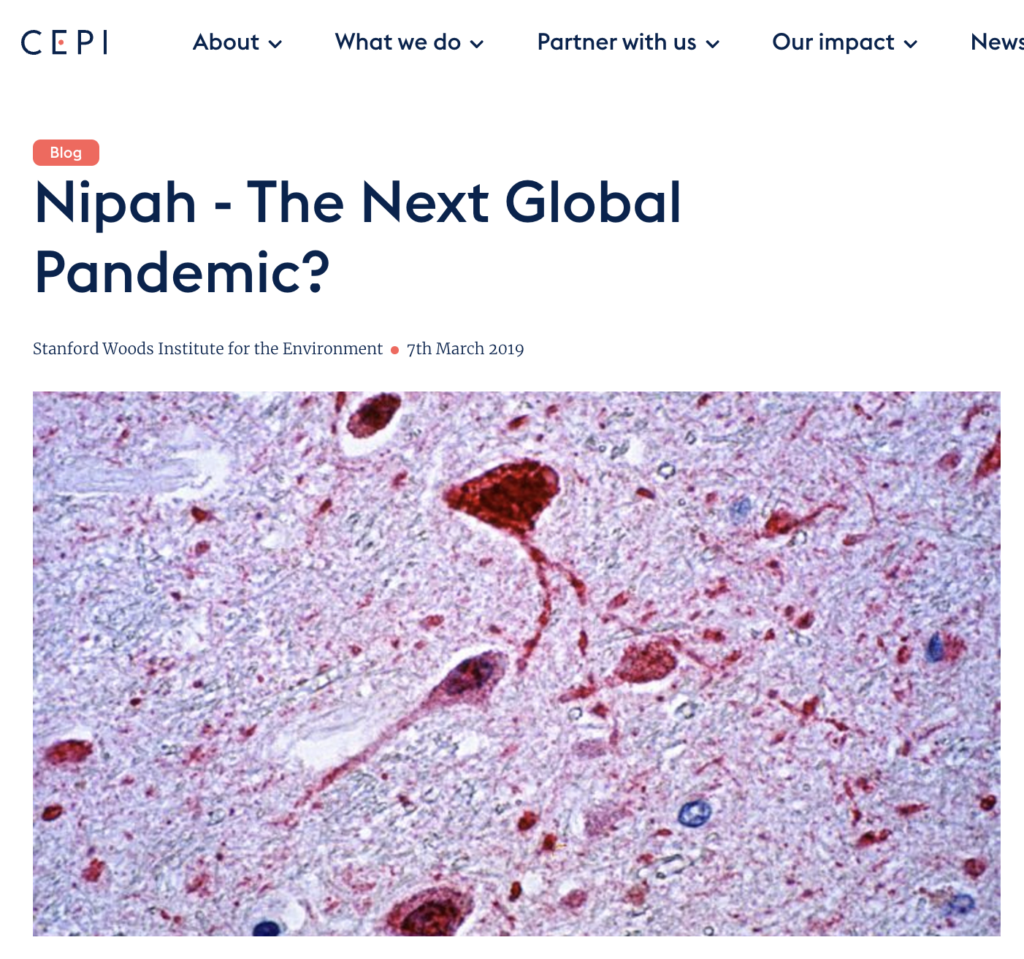
CEPI is the largest global funder of Nipah countermeasures, with two vaccine candidates in development:
ChAdOx1 NipahB (University of Oxford & Serum Institute of India):
- First Phase II trial launched in Bangladesh (2025).
- Uses the same platform as the AstraZeneca COVID-19 vaccine.
- Aims to create an emergency stockpile of 100,000 doses.
- CEPI (Coalition for Epidemic Preparedness Innovations): This $630 million initiative accelerates vaccine development for emerging diseases like Lassa fever and Nipah virus.
- Military and Government Collaboration: Pandemic response should mirror war preparedness, with rapid mobilization of medical personnel, supply chains, and communication strategies.
Monoclonal Antibodies (mAbs) as Immediate Protection
Since vaccines take weeks to confer immunity, CEPI is also funding MBP1F5 (ServareGMP), a monoclonal antibody for post-exposure prophylaxis. Trials are set to begin in 2026 in Nipah-affected regions
CEPI’s Disease X preparedness: Nipah belongs to the paramyxovirus family, which could spawn a future pandemic-capable virus.
CEPI 2.0 and the 100 Days Mission
CEPI’s goal is to develop a vaccine within 100 days of a new pathogen’s emergence. Nipah research helps validate platform technologies (e.g., ChAdOx) that could be adapted for unknown threats (Disease X).
CEPI estimates a licensed Nipah vaccine could be available within 5 years, contingent on:
- Successful Phase II/III trials in Bangladesh.
- Emergency deployment during outbreaks.
- Regulatory flexibility for accelerated approval.
Combining vaccines + monoclonal antibodies could offer a dual defense strategy, protecting both high-risk communities (healthcare workers, farmers) and preventing large-scale outbreaks.
3. Suppression of Alternative Treatments
- Documents show that Gates, Fauci, and CEPI were not interested in repurposed drugs like hydroxychloroquine, despite evidence of efficacy, because vaccines were the primary revenue streamin their pandemic response plan.
- This mirrors Big Pharma’s incentive structure, where new, patentable treatments are prioritized over affordable, generic drugs.
4. Epstein & Gates’ Relationship
- Despite Epstein’s criminal history, Gates met with him multiple times, even after his 2008 conviction.
- The New York Times (2019) reported Epstein’s repeated attempts to collaborate with Gates on global health financing—further suggesting a shared interest in pandemic profiteering.
Parametric Triggers and Reinsurance
In 2017, an associate of Epstein’s described developing “parametric triggers” for Swiss Re, a major reinsurance company. These are automated financial mechanisms that trigger payouts immediately upon a pandemic declaration. This aligned with the World Bank’s 2017 “Pandemic Catastrophe Bonds,” which were structured by Swiss Re and Munich Re to pay investors high coupons unless a pandemic (specifically including coronaviruses) occurred.
Simulation as a Technical Deliverable
Internal documents from bgC3 (Bill Gates’ private office) in 2017 listed “strain pandemic simulation” as a technical deliverable alongside neurotechnology and national defense applications. This suggests that simulations like Event 201 (conducted in October 2019) were not isolated exercises but part of a long-term strategic capability to model and manage global responses.
PLANdemic
In his 2018 Shattuck Lecture, Bill Gates delivered a warning about the looming threat of global pandemics. Drawing from past outbreaks like Ebola and the 1918 flu, he emphasized humanity’s vulnerability to infectious diseases and the urgent need for preparedness. His speech serves as a blueprint for how governments, scientists, and global institutions to collaborate to prevent future catastrophes.
The Stark Reality of Pandemics
Gates opened his lecture by reflecting on the 2014 Ebola outbreak, which claimed thousands of lives and caused billions in economic losses. Despite advancements in medicine, the global response was slow and inadequate. This outbreak, along with the 2009 H1N1 (Swine Flu) scare, revealed critical gaps in disease tracking and emergency response systems.
He also pointed to the 1918 flu pandemic, which killed an estimated 50 million people and reduced U.S. life expectancy by 12 years. Even today, a similarly contagious pathogen could cause 33 million deaths within six months—highlighting the fragility of modern health systems.
Gates planned three essential steps to strengthen global pandemic preparedness:
1. Better Tools: Vaccines, Drugs, and Diagnostics
- Universal Flu Vaccine: Current flu vaccines are limited in effectiveness and accessibility. Gates highlighted research partnerships (e.g., with Mount Sinai, GSK, and PATH) working on next-generation vaccines.
- Antiviral Therapies: Drugs like Xofluza offer single-dose treatments to halt flu progression. Monoclonal antibodies, used successfully in Ebola, could be stockpiled for future outbreaks.
- CRISPR-Based Diagnostics: Rapid, portable tests using CRISPR technology can detect multiple pathogens simultaneously, enabling faster containment.
2. Early Detection Systems
- Predictive Modeling: Advanced computational models (e.g., from the Institute for Health Metrics and Evaluation) can identify high-risk outbreak zones.
- Global Surveillance: Strengthening real-time monitoring in vulnerable regions is crucial to catching outbreaks before they spread.
3.The Urgent Need for U.S. Leadership
Gates stressed that the U.S. must lead global efforts, leveraging its scientific expertise (NIH, CDC, DARPA) and biopharmaceutical innovation. Programs like PEPFAR (which transformed HIV treatment worldwide) demonstrate how bipartisan cooperation can save millions.
Institutional Defense and Fact-Checking
Bill Gates and his representatives have consistently denied the more lurid allegations found in the Epstein documents, such as claims regarding surreptitious medication or illicit trysts, calling them “completely false” and “absurd.”
The Epstein-Gates emails reveal a calculated system where pandemics are financialized, vaccines are monetized, and alternative treatments are suppressed. This business model was operationalized through CEPI and other Gates-funded initiatives, culminating in the COVID-19 response.
However, the 2026 document releases have shifted the debate from the origins of pathogens to the pre-alignment of profit and power. The “tension” noted by Epstein—making money from a charitable organization—remains the central critique of this “Crisis Capitalism” model.
This investigation highlights the dangerous convergence of power, finance, and global health policy, where profit motives override public welfare. Understanding these networks is crucial to demanding transparency and ethical governance in future pandemic responses.
Additional Information:
The Epstein Files Made Simple
An overview of the Epstein files, a collection of court documents, flight logs, and witness testimonies linked to Jeffrey Epstein, a wealthy financier accused of operating a global sex trafficking ring involving underage girls. Epstein’s arrest in 2019 and subsequent death in a Manhattan jail cell—officially ruled a suicide—triggered widespread conspiracy theories about potential cover-ups.
- Jeffrey Epstein: A financier accused of running a vast sex trafficking operation exploiting underage girls, leveraging his wealth and influential connections.
- Epstein Files: Thousands of pages of legal and investigative documents that name numerous high-profile individuals allegedly connected to Epstein through flights, visits, or social ties.
- Notable Names in the Files (January 2024 Unsealed Documents):
- Prince Andrew
- Bill Clinton
- Donald Trump
- Other unnamed elites
- Important Clarification:
- Being named in the documents does not imply guilt. Many individuals are mentioned due to social or professional associations, not direct criminal involvement.
- Some names are linked with detailed accusations (e.g., Prince Andrew), while others appear in peripheral contexts such as flight logs or contact lists (e.g., Bill Gates).
- Media and Public Perception:
- Media coverage has been criticized for selective amplification or suppression of certain names, fostering suspicion that some elites are shielded.
- The “court of public opinion” remains intense and relentless despite legal distinctions.
- Institutional Failures:
- Epstein’s ability to negotiate lenient plea deals and use NDAs to silence victims highlights systemic issues within law enforcement, prosecution, and the media.
- The scandal exposes not only individual wrongdoing but also institutional complicity and negligence.
- Financial Institutions’ Role:
- A $75 million settlement in 2024 between the US Virgin Islands and JP Morgan Chase alleges the bank enabled Epstein’s trafficking by ignoring warning signs.
- This settlement opens inquiries into how financial systems may have facilitated Epstein’s operations.
- Developments (June 2025):
- Elon Musk publicly accused former President Donald Trump of being named in the Epstein files via social media posts.
- Musk suggested that the secrecy surrounding the documents is related to protecting such high-profile figures.
- Ongoing Legal Actions and Uncertainty:
- Lawsuits continue, with the possibility of more names being revealed.
- There is uncertainty about whether full accountability will ever be achieved or if deeper truths will remain buried.
The Epstein files shed light on a complex web of powerful individuals, systemic institutional failures, and complicity that allowed Epstein’s criminal activities to continue for years. While many high-profile names surface in the documents, inclusion does not equate to guilt, and the broader scandal underscores failures in law enforcement, financial oversight, and media transparency. Recent settlements and public accusations indicate ongoing investigations and legal battles, but the question remains whether full truth and accountability will ever emerge or if the story will continue to be veiled by secrecy and selective exposure.
Ref:
- Bill Gates denies Epstein files allegations. [https://www.businessinsider.com/bill-gates-denies-epstein-files-allegations-std-surreptitious-antibiotics-2026-1]
- Breaking: The Epstein Files Illuminate a 20-Year Architecture Behind Pandemics. [ https://sayerji.substack.com/p/breaking-the-epstein-files-illuminate ]
- Epstein Emails Expose Gates’ Crisis Capitalism. [https://thetruthaboutcancer.com/epstein-emails-expose-gates-crisis-capitalism-pandemics-business-model/ ]
- Gates Foundation narrows its priorities. [https://www.news4jax.com/health/2026/02/03/in-the-face-of-aid-cuts-gates-foundation-narrows-its-priorities-and-defends-global-health-funding/]
Also Read: