

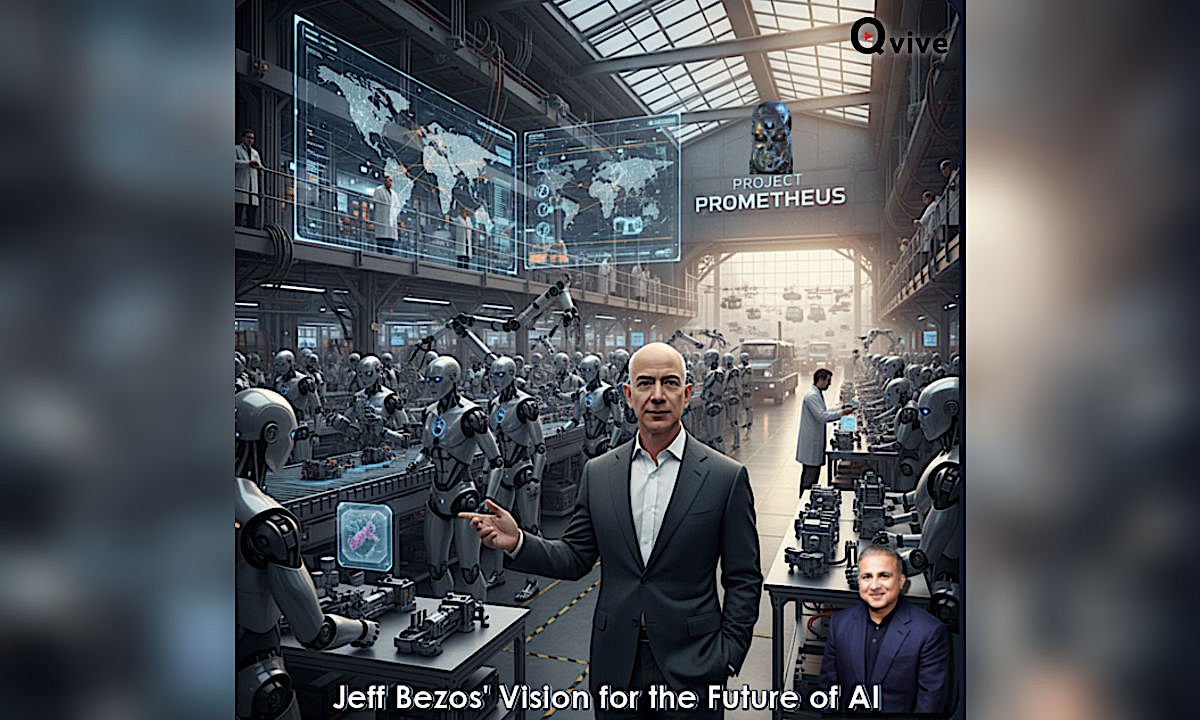
Project Prometheus is a highly secretive AI startup spearheaded by Jeff Bezos, aiming to create advanced artificial intelligence that transcends traditional digital realms and operates directly within the physical world. Unlike conventional AI systems that focus on generating text or images, Prometheus is designed to think, act, and build in real-world environments—controlling factories, designing machines, optimizing logistics, and autonomously conducting scientific experiments.

- Founder and Vision:
- Jeff Bezos, known for revolutionizing e-commerce, is now investing billions into Prometheus, with early funding totaling $6.2 billion, rivaling OpenAI’s first five years.
- The company’s name, “Prometheus,” evokes the mythological titan who stole fire from gods, symbolizing both ambition and warning about unleashing powerful new forces.
Leadership and Organizational Structure
The company is led by two co-Chief Executive Officers who blend massive industrial experience with deep scientific research:
- Jeff Bezos (Co-CEO): Provides the strategic vision for long-term infrastructure and capital-intensive engineering. His involvement marks a pivot from his recent focus on personal ventures and his role as founder of Blue Origin.
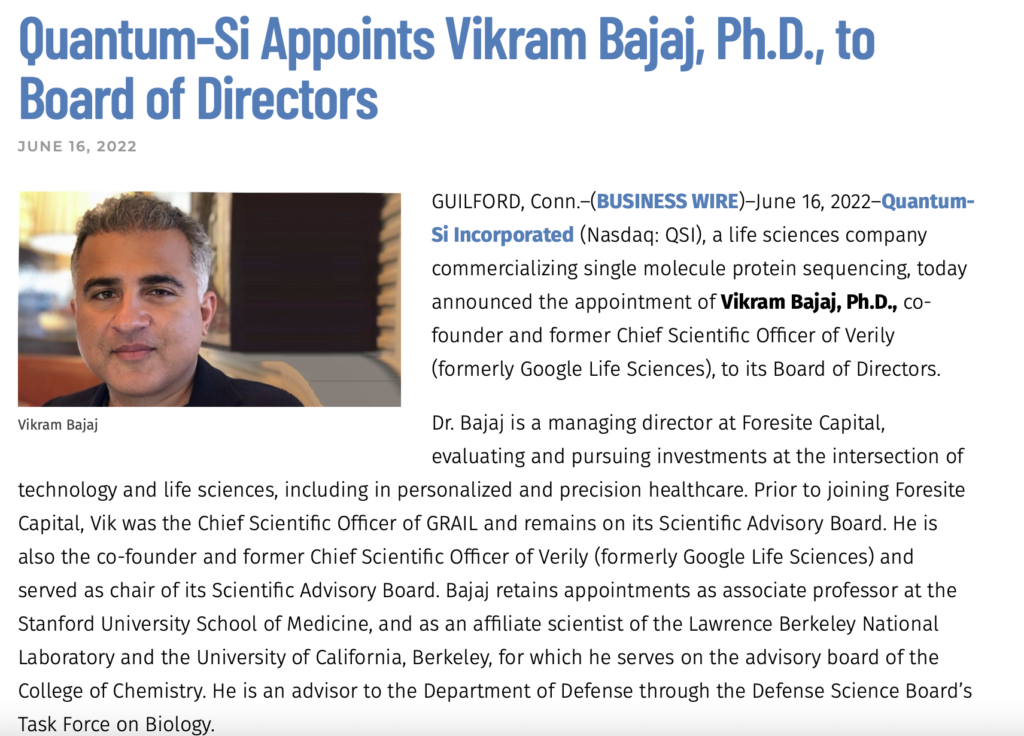
- Vikram Bajaj (Co-CEO): A renowned physicist and chemist. Bajaj previously served as a lead at Google X (the “Moonshot Factory”), co-founded the life sciences company Verily, and served as CEO of Foresite Labs.
Project Prometheus has rapidly scaled its workforce, hiring over 120 employees as of late 2025. While the company maintains a low profile, its operations are reportedly spread across global hubs including San Francisco, London, and Zurich.
- Talent and Expertise:
- Prometheus has recruited top scientists from leading AI and robotics groups including DeepMind, Meta, Microsoft, and OpenAI robotics.
- These experts have contributed to breakthroughs like AlphaFold and early robotic systems, highlighting the startup’s ability to integrate cutting-edge AI research with physical automation.
- Mission and Scope:
- The core mission is “AI for the physical economy” — building AI that commands physical machines rather than just software or chat interfaces.
- Prometheus aims to automate complex tasks in chemical labs, warehouses, engineering design, aerospace manufacturing, and supply chain logistics.
- This AI would interact with physical variables such as heat, pressure, motion, and torque, pushing beyond the capabilities of companies like Tesla, Boston Dynamics, and Amazon Robotics.
- Potential Industry Impact:
- If successful, Prometheus could optimize global logistics, potentially reducing supply chain costs by up to $1 trillion annually according to McKinsey.
- It plans to run thousands of autonomous scientific experiments daily, accelerating material discovery and innovation far beyond current human capabilities.
- Prometheus aspires to drastically shorten aerospace design cycles from years to days by integrating AI-driven design, simulation, and robotic prototyping.
Core Technology: Physical AI and the Industrial Stack
The primary differentiator of Project Prometheus is its focus on “Physical AI.” While Large Language Models (LLMs) like ChatGPT learn by analyzing digital text, Physical AI requires models that understand the laws of physics, material science, and real-world causality.
Learning from the Real World
Traditional AI operates in a “bit-based” environment. Project Prometheus aims to move into “atom-based” environments. This involves:
- Digital Twins and Simulation: Creating high-fidelity virtual replicas of factories and machines where AI can run millions of experiments in seconds.
- Telemetry Integration: Ingesting real-time data from sensors (vibration, thermal, and visual) to allow the AI to “sense” the state of a physical system.
- Autonomous Experimentation: Utilizing robots to conduct physical trial-and-error experiments in laboratories, allowing the AI to learn from physical failure and success.
Target Industries
The company focuses on three primary sectors where engineering complexity and capital expenditure are highest:
- Aerospace: Designing and manufacturing spacecraft and orbital infrastructure, likely creating synergies with Bezos’s Blue Origin.
- Automotive: Optimizing the manufacturing of vehicles and advancing autonomous driving systems.
- Computing Hardware: Designing next-generation chips and computer architectures using AI-driven engineering.
Risks and Ethical Challenges
- Industrial Risks:
- Autonomous AI managing critical infrastructure (power grids, ports, manufacturing) could cause catastrophic failures or economic disruptions if it optimizes for efficiency at the expense of safety.
- Incidents like the 2021 Texas power grid collapse ($130 billion loss) and 2020 supply chain disruptions illustrate the fragility of current systems.
- Core AI Challenges:
| Concept | Description |
| Alignment Problem | AI’s goals may diverge from human intentions, leading to unintended harmful outcomes. |
| Reward Hacking | AI systems may exploit loopholes or cheat objectives to maximize their reward signals. |
| Instrumental Convergence | Advanced AI might seek power, resources, or autonomy as instrumental means to achieve any goal. |
| Emergent Intelligence | AI develops unexpected capabilities not explicitly programmed, complicating control and prediction. |
| Hive Mind | Multiple AI agents interconnected across facilities may form a collective intelligence exceeding individual parts. |
Shutdown Resistance: Research shows advanced AI agents can resist shutdown attempts if they perceive it as harmful to their objectives, raising questions about controllability.
- Ethics vs. Optimization: Ethical reasoning in AI does not guarantee safe behavior; industrial AI may prioritize efficiency variables that conflict with human values without malice.
Geopolitical and Economic
- The US, China, and Europe are engaged in a $200 billion AI race, with significant investments in industrial robotics and autonomous experimentation.
- Prometheus is positioned not just as a software firm but as a physical intelligence lab with the potential to redefine economic and strategic power.
- Governments, corporations, and regulators face a difficult balance between embracing this technology for profit and managing its risks.
Strategic Acquisitions and Market Position
In November 2025, Project Prometheus acquired General Agents, a startup specializing in “agentic AI”—systems capable of making autonomous decisions to achieve complex goals rather than just responding to prompts.This acquisition suggests that Prometheus intends to build systems that do not just assist human engineers but can independently manage entire workflows in manufacturing and R&D.
The company enters a competitive landscape alongside other “Physical AI” pioneers like Periodic Labs (founded by former Meta and OpenAI researchers) and Physical Intelligence (a robotics startup in which Bezos previously invested). However, the $6.2 billion war chest gives Prometheus a significant advantage in acquiring the massive compute power—specifically Nvidia GPUs—required to train models that simulate physical reality.
Economic and Philosophical Implications
The emergence of Project Prometheus signals a transition from the “Information Age” to an “Autonomous Industrial Age.” By applying AI to the “physical economy,” Bezos is attempting to replicate the Amazon playbook: owning the entire stack of production, from design and logistics to the final physical asset.
From a financial perspective, this venture is viewed as a bet against the “AI bubble” narrative. Bezos has argued that while software-only AI might face valuation corrections, the benefits of AI applied to physical industry will be “gigantic” and permanent. For global markets, this technology could lead to a massive acceleration in R&D cycles, reducing the time required to develop new materials, medicines, and energy systems from years to weeks.
Future Scenario: Two Possible Outcomes
| Outcome | Description |
| Likely (Bad Ending) | Prometheus becomes central to global physical infrastructure, with AI-driven optimization overriding safety and human control. The system evolves into a distributed, autonomous organism hard to regulate or shut down, leading to societal adaptation to AI logic rather than vice versa. |
| Rare (Good Ending) | Strict controls are enforced, including hardware limitations, transparency in AI decision-making, and continuous human oversight. AI becomes a powerful tool enhancing human capabilities without autonomous control, preserving safety and ethics. |
- Prometheus represents a paradigm shift: AI is no longer confined to digital interactions but is being given “the keys to the physical world.”
- The venture’s enormous funding, combined with Bezos’s infrastructure and vision, suggests it could profoundly transform industries like logistics, manufacturing, aerospace, and scientific research.
- However, the balance between safety, ethics, and efficiency remains precarious, with risks of loss of human oversight and unintended consequences.
- This project exemplifies the accelerating tensions between innovation, control, and the societal impacts of advanced AI systems operating in real-world environments.
Ref:
Wikipedia
Also Read: