

The concept of a tsunami bomb relates to an ambitious military project that aimed to develop a weapon capable of creating destructive tsunamis during World War II. Let’s break this down step-by-step to understand its origins, development, and related concepts in simpler terms.
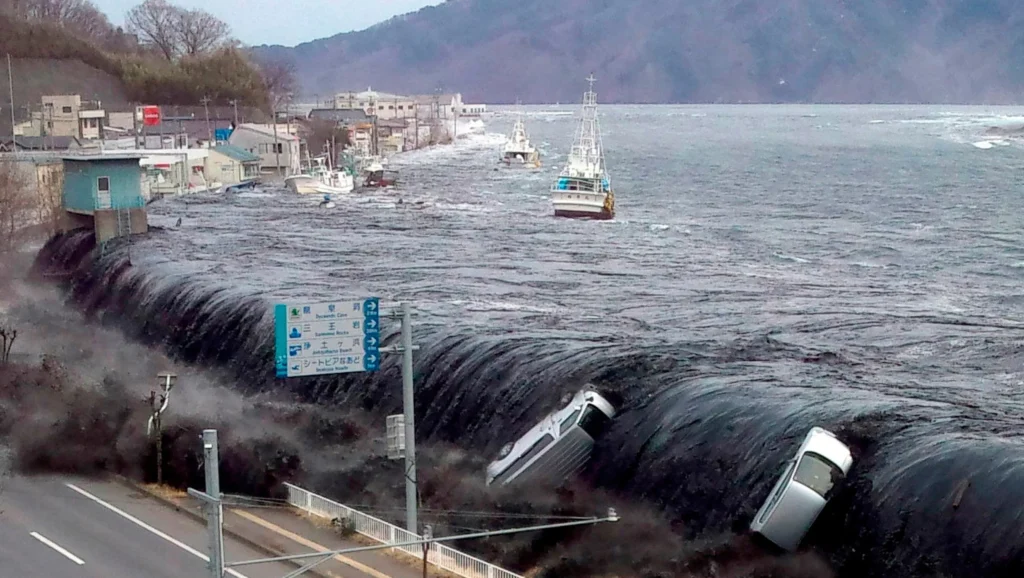
What Is a Tsunami Bomb?
Think of a tsunami bomb as an extreme form of artillery designed not to explode on land but in the water, ultimately generating massive waves aimed at destroying coastal targets. This idea sprouted when U.S. Navy officer E.A. Gibson noticed that explosions used to clear coral reefs created small waves. This led to the collaboration between the United States and New Zealand on a project named Project Seal.
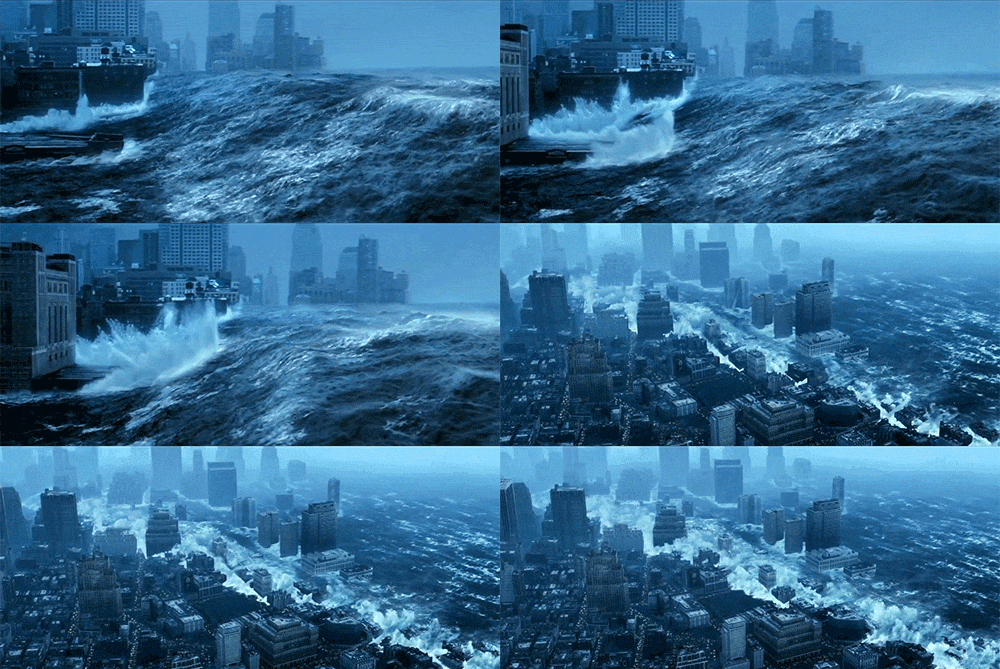
Development
- Initial Concept: Soldiers believed that detonating a large amount of explosives underwater could unleash a tsunami capable of damaging coastlines or defenses.
- Testing: Between 1944 and 1945, tests were conducted around New Zealand and New Caledonia. These tests used smaller explosions rather than a fully developed tsunami bomb.
- Results: The experiments found that single explosions wouldn’t suffice to create a tsunami. However, by detonating around 2 million kilograms (2,000 metric tons) of explosives detonated in a specific pattern to create a 10-meter (33-foot) tsunami. This would necessitate a chain of ten large explosions, each involving 100,000 kg of explosives, to be detonated about 8 kilometers (5 miles) offshore.
- Ineffectiveness: Later studies revealed that most of the explosion’s energy dissipated before reaching the shore, making this method quite ineffective for causing tsunami waves.
Comparisons to Other Weapons
The bouncing bomb, developed during the same era, shared similarities in its underwater operation. It was designed to skip along the surface of water and explode underneath the targeted structures, especially the dams in Germany. This concept aimed at causing flooding and weakening German military efforts.
Additionally, the earthquake bomb planned to strike deep into the ground, causing significant underground explosions that would affect major structures far beyond conventional bombs. This illustrates different ways military minds sought innovative solutions to overcome fortifications.
Further Developments and Interest
The idea of using explosives to create tsunamis didn’t fade away. Soviet and, more recently, Russian military strategists explored similar ideas, proposing massive torpedoes that could create immense waves. In the 1960s, there were even discussions of a nuclear underwater drone designed to generate tsunamis.
In 2023, North Korea reported on a new underwater attack drone that could supposedly create radioactive waves. This indicates that the concept of using explosive energy for warfare continues to evolve.
The trials of the “tsunami bomb” highlight the troubled military tactics of the era and the secret technological goals that were hidden from everyone. While it raised important questions about the impact of underwater explosions, real-world applications showed its limitations. Weapons like the bouncing bomb and earthquake bomb remind us that the quest to penetrate formidable defenses during wars inspired inventiveness. Understanding these concepts helps us see how military technology has developed and its implications, sparking discussions on efficiency, strategy, and ethics in warfare.
Ref:
- https://www.usatoday.com/story/news/world/2013/01/02/tsunami-bomb-us-new-zealand/1804483/
- https://www.telegraph.co.uk/news/worldnews/australiaandthepacific/newzealand/9774217/Tsunami-bomb-tested-off-New-Zealand-coast.html
- Wikipedia
Also Read: