

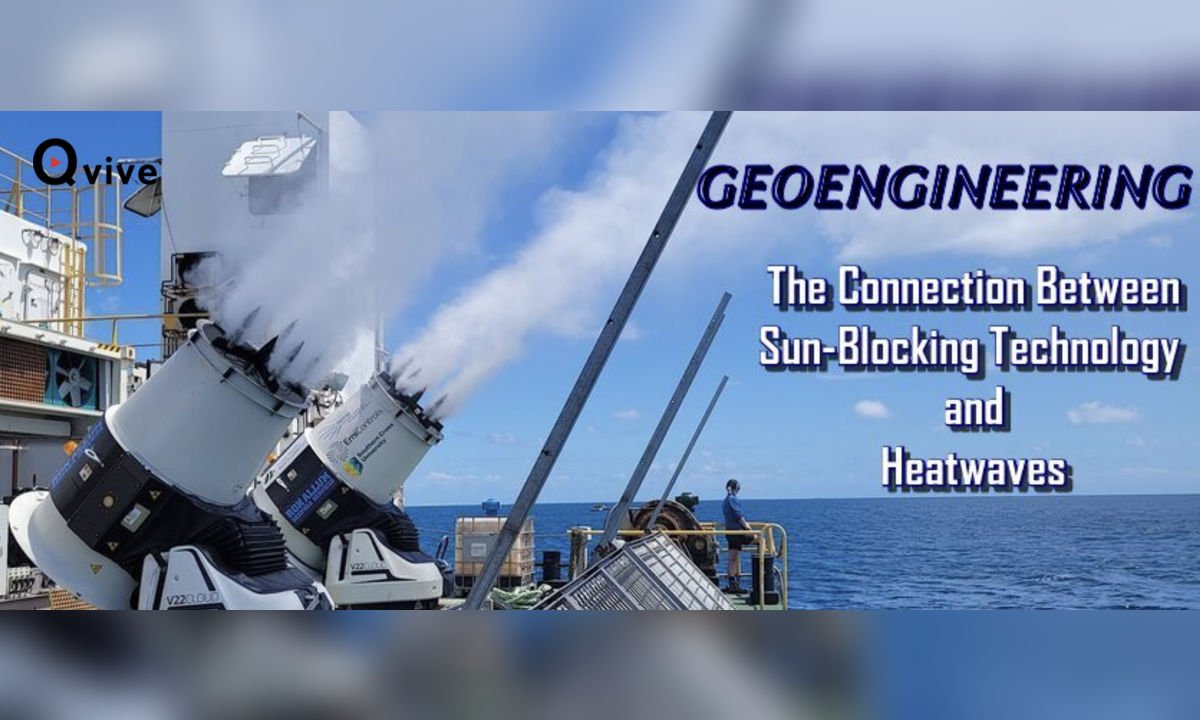
Marine Cloud Brightening (MCB) is a geoengineering method that would seek to curtail global warming by enhancing marine cloud reflectivity and reflecting more sunlight to space. The process is one of Solar Radiation Management (SRM), and the mechanism would involve injecting small sea salt aerosols or other particles into low-altitude marine stratocumulus clouds. The process relies on the Twomey effect, where there are more and smaller cloud droplets, thus whiter and more reflective clouds.
While MCB is a possible short-term solution for delaying severe cuts in carbon emissions, it is a very controversial technology with deep risks and uncertainties.

How Marine Cloud Brightening Works
MCB uses the natural process of cloud formation on aerosol particles. Tiny sea salt particles released into the atmosphere serve as Cloud Condensation Nuclei (CCN), upon which water vapor condenses to create cloud droplets. A greater concentration of CCN creates more small cloud droplets, which combined reflect more solar radiation out into space and cool the Earth.

The target aerosols for MCB are generally warm marine boundary layer stratocumulus clouds, which cover large expanses of subtropical oceans and are highly sensitive to aerosol injections. The intended method is to apply high-technology spray machines, possibly from unmanned rotor ships, to spray seawater mist into the air. The particles are claimed to last in the atmosphere for just a few days, which will induce short-term cooling and possible reversibility.
The Degrees Initiative, a UK-based non-government group, awarded $900,000 for research into the impacts of solar geoengineering on weather patterns, wildlife, and glaciers to scientists from Chile, India, Nigeria, and other countries.
Industrial Manufacturing of Salt Nanoparticles: A more recent proposal involves industrially manufacturing salt nanoparticles using anti-solvent precipitation techniques, then dispersing them with unmanned aerial vehicles (UAVs). This method aims to produce a narrow size distribution, potentially reducing the total salt mass required.
Furthermore, the potential phytotoxicity and environmental impact of manufactured salt NPs must be carefully considered. While nanoparticles offer benefits, their application is a “double-edged sword”; if not used properly, they can have negative effects on plant growth, protein formation, and pigment content. The type of NP, its concentration, size, morphology, chemical composition, and surface charge all influence its phytotoxicity. High concentrations can lead to issues for plants, animals, and humans. For example, some nanoparticles can induce oxidative stress, cause DNA damage, and affect cellular functions in plants. In the soil, NPs undergo bio/geo-transformations, which determine their bioavailability and toxicity. The long-term effects of NPs on soil ecosystems, microbial communities, and their potential for bioaccumulation in the food chain are still under vigorous investigation and require further research. This necessitates a cautious and responsible approach to their application, emphasizing the need for sustainable practices and strict regulatory guidelines.
Researchers are asking for rules to stop the use of marine cloud brightening from having a negative impact elsewhere
Countries face significant challenges when adopting Marine Cloud Brightening (MCB) methods, primarily due to scientific uncertainties, potential unintended consequences, and complex governance issues. While MCB offers a potential temporary solution to mitigate global warming by increasing cloud reflectivity, its viability and widespread implementation are hampered by a range of technical, environmental, and socio-political hurdles
Related Article:
Geoengineering and Its Unintended Consequences
A recent study highlights the complex and often unintended consequences of climate engineering techniques, specifically concerning a method called marine cloud brightening. While it might seem like a beneficial idea, the study reveals some alarming potential side effects, especially on a global scale.
- Localized Action, Global Impact: Researchers found that attempts to cool specific regions, such as California, can unexpectedly increase heat stress in other areas, particularly Europe. Think of it like turning on the air conditioning in one room of your house—while that room gets cooler, adjacent rooms may actually heat up.
- Research Findings: The study utilized climate simulations from 2010 and projections for 2050 to understand how these geoengineering operations would behave under different future climate conditions.
- In 2010, a cloud brightening effort near Alaska could reduce the risk of extreme heat significantly—by 55%, helping millions. A similar effort closer to California would provide some benefits too, though smaller, reducing heat by 16%.
- By 2050, however, the effectiveness of the Alaska operation diminished greatly due to changed climatic conditions. In fact, the California operation could potentially worsen heat exposure in that region.
- Unpredictable Effects: The study demonstrated that simpler, immediate cooling strategies might not work well as the climate changes. Factors such as fewer clouds and higher base temperatures impact the effectiveness of these interventions. This unpredictability can lead to more heat waves instead of mitigating them, which is opposite to the intended purpose.
Implications for the Future
The research underscores a critical message: while geoengineering may present temporary solutions to climate challenges, careful consideration is vital. The changing climate complicates predictions of effectiveness and safety. Researchers advocate for alongside scientific inquiry to establish governance and guidelines to manage potential risks associated with climate modification techniques.

Risks and Unintended Consequences
Despite its potential, MCB carries substantial risks and uncertainties, leading to its controversial nature.
Regional Climate Disruptions
One of the most significant concerns is the potential for unintended regional climate disruptions. While MCB aims for global cooling, its effects could vary significantly by region, potentially altering precipitation patterns and leading to droughts in some areas and increased rainfall in others. For instance, a 2024 modeling study indicated that regional MCB off the U.S. West Coast, while effective initially, could lead to higher temperatures in Europe and other regions by 2050 due to disruptions in large-scale atmospheric and oceanic circulation patterns, such as the Atlantic Meridional Overturning Circulation (AMOC). Such disparities could exacerbate existing inequalities and create new conflicts.
Ocean Acidification
MCB does not address the root cause of climate change – greenhouse gas emissions – nor does it mitigate ocean acidification. Ocean acidification, caused by the absorption of excess carbon dioxide by oceans, poses a severe threat to marine ecosystems, particularly coral reefs and shellfish. By masking the warming effects of CO2, MCB could inadvertently delay efforts to reduce emissions, thereby worsening ocean acidification in the long run.
Termination Shock
A critical risk is the potential for a “termination shock”. If MCB were deployed for an extended period and then suddenly stopped, the accumulated warming effect of greenhouse gases would rapidly manifest, leading to a sudden and dramatic increase in global temperatures. This rapid warming could cause more severe impacts than if MCB had never been used, highlighting the need for MCB to be a temporary measure accompanied by aggressive decarbonization efforts.
Impacts on Atmospheric Chemistry and Ecosystems
Introducing large quantities of sea salt particles into the atmosphere could have unintended consequences for atmospheric chemistry, potentially altering the behavior and distribution of other pollutants, affecting ozone levels, and impacting air quality. While sea salt is generally considered benign, high concentrations could be harmful to plants and animals, particularly in coastal areas. The potential for these direct impacts on ecosystems requires careful evaluation.
Modeling Uncertainties and Feedback Loops
Current climate models, while essential, have inherent uncertainties and may not fully capture all relevant processes and feedback loops. The interaction between clouds and aerosols is complex, and accurately modeling how MCB would affect cloud formation, liquid water content, and cloud lifetime remains a significant challenge. These uncertainties make it difficult to predict the precise global and regional impacts of MCB.
Governance and Ethical Challenges
The deployment of MCB raises profound ethical and governance challenges. There is currently no legally binding international framework specifically addressing marine geoengineering activities. This lack of regulation creates concerns about unilateral action by nations or even private entities, potentially leading to conflicts and mistrust. Decisions about who benefits and who bears the risks, and how to ensure equitable distribution, are complex and require international cooperation and public engagement. There is also a “moral hazard” concern, where the perceived availability of a technological fix might reduce the urgency for emissions reductions.
Research and Governance Efforts
Recognizing these risks, there is a strong consensus among scientists for a substantial and coordinated research program to better understand MCB’s viability and risks. This includes field and laboratory experiments, monitoring, and numerical modeling across various scales. Small-scale field tests have been conducted, such as those in Australia for the Great Barrier Reef and a brief experiment in Alameda, California. These experiments aim to gather data on aerosol distribution and test the basic MCB concept, but they also highlight the need for robust governance frameworks.
Efforts are underway to include marine cloud brightening under international anti-marine pollution treaties like the London Protocol, which could establish standards for research and field experiments. However, the process is slow, and many major global powers have not yet accepted relevant amendments. The scientific community emphasizes that MCB research should be conditional on a simultaneous commitment to decarbonization, as it is not a substitute for emissions reductions.

It sounds odd, but Billionaires are focused on this concept.
FEBRUARY 24, 2023: At the Munich Security Conference, billionaire George Soros highlighted the urgent threat posed by climate change, advocates a controversial approach of solar geoengineering aimed at reflecting sunlight to mitigate warming effects. His proposition involves brightening Arctic clouds, marking a prominent example of a growing trend among affluent individuals investing in geoengineering technologies.
Several influential billionaires have pursued similar projects:
- Bill Gates supported a Harvard initiative to test the injection of calcium carbonate into the atmosphere, which was eventually halted due to backlash from local communities and environmental activists.
- Jeff Bezos utilized Amazon’s supercomputing resources for models assessing the impact of sulfur dioxide injection into the atmosphere.
- Dustin Moskovitz, co-founder of Facebook, contributed $900,000 to research efforts in multiple countries regarding solar geoengineering.
- A recent venture, Make Sunsets, received $750,000 from venture capitalists to proceed with SO2 atmospheric tests, launching their first experimental balloons in Nevada.
Israel’s Stealth Geoengineering Project
A stealth startup is a company that operates in secrecy during its early stages, intentionally keeping its products, services, and operations confidential from the public and competitors. This approach allows the startup to develop its innovative ideas and refine its offerings without external scrutiny or press.
The primary goal of a stealth startup is to protect intellectual property (IP) and gain a competitive advantage before a public launch. By operating under the radar, these companies can prevent competitors from copying their ideas or launching similar products prematurely. This is particularly crucial for startups developing groundbreaking or easily replicable technologies. For instance, companies in advanced software, cutting-edge hardware, biotech, and AI often benefit from stealth mode to secure patents and build a strong foundation before revealing their innovations
Stealth mode also provides the freedom to iterate and pivot without public scrutiny, fostering creativity and innovation. This allows the team to focus intensely on product development and perfection, rather than being distracted by marketing, sales, or external expectations. This strategic quiet can also serve as a powerful negotiating tactic with investors, partners, or potential acquirers, building anticipation and potentially commanding more favorable terms.
However, operating in stealth mode comes with its own set of challenges. One significant drawback is the limited customer feedback. Without early user insights, there’s a risk of developing a product that doesn’t fully align with market needs, potentially leading to costly adjustments post-launch. Hiring talent can also be more difficult, as potential employees may be hesitant to join a company that provides little information about its offerings or vision. Furthermore, attracting investors can be challenging, as many prefer companies with clear public metrics and market validation. Stealth startups often rely on personal networks, warm introductions, and exclusive investor meetings under strict non-disclosure agreements (NDAs).
There are varying degrees of stealth, from total stealth, where the company’s existence and product details are completely hidden, to partial stealth, where the company’s existence is known but key details remain undisclosed. Some larger organizations also employ “in-company stealth mode” for new projects, keeping them secret even from other internal teams.
Successful examples of companies that started in stealth mode include SpaceX, which quietly developed its reusable rocket technology, and LinkedIn, which refined its professional networking platform before its public debut. Other notable examples include Robinhood, Magic Leap, and Clubhouse. These companies leveraged stealth to achieve significant milestones and build a competitive moat before their public launches.
The decision to operate in stealth mode depends on the startup’s unique needs, product complexity, and market dynamics. It is often recommended for companies with truly disruptive innovations, those needing significant time for R&D, or those operating in highly competitive industries where IP protection is paramount. The ideal time to emerge from stealth mode is when the product is market-ready, IP protections are in place, and a robust go-to-market strategy is prepared.
A Secret Project to Brighten the Clouds, Funded by Billionaires, is Getting Criticism
A significant backlash has emerged surrounding a proposed geoengineering project aimed at cooling the Earth through marine cloud brightening. This initiative, primarily backed by wealthy individuals and organizations, has raised ethical concerns due to its secretive nature and potential environmental risks.
- The project, led by researchers at the University of Washington and supported by advocacy group SilverLining and SRI International, seeks to mitigate climate change effects by spraying saltwater aerosols into the atmosphere. This process is intended to enhance cloud reflectivity, thus reducing solar radiation.
- Initial tests, including a pilot on the retired USS Hornet in Alameda, California, were intended as precursors to a larger experiment covering an area greater than Puerto Rico.
- The initiative has garnered over $16 million from the Quadrature Climate Foundation and contributions from notable investors such as Chris Larsen and venture capitalist Chris Sacca, indicating substantial financial backing.
- Researchers planned to utilize federal resources, including ships and planes, underscoring the project’s ambitious scale and logistical requirements.
Public and Ethical Concerns
- Lack of Transparency: Critics have expressed concerns regarding the project’s secrecy, particularly the decision to keep the Alameda pilot test under wraps from local officials. Internal communications revealed an intentional effort to minimize public awareness and engagement, which has been viewed as a violation of ethical norms.
- Community Reactions: Local government leaders, including Alameda’s Mayor Marilyn Ezzy Ashcraft, have questioned the long-term environmental consequences of such geoengineering interventions. The project’s potential to alter weather patterns has intensified scrutiny from both the public and scientific communities.
- Opposition from Experts: A coalition of over 575 scientists has called for a moratorium on geoengineering technologies, citing risks such as “termination shock”—the abrupt climate consequences likely to occur if geoengineering practices were to cease suddenly.
- Project Defense: Despite the opposition, project leaders assert their focus is on scientific understanding rather than immediate implementation. Sarah Doherty, head of the Marine Cloud Brightening Program, emphasized that there are currently no plans for widespread experiments that would directly impact weather or climate.
The emerging debate surrounding marine cloud brightening reflects a crucial tension in climate science: the ethical implications of human intervention in natural systems. The question of whether humanity should directly alter the climate through geoengineering, or if even the study of such techniques poses too great a risk without comprehensive public engagement and consent, remains at the forefront of discussions among environmentalists, scientists, and policymakers.
Why Geoengineering is a False Solution to the Climate Crisis?
Published on October 15, 2024, by Mary Church and Rossella Recupero from the Center for International Environmental Law, this blog post critically examines the emerging field of geoengineering as a supposed solution to climate change. Geoengineering is defined as large-scale interventions aimed at counteracting climate change effects. However, the authors argue that these technologies are risky, ineffective, and may distract from viable climate solutions.
Fundamental Flaws of Geoengineering
- Ineffectiveness: None of these techniques addresses the root causes of climate change, principally the emission of fossil fuels. Notably, solar geoengineering could destabilize climate systems and produce uneven effects, exacerbating climate injustice in vulnerable regions.
- Distraction from Real Solutions: The belief in geoengineering as a “fix” is perilous, as it may prolong dependence on fossil fuels and divert attention from immediate, actionable solutions, risking irreversible climate change scenarios.
- Risky Experiments: Large-scale deployment is necessary for testing practical impacts; however, this could lock in harmful effects without prior understanding of the consequences. Existing models tend to underestimate potential negative outcomes.
- Scale of Implementation: For any significant impact, geoengineering would require unprecedented levels of intervention, with substantial political, social, and environmental repercussions.
- Human Rights Concerns: Deployment risks severely infringing on human rights, notably affecting populations least responsible for climate change, including marginalized communities and Indigenous groups.
- Legal Conflicts: There is an existing de facto moratorium on geoengineering technologies, particularly marine approaches, under international law, highlighting their contentious nature.
- Governance Issues: Effective and fair governance of geoengineering poses significant challenges due to its scale and ambiguous authority, risk of geopolitical conflict, and the potential creation of “winners and losers” among nations.
Geoengineering does not present a valid or safe solution to the climate crisis. The post urges global leaders to reject speculative technologies and adopt tangible, justice-centered approaches to climate mitigation. As the climate crisis worsens, the urgency to act responsibly and sustainably has never been more critical.
Ref:
- Cloud brightening over oceans may stave off climate change, but with risk. [ https://news.mongabay.com/2024/08/cloud-brightening-over-oceans-may-stave-off-climate-change-but-with-risk/ ]
- Marine cloud brightening. [https://en.wikipedia.org/wiki/Marine_cloud_brightening]
- Scientists detail research needed to assess the viability and risks of marine cloud brightening. [ https://www.climate.gov/news-features/feed/scientists-detail-research-needed-assess-viability-and-risks-marine-cloud]
- Diminished efficacy of regional marine cloud brightening in a warmer world. [ https://phys.org/news/2024-06-marine-cloud-brightening-unexpected-consequences.html ]
- What is marine cloud brightening? [ https://www.barrierreef.org/news/explainers/what-is-cloud-brightening ]
- What are the risks of marine cloud brightening? [ https://climate.sustainability-directory.com/question/what-are-the-risks-of-marine-cloud-brightening/ ]
- Marine Cloud Brightening Program studies clouds, aerosols, and pathways to reduce climate risks. [ https://environment.uw.edu/news/2024/04/marine-cloud-brightening-program-studies-clouds-aerosols-and-pathways-to-reduce-climate-risks/ ]
- Exploring Marine Cloud Brightening with a Reduced Complexity Model. [ https://pmc.ncbi.nlm.nih.gov/articles/PMC10954212/]
- ‘We’re changing the clouds.’ An unforeseen test of geoengineering is fueling record ocean warmth. [ https://www.science.org/content/article/we-re-changing-clouds-unforeseen-test-geoengineering-fueling-record-ocean-warmth ]
- Climate Impact of Marine Cloud Brightening Solar Climate Intervention Under a Susceptibility-Based Strategy Simulated by CESM2. [ https://agupubs.onlinelibrary.wiley.com/doi/full/10.1029/2024JD041245 ]
- Solar radiation modification: evidence review report. [ https://sapea.info/publication/srm/ ]
- Climate Intervention: Reflecting Sunlight to Cool Earth. [ https://nap.nationalacademies.org/catalog/18982/climate-intervention-reflecting-sunlight-to-cool-earth ]
- Buying time: can science save the Great Barrier Reef? [ https://www.cam.ac.uk/stories/buying-time-can-science-save-the-great-barrier-reef ]
- Cloud brightening could have unintended effects in a warming world. [ https://eos.org/articles/cloud-brightening-could-have-unintended-effects-in-a-warming-world ]
- Artificial climate controls might become ineffective because of climate change. [https://scripps.ucsd.edu/news/artificial-climate-controls-might-become-ineffective-because-climate-change]
- Solar Radiation Modification: A Risk-Risk Analysis. [https://www.c2g2.net/publication/solar-radiation-modification-a-risk-risk-analysis/]
- Marine cloud brightening: a controversial geoengineering technology with potentially harmful effects. [ https://www.lemonde.fr/en/environment/article/2024/08/31/marine-cloud-brightening-a-controversial-geoengineering-technology-with-potentially-harmful-effects_6724084_114.html ]
- Physical science research needed to evaluate the viability and risks of marine cloud brightening. [ https://www.science.org/doi/10.1126/sciadv.adi8594 ]
- What is cloud brightening? [ https://www.barrierreef.org/news/explainers/what-is-cloud-brightening ]
- Governing marine cloud brightening for ecosystem conservation under a warming climate. [ https://www.sciencedirect.com/science/article/pii/S258981162400003X ]
- https://www.theguardian.com/environment/article/2024/jun/21/climate-engineering-off-us-coast-could-increase-heatwaves-in-europe-study-finds
- Image-https://genn.cc/marine-cloud-brightening/
- https://www.seattletimes.com/seattle-news/climate-lab/uw-studies-a-drastic-way-to-cool-a-warming-planet-cloud-brightening/
- What is a stealth startup? [ https://www.pitchdrive.com/academy/what-is-a-stealth-mode-startup-company]
- Stealth startup. [ https://en.wikipedia.org/wiki/Stealth_startup]
- Stealth Startup. [ https://www.greyb.com/glossaries/stealth-startup/]
- What is Stealth Startup? [ https://evnedev.com/blog/development/what-is-stealth-startup/]
- The Secrets of Stealth Startups. [ https://www.thevccorner.com/p/the-secrets-of-stealth-startups]
- Stealth Startups: What They Are and When to Go Stealth. [ https://waveup.com/blog/stealth-startups-what-they-are-and-when-to-go-stealth/]
- Stealth Startup Jobs in New York, United States. [ https://www.linkedin.com/jobs/stealth-startup-jobs-new-york]
- Stealth Startup. [ https://www.linkedin.com/company/stealth-startup-careers]
- The Founder’s Guide to Stealth Startups. [ https://www.karllhughes.com/posts/stealth-startup]
- Stealth Mode Startup. [https://www.bondcollective.com/blog/stealth-mode-startup/]
- What is a Stealth Mode Startup? [https://coresignal.com/blog/stealth-mode-startups/]
- https://link.springer.com/article/10.1007/s42452-024-06009-7
Also Read: