

Chenetha Santha Handloom Weaver’s Market Makes Its Debut in Bengaluru
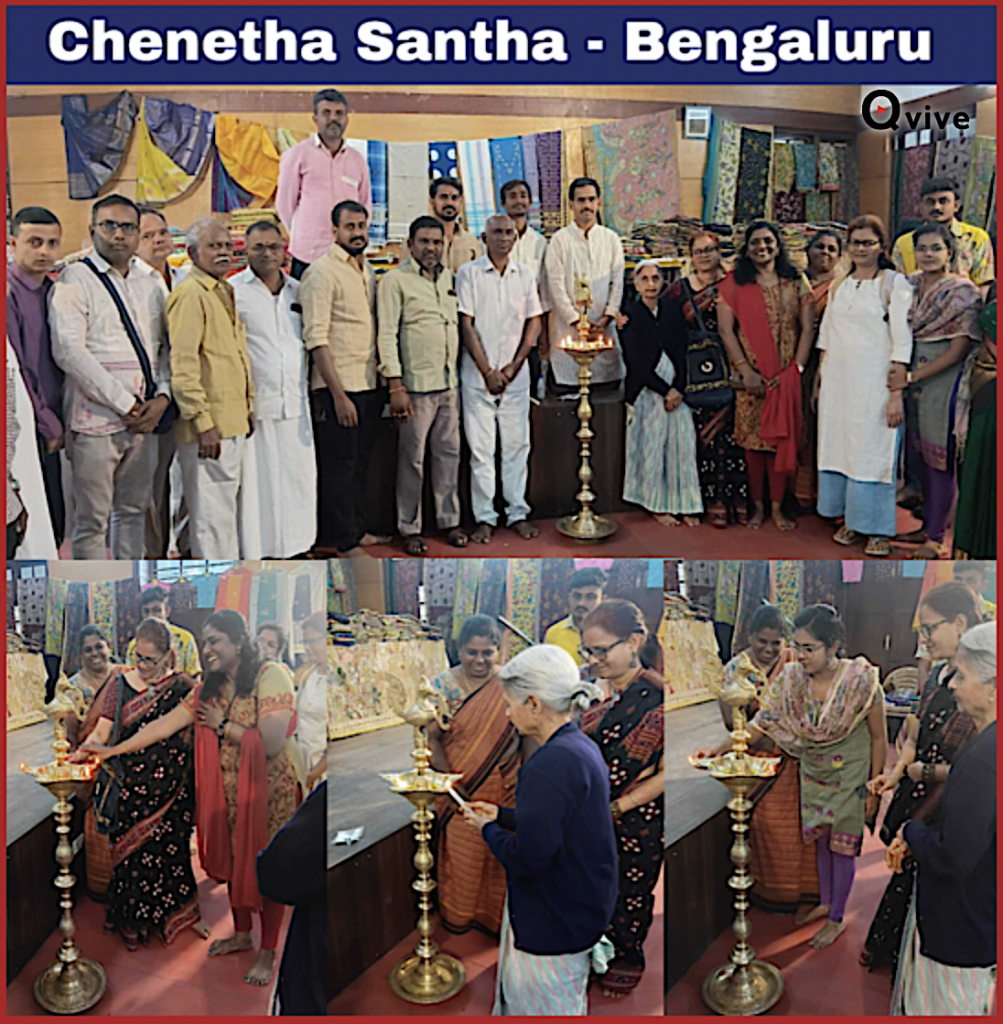
As the Chenetha Santha Handloom Weaver’s Market unfolds in Bengaluru from February 4th to 8th, 2026, at Gandhi Bhavana, Kumar Park West, the event marks a significant milestone in supporting India’s handloom weavers. Organized by Saraswati Kavula, a Filmmaker-Activist, Farmer, and Awaken India Movement NSC member, this market provides a direct platform for weavers to sell authentic handloom and khadi products, bypassing exploitative middlemen and unfair competition from mass-produced imitations.
She explains:
Chenetha Santha, meaning “handloom sante” (handloom marketplace), is a unique initiative aimed at creating a direct marketing platform for handloom weavers. Launched in January 2015, this exhibition provides a much-needed space for weavers to connect directly with consumers, bypassing exploitative middlemen and counterfeit markets.
Saraswati Kavula highlights that the handloom industry, much like agriculture, faces severe challenges:
- Rising Input Costs: Silk, zari (metallic thread), and raw materials have become increasingly expensive.
- Lack of Government Support: Post-liberalization, subsidies on cotton yarn and other inputs have dwindled, leaving weavers vulnerable.
- Market Exploitation: Power looms and mills mass-produce imitations of traditional handloom designs, misleading consumers with labels like “Kanjivaram” or “Venkatagiri” without specifying whether they are handwoven or power-loom copies.
- Unfair Pricing: Authentic handloom sarees (such as Kanjivaram) cost upwards of ₹12,000–15,000 due to craftsmanship and material costs, while imitations flood markets at ₹5,000, deceiving buyers.
The decline of handlooms benefits synthetic fiber industries, often dominated by corporate giants. Saraswati Kavula references the “polyester prince” (Dhirubhai Ambani) to highlight how man-made fibers undermine natural fabric producers. The handloom sector’s erosion parallels agricultural distress, where policies favor large corporations over small-scale artisans and farmers.
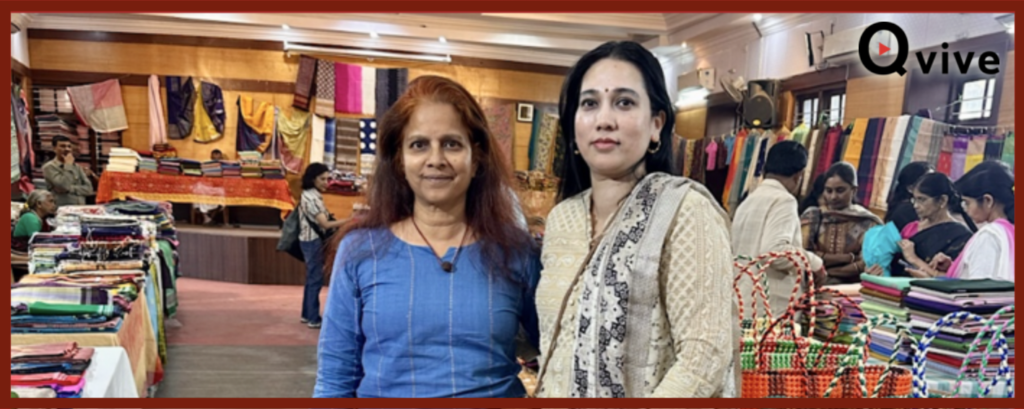
Chenetha Santha emerged as a niche, protected market where:
- Weavers Get Fair Prices: By eliminating middlemen, artisans receive rightful earnings.
- Consumers Access Authentic Products: Buyers can trust the origins of handwoven sarees.
- Sustainable Livelihoods Are Promoted: The initiative supports decentralized, rural economies against corporate monopolies.
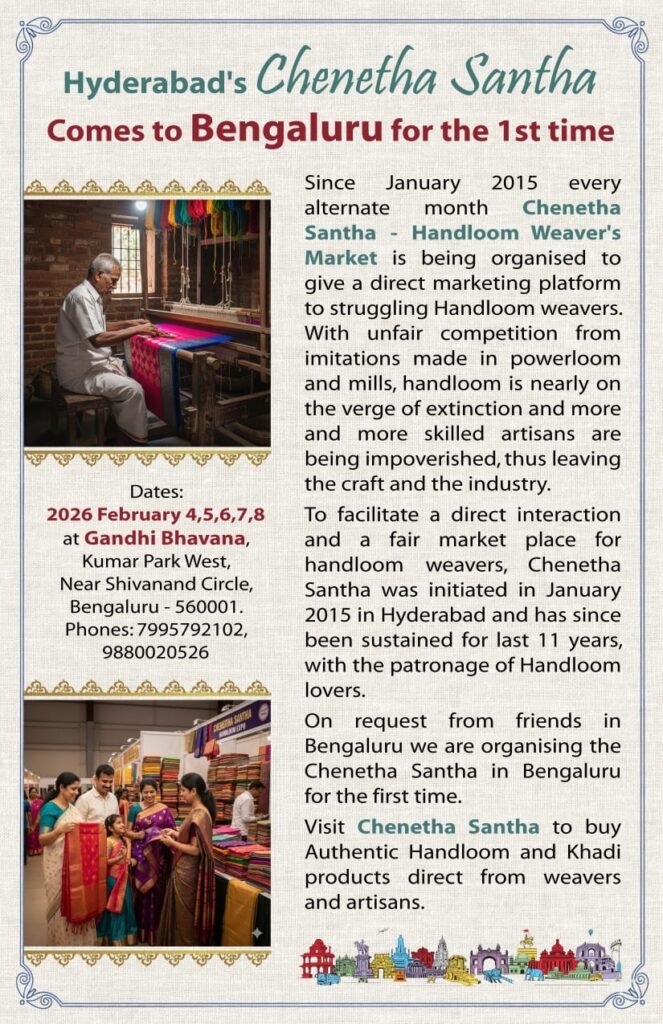
Originally organized in Hyderabad every few months, the exhibition has now expanded to Bengaluru due to public demand. Held at Gandhi Bhavan (near Shivanand Circle), the event runs from 11 AM to 9 PM (Feb 4–8).
Saraswati Kavula urges eco-conscious consumers and supporters of rural livelihoods to visit Chenetha Santha. By choosing authentic handlooms, buyers contribute to:
- Preserving traditional craftsmanship.
- Resisting corporate-driven market exploitation.
- Empowering decentralized, ethical economies.
If you are in Bengaluru (or future host cities), visit Chenetha Santha, engage with the weavers, and invest in handloom—not just as a product, but as a pledge to protect India’s craft heritage.
“When you buy handloom, you don’t just wear a saree—you wear a story of resilience.”
Also Read: