

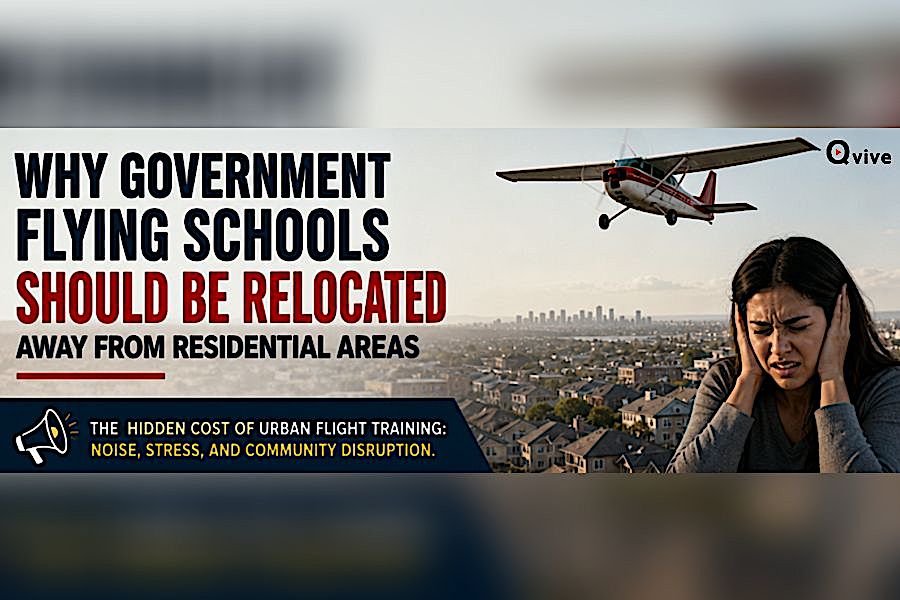
Flight training is an essential component of aviation safety. Every commercial airline pilot, charter pilot, and flight instructor must undergo extensive training before being entrusted with the lives of passengers. However, the location of that training deserves greater scrutiny, particularly when repeated training flights occur over densely populated residential areas.
Across many cities, residents have voiced growing concerns regarding the constant presence of training aircraft overhead. Unlike regular commercial flights that typically pass through an area briefly, training aircraft often perform repetitive circuits, touch-and-go landings, steep turns, and maneuvering exercises for several hours each day. As a result, communities may experience continuous noise exposure from early morning until evening.
Studies by international health organizations have linked prolonged exposure to aircraft noise with sleep disturbance, stress, reduced concentration, and decreased quality of life. Families living beneath training flight paths frequently report interrupted conversations, difficulty working from home, and disturbances to children and elderly residents.
The skepticism has been further fueled by the opaque nature of the flight logs provided by regional flight schools. Critics argue that the schools provide minimal information regarding the specific objectives of the training sessions, leading many to believe that the “training” label is merely a cover for secondary operations, such as cloud seeding or aerosol testing.
Many residents argue that flight training should be shifted away from densely populated areas whenever possible. One proposal frequently raised is the greater use of coastal regions, designated offshore training corridors, or sparsely populated zones where noise impacts on communities would be significantly reduced. Such approaches are already used in various parts of the world for certain military and aviation training activities.
“The sea provides an expansive, unpopulated environment where pilots can train without disturbing thousands of people or raising concerns about atmospheric experimentation,” Concerned Citizen added. “There is no logistical reason to prioritize these schools’ convenience over the mental health and peace of mind of our citizens.”
In response to the mounting pressure, a growing coalition of citizens is calling on local government and aviation regulators to establish strict “no-fly” zones over residential areas. Their demand is clear and consistent: relocate all non-essential training operations to the open ocean.
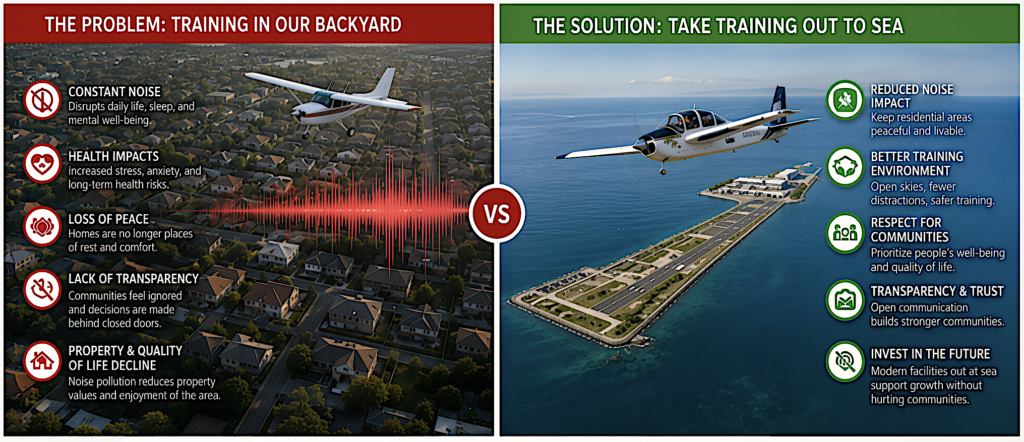
For residents who have spent months living in the shadow of the noise, the message is simple: keep the skies quiet, stop the secrecy, and take the training out to sea.
Also Read: